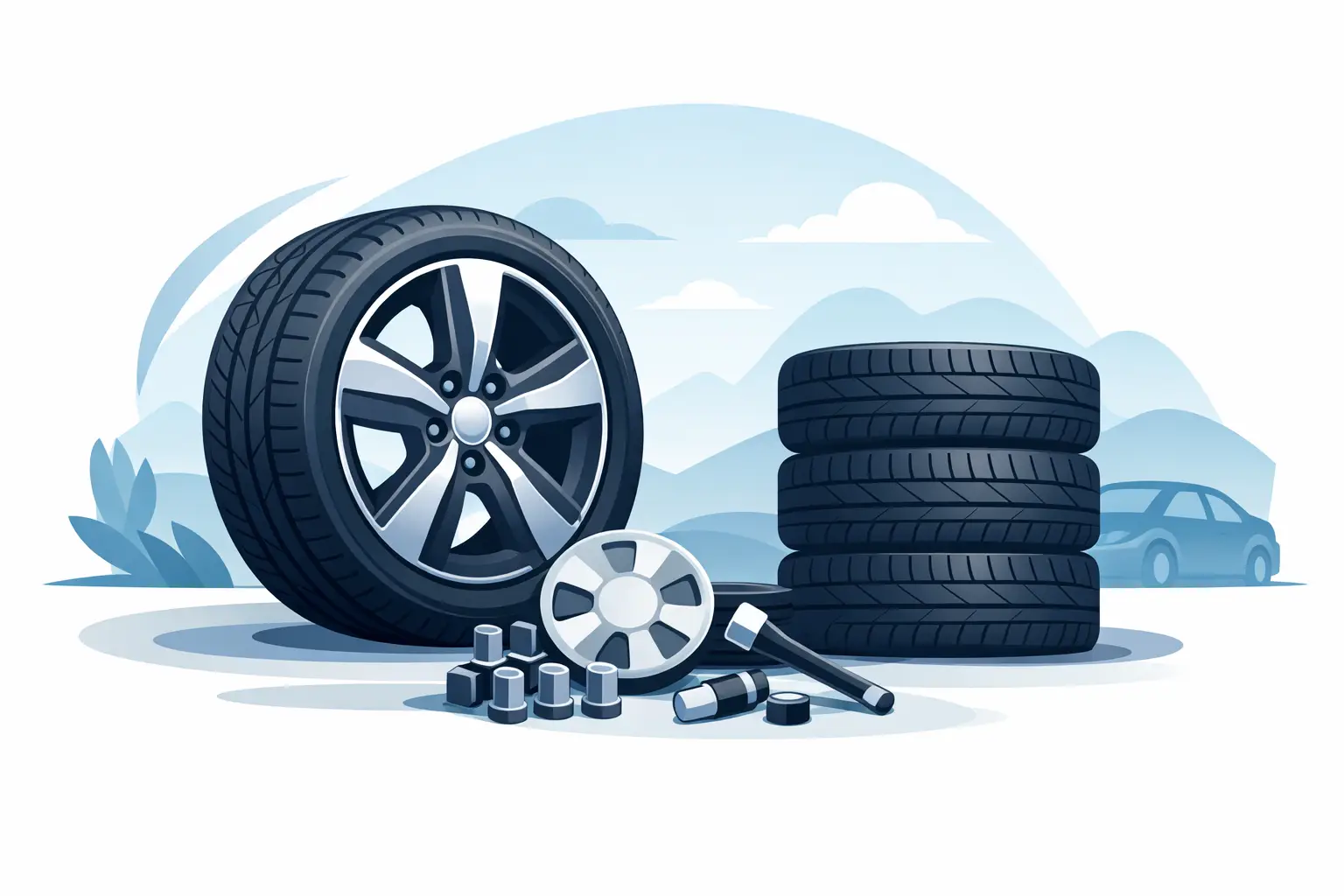
A good wheel and tire setup is not cheap, and a bad storage routine can ruin it quietly. One season in the wrong corner of the garage can leave you with dry rubber, stained finishes, trapped moisture, or a set that vibrates when it goes back on the vehicle. If you’re wondering how to store tires and rims without shortening their life, the answer comes down to clean prep, the right environment, and the right position.
For daily drivers, lifted trucks, Jeeps, and performance builds alike, storage is part of maintenance. Tires are engineered compounds. Rims are finished surfaces. Both react to heat, sunlight, moisture, and pressure over time. Store them correctly, and your next seasonal swap is simple. Store them poorly, and you may be shopping sooner than expected.
How to store tires and rims without causing damage
The first step is cleaning them properly before they ever go into storage. Road salt, brake dust, tar, and grime do more than make a wheel look neglected. They hold moisture against the finish and can slowly etch coatings or encourage corrosion, especially on damaged spots around the lip or lug area.
Wash the tires and rims with mild soap and water, then dry them completely. That last part matters. Putting damp wheels into storage bags or stacking them while moisture is still trapped between surfaces is an easy way to create stains, oxidation, and odor. If the wheels have a polished or coated finish, avoid harsh chemicals that strip protection.
Once they are clean, inspect them like you mean it. Look for uneven tread wear, sidewall cracking, punctures, bent lips, or curb damage. If a tire is already aging out or a rim has structural damage, storage will not fix it. It only delays the moment you have to deal with it. Mark each wheel’s previous position on the vehicle – front left, front right, and so on – so rotation planning is easier next season.
The best place to store tires and rims
The ideal storage space is cool, dry, and stable. A climate-controlled garage, basement, or enclosed workshop is better than a shed, carport, or anywhere with big swings in temperature and humidity. Tires do not like prolonged heat, direct sun, or ozone exposure from electric motors and certain shop equipment. Rims do not like wet concrete, condensation, or contact with chemicals.
If your only option is a garage, choose the cleanest and most protected area you have. Keep the set away from windows, furnaces, water heaters, air compressors, welders, and chemical storage. Fuel vapors, solvents, and petroleum products can accelerate rubber degradation. That matters whether you are storing a winter setup for your SUV or a polished aftermarket wheel package for a weekend truck.
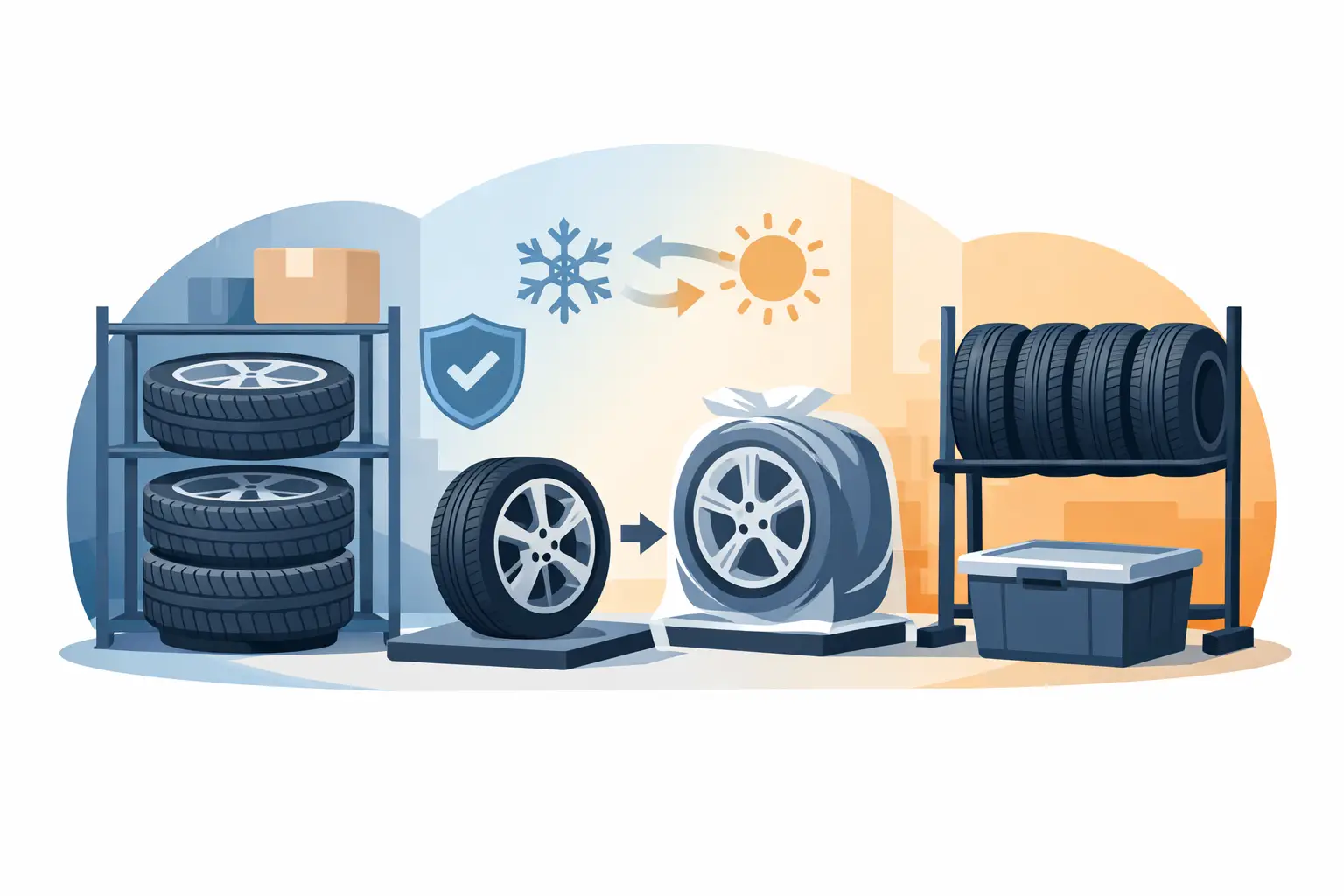
A common mistake is leaving the set directly on bare concrete for months. Concrete can hold moisture, and temperature transfer is not ideal either. Put down a piece of clean plywood, thick cardboard, rubber matting, or a storage rack to create separation from the floor.
Should you bag the tires?
Usually, yes – with one condition. They need to be fully dry first. Tire storage bags or large plastic bags help reduce exposure to air, dust, and light. If the tires are mounted on rims, bagging still helps, especially for finished wheels that you want to keep free from scratches and shop debris.
Do not seal in moisture. If you wash the set and bag it too soon, you are creating a closed, damp environment. That is a bad trade. Protection only works when the components go in clean and dry.
Store mounted and unmounted sets differently
How to store tires and rims depends partly on whether the tires are mounted on the wheels.
If the tires are mounted on rims, stacking is generally acceptable for seasonal storage, as long as the stack is not excessive and the wheels are protected from metal-to-metal contact. Four is usually manageable for most passenger vehicle setups. You can also hang mounted assemblies on a proper wall rack designed to support them by the wheel, not by compressing the tire oddly.
If the tires are not mounted on rims, store the tires upright, side by side, and rotate their position slightly once a month if they will sit for a long stretch. Do not hang unmounted tires, and do not stack them flat for extended periods. That can distort their shape over time.
For rims stored without tires, keep them upright or on padded shelving with spacing between each wheel. Finished surfaces are easy to mark up if they are leaned carelessly against each other. A protective sleeve, cloth barrier, or wheel tote goes a long way here.
What about tire pressure?
For mounted sets, reduce pressure modestly for storage if the manufacturer guidance and your setup allow it, but do not fully deflate the tires. A tire that is left nearly empty is more vulnerable to bead issues and shape distortion. You are not trying to collapse it. You are simply avoiding unnecessary stress from full operating pressure while it sits.
If the mounted set stays on the vehicle during storage, that becomes a different conversation. Then you need to think about flat spotting, full vehicle weight, and moving the vehicle periodically or placing it on stands when appropriate.
Protecting rim finish during storage
Wheel finish is where a lot of value lives. Painted, machined, polished, chrome, satin black, bronze, and clear-coated wheels all have different sensitivities, but the rule is the same: keep them clean, dry, and separated from abrasion.
Do not slide wheels across the floor. Do not stack them face to face without a barrier. Do not wrap them in dirty blankets that carry grit into the finish. A set of padded wheel bags, foam separators, or even clean microfiber barriers can prevent the kind of cosmetic damage you notice immediately when reinstalling them.
This is especially relevant for aftermarket rims. Style matters, but finish care is not just cosmetic. Chips, scratches, and compromised coatings can open the door to corrosion around exposed metal. At FORTLUFT, that mix of function and appearance is not a contradiction. It is the point. Good parts should perform and present well.
Common mistakes that shorten tire life
Most storage damage does not look dramatic at first. It shows up later as vibration, sidewall dryness, surface staining, or tires that seem older than they should. The biggest mistakes are easy to avoid once you know where the risk comes from.
One is storing tires in direct sunlight. UV exposure steadily breaks down rubber. Another is keeping them near electric motors or generators that produce ozone, which can accelerate cracking. A third is ignoring cleanliness and storing brake dust and road salt right on the wheel. Then there is the simple but costly mistake of piling heavy items on top of the tires or wheels.
There is also an it-depends factor with long-term storage. A few months between seasons is straightforward if the space is controlled. A year or longer requires more attention to environment, positioning, and periodic checks. If the storage area gets damp in summer or freezing in winter, your margin for error gets smaller.
A smart seasonal routine for trucks, Jeeps, and SUVs
Larger wheel and tire packages need a little more planning because of their weight and bulk. All-terrain and mud-terrain tires, plus heavier rims, are harder to stack safely and easier to scratch during handling. If you run oversized fitments on a truck or Jeep, use a rack or individual storage positions if possible rather than building a tall stack.
This is also the time to check torque notes, tread depth, and wear patterns before the set disappears for the season. If one tire is wearing faster than the others, storage is your pause point to address alignment or suspension issues before they eat into the next season too.
For shops and higher-volume buyers, labeling every set with vehicle info, position, and removal date keeps inventory clean and reinstalls faster. Efficient storage is not just about preservation. It saves labor and reduces avoidable damage.
How to know your stored set is still ready to use
Before reinstalling, inspect the tires and rims again. Look for cracking, hardening, flat spots that do not round out, corrosion around the bead area, or finish damage around lug holes and edges. Check tread and age. Storage preserves a set, but it does not stop time.
If the tires are several years old, even a well-stored set may need closer evaluation before going back into service. The same goes for rims that took an impact before storage and were never inspected properly. Clean storage is smart maintenance, not a substitute for condition checks.
Treat your wheel and tire package like a real component investment, because that is exactly what it is. A clean, dry, controlled storage routine keeps the rubber healthier, the finish sharper, and the next install a lot less frustrating.