
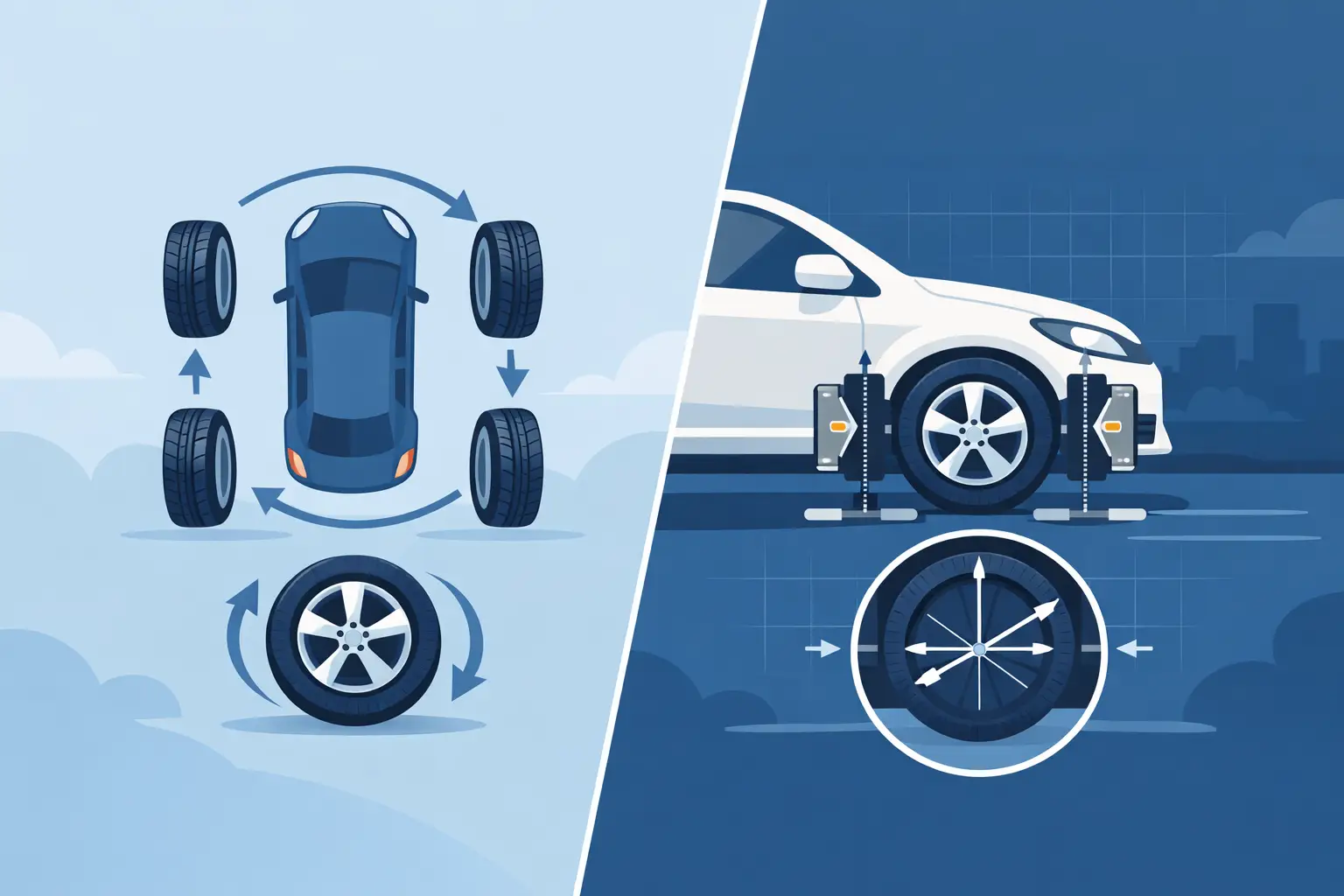
A steering wheel that sits a little off-center, a tire edge wearing faster than the rest, or a highway vibration you did not notice last month – that is usually when drivers start asking, what is tire rotation and wheel alignment, and do I need both? The short answer is yes, often you do. But they are not the same service, and treating them like they are can cost you tire life, ride quality, and money.
For any car, truck, Jeep, or SUV, tires are a major wear item and a major style element. They affect stance, handling, braking, and the way the vehicle feels every time you pull out of the driveway. Rotation and alignment are two of the simplest ways to protect that investment.
What is tire rotation and wheel alignment?
Tire rotation is the process of moving tires from one position on the vehicle to another, usually front to rear or in a specific pattern recommended by the manufacturer. The goal is even out tread wear because each wheel position wears tires differently.
Wheel alignment is the adjustment of the suspension angles that determine how your tires meet the road. Despite the name, an alignment does not really adjust the wheels themselves. It adjusts angles such as camber, caster, and toe so the tires track correctly and the vehicle drives straight.
That difference matters. Rotation manages wear that naturally happens over time. Alignment corrects geometry when the vehicle is no longer tracking as designed.
Why tire rotation matters more than many drivers think
Front and rear tires do different jobs. On many vehicles, the front tires carry more engine weight, handle steering forces, and often do more braking work. On front-wheel-drive vehicles, they also put power to the road. That means front tires usually wear faster than rears.
If you leave every tire in the same position for too long, one pair can wear down much earlier than the other. Rotation spreads that wear across all four tires so you get more even tread depth and a more balanced feel.
This is especially useful on trucks and SUVs that see mixed driving, towing, rougher pavement, or larger wheel and tire packages. Uneven wear can show up sooner than drivers expect, and once a wear pattern gets aggressive, rotating late will not fully fix it.
A typical rotation interval is every 5,000 to 7,500 miles, often lining up with an oil change or regular inspection. Some vehicles, tire types, and driving conditions may call for a different schedule. If you use directional tires or a staggered wheel setup, rotation options can be limited. It depends on your vehicle and tire design.
Common signs you may be overdue for rotation
If road noise has increased, one end of the vehicle feels less planted, or your tread depths are noticeably different front to rear, rotation may be overdue. You might also notice feathering or more wear on specific blocks of tread, although that can overlap with alignment issues.
The key point is simple: rotation is preventative. It is not a repair for damaged suspension geometry or badly worn tires. It works best when done consistently.
What wheel alignment actually changes
Alignment is about angles, not tire placement. When those angles drift out of spec, your tires stop rolling in the clean, controlled way they were designed to.
Toe describes whether the tires point slightly inward or outward when viewed from above. A bad toe setting can scrub tread quickly, sometimes in a surprisingly short time.
Camber is the inward or outward tilt of the tire when viewed from the front. Too much negative or positive camber can wear one edge of the tread faster than the rest.
Caster affects steering stability and return-to-center feel. It usually does not create tire wear as directly as toe or camber, but it can influence handling and steering confidence.
When alignment is correct, the vehicle feels settled. It tracks straight, the steering wheel centers properly, and the tires wear more evenly. When it is off, you may feel the vehicle pull left or right, notice a crooked steering wheel, or see inside or outside edge wear.
Why alignment can go out of spec
Wheel alignment does not only change after a crash. Real-world driving is enough. A hard pothole hit, curb contact, worn suspension parts, lifted or lowered ride height, and even normal component wear can all affect alignment.
For trucks, Jeeps, and SUVs, suspension modifications make alignment even more important. Changing ride height or wheel-and-tire fitment can alter steering and suspension angles. That does not mean modifications are a problem. It means the geometry has to be corrected afterward so the vehicle looks right and drives right.
This is where practical maintenance meets design-aware ownership. A strong stance and upgraded wheel setup can transform a vehicle, but if the alignment is off, the tires will show you fast.
Tire rotation vs. wheel alignment: not interchangeable
A lot of drivers book one service thinking it covers the other. It does not.
Rotation moves tires to different positions to manage normal wear. Alignment adjusts suspension settings to correct how the tires contact the road. One does not replace the other, and often the best results come from doing both at the right time.
If your tires are wearing unevenly because of alignment problems, rotating them alone may just move the problem around. If your alignment is perfect but you never rotate, you can still wear out one pair much faster than the other.
That is why shops often recommend checking both whenever new tires are installed. Fresh tires deserve a clean start.
When should you get each service?
Tire rotation is usually scheduled by mileage. For most drivers, every 5,000 to 7,500 miles is a solid range, but always check the vehicle owner manual and tire manufacturer guidance.
Wheel alignment is more condition-based. You should have it checked if the vehicle pulls, the steering wheel is off-center, you see unusual tread wear, you hit a major pothole, replace steering or suspension parts, or install new tires. Many drivers also choose an alignment check once a year as cheap insurance against premature tire wear.
If you drive a lifted truck, a Jeep with larger tires, or an SUV used for towing or rough roads, it makes sense to stay more proactive. Those vehicles often place greater demands on suspension and tire setup.
Signs you may need an alignment soon
A pull to one side is the classic sign, but not the only one. A steering wheel that is crooked while driving straight, rapid wear on one edge of the tread, wandering at highway speed, or a slight loss of steering precision can all point to alignment issues.
Not every pull is alignment, though. Tire pressure differences, tire construction differences, worn suspension components, and even brake drag can create similar symptoms. That is why a proper inspection matters.
Can rotation or alignment fix vibration?
Sometimes, but not always. Tire rotation can change where you feel a vibration, especially if one tire has a wear pattern developing. Alignment can improve tracking and reduce scrub-related issues. But a true vibration often comes from tire balance, a bent wheel, uneven tire wear, or suspension problems.
That is the trade-off with symptom chasing. Similar driving complaints can come from different causes. Good service is not about guessing. It is about measuring tread, checking pressures, inspecting components, and verifying alignment angles before parts and labor stack up.
How these services protect your tire investment
Tires are not cheap, especially for larger trucks, SUVs, and enthusiast wheel setups. A missed rotation schedule or ignored alignment issue can cut tire life dramatically. That means replacing tires earlier than planned and potentially dealing with weaker handling or longer braking distances along the way.
Proper rotation helps each tire carry its share of the workload over time. Proper alignment helps each tire use its full contact patch as intended. Together, they protect tread life, maintain driving confidence, and support the look and performance of the vehicle.
That balance matters whether your build is purely practical or more refined. At FORTLUFT, that philosophy is simple: the parts that keep a vehicle performing should also support the way it presents on the road. Tires and wheel setup do both.
The smartest way to think about maintenance here
Do not wait for obvious problems. By the time a tire is loudly cupped or worn through one edge, the cheap fix has already passed.
Think of tire rotation as routine maintenance and wheel alignment as precision correction. One is scheduled care. The other is a geometry check that becomes essential whenever the vehicle starts telling you something has changed.
If your vehicle drives straight, your steering wheel is centered, and your tread is wearing evenly, stay on top of rotation and keep alignment on your radar. If anything feels off, address it early. Tire life, handling, and ride quality all respond better to timely adjustments than delayed repairs.
The road gives feedback through your tires first. Paying attention to that feedback is one of the cleanest ways to keep your vehicle looking sharp, driving correctly, and wearing its hardware the way it was meant to.