
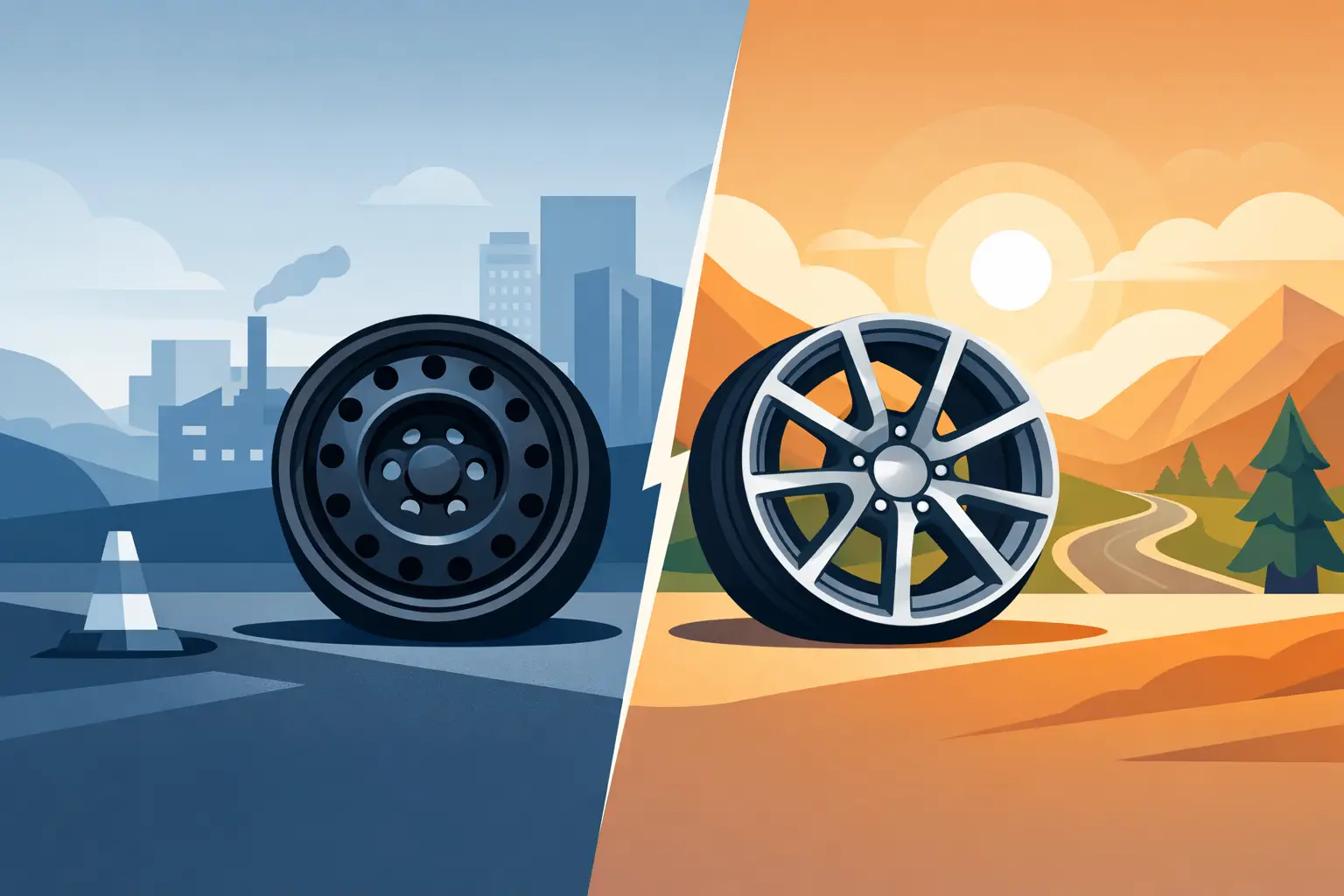
A bent wheel usually settles this debate faster than any spec sheet. If your vehicle sees potholes, winter roads, jobsite gravel, or daily commuter miles, the choice between steel wheels vs alloy is less about hype and more about how you actually drive, what you carry, and how much appearance matters to you.
For some owners, steel is the smart, hard-use answer. For others, alloy delivers the better balance of weight, handling, and visual appeal. Neither is automatically better. The right pick depends on your vehicle, your climate, and your priorities.
Steel wheels vs alloy: what changes in real-world driving?
The biggest difference starts with material. Steel wheels are stamped and welded from steel, while alloy wheels are typically cast or forged from aluminum-based alloys. That change in material affects weight, strength, corrosion behavior, repairability, appearance, and cost.
On the road, weight is what most drivers notice first, even if they do not call it that. Alloy wheels are usually lighter than steel wheels. Less wheel weight can help steering feel more responsive, reduce unsprung mass, and slightly improve braking and ride control. On a car or crossover used for everyday commuting, that can make the vehicle feel sharper and less heavy-footed.
Steel wheels tend to be heavier, and that extra mass changes the character of the vehicle. You may not feel a dramatic difference on a truck or SUV with taller sidewalls, but on smaller vehicles, the steering and suspension often feel less crisp. That does not make steel bad. It simply means steel prioritizes toughness and cost over refinement.
Cost usually starts the conversation
If you need a straightforward replacement set or a dedicated winter setup, steel wheels are often the budget-friendly choice. They generally cost less to buy, and that matters when you are outfitting four wheels at once, especially for a work truck, older SUV, or seasonal tire package.
Alloy wheels usually cost more because the manufacturing process, finish quality, and design options are more complex. But the added price is not only about looks. You are also paying for lighter construction and a broader range of fitment and styling options.
For fleet buyers, commercial users, and value-focused drivers, steel often makes financial sense. For owners upgrading the look and road feel of a vehicle they plan to keep, alloy can be worth the premium.
Durability is not as simple as strong vs weak
A lot of drivers assume steel wheels are stronger and alloy wheels are fragile. That is only half true.
Steel wheels are more likely to bend under a hard impact rather than crack. That can be useful in rough-road conditions because a bent steel wheel may still hold together long enough to get you home or to a shop. In some cases, steel wheels can also be repaired more easily, depending on the damage.
Alloy wheels react differently. Because aluminum alloys are lighter and stiffer, they can improve performance, but under a severe hit they are more likely to crack or fracture instead of bending. Not every impact causes that kind of damage, and many quality alloy wheels hold up well in daily driving. Still, if your route includes cratered city streets, off-road abuse, or repeated heavy impacts, steel has a practical edge.
That said, durability is also about finish and corrosion. Steel wheels usually need protective coatings and are often covered with hubcaps or simple center caps. Once the finish gets damaged, rust can become part of the picture, especially in snow-belt states where road salt is a constant problem.
Alloy wheels do not rust like steel, but they are not immune to damage. They can corrode, pit, stain, or develop finish failure, especially if brake dust, salt, and grime sit too long on the surface. From a maintenance standpoint, both need care. They just age differently.
Alloy wheels win on appearance, and that matters
There is no need to pretend style is secondary. Wheel choice changes the look of a vehicle immediately.
Steel wheels are functional. They suit basic trim levels, winter use, off-road utility builds, and work-focused setups where appearance is not the first priority. On some trucks and Jeeps, that simple look is part of the appeal. It reads honest, durable, and ready for abuse.
Alloy wheels offer more design freedom. Spoke patterns, finishes, machined faces, dark coatings, and more aggressive fitment options make them the clear choice if you want to sharpen the stance of a car, truck, Jeep, or SUV. For many owners, that is reason enough. Technology as an art form only works when the hardware performs and looks right doing it.
The practical point is this: if you care how your vehicle presents itself, alloy gives you far more room to build the look you want.
Steel wheels vs alloy in winter and bad weather
Winter is where steel wheels keep their loyal following.
Many drivers use steel wheels for a dedicated snow tire package because they are less expensive and easier to treat as a seasonal tool. If slush, salt, sand, and freezing grime are going to punish the finish for months, steel can be the low-stress option. If a wheel gets cosmetically rough, it hurts less than damaging a premium alloy set.
But alloy wheels are not automatically a bad winter choice. A quality alloy wheel with a durable finish can perform well in cold weather, and the lighter weight may still benefit handling. The bigger factor is how carefully you maintain them and whether the roads in your area are aggressively salted.
For drivers in harsh winter regions, the common strategy still makes sense: steel for winter duty, alloy for the rest of the year.
Performance and fuel economy: small gains, real difference
If you want the best handling response, alloy usually comes out ahead. Lower rotational and unsprung weight can help the suspension react more efficiently and can make steering feel more precise. On sport sedans, performance crossovers, and street-driven trucks with upgraded tires, that difference is easier to appreciate.
Fuel economy gains from lighter wheels are usually modest, so this should not be the only reason to choose alloy. Still, every pound matters when it is rotating mass. Across daily driving, acceleration, braking feel, and suspension control, lighter wheels can improve the overall character of the vehicle.
Steel wheels are not built around that goal. They are the practical choice when performance is not the main concern.
Fitment matters more than material
A well-made wheel with proper bolt pattern, offset, center bore, load rating, and brake clearance will outperform the wrong wheel every time, regardless of whether it is steel or alloy.
This matters especially for trucks, Jeeps, and SUVs. If you tow, haul, or run oversized tires, wheel load capacity is critical. If you are upgrading for appearance, offset and width have to work with suspension clearance and fender space. If you are choosing winter wheels, downsizing can sometimes improve tire selection and reduce package cost, but only if brake clearance allows it.
Material is only part of the decision. Fitment is what makes the wheel usable.
So which one should you buy?
Choose steel wheels if your priorities are low cost, rugged use, winter duty, or work-truck practicality. They make sense for drivers who care more about function than finish and for buyers who want a dependable second wheel set without overspending.
Choose alloy wheels if you want lower weight, better handling response, stronger visual impact, and a more premium overall look. They are the better fit for drivers who see their vehicle as both transportation and presentation.
There is also a middle ground. A lot of owners run steel wheels for winter or off-road abuse and alloy wheels for daily use the rest of the year. That is not overthinking it. It is matching the equipment to the job.
If you are shopping with real-world priorities in mind, not just forum opinions, steel and alloy each have a clear lane. Buy for your roads, your weather, your vehicle, and your standards. The best wheel is the one that still makes sense after the first pothole, the first storm, and the first long look back at your parked vehicle.