
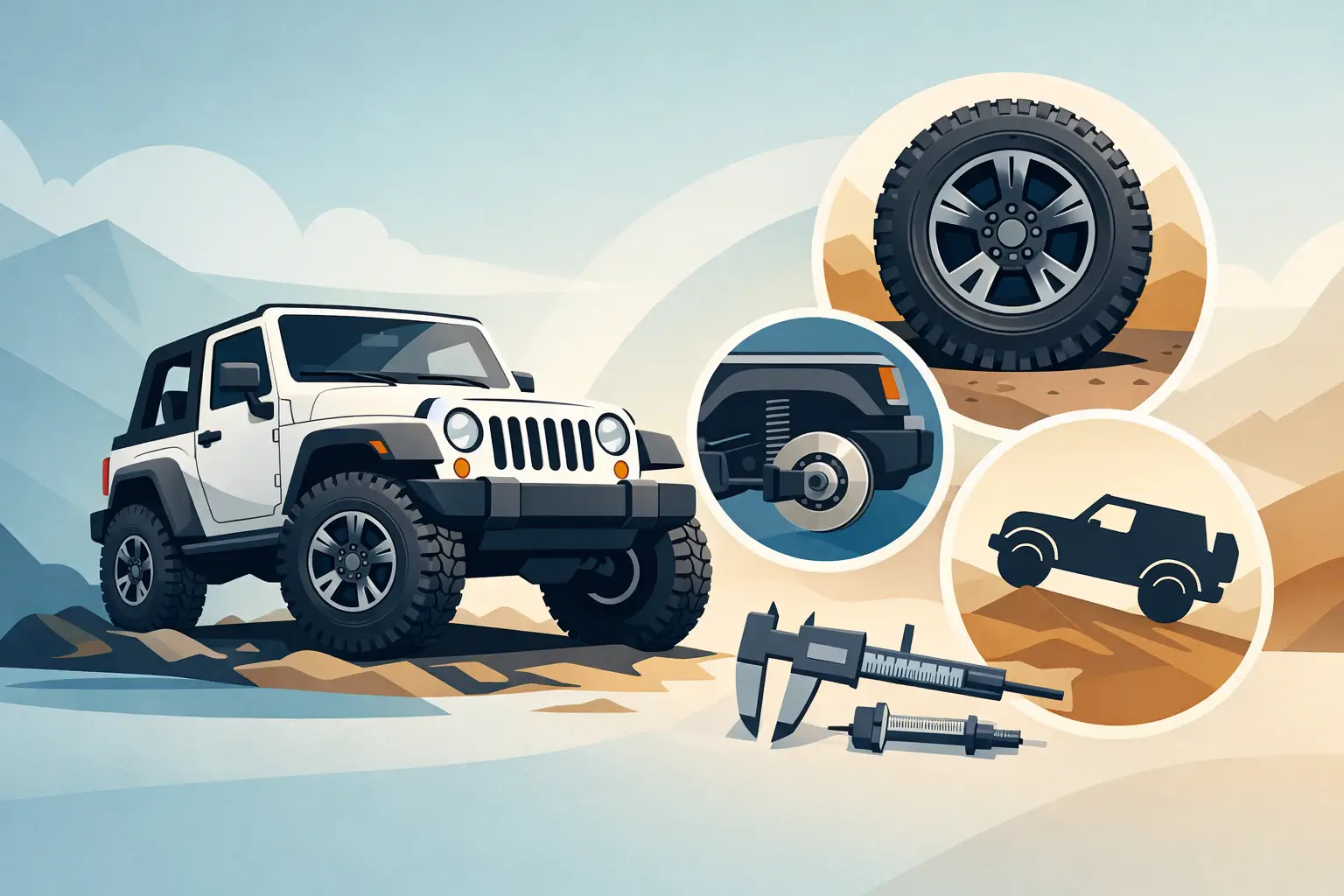
A Jeep can look perfect on paper and still rub at full lock, chew through fender liners, or feel wrong on the road once new wheels go on. That is why jeep wheel fitment basics matter more than the wheel’s finish, diameter, or brand name. Fitment is what decides whether your upgrade looks right, clears correctly, and works the way your Jeep should.
For Jeep owners, wheel fitment sits at the intersection of function and stance. You are not just filling the wheel wells. You are managing suspension travel, steering angle, brake clearance, tire width, and the way the Jeep behaves on pavement and off it. A wheel setup that looks aggressive can improve capability in one area and create problems in another. Good fitment is not guesswork. It is a set of measurements that need to work together.
Jeep wheel fitment basics start with the wheel specs
When people talk about wheel fitment, they usually mean whether the wheel will bolt on and whether the tire will clear. That is part of it, but the full picture starts with five specs: diameter, width, bolt pattern, offset, and backspacing.
Diameter is the wheel size measured across the barrel, usually in inches. Width is measured between the bead seats, not the outer lips. A 17×8.5 wheel is 17 inches in diameter and 8.5 inches wide. Those two numbers affect tire options, sidewall height, and overall look, but they do not tell you where the wheel will sit in relation to the suspension and fender.
Bolt pattern is the number of lug holes and the distance between them. If the bolt pattern is wrong, the wheel is simply not going on. Many Jeep applications use familiar patterns like 5×5 or 5×4.5, but that depends on the model and year. A Wrangler JK, JL, TJ, Gladiator, Cherokee, and Grand Cherokee do not all share the same fitment details. Jeep is one of those brands where assuming can get expensive fast.
Offset and backspacing are where most fitment mistakes happen. Offset measures the position of the wheel mounting surface relative to the wheel centerline. Positive offset pushes the wheel farther inward. Negative offset pushes it outward. Backspacing measures from the mounting pad to the inner edge of the wheel. Both describe where the wheel sits, just from different angles.
On a Jeep, those measurements affect control arm clearance, inner fender clearance, scrub radius, and how far the tire sticks out past the body. Push the wheel too far inward and you can hit suspension components. Push it too far outward and you add stress, invite rubbing, and often throw more road spray down the side of the vehicle.
Why offset and backspacing matter so much on a Jeep
Jeeps are not built for static showroom fitment. They articulate, compress, and steer through a wider range of motion than a lot of daily drivers. That makes offset and backspacing especially important.
A wheel with less backspacing or more negative offset will move the tire outward. That can help clear wider tires from control arms and sway bar links. It can also create the wider, planted look many owners want. But there is a trade-off. The farther out the tire goes, the more likely it is to contact the fender edge during compression, especially if tire diameter also increases.
There is also a handling side to it. Moving the wheel outward changes leverage on wheel bearings, ball joints, and steering components. Plenty of Jeep owners run aggressive offsets successfully, but the more extreme you go, the less margin you have. A setup that works for light trail use and city driving may not be the best choice for a heavily loaded overland build or a daily driver that sees a lot of highway miles.
This is where design and function need to agree. A wheel should complement the Jeep, not force the rest of the vehicle to compensate for a bad measurement.
Tire size changes the fitment equation
A lot of wheel questions are really tire questions in disguise. You can bolt on the right wheel and still have fitment issues because the tire is too tall, too wide, or both.
For example, moving from a stock tire to a 33-inch or 35-inch tire changes more than appearance. Diameter affects vertical clearance at the fender and pinch points during suspension compression. Width affects lateral clearance to control arms, frame rails, and liners. Even the tread design matters. An aggressive mud-terrain often runs wider in real life than its listed size suggests.
That is why wheel width and offset should be matched to the tire you plan to run, not treated as separate choices. A narrow wheel can work well with many off-road tire sizes and can help protect the wheel lip, while a wider wheel may change sidewall shape and clearance behavior. There is no universal best answer. It depends on how the Jeep is used and how much suspension clearance you already have.
Brake clearance is easy to overlook
Not every wheel that matches your bolt pattern will clear your brakes. This is especially relevant when stepping down to a smaller wheel diameter or when dealing with trim packages that use larger brake components.
Wheel diameter matters, but spoke design matters too. Two wheels with the same size can have very different barrel and spoke clearance. That means a 17-inch wheel from one design may clear a brake package that another 17-inch wheel will not. If your Jeep has upgraded brakes, or if you are shopping across multiple generations and trims, this is not a detail to gloss over.
Hub bore also matters. Some wheels are hub-centric and designed to center tightly on the hub. Others are lug-centric and rely more on the lug hardware for centering. Either can work when engineered correctly, but the fitment needs to match the application.
Stock height or lifted changes what fits
One of the biggest fitment mistakes is assuming a wheel and tire combo that works on a lifted Jeep will fit the same way on a stock-height Jeep. Lift height changes available clearance, but it does not eliminate every problem.
A small lift may create room for a taller tire at ride height, yet rubbing can still happen during articulation or full steering lock. Bump stop length, control arm geometry, and fender design still matter. On the other hand, some owners fit larger tires with minimal lift by choosing the right wheel offset and accepting small adjustments like trimming or liner modification.
There is always an it-depends factor here. If your Jeep is a commuter with occasional dirt-road use, you may want conservative fitment with minimal poke and no trimming. If it is built for trails, you may prioritize clearance under articulation and accept a more aggressive stance. The best setup is the one that matches how the vehicle is actually used.
Common fitment mistakes Jeep owners make
Most bad wheel purchases come from chasing one spec while ignoring the rest. Buying for bolt pattern alone is the classic mistake. The wheel bolts on, but the offset is wrong and the tire contacts the suspension. The next common error is choosing a wheel based on appearance and assuming the tire size will sort itself out later.
Another issue is relying on generic fitment claims. “Fits Jeep Wrangler” is not enough information by itself. You need model, year range, brake compatibility, and the context of your tire size and suspension setup. Even within the same platform, aftermarket parts can change the clearance picture.
Spacer use also deserves a realistic view. Spacers can solve certain clearance problems or help achieve a desired stance, but they are not a shortcut around poor planning. Quality, proper torque, and application matter. They can be part of a sound setup, but they should not be used to patch over a wheel choice that was wrong from the start.
How to choose a setup that actually works
Start with your Jeep’s exact year, model, and trim, then confirm the factory wheel specs. From there, decide what matters most in the finished setup. Is the goal daily-driver comfort, a cleaner visual stance, larger all-terrain tires, or more serious trail performance? The answer shapes the acceptable range for wheel width, offset, and tire size.
Then build the package as a system. Match the wheel to the tire, and match both to the suspension and brake setup. If you are keeping stock ride height, stay realistic about tire growth and steering clearance. If you are lifted, think beyond the parking-lot look and account for articulation. If you want the wheel to sit flush or slightly outside the fender, know that this affects not only style but also debris spray, component load, and in some areas local compliance.
This is the point where product quality matters too. A properly engineered wheel with the right specs is not just easier to install. It is easier to live with. For buyers who care about both fit and finish, that combination is where style starts to feel like function rather than decoration. That is very much in line with how FORTLUFT approaches aftermarket parts – technology as an art form, but still built around the realities of the vehicle.
The smart move is not chasing the biggest tire or the most aggressive offset. It is choosing a setup that clears, performs, and still looks right every time you walk back to your Jeep in the parking lot.