
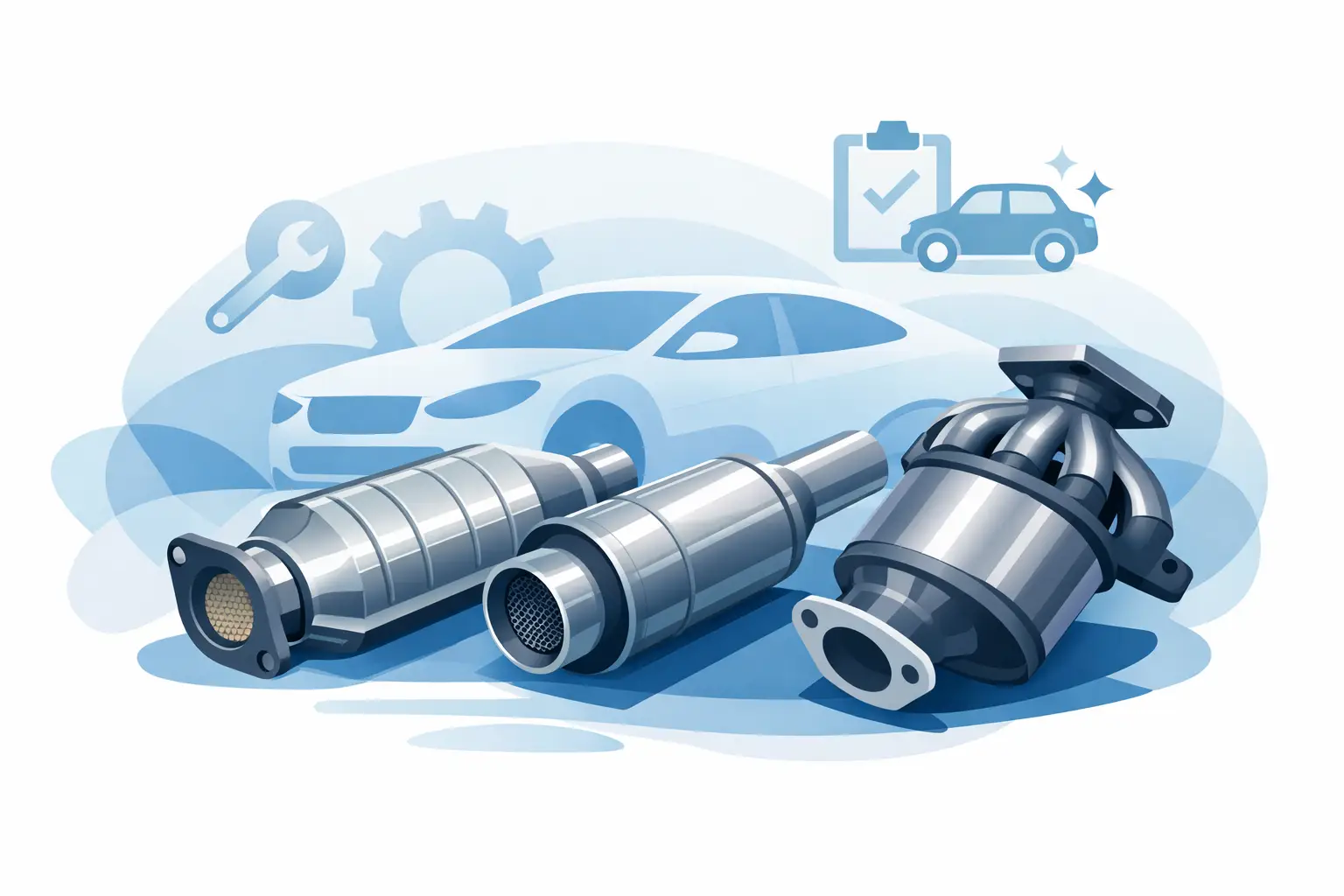
A catalytic converter replacement should not turn into a fabrication project. Direct fit catalytic parts are designed around the original mounting points, exhaust routing, sensor locations, and underbody clearance of a specific vehicle application. For drivers, DIY installers, and repair shops, that means less time correcting fitment problems and more confidence that the exhaust system will perform as intended.
A correct fit matters beyond convenience. The catalytic converter is part of an emissions system that must manage heat, exhaust flow, oxygen-sensor feedback, and vehicle-specific calibration. A part that physically looks close can still create clearance issues, leaks, warning lights, or compliance concerns. The right replacement starts with verified vehicle details, not a universal guess.
What Makes Direct Fit Catalytic Parts Different
Direct fit catalytic parts are made to replace a defined original-equipment configuration. Depending on the application, the assembly may include the converter body, inlet and outlet pipes, flanges, hangers, heat shields, sensor bungs, and connection hardware. The goal is to match the original exhaust path without requiring major cutting, welding, or custom brackets.
That distinguishes a direct-fit assembly from a universal catalytic converter. Universal units can be useful when an experienced exhaust shop needs a flexible repair solution, particularly on modified or older vehicles. But they generally require measuring, cutting, welding, and selecting additional pipe sections or fittings. The labor can quickly outweigh the lower purchase price if the installation is not straightforward.
Direct fit does not mean every job is effortless. Rusted flange bolts, damaged studs, seized oxygen sensors, and corroded adjoining pipe can complicate any exhaust repair. It does mean the replacement part is engineered to give the installer the correct starting geometry for the vehicle rather than asking them to create it from scratch.
Why Exact Vehicle Fitment Protects the Whole Exhaust System
The exhaust system works as a connected assembly. A converter that sits too high can contact a heat shield or vehicle floor. One that hangs too low can be exposed to road damage. A flange that is slightly off-angle may create a leak that produces exhaust noise, sends inaccurate oxygen readings, or leaves the cabin with an unpleasant odor.
Direct fit catalytic parts help preserve the relationships between the converter, upstream and downstream oxygen sensors, mufflers, resonators, exhaust pipes, and factory hangers. This is especially valuable on trucks, Jeeps, and SUVs, where ground clearance, four-wheel-drive components, and longer exhaust routing leave less room for error. On passenger cars, close packaging around the engine bay and floor pan can make accurate placement just as critical.
Fitment also affects how the system handles movement. Engines twist under acceleration, and exhaust systems expand substantially as they heat up. Correct hanger positions and pipe angles let the system move as designed. Forcing an incorrectly shaped assembly into place can place constant stress on flanges, welds, flex sections, and sensor wiring.
The Value of Factory-Style Connection Points
Factory-style flanges, bolt patterns, and hanger locations reduce uncertainty during installation. They also make future service more manageable. When components connect where they should, replacing a downstream exhaust section or servicing a sensor does not require undoing a previous custom workaround.
Gaskets and hardware still deserve attention. A direct-fit part cannot compensate for a warped mating flange, worn rubber hanger, or broken spring bolt. Inspect the connecting surfaces before installation and replace service hardware when its condition is questionable. A clean, properly sealed joint is as important as the converter itself.
Start With the Vehicle Details That Actually Matter
The year, make, and model are only the first layer of fitment. Engine size, fuel type, drivetrain, wheelbase, emissions package, production date, and trim can all change the correct catalytic converter configuration. A vehicle may use different assemblies for federal and California emissions applications, or have separate front and rear converter locations.
Before ordering, confirm the VIN when possible and identify the original part location. Check whether the vehicle has one converter or several, and verify the number and position of oxygen-sensor ports. Compare the existing assembly with product specifications, including pipe diameter, overall shape, flange style, and hanger layout.
This is not paperwork for its own sake. A 3.5-liter truck and a 3.5-liter SUV from the same manufacturer may use different exhaust assemblies. Even within one model year, a midyear production change can alter a flange or sensor setup. A few minutes spent confirming application data can prevent a return, a stalled repair bay, or a part that cannot be safely installed.
Federal and California Emissions Applications
Emissions requirements are a major part of catalytic converter selection. Some vehicles and locations require California Air Resources Board-compliant components, while other applications may accept federal EPA-compliant replacements. Requirements depend on the vehicle and the state or locality where it is registered and operated.
Never select a converter solely because it bolts on or costs less. Use a part that is legal for the specific vehicle application and applicable emissions rules. Removing, bypassing, or installing an unsuitable emissions-control component can be illegal and may lead to inspection failures, warning lights, and costly repairs. For shops, careful fitment and compliance verification also protect customer trust.
Signs the Converter May Not Be the Only Problem
A check engine light, sulfur-like exhaust smell, rattling converter substrate, reduced power, or an emissions-test failure can point toward a catalytic converter issue. They can also point to the condition that damaged the converter in the first place.
Misfires, oil consumption, coolant entering the combustion chamber, incorrect air-fuel mixtures, leaking injectors, and failed oxygen sensors can overheat or contaminate the catalyst. Installing a new direct-fit converter without correcting the root cause can shorten the life of the replacement. If the old unit has melted, broken apart, or discolored from excessive heat, diagnose the engine before considering the repair complete.
An exhaust leak upstream of an oxygen sensor can also lead to misleading diagnostic codes. So can a damaged sensor harness, poor electrical connection, or a leak at a flange. A proper diagnosis looks at fault codes, live sensor data, fuel-trim readings, ignition performance, and the physical condition of the exhaust system. The converter is often the affected component, not always the original failure.
Installation Choices: DIY Repair or Professional Service
For an experienced DIY owner with safe lifting equipment, penetrating oil, torque tools, and a plan for stubborn hardware, a direct-fit assembly can make a home repair far more realistic. The factory-style layout eliminates much of the custom work associated with universal parts. Still, exhaust repairs are often performed under a vehicle, where rust, heat, and limited access change the difficulty quickly.
Professional installation is the better choice when bolts are heavily corroded, sensor removal is uncertain, welding may be required to repair adjoining pipe, or diagnosis has not confirmed the failure. Shops can also verify that there are no leaks after installation and confirm that the system clears heat shields, suspension components, and driveline parts through its full range of movement.
Whether the work is done at home or in a bay, avoid using sealants where a metal gasket or specified hardware is required. Route oxygen-sensor wiring away from hot exhaust surfaces, tighten fasteners evenly, and recheck joints after the first heat cycle. These details help a direct-fit part deliver the clean, controlled installation it was designed to provide.
Select for Function, Finish, and Long-Term Service
An exhaust component lives in a demanding environment of heat, moisture, vibration, salt, and road debris. Material quality, weld quality, coating, and accurate construction influence how well a replacement holds up over time. For vehicles driven in snow-belt conditions or used for work, towing, and off-road travel, corrosion resistance and secure hanger placement deserve extra attention.
FORTLUFT serves buyers who expect an exhaust repair to be practical without looking like an afterthought. The best direct-fit catalytic parts support the vehicle’s emissions system, preserve the intended exhaust layout, and keep the underside of the vehicle cleanly assembled. That is technology as an art form in the place it counts most: a component that fits correctly, works hard, and stays out of the way.
Choose by verified application, legal emissions requirement, and the actual condition of the surrounding exhaust system. When those three details line up, a replacement converter becomes a repair you can install with confidence and leave behind with confidence.