
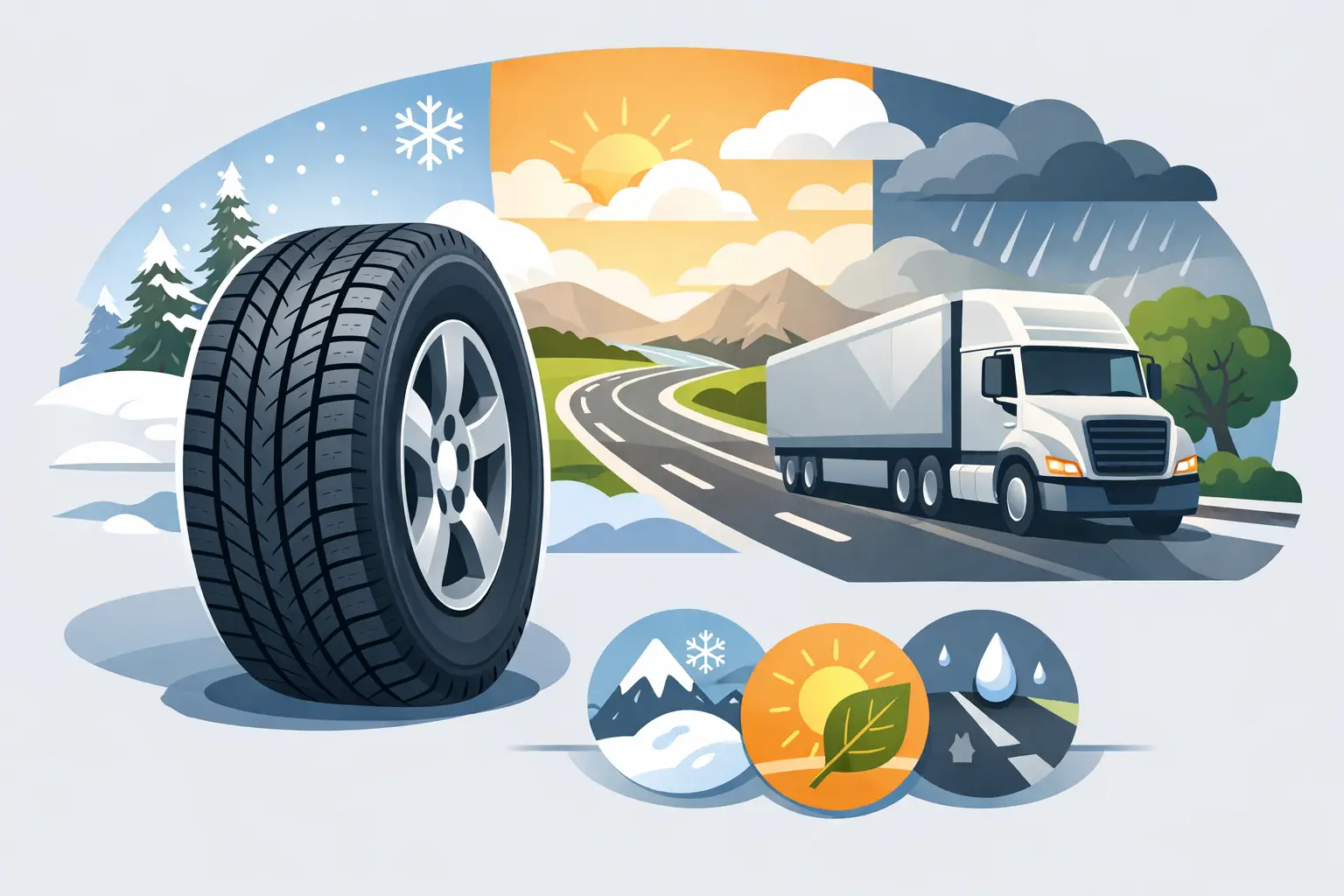
A truck tire can look aggressive on the rack and still be the wrong choice for the way you drive. This all season truck tire review focuses on what separates a capable year-round tire from one that only looks the part: wet grip, load handling, tread design, comfort, and the fitment details that affect every mile.
For most truck owners, all-season tires are the practical middle ground. They are built for daily driving, rain, light snow, highway travel, towing, and occasional unpaved roads without the noise and fuel-use penalties common with more aggressive all-terrain patterns. The right set should support the truck’s working side while keeping its road manners clean and controlled.
What an All-Season Truck Tire Is Built to Do
An all-season truck tire is designed to perform across a broad temperature range, not every possible condition. Its rubber compound stays flexible in cool weather while remaining stable during hot pavement miles. The tread is usually less open and less blocky than an all-terrain tire, creating more consistent contact with the road.
That design typically benefits highway stability, braking, and tread life. It also reduces the hum that can make a long commute or family road trip tiring. For a pickup, Jeep, or SUV that spends most of its time on pavement, these are meaningful advantages rather than minor refinements.
The trade-off is clear. A standard all-season tire is not a replacement for a dedicated winter tire in severe ice, deep snow, or sustained subfreezing conditions. It is also not the first choice for mud, sharp rocks, or frequent trail use. Match the tire to the terrain you actually cover, not the terrain you might see once a year.
All Season Truck Tire Review: The Key Performance Areas
A useful tire review starts with conditions, not marketing claims. The same tire can feel excellent on a lightly loaded half-ton pickup and less convincing on a fully equipped truck that tows regularly. Start with these core measures.
Wet Traction and Braking
Rain performance deserves more attention than many buyers give it. Trucks have substantial weight, and an unloaded pickup can be especially light over the rear axle. When pavement is wet, the tire must channel water away from the contact patch fast enough to maintain control.
Look for wide circumferential grooves, well-defined lateral channels, and siping across the tread blocks. These features help resist hydroplaning and provide more edges for braking on wet pavement. A tire with strong wet performance generally inspires confidence during sudden lane changes, freeway ramps, and stop-and-go traffic after a storm.
Do not judge wet capability by tread depth alone. A deep tread can still perform poorly if the channels do not move water efficiently or if the compound becomes hard with age. Review the tire’s intended application and replace tires before wear bars turn wet-weather driving into a compromise.
Tread Life and Even Wear
Long tread life is one of the strongest reasons to choose an all-season truck tire. Highway-oriented designs typically use a stable tread pattern that resists irregular wear when the truck is aligned and maintained properly. That can mean more useful miles and a quieter ride throughout the tire’s life.
There is no universal mileage result, however. Towing, hard acceleration, frequent short trips, underinflation, and worn suspension components can shorten tread life quickly. Front-end alignment is particularly important on trucks with larger wheels, altered ride height, or aftermarket suspension parts.
Rotate tires on schedule and check pressure when the tires are cold. These basic habits protect your investment and reveal problems early, including cupping from weak shocks or uneven shoulder wear from incorrect alignment.
Load Capacity and Towing Confidence
A truck tire must do more than carry the vehicle. If you haul equipment, pull a trailer, carry tools, or regularly load the bed, the tire’s load index and load range need to match the job.
Check the placard on the driver-side door jamb and the truck owner’s manual before changing tire sizes or construction. The replacement tire should meet or exceed the original equipment load capacity. When towing, factor in tongue weight, cargo, passengers, and the pressure requirements for the specific tire. More pressure is not automatically better, but running below the recommended pressure under load can build heat and damage the tire.
For drivers who tow only occasionally, a quality standard-load or XL tire may provide the ride quality they want. For frequent heavy-duty use, an LT tire with the appropriate load range may be the better fit. LT tires often have stronger construction, but they can ride firmer and weigh more. That is a functional trade-off worth making only when the workload calls for it.
Ride Quality and Road Noise
Truck owners often assume a tougher-looking tire must be a better tire. On pavement, that is rarely true. Larger tread voids and aggressive shoulder blocks can create more noise, more vibration, and less precise steering response than a road-focused all-season design.
A refined all-season tire should track predictably, absorb small impacts without feeling vague, and remain reasonably quiet at interstate speeds. This matters even more on daily-driven trucks and SUVs where tire noise can dominate the cabin once the tread begins to wear.
Wheel size also changes the experience. Moving to a larger wheel usually means a shorter sidewall, which can sharpen turn-in but reduce impact comfort and increase the chance of wheel damage on potholes. A balanced tire-and-wheel setup delivers a more finished result than chasing diameter alone. Technology as an art form means performance and appearance should work together.
Understanding Tire Size, Construction, and Fitment
The sidewall contains the information that determines whether a tire belongs on your vehicle. A size such as 275/65R18 identifies section width, aspect ratio, radial construction, and wheel diameter. It does not tell the whole story. Load index, speed rating, construction type, and overall diameter also matter.
Changing tire diameter can affect speedometer accuracy, gearing, clearance, and steering travel. On newer trucks, a substantial change may also influence driver-assistance calibration. A wider tire can improve the visual stance, but it may rub at full lock or under suspension compression if wheel offset and clearance are not considered.
Before ordering, confirm wheel diameter, recommended rim width, bolt pattern, offset, brake clearance, and the available space around the fender liner and suspension. This is especially important for lifted trucks, leveled trucks, and vehicles with aftermarket wheels. A tire that fits while parked may still contact bodywork during a turn or over a bump.
When All-Season Tires Are the Right Call
All-season truck tires make the most sense for drivers who spend the majority of their time on paved roads and want dependable performance across changing weather. They fit the needs of commuters, contractors with moderate payloads, family SUVs, and trucks that tow within their rated capacity on maintained roads.
They are also a smart choice for buyers who prioritize tread life and a polished on-road feel. If your truck has upgraded wheels, exhaust components, or a carefully finished exterior, a tire with controlled road noise and a clean sidewall profile can support the overall build without adding unnecessary harshness.
Choose an all-terrain tire instead if gravel, rutted access roads, loose dirt, and occasional trail travel are routine. Choose winter tires if snow and ice are regular parts of your season. The best tire is not the most aggressive option. It is the one that gives your truck the most control where it actually works.
Buying With a Clear Checklist
Before selecting a set, verify the original tire size and required load rating, then decide how often you tow or haul. Consider your local weather, your annual mileage, and whether road noise matters to you. Finally, inspect your wheels and suspension for issues that could ruin a new set prematurely.
A good all-season tire does not need to transform your truck into something it is not. It should make every ordinary drive feel more composed, every wet stop more controlled, and every loaded mile more confident. Choose the tire that supports the work, the ride, and the look you expect from your vehicle.