
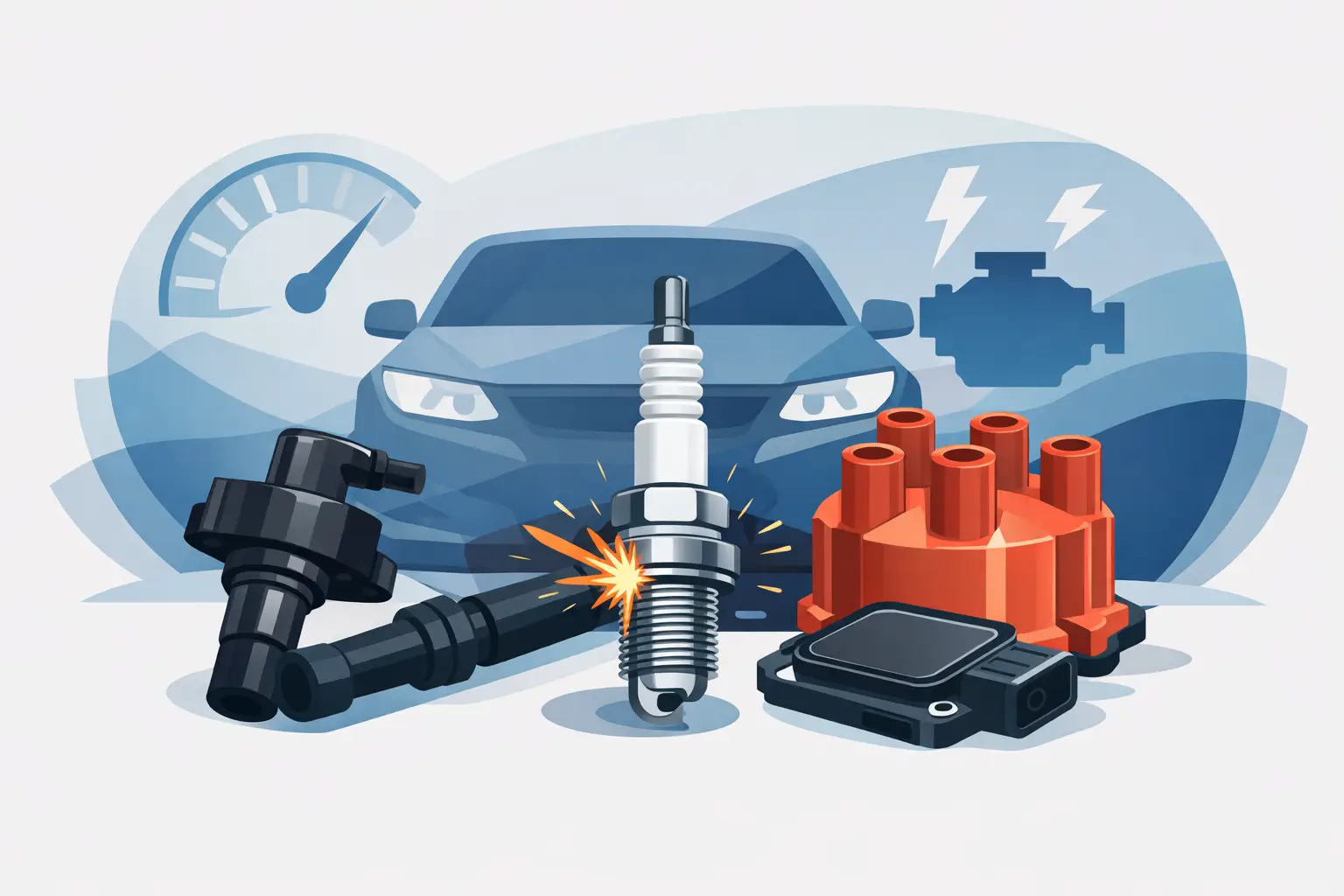
A hard start, intermittent misfire, or rough idle rarely comes down to one “bad ignition part” in isolation. Spark plugs, coils, wires, boots, connectors, and engine controls work as a system. This aftermarket ignition parts guide helps you identify what belongs on your car, truck, Jeep, or SUV – and what should stay on the shelf.
For daily drivers, the right choice is usually an OE-style replacement with correct fitment and dependable materials. For modified engines or vehicles that see towing, trail use, or high-load driving, ignition upgrades can make sense when they solve a specific demand. The goal is not the most aggressive-looking part. It is consistent spark delivery, correct installation, and a component set matched to the vehicle.
Start With the Ignition System You Have
Before choosing parts, confirm how your vehicle produces and delivers spark. Older vehicles may use a distributor, ignition module, cap, rotor, and plug wires. Many modern vehicles use coil-on-plug ignition, where each spark plug has its own coil mounted directly above it. Other engines use a coil pack with short plug wires.
This matters because the replacement strategy changes with the system. A distributor-equipped engine may need routine service across several wear items at once. A coil-on-plug engine may only need individual plugs, boots, or a single failed coil. Buying by vehicle year, make, model, engine size, and VIN-compatible fitment information is the fastest way to avoid a mismatch.
Also check for factory variations. The same model year can have different engines, emissions packages, connector styles, and ignition configurations. Visual comparison is useful, but it should support fitment verification, not replace it.
Spark Plugs: Match Heat Range, Material, and Gap
Spark plugs are the most familiar ignition service part, but they are not interchangeable simply because the threads fit. The plug’s reach, seat type, heat range, electrode design, and specified gap all affect combustion and engine durability.
For most stock vehicles, use the plug type specified by the manufacturer. Copper plugs are common in older applications and may require more frequent replacement. Platinum and iridium plugs typically offer longer service life because their fine-wire center electrodes resist wear. That does not automatically mean an iridium plug is the right upgrade for every engine. Some engines are calibrated around a particular plug design, and staying with the specified style can be the best decision.
Heat range deserves extra attention on modified applications. A colder plug can help manage heat in engines with added boost, higher compression, heavy towing loads, or sustained high-RPM operation. But running a colder plug in a stock engine without a reason can contribute to fouling and poor low-speed operation. Choose heat range based on the engine’s real operating conditions, not a generic performance claim.
Do not assume every new plug arrives ready to install. Many are pre-gapped, yet they can be damaged in shipping or may not match a modified engine’s requirements. Check the gap against the vehicle specification with an appropriate tool. Fine-wire iridium and platinum electrodes should be handled carefully. Forcing a conventional gap tool against the center electrode can damage the plug.
Signs Spark Plugs May Be Due
Slow starts, reduced fuel economy, a rough idle, hesitation under acceleration, and a flashing or steady check engine light can point to worn plugs. Those symptoms can also come from fuel, air, sensor, or mechanical problems. Reading stored diagnostic trouble codes and inspecting the old plugs can reveal more than replacing parts by guesswork.
A worn electrode gap, oil fouling, fuel fouling, cracked porcelain, or unusual deposits can tell a story about engine condition. If one plug looks dramatically different from the rest, investigate that cylinder rather than treating it as normal wear.
Ignition Coils: Replace the Failure, Not the Whole System by Default
An ignition coil converts battery voltage into the high voltage needed to fire the plug. When a coil weakens, the engine may misfire under load before it misfires at idle. You may notice a stumble during acceleration, reduced power, poor fuel economy, or a check engine light with a cylinder-specific misfire code.
On coil-on-plug systems, replacing only the failed coil is often practical. If several coils are original and the vehicle has high mileage, replacing a full set can reduce the chance of repeated repairs, especially when labor access is difficult. There is no universal rule. The smart choice depends on mileage, budget, diagnostic results, and how consistently the vehicle needs to perform.
Look for correct electrical connectors, mounting points, boot length, and vehicle application. A coil marketed as high output is not automatically better for a stock engine. Modern engine management systems are calibrated around dwell time, coil characteristics, plug gap, and combustion conditions. An incompatible performance coil can create new problems instead of solving an existing one.
For modified engines, upgraded coils may be appropriate when increased cylinder pressure makes spark blowout more likely. That decision should be based on the complete combination: boost level, fuel type, plug gap, tuning, and ignition control strategy.
Wires, Boots, Caps, and Rotors Still Matter
Plug wires remain common on many trucks, SUVs, Jeeps, and older performance vehicles. Heat, vibration, oil exposure, and age can break down insulation and increase resistance. A damaged wire may arc to nearby metal, especially under load or in damp weather, creating a miss that is easy to feel but difficult to see.
Choose wire sets with the correct length, terminal ends, routing clips, and heat protection for the application. Route them as designed. Crossing wires incorrectly, letting them rest on exhaust components, or pulling on the wire instead of the boot during service can shorten their life.
Distributor caps and rotors are wear parts, not permanent hardware. Inspect for corrosion, carbon tracking, cracks, burnt terminals, and a worn center contact. When replacing a cap and rotor, inspect the distributor shaft and related components as well. A new cap cannot correct excessive shaft play or a failing ignition module.
Diagnose Before You Buy
Ignition parts are frequently blamed for problems caused elsewhere. A vacuum leak, clogged injector, failing fuel pump, weak battery, poor ground, damaged connector, or low engine compression can all mimic an ignition fault. Start with the basics: scan for codes, inspect connectors and wiring, verify battery condition, and check for obvious contamination around plugs and coils.
If a misfire code follows a coil when you swap it to another cylinder, the coil is a strong suspect. If it stays with the same cylinder, look at the spark plug, injector, wiring, compression, and air leaks. This basic process prevents unnecessary parts replacement and gets the vehicle back on the road faster.
Do not ignore a flashing check engine light. It often indicates an active misfire severe enough to send unburned fuel into the exhaust, where it can overheat and damage the catalytic converter. Reduce load on the engine and address the cause promptly.
Installation Details That Protect the Repair
A quality part can still fail early when installation is rushed. Work on a cool engine, disconnect power when the service procedure calls for it, and keep debris out of spark plug wells. On engines with deep plug tubes, remove dirt and moisture before pulling the plug so contamination does not enter the cylinder.
Use the correct spark plug socket and torque specification. Under-tightening can affect heat transfer and sealing; over-tightening can damage threads, especially in aluminum cylinder heads. Avoid adding anti-seize or dielectric grease unless the part maker or vehicle service information calls for it. Many modern plugs have plated threads, and excess anti-seize can alter torque readings. Dielectric grease belongs on the inside lip of a boot when specified, not on the electrical contact itself.
After installation, reconnect every connector securely, clear codes only after recording them, and verify the repair with a test drive under the conditions that produced the original complaint. A vehicle that idles smoothly but misfires under acceleration is not fully repaired.
Choose Parts for the Job in Front of You
The best ignition purchase is application-specific. A commuter SUV needs dependable OE-style service parts. A work truck may need parts selected for heat, towing, and frequent use. A modified Jeep or performance build may require a more deliberate match between plugs, coils, tuning, and engine load.
Material quality, connector accuracy, heat resistance, and fitment should carry more weight than flashy packaging. At FORTLUFT, the same practical standard applies across maintenance and upgrade categories: choose components that work cleanly, fit correctly, and support the way your vehicle is actually driven. Good ignition service is technology doing its job quietly – every start, every mile.