
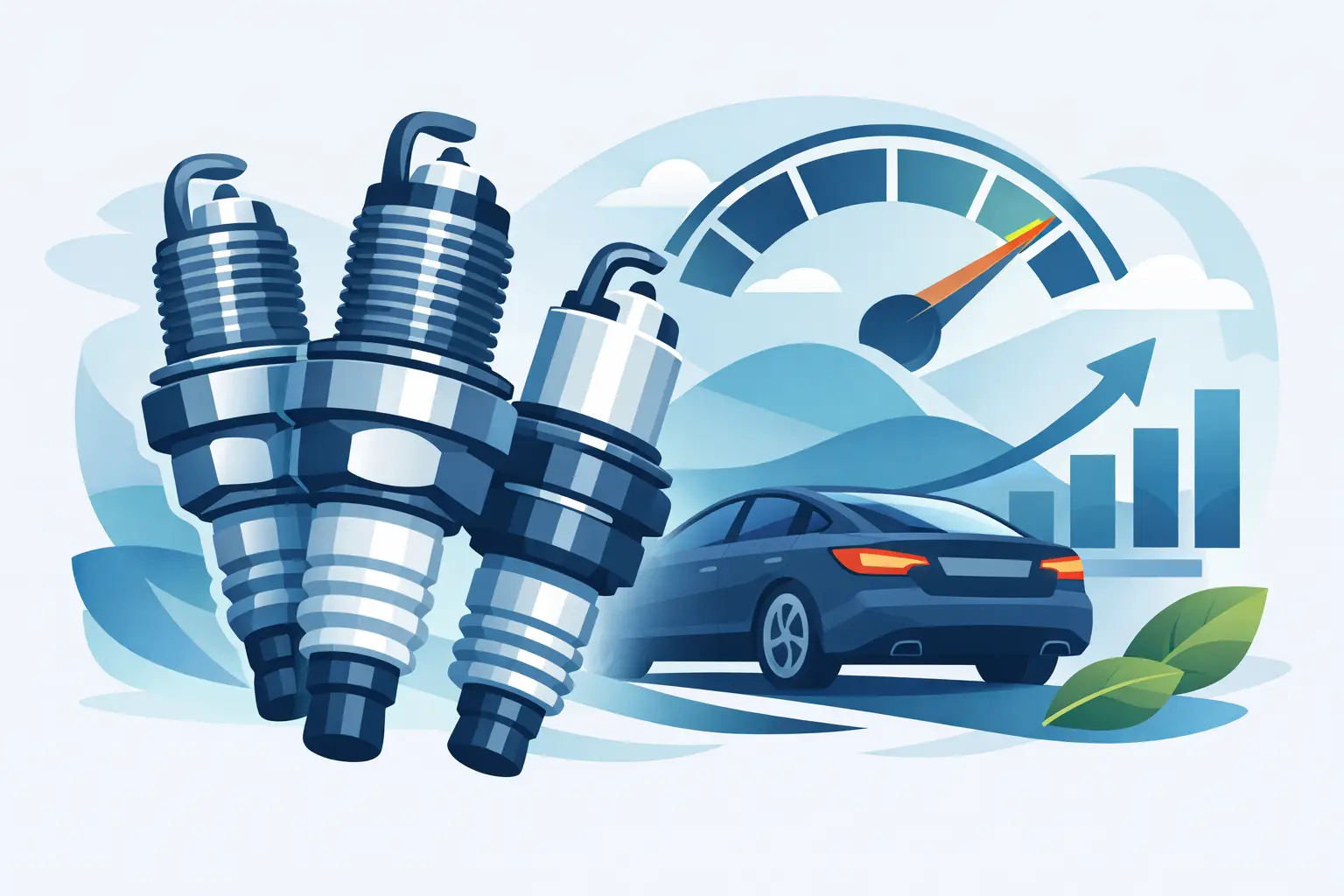
A worn plug does not usually cause a dramatic fuel-economy collapse overnight. More often, it creates a slow loss of efficiency: longer cranking, a less crisp throttle response, occasional hesitation, and extra fuel used to maintain the same pace. The best spark plugs for mileage are not simply the most expensive plugs on the shelf. They are the plugs that match your engine’s factory ignition requirements, are correctly gapped, and are replaced before wear compromises combustion.
For cars, trucks, Jeeps, and SUVs, spark plug selection is a fitment decision first. Material matters, but only after you have confirmed the correct plug design, heat range, reach, seat style, and terminal type for the vehicle.
Why Spark Plugs Affect Fuel Mileage
Every combustion cycle depends on a reliable spark delivered at the right moment. When a plug’s center and ground electrodes wear, the gap grows. The ignition system must work harder to jump that larger gap, and the spark can become inconsistent under load. That does not always trigger a check-engine light immediately, but it can make the engine less efficient.
A healthy ignition system supports a clean, repeatable burn of the air-fuel mixture. That means smoother idle quality, dependable starts, and less unburned fuel moving through the exhaust system. It also helps protect related components such as ignition coils, oxygen sensors, and catalytic converters from the consequences of repeated misfires.
Spark plugs will not transform a mechanically tired engine into a fuel sipper. If mileage has dropped because of low tire pressure, dragging brakes, a dirty air filter, a failing oxygen sensor, fuel-trim issues, or aggressive driving, new plugs alone will not solve it. But if the installed plugs are overdue, contaminated, damaged, or incorrectly specified, replacing them can restore the efficiency the engine was designed to deliver.
Best Spark Plugs for Mileage by Material
The right material depends on what your vehicle manufacturer calls for and how long you expect the plugs to remain in service. In many late-model engines, the factory specification already points toward a platinum or iridium design for a reason.
Copper plugs
Copper-core plugs conduct heat well and remain a practical choice for certain older engines, performance applications, and vehicles specifically designed around conventional plugs. Their larger electrodes wear faster than precious-metal alternatives, so replacement intervals are generally shorter.
For mileage, copper plugs are a good choice only when they are the correct OE-style specification. Installing a budget copper plug in an engine designed for long-life iridium plugs may save money at checkout, but it can shorten service life and create avoidable maintenance work.
Single platinum plugs
Platinum plugs use a platinum pad on the center electrode to slow wear. They typically provide a longer service interval than copper and can be an appropriate replacement in many distributorless ignition systems. They are often a sensible middle ground for drivers who want dependable everyday performance without stepping outside the vehicle’s intended plug design.
Double platinum plugs
Double platinum designs place platinum on both the center and ground electrodes. They are commonly used in waste-spark ignition systems, where spark polarity can alternate and wear both electrodes. If your engine was built for double platinum plugs, switching to a single-platinum design can reduce plug life and may affect long-term consistency.
Iridium plugs
Iridium plugs use an extremely durable fine-wire center electrode. Their smaller firing tip needs less voltage to produce a consistent spark, while the material resists erosion over a long service interval. For many modern cars, crossovers, trucks, and SUVs, iridium is the strongest choice for maintaining mileage over time because it stays closer to its intended gap for longer.
That does not mean every engine benefits from an upgrade to iridium. A plug is part of a complete ignition design. When the owner’s manual or underhood emissions label specifies a particular plug type, follow that specification rather than assuming a premium material automatically improves fuel economy.
Fitment Matters More Than a Premium Label
A spark plug can look nearly identical to the correct part and still be wrong for the engine. Thread diameter, reach, electrode projection, seat type, resistor design, and heat range all matter. An incorrect reach can leave the spark too far from the combustion chamber or extend the plug too far into it. Either condition can hurt performance, and in serious cases, cause damage.
Heat range is especially easy to misunderstand. A colder plug transfers heat away from the firing tip faster and is often used in high-load or modified applications. A hotter plug retains more heat. Neither is universally better for mileage. The correct heat range is the one engineered for your engine, operating conditions, and state of tune.
Gap is equally critical. Some replacement plugs arrive pre-gapped, but pre-gapped does not mean automatically correct for every application. Check the specification before installation. Fine-wire platinum and iridium plugs should be handled carefully because forcing a gap adjustment against the center electrode can damage the delicate firing tip. If a plug is out of specification or has been dropped, replacement is often the smarter move.
When New Plugs Can Help Restore MPG
Fuel-mileage gains from new spark plugs are usually restorative, not magical. If the current set is functioning normally and remains within its scheduled service life, a new set may produce little measurable change at the pump. If the old plugs are worn or misfiring, the difference can be noticeable.
Watch for hard starts, rough idle, hesitation during acceleration, reduced towing confidence, intermittent misfire codes, or a mileage drop with no clear driving-pattern change. These symptoms can also point to coils, injectors, vacuum leaks, or fuel-system problems, so spark plugs should be inspected as part of a broader diagnosis.
When plugs are removed, inspect their condition. Dry black soot may suggest a rich mixture or excessive idling. Oily deposits can indicate an oil-control issue. A chalky white appearance, blistering, or melted electrodes can point to overheating or an incorrect heat range. Replacing plugs without addressing the source of unusual deposits only delays the next problem.
Installation Details That Protect Efficiency
Use the correct torque specification. Under-tightening can prevent proper heat transfer and allow combustion gases to leak past the seat. Over-tightening can damage threads, distort the plug, or crack the insulator. This is particularly important with aluminum cylinder heads.
Install plugs in a cool engine, keep dirt out of the plug wells, and inspect ignition boots or coil-on-plug assemblies during the job. A torn boot, corrosion in a coil connector, or oil in a plug well can undermine the benefit of fresh plugs. Dielectric grease belongs inside the boot where specified, not on the plug’s firing end or threads.
Anti-seize is another detail that depends on the plug maker’s instructions. Many modern plugs use plated threads and are designed to be installed dry. Adding lubricant changes torque values and can lead to over-tightening. Follow the plug and vehicle specifications instead of relying on a one-size-fits-all installation habit.
Choosing Spark Plugs for Daily Drivers and Work Vehicles
For a stock daily driver, choose the OE-specified plug material and design, then replace it at the recommended interval. That is usually the clearest route to stable fuel economy and predictable maintenance costs. For a truck or SUV used for towing, hauling, off-road travel, or long highway miles, correct fitment becomes even more valuable because ignition demand rises under load.
Modified engines need more care. Forced induction, increased compression, tuning changes, and sustained heavy use can change plug requirements. A colder heat range may be appropriate, but it should be selected based on the build and tune rather than as a generic performance upgrade. The best result is an ignition setup that matches the engine’s actual operating conditions.
Reliable mileage starts with precise maintenance. Select plugs built for your vehicle, install them to specification, and give the rest of the ignition and fuel system the same attention. That is practical automotive technology at its best: every component doing its job cleanly, efficiently, and with purpose.