
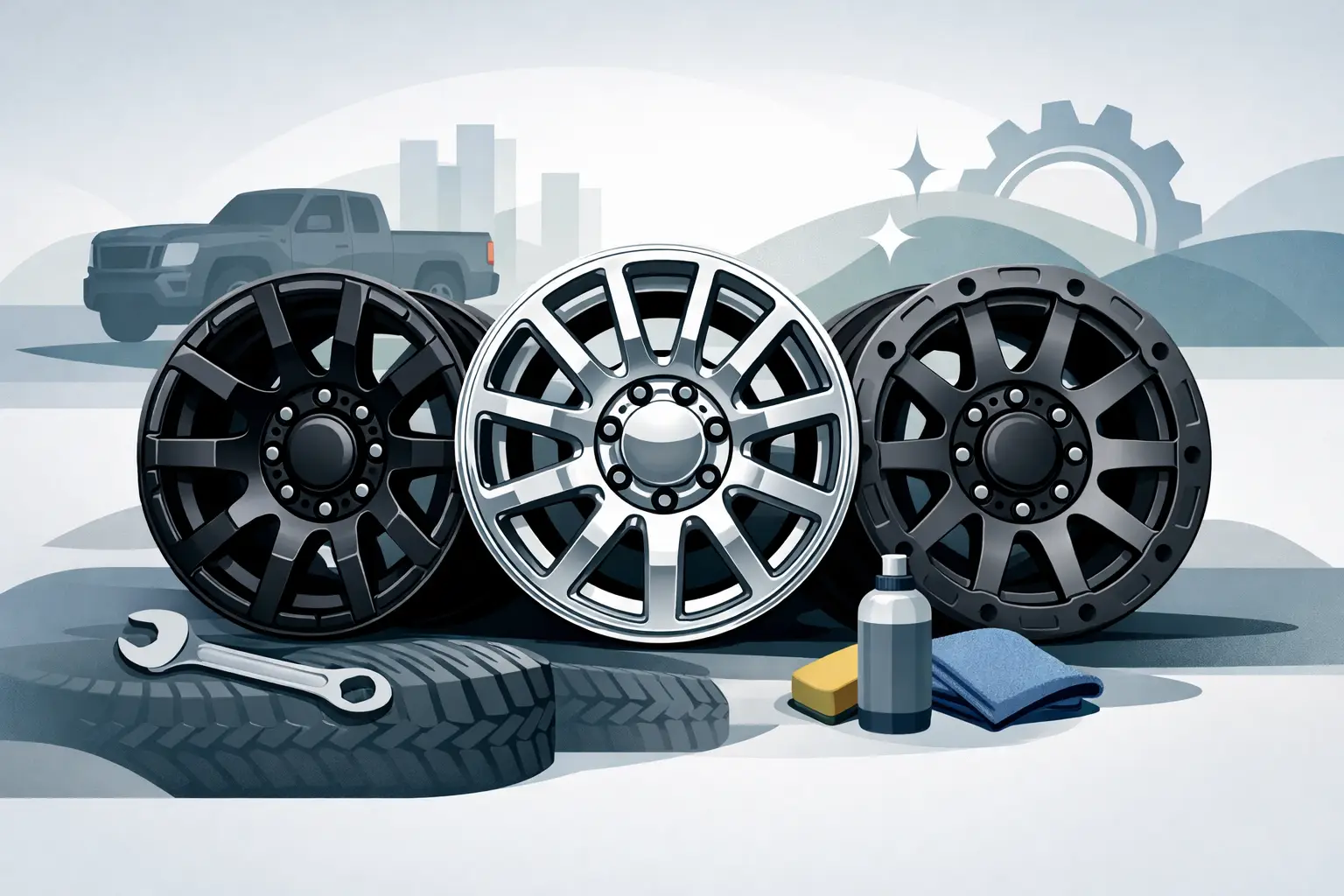
A truck wheel finish has to do more than look right under the fender. It faces brake dust, road salt, loose gravel, trailer duty, curb contact, and the occasional trail washout. The best truck wheel finishes balance the look you want with the maintenance you will realistically perform and the conditions your truck sees every week.
For a show-focused street truck, a bright polished surface may be worth the extra care. For a work truck that runs through winter or visits job sites, a durable powder-coated finish can make more sense. The right choice comes down to material, coating process, wheel design, and how the truck is used.
What a Wheel Finish Actually Protects
A wheel finish is not just a color treatment. It is the outer defense between the wheel and moisture, chemicals, UV exposure, and abrasion. On alloy wheels, that protection matters because bare aluminum oxidizes. On steel wheels, it is essential because exposed metal can rust quickly.
Finish quality also affects how a wheel ages. A deep black wheel with a weak clear coat can turn dull or develop peeling around the lug holes. Chrome that has been damaged by road debris can allow corrosion beneath the plating. A machined face can lose its crisp contrast when clear coat failure begins.
This is why price alone does not tell the full story. Look at the wheel’s construction, coating or plating process, warranty coverage, and whether the finish suits the environment. A wheel that is perfect for dry-weather cruising may not be the best fit for a northern daily driver or an off-road rig.
Best Truck Wheel Finishes by Use
Gloss Black: Clean, Aggressive, and Versatile
Gloss black is one of the most popular finishes for trucks, Jeeps, and SUVs because it works with nearly every body color. It gives stock-height trucks a sharper appearance and looks equally at home with all-terrain tires, lift kits, and blackout trim.
The trade-off is upkeep. Gloss black shows dried water spots, fine scratches, mud residue, and brake dust more readily than satin or matte finishes. It also needs careful washing. Use a pH-balanced wheel cleaner and soft brushes, especially if the wheel has a clear-coated painted surface. Avoid stiff brushes that can leave visible swirls.
Choose gloss black when appearance is a priority and you do not mind regular cleaning. It is a strong street and weekend-truck option, but a satin finish may be more forgiving for frequent off-road use.
Satin and Matte Black: Built for a Harder-Working Look
Satin black offers a low-sheen appearance that hides light dust and small imperfections better than gloss. Matte black goes further, creating a flat, purposeful finish that fits overland builds, work trucks, and trail-focused vehicles.
These finishes are easier to live with visually, but they are not maintenance-free. Matte and satin coatings should not be polished or waxed with traditional products because they can create uneven shiny spots. Use cleaners labeled safe for matte finishes, rinse thoroughly, and do not let harsh chemical products dry on the wheel.
For trucks that see gravel roads, construction sites, hunting land, or regular mud, satin black is often the practical middle ground. It has a refined, modern look without requiring the constant attention of high-gloss paint.
Machined with Clear Coat: Factory-Inspired Contrast
Machined wheels feature exposed, precision-cut aluminum on the face or spoke surfaces, often paired with painted pockets. The result is a clean contrast that complements both OEM-style upgrades and premium custom builds. This finish can make a large wheel look more detailed without relying on excessive shine.
The key consideration is the clear coat. The machined aluminum is normally protected by a transparent top layer, and that layer needs to remain intact. Once it chips or lifts, moisture can reach the aluminum underneath and create cloudy white oxidation. Salt, acidic cleaners, and neglected curb damage can accelerate the process.
Machined wheels are best for owners who want a bright, technical appearance and are willing to clean them consistently. They are especially effective on trucks with chrome accents, polished exhaust tips, or silver body trim, where the finish can tie the build together without overpowering it.
Chrome: Maximum Brightness, Maximum Commitment
Chrome delivers a high-impact look that remains a natural match for classic pickups, luxury trucks, and show-oriented builds. A quality chrome wheel reflects light like no painted finish can, and it pairs well with stainless steel accessories and bright exterior trim.
But chrome demands attention. Brake dust, winter salt, and moisture trapped around the valve stem, lug seats, or center cap can lead to pitting and corrosion. Once chrome begins to peel or bubble, repair is rarely simple or inexpensive. It is usually better to prevent damage through frequent washing and drying.
Chrome is most practical for fair-weather trucks, garage-kept vehicles, and owners who regularly detail their wheels. If your truck is driven through salted roads all winter, a chrome look may be better achieved with a durable painted or machined alternative.
Polished Aluminum: A Premium Finish That Needs Maintenance
Polished aluminum has depth and warmth that can make a truck look custom without appearing overly flashy. It is common on high-end forged wheels and certain classic-style designs. Unlike chrome, polished aluminum is actual metal brought to a shine, so minor dullness and light surface marks can sometimes be corrected.
That advantage comes with responsibility. Uncoated polished aluminum oxidizes and needs routine polishing to maintain its luster. Clear-coated polished wheels require gentler care, since aggressive metal polish can damage the protective layer. Before choosing cleaning products, confirm whether the wheel is bare polished aluminum or clear-coated.
This finish is a strong choice for enthusiasts who enjoy detailing and want a handcrafted appearance. It is less ideal for a truck that spends every day in wet, salted, or heavily industrial conditions.
Powder-Coated Color: Durable and Personal
Powder coating applies dry color particles electrostatically before curing them at high temperature. When the process is done correctly, it produces a thick, durable coating that resists chips and corrosion better than many conventional paint applications.
Black remains the most common choice, but bronze, gunmetal, gray, white, and body-color matched finishes can transform a truck’s stance. Bronze works especially well with earth-tone overland builds, while gunmetal provides a more understated alternative to black. White makes a bold motorsports statement but shows dirt quickly.
Powder coating is often the best choice for owners who need durability and a specific color. The quality of the preparation matters as much as the color itself. Poor surface prep can cause adhesion problems, while excessive coating thickness can affect tight areas around center bores and lug seats.
How to Choose the Best Truck Wheel Finish
Start with your operating conditions. A daily-driven truck in Arizona handles UV and dust differently than a truck in Michigan that sees road salt for months. If winter corrosion is a concern, prioritize a well-applied powder coat, quality painted finish, or a wheel with a proven corrosion-resistant clear coat. Wash wheels promptly after exposure to salt brine, even if they do not look dirty.
Next, consider your maintenance habits. Gloss black and chrome reward frequent cleaning. Satin black conceals more between washes. Polished aluminum asks for hands-on care, while machined wheels need protection from clear coat damage. There is no wrong answer, but there is a finish that fits your schedule better.
Wheel design matters too. Deep lips, simulated beadlock rings, intricate spokes, and exposed hardware create more areas where mud and brake dust can collect. A simple multi-spoke or split-spoke wheel is easier to clean than a highly detailed design. For a work truck, that difference becomes noticeable fast.
Finally, match the finish to the rest of the truck. Black wheels create a cohesive look with dark grilles, step bars, and tinted trim. Machined or polished surfaces connect naturally with stainless steel exhaust components and bright accents. At FORTLUFT, the best upgrades combine fitment, material quality, and a finish that makes the vehicle look intentionally built.
Protect the Finish You Choose
Regardless of finish, wash wheels when they are cool and avoid strong acidic cleaners unless the wheel manufacturer specifically approves them. Clean one wheel at a time, use dedicated soft brushes, and dry the surface to prevent mineral spots. Do not use tire shine on wheel faces, and keep abrasive polishes away from matte, satin, and clear-coated surfaces.
Inspect the lug area, outer lip, and valve stem opening during routine washes. Small chips are easier to address before moisture gets underneath the coating. If you change tires often, ask the installer to use protective tools and take care around the wheel face. Mounting damage can ruin even the toughest finish.
Choose the finish that suits the miles ahead, not just the parking-lot photo. A truck built to work deserves wheels that can take the work, and a truck built to stand out deserves details that stay sharp long after the first install.