
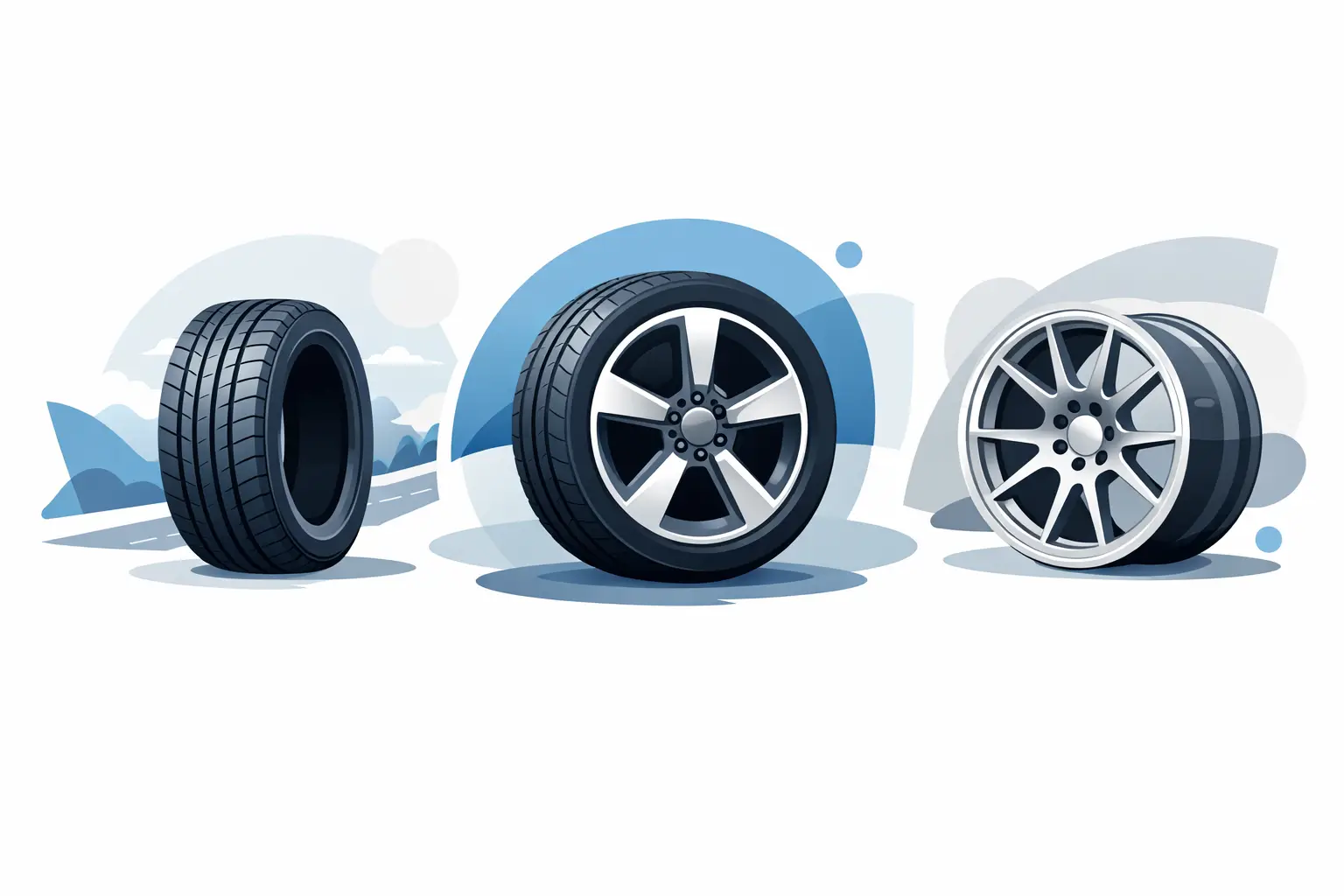
If you have ever ordered parts and caught yourself using tire, wheel, and rim like they mean the same thing, you are not alone. The difference between tires wheels and rims matters because the wrong term can lead to the wrong part, bad fitment, wasted money, or a setup that simply does not perform the way you expect.
In everyday conversation, plenty of drivers say “rims” when they really mean the whole wheel assembly. That is common, but when you are buying aftermarket parts, comparing sizes, or planning an upgrade for your car, truck, Jeep, or SUV, precision helps. These three parts work together, but they are not interchangeable.
What Is the Difference Between Tires, Wheels, and Rims?
The tire is the outer rubber component that contacts the road. It is responsible for grip, ride comfort, braking traction, wet-weather control, and part of the vehicle’s load support. When you read a size like 265/70R17, you are looking at tire sizing.
The wheel is the full metal structure the tire mounts onto. It bolts to the vehicle’s hub, supports the tire, and houses key mounting dimensions such as bolt pattern, offset, and center bore. In the aftermarket world, when you shop for a new set of alloy or steel pieces for appearance or performance, you are usually shopping for wheels.
The rim is one section of the wheel. More specifically, it is the outer edge of the wheel where the tire bead seats. So when someone says “I bought new rims,” they often mean wheels. Technically, though, the rim is only part of the wheel, not the entire assembly.
That distinction may sound minor, but it changes how you shop. You replace tires for tread wear, seasonal traction, or road damage. You replace or upgrade wheels for fitment, strength, weight, brake clearance, and style. A damaged rim may sometimes make the whole wheel unusable, but the rim itself is not a separate category in the way many people think.
Tires: The Part That Meets the Road
Tires do the hard work where the vehicle actually touches pavement, gravel, mud, or snow. They absorb small impacts, maintain traction, and help the suspension do its job. Their construction includes tread, sidewall, internal belts, and bead areas that lock onto the wheel rim.
When a tire wears out, the usual issue is tread depth, uneven wear, dry rot, punctures, or sidewall damage. In most cases, you do not need a new wheel just because you need new tires. The existing wheel can often be reused as long as it is straight, structurally sound, and matched to the new tire size.
Tire choice affects more than comfort. A highway tire, all-terrain tire, and mud-terrain tire can make the same vehicle feel completely different. Wider tires may improve grip in some conditions, but they can also increase road noise, reduce fuel economy, and create clearance issues if the wheel width and offset are not right.
For daily drivers, the best tire is usually the one that fits your actual use, not the most aggressive-looking option. For trucks and Jeeps, appearance matters, but so do load rating, sidewall strength, and how the tire works with your wheel setup.
Wheels: Structure, Fitment, and Style
The wheel is the metal backbone of the assembly. It carries the tire, mounts to the hub, and has to match the vehicle’s specifications. This is where fitment gets serious.
A wheel is defined by diameter, width, bolt pattern, offset, backspacing, center bore, and construction material. Change any of those, and you can affect handling, fender clearance, suspension clearance, and brake fitment. That is why a wheel upgrade is not just cosmetic, even though appearance is a big reason people make the change.
Alloy wheels are popular because they can reduce weight and offer sharper styling. Steel wheels are often chosen for durability, winter use, or work-truck practicality. Neither is automatically better in every case. It depends on the vehicle, the job, and how much value you place on weight, cost, finish, and appearance.
A larger wheel can create a more aggressive look and open up room for bigger brakes. The trade-off is that it usually requires a lower-profile tire, which can make the ride firmer and leave less rubber to absorb impacts. For some builds, that is exactly the point. For others, especially rough-road or off-road setups, more sidewall is the smarter choice.
Rims: The Most Misused Word in the Category
The rim is the outer portion of the wheel where the tire bead sits and seals. It is part of the wheel’s structure, but it is not the whole wheel. In technical terms, that is the cleanest answer.
Why does the word get used so loosely? Because in automotive culture, “rims” became shorthand for visible wheel upgrades. People are usually referring to the entire wheel because that is the part they see and choose for style. That casual use is not unusual, but if you are buying parts, it helps to know what you actually need.
If a shop says your rim is bent, they usually mean the wheel has damage at the outer edge. Depending on severity, the wheel may be repairable or may need replacement. If you are shopping online and search for rims, you are typically browsing wheels.
Why the Difference Between Tires Wheels and Rims Matters When Buying Parts
Terminology affects fitment, and fitment affects everything from safety to stance. If you tell a seller you need rims when you actually need tires, the conversation goes sideways fast. More importantly, if you choose a wheel without understanding diameter, width, and offset, your tire options can narrow quickly.
Take a common example. If you move from a 17-inch wheel to a 20-inch wheel, you need a tire with a matching inner diameter. A 17-inch tire will not mount on a 20-inch wheel. That sounds obvious, but sizing mistakes happen all the time when buyers focus on appearance first and specs second.
There is also the issue of load capacity. A heavy SUV or truck needs both tires and wheels rated for the application. A wheel that looks right but lacks the proper load rating is not a real upgrade. The same goes for tire construction. Design matters, but function comes first.
For aftermarket buyers, the smart approach is to treat the assembly as a system. Tire size, wheel dimensions, suspension setup, brake clearance, and intended use all need to agree with each other.
Common Situations and What You Actually Need
If your tread is worn but your metal wheel is fine, you need tires. If your vehicle has curb rash, a crack, a bend, or you want a different offset or finish, you are looking for wheels. If someone says the rim lip is damaged, that usually points to damage on the wheel itself.
If you want a more aggressive look on a truck or Jeep, you may need both new wheels and new tires to get the stance you want. A wider wheel may call for a wider tire. A more negative offset may push the wheel outward for a stronger visual presence, but it can also increase rubbing, road spray, and steering feel changes. Style has trade-offs.
If your goal is better handling on a street-driven car, a lighter wheel paired with the right performance tire can sharpen response. If your goal is off-road durability, a wheel built for abuse and a tire with stronger sidewalls may matter more than shaving weight.
The Fastest Way to Talk About These Parts Correctly
Use tire when you mean the rubber. Use wheel when you mean the full metal part that bolts to the hub. Use rim when you are specifically talking about the outer edge of that wheel.
That alone will make product searches cleaner and ordering easier. It also helps when comparing specs, asking about compatibility, or deciding whether you need a replacement part or a full visual upgrade.
At FORTLUFT, that kind of clarity matters because aftermarket parts are not just about replacing what wore out. They are about choosing components that fit right, perform right, and look right on the vehicle you actually drive.
The next time someone says “nice rims,” you will know what they probably mean and what the part actually is. That small bit of knowledge goes a long way when it is time to buy smarter, build cleaner, and make every detail count.