
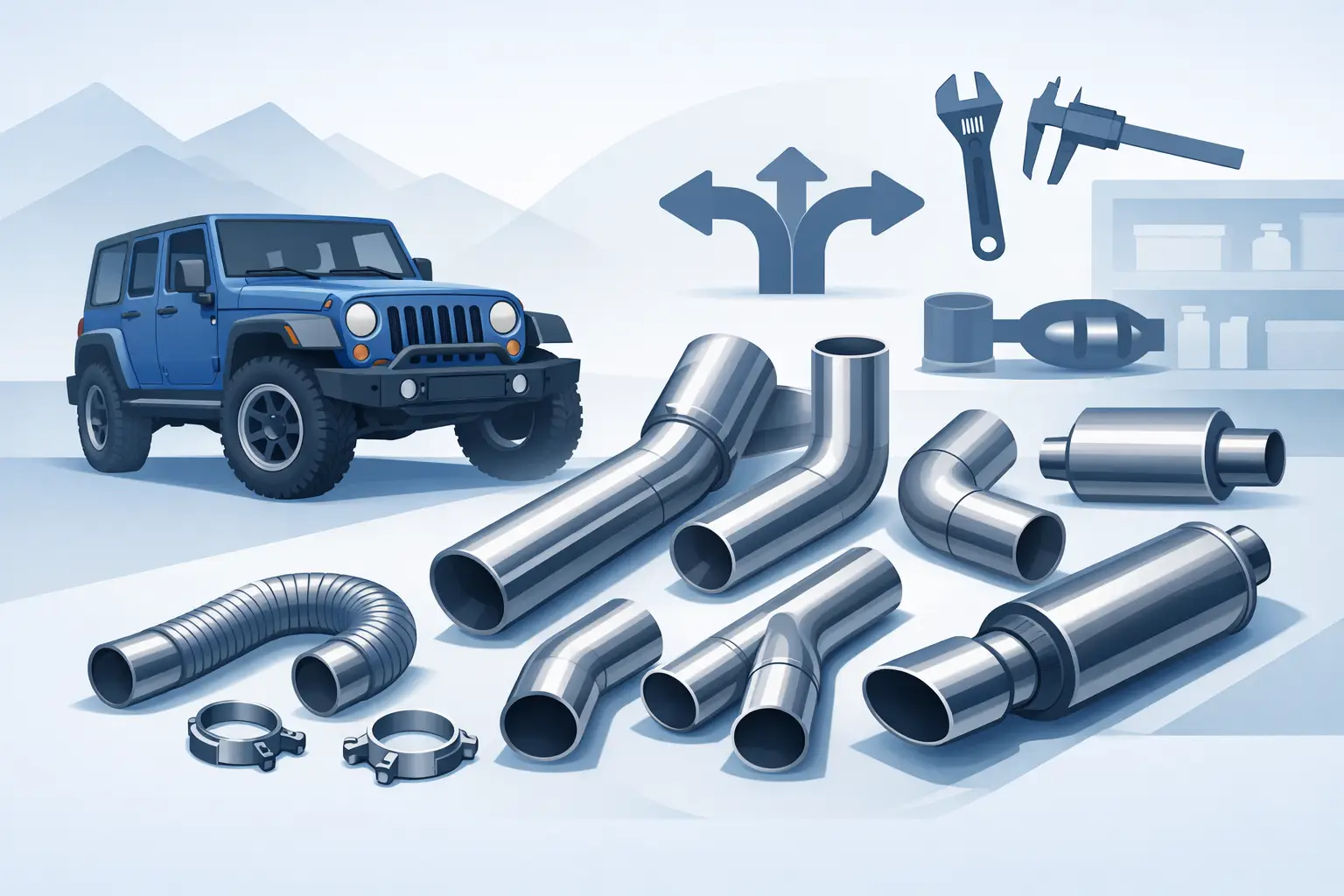
A Jeep that sounds wrong usually feels wrong too. If the exhaust note is tinny, the tubing hangs too low, or the pipe starts rusting after one hard winter, the problem often starts with the tubing itself. If you are figuring out how to choose Jeep exhaust tubing, the right answer comes down to fit, material, pipe diameter, and how you actually use the vehicle.
This is one of those parts categories where buying the biggest pipe or the cheapest steel can cost you twice. Exhaust tubing affects clearance, heat management, sound, durability, and, to a point, how efficiently your engine moves spent gases. On a Jeep, that matters even more because street driving, trail articulation, water crossings, road salt, and custom modifications all put more demand on the exhaust than a basic commuter build.
How to choose Jeep exhaust tubing for your build
The first decision is not material or finish. It is use case. A daily-driven Wrangler in a northern climate needs a different tubing setup than a trail-only TJ, an overland Gladiator, or a lifted Cherokee with custom suspension and tire clearance demands.
If your Jeep sees year-round road use, corrosion resistance should move to the top of the list. If it spends weekends off-road, routing and ground clearance become just as important as flow. If you are pairing tubing with a muffler, resonator, catalytic converter section, or new tip, the whole system has to work together. Good exhaust choices are rarely about one part in isolation.
Start with the Jeep’s current setup
Before choosing tubing, look at what is already under the vehicle. Measure the outside diameter of the existing pipe, check the routing around the axle and transfer case, and note whether you are replacing a damaged section or building a larger portion of the system. A stock replacement decision is different from a custom upgrade.
It also helps to know whether your engine is stock, lightly modified, or built for more output. A mostly stock Jeep does not automatically benefit from oversized tubing. In many cases, going too large slows exhaust gas velocity and changes the tone without delivering meaningful performance gains.
Pipe diameter matters more than most buyers think
Tubing diameter is where many purchases go off track. Bigger sounds better on paper, but the right size is the one that matches engine output and system design.
For many stock or mildly modified Jeep applications, a moderate diameter preserves good velocity and keeps the exhaust balanced. If you jump too far in size, you may gain a louder note but lose the crisp response and packaging flexibility that make a Jeep easy to live with. Larger tubing can also create fitment headaches around suspension components and frame rails.
If you are replacing one section, match the original size unless the rest of the exhaust has already been upgraded to support a different diameter. If you are building a full cat-back or custom system, keep the engine, wheelbase, and intended use in mind. A rock crawler with tight routing needs a different approach than a highway-focused Jeep build where straight flow matters more.
Material choice: aluminized steel vs stainless steel
When buyers ask how to choose Jeep exhaust tubing, material is usually the next question, and for good reason. The difference affects service life, appearance, and long-term value.
Aluminized steel is the budget-conscious option. It performs well for many replacement jobs and works for drivers in drier climates or Jeeps that are not exposed to much salt. It is practical, functional, and often enough for a straightforward repair.
Stainless steel is the premium move, especially if you want stronger corrosion resistance and a cleaner finish over time. For Jeeps that see wet roads, snow, off-road mud, or seasonal storage in less-than-ideal conditions, stainless pays off. It is also the better fit for buyers who care about visual quality under the vehicle, not just basic function. That balance of durability and appearance is exactly why higher-grade exhaust components stand out – technology as an art form only works when the part performs as well as it looks.
Not all stainless is the same, of course. Some grades are more corrosion-resistant than others, so product specs matter. If longevity is the goal, do not just stop at the word stainless and assume every option performs equally.
Bent tubing vs straight sections
The shape of the tubing is just as important as the material. Straight sections are useful for custom fabrication, simple repairs, and controlled shop builds. But a Jeep’s underbody rarely rewards guesswork. Axle travel, skid plates, drivetrain movement, and uneven terrain mean routing has to be deliberate.
Mandrel-bent tubing is generally the better choice when preserving consistent diameter through the bend matters. Crush-bent tubing is often more affordable, but it narrows through the curve. That may be acceptable for a basic repair or low-demand setup, but it is less ideal when you want cleaner flow and a more refined system layout.
For off-road Jeeps, well-executed bends also help with clearance. A poorly routed exhaust section can become the lowest point under the vehicle, and that is exactly where trail damage starts.
Fitment is not just diameter
A lot of buyers focus on pipe size and forget the rest of fitment. On a Jeep, that can be expensive.
Length, bend angle, inlet and outlet compatibility, hanger location, and connection style all matter. So does the relationship between the tubing and surrounding parts. Lift kits, aftermarket control arms, larger axles, skid systems, and wheelbase differences can all change what fits cleanly.
If your Jeep has custom suspension or armor, take extra care. A tubing section that looks correct on paper may still interfere under compression or articulation. This is where experienced buyers slow down and measure twice. A few extra minutes checking routing can save hours of cutting and reworking later.
Think about sound before you buy
Exhaust tubing does not create sound by itself, but it shapes it. Diameter, length, bends, and material all influence how the final system sounds with your muffler and resonator.
If you want a deeper, more controlled tone, resist the urge to chase maximum pipe size. Many Jeep owners end up with more drone than they expected because the tubing and muffler combination was chosen for volume rather than balance. That gets old fast on highway drives.
For trail rigs and weekend builds, a more aggressive note may be part of the plan. That is fine, but sound should still be matched to use. A Jeep built for long-distance travel benefits from a cleaner, less fatiguing exhaust character. A short-wheelbase weekend toy gives you a little more freedom, but even then, the best systems sound intentional, not accidental.
Match the tubing to the rest of the exhaust
Tubing should never be treated like a standalone commodity part. It has to match the rest of the system, from the catalytic converter section back to the muffler and tip.
If you are replacing only one damaged area, try to maintain consistency in size and material where possible. Mixing components can work, but it should be done with a clear reason. If one section is premium stainless and the next is lower-grade material, the weaker section will usually determine how the system ages.
Connection style matters too. Slip-fit, clamp-on, and weld-on options each have their place. Clamp-on solutions are convenient and serviceable. Welded joints can offer a cleaner, more permanent result when the fabrication is done well. The right choice depends on whether you want easy future service, a cleaner custom finish, or a straightforward repair.
Common mistakes to avoid
The most common mistake is buying oversized tubing for a mostly stock Jeep. The second is underestimating corrosion exposure. The third is ignoring routing and clearance until the part is already on the shop floor.
Another mistake is choosing purely by price and not by material spec or build quality. Thin, low-quality tubing may look like a deal at checkout, but if it rattles, rusts, or needs rework, it was never a deal. For a category this exposed to heat, moisture, vibration, and impact, quality is not a cosmetic upgrade. It is basic protection against doing the job twice.
How to choose Jeep exhaust tubing with confidence
If you want to make the right call, keep the decision simple. Match the tubing diameter to your engine and current exhaust design. Choose material based on climate, driving conditions, and how long you want the system to last. Prioritize bend quality and routing if the Jeep sees trail use. And never treat fitment as a one-number question.
For many buyers, the smart move is premium tubing in the correct size rather than oversized tubing in a lower grade. That gives you better durability, cleaner appearance, and a system that feels engineered instead of improvised. For replacement work or custom builds alike, that is usually where the best value lives.
A good Jeep exhaust setup should do more than move gases out of the engine. It should fit right, last through real use, and look like it belongs there.