
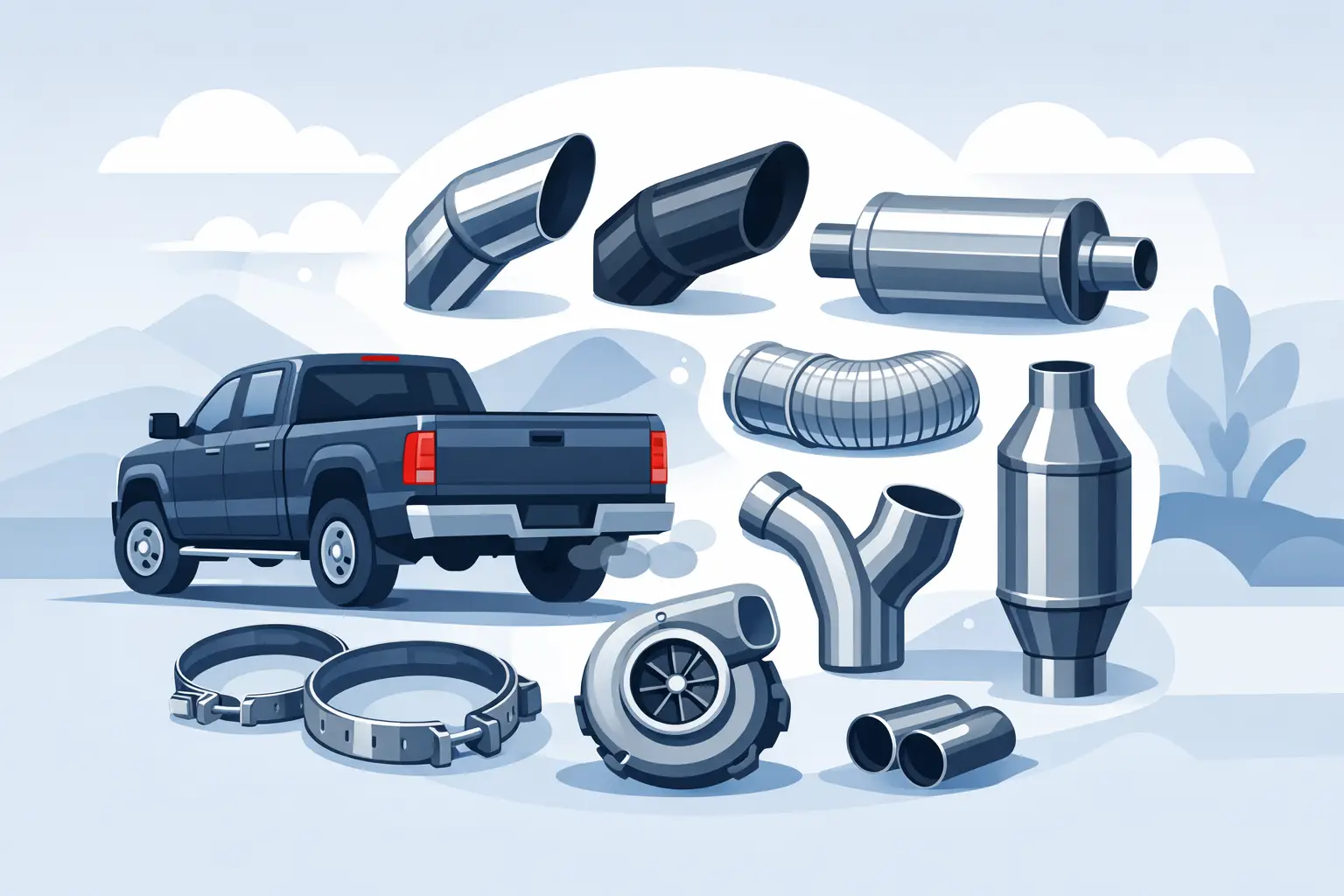
A truck exhaust system takes more abuse than most owners realize. Road salt, trailer duty, trail impacts, heat cycles, and vibration can turn a small leak, loose hanger, or tired tip into a bigger repair. The top exhaust accessories for trucks do more than change the look at the rear bumper. They help you finish an installation correctly, protect key components, and build an exhaust setup that fits the way your truck works.
For a daily-driven pickup, reliable fitment and corrosion resistance usually matter more than maximum volume. For an off-road truck or a custom build, clearance, outlet position, and visual finish may move higher on the list. The right choice starts with knowing which accessory solves a real need – not simply adding parts for appearance.
1. Stainless Steel Muffler Tips
A quality muffler tip is the most visible exhaust upgrade on a truck. It can clean up a plain factory outlet, complement new wheels, or give a custom exhaust a more finished appearance without replacing the entire system. Polished stainless steel delivers a classic, durable look, while black-coated and carbon fiber styles create a sharper, more modern finish.
Material should drive the decision. Stainless steel is a strong choice for trucks that see rain, snow, salted roads, or frequent washing because it resists corrosion better than basic plated steel. Carbon fiber tips can offer a distinctive premium appearance, but they should be selected with careful attention to exhaust heat and proper mounting. A tip that is too close to the bumper, too small for the pipe, or poorly secured can create more problems than it solves.
Measure the outside diameter of the existing tailpipe before ordering. Also consider the tip’s inlet, outlet, overall length, and whether a clamp-on or weld-on design fits your project. The best tip looks intentional from every angle and leaves enough clearance for suspension movement and heat.
2. Exhaust Band Clamps
When an exhaust connection needs to be secure without permanently welding the parts together, band clamps are often the smarter answer. They distribute clamping force around a wider section of pipe than many traditional U-bolt clamps. That can help create a cleaner seal and reduce pipe distortion, especially on stainless steel tubing.
Band clamps work well for slip-fit joints, muffler connections, resonator replacements, and serviceable exhaust sections. They are especially practical for truck owners who may need to remove a component later for repairs, upgrades, or access. Choose a clamp diameter that matches the connection precisely. Guessing by a quarter inch can leave a joint loose or make installation unnecessarily difficult.
Not every connection is a candidate for a clamp. A damaged pipe end, a badly corroded section, or a joint under unusual stress may require repair or welding. But for clean, correctly sized exhaust components, a quality clamp provides a professional finish with less commitment than a welded joint.
3. Exhaust Reducers and Adapters
Truck exhaust projects rarely use one universal pipe diameter. A replacement muffler may have a different inlet size than the original tubing. A custom tailpipe may need to transition to a larger outlet. That is where reducers and adapters earn their place.
A reducer joins two different pipe diameters, while an adapter can address differences in connection style, length, or pipe configuration. The goal is a secure transition with minimal disruption to exhaust flow. Properly selected parts prevent the rushed, improvised fitment that often leads to leaks, rattles, or pipes that sit crooked under the truck.
Keep the application realistic. Moving to a substantially larger pipe does not automatically add useful performance on a stock engine. Oversizing can affect tone, packaging, and low-speed response depending on the truck and overall system design. Match the adapter to the existing exhaust, the new component, and the purpose of the build.
4. Exhaust Hangers and Rubber Isolators
An exhaust system is designed to move slightly as the drivetrain shifts and the pipes expand with heat. Hangers and rubber isolators control that movement while keeping metal components from contacting the frame, axle, body, or suspension. When they wear out, the first sign may be an irritating rattle. Left alone, that rattle can become a cracked pipe, damaged muffler, or melted nearby component.
Inspect hangers whenever you replace a muffler, tailpipe, or catalytic converter-related component. Look for cracked rubber, stretched mounting holes, broken metal rods, and shiny marks where the exhaust has been rubbing another surface. A truck used for towing or rough-road travel places extra demand on these parts.
The correct hanger maintains clearance throughout suspension travel. This is particularly important with lifted trucks, aftermarket bumpers, oversized tires, and modified rear suspensions. A clean exhaust installation should look controlled, not pulled tight or hanging low.
5. Exhaust Gaskets and Flange Hardware
Flanged exhaust connections rely on more than bolts. The gasket between the mating surfaces is what helps contain exhaust pressure and keeps hot gases from escaping. Reusing an old, crushed gasket after a repair is a common shortcut that can produce a ticking leak almost immediately.
Choose the gasket style that matches the flange design, pipe diameter, and temperature demands of the application. Multi-layer metal, composite, and high-temperature materials all have different uses. The flange surfaces also need to be clean and reasonably flat. Even an excellent gasket cannot fully compensate for a warped flange or severely rusted hardware.
Use appropriate replacement hardware when the existing bolts, nuts, or springs are corroded. Heat and road exposure can make exhaust fasteners difficult to service, so replacing questionable hardware during the job is usually less expensive than revisiting the repair later.
6. Flex Pipes and Flex Sections
A flex section absorbs engine and drivetrain movement that would otherwise transfer stress into rigid exhaust tubing. On many trucks, it is a quiet but essential component. Without enough flexibility in the right location, repeated vibration can fatigue welds, crack pipes, and create leaks near manifolds or converters.
Flex pipes are not a universal substitute for damaged exhaust tubing. They need to be installed in a location that supports the system’s design and maintains sufficient clearance from heat-sensitive components. Length, diameter, braid construction, and end configuration all matter. A poorly positioned flex section may sag, fray, or contact the chassis.
If your truck has a failed factory flex section, match the original dimensions as closely as possible unless a broader exhaust modification calls for a different layout. This is a functional repair item, but the payoff is noticeable: fewer vibrations, better durability, and a more refined exhaust feel.
7. Heat Shields and Exhaust Insulation
Exhaust heat is part of every truck’s operating environment, but uncontrolled heat can damage wiring, brake lines, fuel-system components, cargo-area materials, and nearby body panels. Heat shields and insulation products help manage that exposure where pipes run close to sensitive areas.
They are especially useful on custom exhaust routing, lifted trucks, towing applications, and builds with modified bumpers or underbody equipment. The right shield creates an air gap or reflective barrier between the exhaust and the component that needs protection. It should be mounted securely and kept clear of moving parts.
Do not use heat management products to hide an unsafe routing decision. If a pipe is touching a wiring harness, sitting against a fuel tank, or positioned too close to a plastic bumper, correct the routing first. Heat shielding is added protection, not a replacement for proper clearance.
Choosing Truck Exhaust Accessories That Fit the Job
Before purchasing, confirm your truck’s year, make, model, engine, cab and bed configuration, and existing exhaust diameter. Those details can change pipe length, hanger placement, outlet location, and component compatibility. Measure when possible, particularly for universal tips, clamps, reducers, and flex sections.
Then think about material and use. Stainless steel components make sense for long-term corrosion resistance and visible finish. Nonmagnetic stainless exhaust pipes can be a strong option where durability and a clean custom appearance both matter. For work trucks, prioritize dependable mounting and serviceable joints. For show-focused or enthusiast builds, carry that same attention to fitment into the finish, outlet style, and alignment.
FORTLUFT approaches truck parts with that balance in mind: technology as an art form, backed by practical materials and clear application choices. Start with the accessory that solves your immediate exhaust need, install it with correct measurements and clearance, and let the finished system look as capable as the truck itself.