
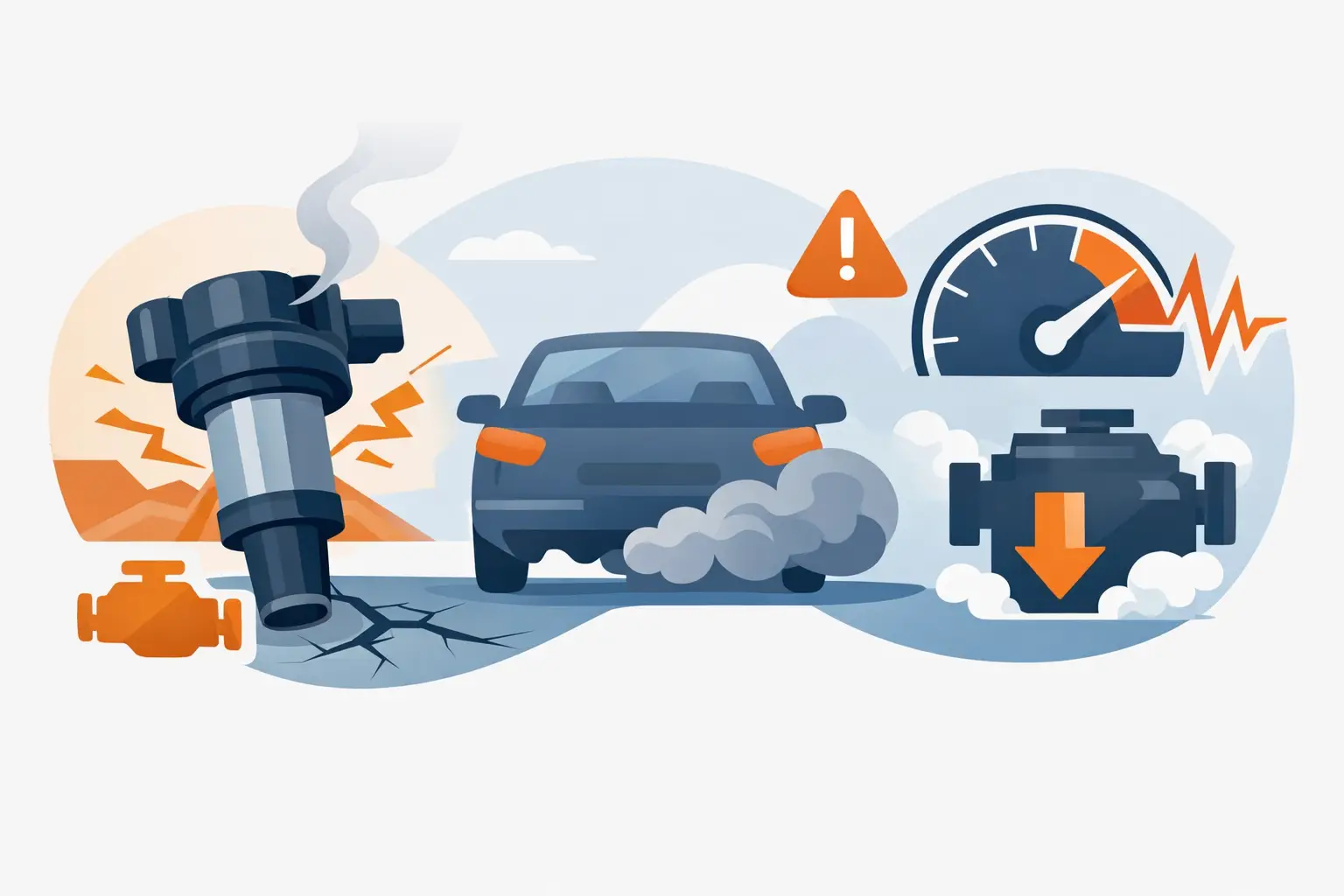
A rough idle at a stoplight, a flashing check engine light under acceleration, and a sudden drop in power can all point to one question: when do ignition coils fail? The answer is rarely tied to a single mileage number. Ignition coils usually fail after years of heat cycles, electrical stress, moisture exposure, or related ignition problems that force them to work harder than intended.
For drivers, shops, and fleet buyers, the key is recognizing the difference between a coil that is beginning to weaken and a problem elsewhere in the ignition or fuel system. Replacing the right part restores clean combustion, dependable starts, fuel economy, and the responsive power your vehicle was built to deliver.
When Do Ignition Coils Fail?
An ignition coil can fail at almost any mileage, but many original coils last well beyond 100,000 miles. That does not mean 100,000 miles is a service interval. Some coils fail much earlier because of engine heat, oil leaks, poor-quality spark plugs, damaged wiring, or repeated moisture intrusion. Others continue working reliably for the life of the vehicle.
Modern vehicles commonly use coil-on-plug ignition systems, with one coil mounted directly over each spark plug. Older vehicles may use a coil pack or a single conventional coil. Regardless of design, the job is the same: convert low battery voltage into the high voltage needed to create a spark at the plug.
That high-voltage work happens thousands of times per minute. Over time, insulation inside the coil can break down, internal windings can weaken, and the coil boot can develop carbon tracking. Heat is usually the biggest enemy. Coils mounted deep in a hot engine bay or directly on the cylinder head live in a harsher environment than most electrical components.
A coil may fail completely, causing a dead cylinder, or it may work acceptably at idle and break down only under load. That second scenario is why some vehicles feel normal on a short drive but stumble when climbing a grade, towing, or accelerating onto the highway.
The Most Common Signs of a Failing Ignition Coil
A failing coil does not always produce one obvious symptom. The vehicle may start and drive, yet feel noticeably less refined. Pay attention when a new issue appears consistently, especially during acceleration or in wet weather.
Common warning signs include:
- A check engine light with a misfire code, often P0300 for a random misfire or P0301 through P0308 for a specific cylinder
- Rough idle, shaking, hesitation, or a noticeable loss of power
- Hard starting, extended cranking, or an intermittent no-start condition
- Poor fuel economy caused by incomplete combustion
- Backfiring through the intake or exhaust, sometimes accompanied by a raw fuel smell
- A flashing check engine light when the engine is under load
A flashing check engine light deserves immediate attention. It typically means the engine is misfiring severely enough that unburned fuel may overheat and damage the catalytic converter. Pull over when safe, avoid hard acceleration, and diagnose the issue before continuing to drive.
Why the Symptoms Can Come and Go
Electrical faults can be temperature-sensitive. A marginal coil may perform normally when cold, then misfire after the engine reaches operating temperature. It can also fail only when cylinder pressure rises under acceleration, because the spark needs more voltage to jump the plug gap under load.
Moisture can create a similar pattern. Rain, car washes, or humid conditions may expose a cracked coil housing or compromised boot. If the problem appears only after wet weather, inspect the coil wells for water, damaged seals, and signs of arcing.
What Causes Ignition Coils to Wear Out Early?
Coils are wear items in practice, even though they are not normally replaced on a scheduled maintenance basis. The most reliable way to extend their service life is to address the conditions around them.
Worn spark plugs are one of the most common contributors. As a plug electrode wears, the gap grows larger. A larger gap requires more voltage to fire, increasing the electrical demand on the coil. If plugs are overdue, a new coil may be forced into the same high-stress conditions that damaged the old one.
Oil or coolant leaking into a spark plug well is another major concern. A leaking valve cover gasket, tube seal, or cooling-system component can contaminate the boot and create an electrical path outside the spark plug. Carbon tracking – thin dark lines on the boot or porcelain – shows that spark energy has been escaping where it should not.
Heat, vibration, corroded electrical connectors, rodent-damaged wiring, and incorrect aftermarket parts can also shorten coil life. On modified vehicles, extreme underhood temperatures or an ignition setup that does not match the engine’s requirements can add further stress. Proper fitment is not just about installation. It affects connector security, coil seating, boot length, and long-term reliability.
Confirm the Coil Before Replacing It
A misfire code identifies the cylinder experiencing a combustion problem. It does not automatically prove the ignition coil is bad. The same code can be caused by a worn spark plug, faulty fuel injector, vacuum leak, low compression, intake gasket leak, wiring issue, or fuel delivery problem.
Start with the basics. Scan for diagnostic trouble codes and note whether the misfire is isolated to one cylinder or appears randomly across several cylinders. Inspect the affected spark plug and coil boot for oil, coolant, cracks, corrosion, or carbon tracking. Check the electrical connector for bent pins and verify that the harness is not rubbing against a hot or moving component.
For a coil-on-plug system, a practical diagnostic method is swapping the suspected coil with one from another cylinder. Clear the codes, then run the engine and rescan it. If the misfire moves with the coil, the coil is strongly indicated. If it remains on the original cylinder, continue testing the plug, injector, wiring, and mechanical condition of that cylinder.
This swap test is useful, but it is not a substitute for safe diagnosis. Do not unplug coils with the engine running or handle ignition components while the system is energized. Ignition voltage is high enough to cause injury. A multimeter, scan tool, service information, and the correct test procedure are better tools than guesswork.
Should You Replace One Ignition Coil or the Full Set?
If one coil has failed, replacing only that coil is often the most cost-effective repair. It makes particular sense when the remaining coils are relatively new, the vehicle has moderate mileage, and inspection shows no broad heat or contamination problem.
Replacing all coils can be reasonable when the vehicle has high mileage, several coils have failed within a short period, or labor overlap makes access difficult. It may also be a practical choice for a work truck, SUV, or Jeep where downtime matters more than extracting every remaining mile from aging components.
There is a trade-off. A full set costs more upfront, and not every original coil needs replacement simply because one failed. However, mixing a new coil with several aging units can mean another repair later. For engines with known coil issues or difficult intake access, planning the job as a complete ignition refresh may save time.
If spark plugs are due, replace them at the same time and use the correct plug type and gap for the engine. A quality coil paired with worn or incorrectly gapped plugs is not a complete repair.
Protect the New Coils After Installation
Before installing a replacement coil, clean the plug well and correct any source of oil or water contamination. Verify that the spark plug is in good condition, torqued correctly, and properly gapped when the application uses a gap-adjustable plug. Apply dielectric grease only where the vehicle manufacturer specifies it, typically inside the coil boot to support sealing and future removal. Do not coat electrical terminals unless the product and application call for it.
Seat the coil fully over the spark plug, secure the connector until it clicks, and route wiring away from sharp edges and exhaust heat. After installation, clear codes and confirm that the engine runs smoothly through idle, acceleration, and normal operating temperature.
For dependable replacement parts, choose coils built for the vehicle’s exact year, make, model, engine, and ignition configuration. FORTLUFT customers who verify fitment before ordering are better positioned to make a repair that looks clean, performs correctly, and holds up to real-world driving.
A coil failure can feel sudden, but the evidence is usually there: a misfire pattern, a stressed spark plug, contamination in the plug well, or a component that breaks down under heat. Address the cause along with the coil, and your next start, commute, tow, or trail run has a much better chance of being uneventful – exactly how dependable ignition should be.