
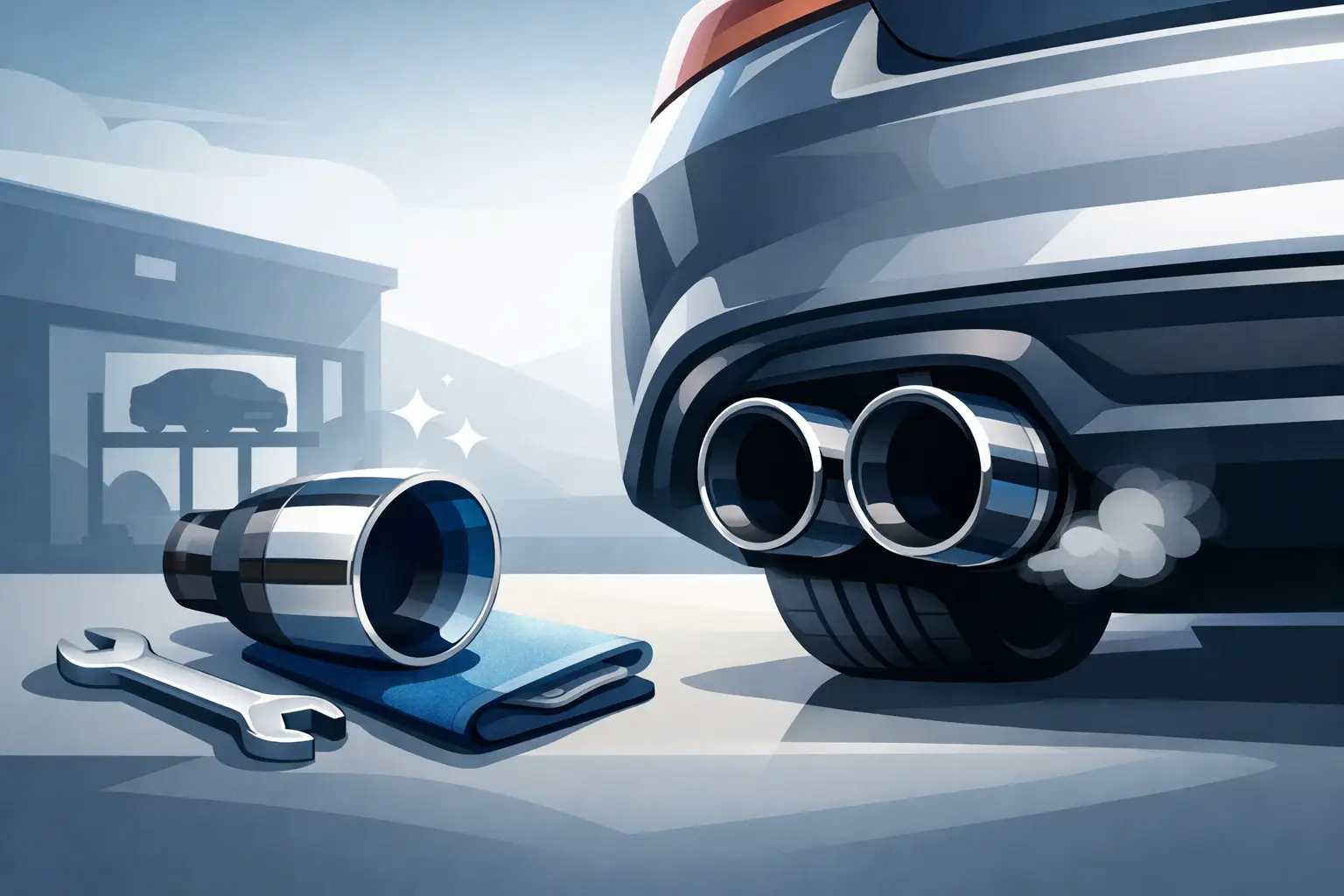
The rear of a vehicle tells on the rest of the build. You can have fresh wheels, clean paint, and a dialed suspension, but if the exhaust looks rusted, tucked too far in, or mismatched to the bumper cutout, the whole finish feels unfinished. If you’re deciding how to upgrade exhaust appearance, the best results come from treating it like a design and fitment project, not just a parts swap.
How to upgrade exhaust appearance without overdoing it
A better-looking exhaust is usually about proportion, material, and placement. Bigger is not automatically better, and louder is not the same as cleaner. On most cars, trucks, Jeeps, and SUVs, the visible part of the system is limited to the tip area, so that is where appearance upgrades make the biggest visual difference for the least effort.
Start by looking at what is actually hurting the current setup. Sometimes it is corrosion on the tailpipe. Sometimes the factory tip is too small for the bumper opening. On trucks and SUVs, it may sit too far under the body and disappear from view. On custom builds, the issue is often inconsistency – one part is polished, another is dull, and the overall look does not match the rest of the vehicle.
That is why the smartest upgrade path is not always a full exhaust replacement. If sound and flow are already where you want them, a well-chosen exhaust tip or visible pipe section can change the look fast and keep the budget under control.
Start with the finish people actually see
The finish is the first thing your eye picks up. Raw, oxidized steel reads as old, even if the vehicle is mechanically sound. Stainless steel immediately sharpens the rear profile because it reflects light cleanly and holds its appearance better over time. For daily drivers in mixed weather, stainless makes even more sense because road salt and moisture punish cheaper materials fast.
Polished stainless gives a bright, precise look that fits modern trucks, sport sedans, and SUVs well. If the rest of the vehicle uses black trim, dark wheels, or smoked lighting, a black exhaust tip can feel more integrated. Carbon fiber styles can work too, but only when the rest of the vehicle already has that design language. If not, they can look added-on rather than intentional.
This is where a lot of owners go wrong. They choose a finish because it looks good in a product photo, not because it matches the vehicle. Gloss black on a chrome-heavy truck may feel out of place. Mirror-polished stainless on a blackout build can be too bright. The right finish should connect with your wheels, badging, trim, and bumper details.
Size matters, but so does balance
When people think about how to upgrade exhaust appearance, tip diameter is usually the first decision. It should not be the only one. A tip that is too small can look lost. A tip that is too large can overwhelm the rear end and make the vehicle look less refined.
On a car with a subtle factory valance, a moderate increase in size usually looks best. On trucks and SUVs with larger rear proportions, a bigger tip often looks more natural because it fills the available visual space. Shape matters too. Round tips are versatile and clean. Angle-cut designs feel more performance-oriented. Rolled edges add a finished, premium look. Dual-wall construction can add visual depth and a stronger sense of quality.
The bumper opening should guide the choice. If the tip barely fills half the cutout, the setup can look undersized. If it crowds the edges, it starts to look forced. Aim for a fit that looks intentional, with enough clearance to avoid visual tension and enough presence to avoid disappearing.
Placement changes the whole rear view
A quality tip can still look wrong if placement is off. This is one of the most overlooked parts of the upgrade.
The tip should usually sit close enough to the bumper edge to be visible, but not so far out that it looks stuck on. Too recessed and the exhaust vanishes under the vehicle. Too extended and it starts to look awkward, especially on daily-driven vehicles where function and style need to stay in balance.
Height and angle matter just as much. If the tip hangs too low, it can make the rear suspension look sagged or unfinished. If it sits crooked relative to the bumper line, even a premium part will read as a poor install. Straight alignment and consistent spacing are what separate a clean exhaust appearance from a random accessory.
For dual-exit setups, symmetry is critical. Uneven projection from side to side is immediately noticeable. On single-exit systems, the tip should still feel centered within its visual area, even if the factory routing is offset.
How to upgrade exhaust appearance with the right tip style
The easiest visual upgrade is often a muffler tip, but the right style depends on the vehicle and the result you want.
A polished stainless tip works for almost everything because it looks clean, technical, and durable. It suits stock-height trucks, tuned imports, muscle cars, and family SUVs without trying too hard. Black tips create a lower-contrast look and can make the rear end feel more aggressive, especially when paired with black wheels or dark trim. Carbon fiber styles push further into performance-inspired territory and tend to work best on modern, design-forward builds.
Clamp-on options are attractive for fast installation, but fitment quality matters. A poorly fitted clamp-on tip that rotates or sits unevenly can hurt appearance more than help it. Weld-on styles usually offer a more custom, integrated result, though they require more effort and precision. The right answer depends on your budget, your tools, and how permanent you want the upgrade to be.
If your current tailpipe is heavily corroded or oddly shaped, replacing more than just the visible tip may be worth it. Fresh exhaust pipe sections can clean up the look under the bumper and create a better base for the finish piece. This is especially true when the existing pipe is too thin or damaged to support a premium tip properly.
Match the exhaust to the vehicle’s overall design
The best-looking exhaust upgrades do not call attention to themselves for the wrong reason. They make the entire vehicle look more complete.
That means considering the rest of the build. A lifted truck can carry a larger, bolder tip. A commuter sedan with stock wheels usually benefits from something more restrained. A Jeep or SUV built for utility still looks better with a corrosion-resistant, well-finished exhaust outlet, but extreme show styling may not suit the purpose of the vehicle.
Think in terms of consistency. If the vehicle has brushed metal accents, a bright polished tip may be a better match than glossy black. If the styling is modern and minimal, a simple round or angle-cut design often works better than anything with too much visual layering. Technology as an art form only works when the art has discipline.
Material quality shows up over time
An exhaust appearance upgrade should still look right six months from now. That is where material choice matters.
Cheap finishes can discolor, pit, or peel. Lower-grade metal can start looking tired after one winter or a stretch of humid weather. Stainless steel remains the strongest choice for owners who care about long-term appearance, not just day-one shine. Nonmagnetic stainless options are especially attractive when you want corrosion resistance with a more premium feel.
This matters for business buyers and installers too. A part that looks good on delivery but fades quickly creates avoidable dissatisfaction. Better materials reduce that risk and protect the visual investment.
Installation quality is part of the appearance
Even the right part can look wrong if the install is rushed. Crooked alignment, uneven clamp pressure, visible gaps, and poor cut lines all show. Exhaust upgrades live in a high-visibility zone, so details matter.
Before final tightening or welding, step back and view the tip from multiple angles. Check projection from the bumper, side-to-side level, and spacing around the valance. On trucks and SUVs, look at it from standing height and from a lower angle, since both views are common in the real world.
Also keep heat in mind. A tip placed too close to the bumper can create discoloration or damage over time. The visual goal is tight, clean fitment, not contact.
For buyers who want a cleaner result without trial and error, choosing quality stainless steel pipes and muffler tips from a design-aware aftermarket source like FORTLUFT can simplify the process. The right materials and style options make it easier to build a rear-end look that feels finished instead of improvised.
Know when subtle is the better upgrade
Not every vehicle needs oversized dual tips or an aggressive finish. Sometimes the strongest move is just replacing a tired factory outlet with a better-shaped, better-positioned stainless piece.
That kind of restraint tends to age well. It keeps the vehicle looking intentional, protects resale appeal, and avoids the trend-chasing look that can date a build quickly. If you use your vehicle every day, that balance matters.
The best exhaust appearance upgrades do one thing very well: they make the vehicle look complete. Choose the finish that fits the trim, the size that fits the bumper, and the placement that fits the body lines, and the rear view starts looking like the rest of the build finally caught up.