
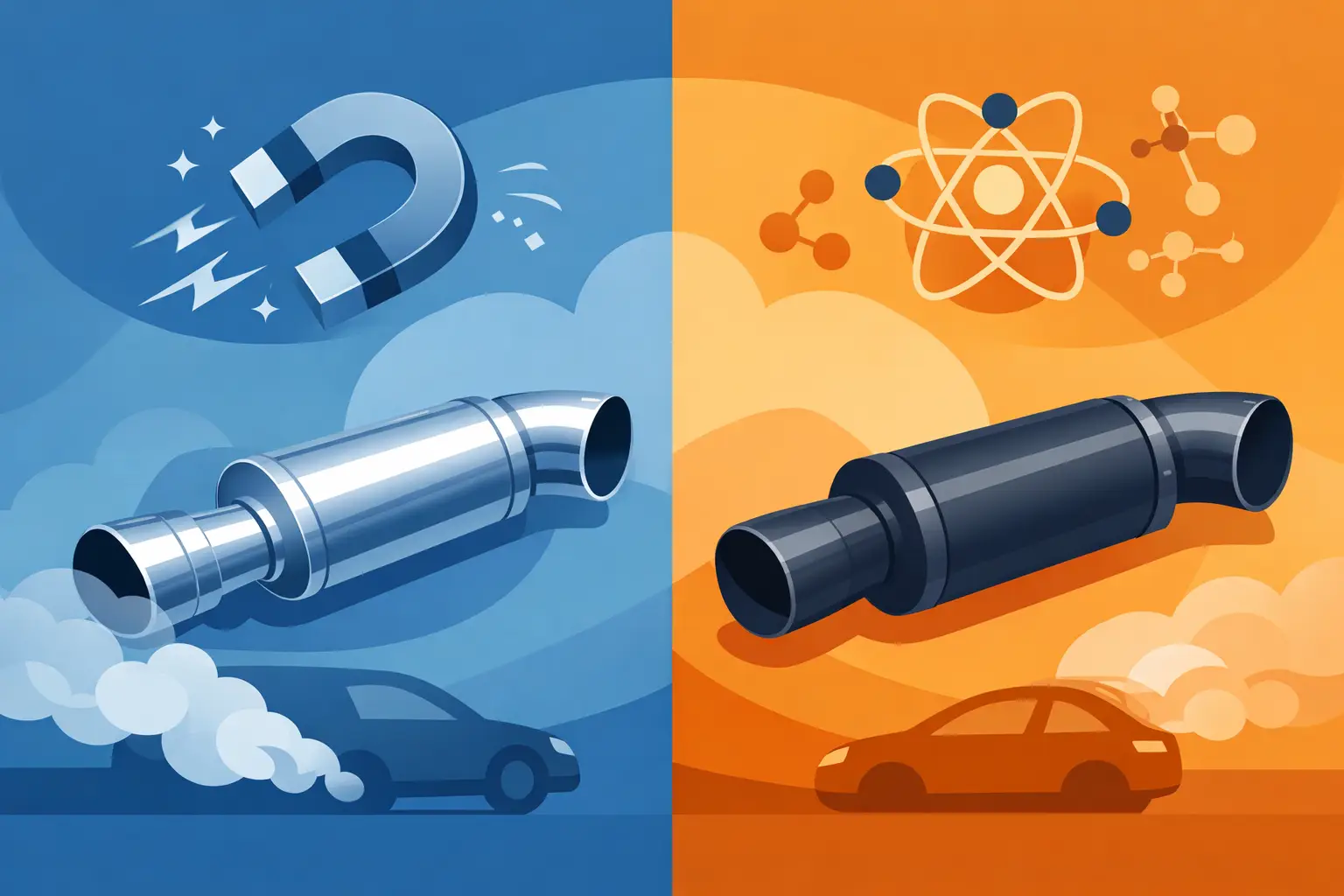
If you are asking whether are nonmagnetic exhaust pipes better, you are probably looking at stainless options and trying to separate real material advantages from sales language. That is a smart question, because magnetism in exhaust parts is not just a random trait. It often points to the stainless steel grade, and the grade affects corrosion resistance, appearance, fabrication, and long-term value.
The short answer is this: nonmagnetic exhaust pipes can be better, but not automatically. In most aftermarket exhaust applications, a nonmagnetic pipe usually means an austenitic stainless steel such as 304 stainless. That material is widely respected because it resists rust better than many magnetic alternatives. But better for one driver does not always mean better for every build, every climate, or every budget.
Are nonmagnetic exhaust pipes better for daily drivers?
For many daily drivers, especially in wet, snowy, or coastal regions, the answer leans yes. Nonmagnetic stainless pipes are commonly associated with better corrosion resistance, which matters more than almost anything else once an exhaust system is under the vehicle facing road salt, moisture, heat cycles, and debris.
If you are replacing a factory exhaust on a truck, SUV, Jeep, or commuter car that sees year-round use, the material choice can affect how the system looks and performs after several winters. A nonmagnetic stainless pipe tends to hold up longer against surface staining and deeper corrosion than aluminized steel or lower-grade stainless. That means fewer ugly rust patches, fewer weak points at welds and bends, and a better chance the system still looks clean when you are under the vehicle a few years later.
That said, material alone does not guarantee durability. Pipe thickness, weld quality, fitment, hanger position, and installation all matter. A poorly made 304 pipe can still disappoint. A well-made magnetic stainless system can still serve a vehicle very well.
What nonmagnetic usually means in exhaust materials
In exhaust products, nonmagnetic usually points to 304 stainless steel or a similar austenitic stainless grade. These alloys contain more nickel and chromium than more magnetic ferritic grades such as 409 stainless. That chemical makeup is a big reason they resist corrosion better.
409 stainless is common in OEM and value-focused aftermarket exhaust systems. It is magnetic, heat-tolerant, and generally more affordable. It can still last a long time, but it often develops a more obvious brownish surface oxidation over time. That does not always mean failure is around the corner. It does mean the finish tends to look more industrial and less refined.
304 stainless is often chosen for premium exhaust pipes and tips because it combines functional durability with a cleaner visual finish. That makes it attractive for buyers who care about both service life and appearance. For a brand built around the idea that technology can also look intentional, that distinction matters.
Why corrosion resistance is the real advantage
The best argument for a nonmagnetic exhaust pipe is corrosion resistance. Exhaust systems live in a hostile environment. They deal with condensation inside the pipe, water spray outside the pipe, and repeated heating and cooling that can stress the metal over time.
In dry climates, the difference between stainless grades may not feel dramatic day to day. In the Rust Belt, near the ocean, or anywhere roads are heavily salted, it becomes much more noticeable. A nonmagnetic stainless pipe is less likely to rust through early, and less likely to lose its appearance after one rough season.
This is why buyers often move beyond the question of magnetism and start asking a better one: what stainless grade am I getting, and how was this pipe made? Magnetism is a clue, not the whole story.
Are nonmagnetic exhaust pipes better for performance?
Not by magnetism alone.
A pipe does not flow better simply because a magnet will not stick to it. Exhaust performance depends more on pipe diameter, bend design, routing, overall system layout, muffler construction, and whether the setup matches the engine’s needs. Material can affect weight and heat behavior slightly, but it is not the main performance driver in most street applications.
Where nonmagnetic stainless can help is consistency over time. A pipe that resists corrosion better is less likely to degrade, scale up internally, or weaken at critical points. For a long-term build, that supports stable performance and fewer replacement headaches.
For appearance-focused upgrades, the benefit is more obvious. Stainless with stronger corrosion resistance generally keeps a cleaner finish, especially on visible sections and exposed tips. If the rear of the vehicle is part of the build, material quality shows.
The trade-off: cost matters
If you are comparing exhaust options, the biggest trade-off is usually price. Nonmagnetic stainless pipes, especially 304 stainless, often cost more than magnetic stainless or aluminized steel alternatives. That higher cost may be absolutely worth it if you plan to keep the vehicle for years, live in a harsh climate, or want a cleaner premium finish.
But if the vehicle is older, the budget is tight, or the exhaust is a short-term repair on a work vehicle, a magnetic stainless option may be the smarter buy. You do not always need the top-tier material to make the right decision. You need the right material for the vehicle’s use, environment, and lifespan.
That is the practical view most experienced buyers take. Better is not just about the metal. Better is about value over the time you expect to own and drive the vehicle.
Are nonmagnetic exhaust pipes better looking?
Usually, yes.
This is one area where the difference is easy to spot. Nonmagnetic stainless pipes and tips tend to maintain a brighter, cleaner appearance. They polish well, present a more premium finish, and fit better with builds where visual detail matters. On trucks, Jeeps, SUVs, and enthusiast cars, the exhaust is not always hidden. Sometimes it is part of the statement.
That is especially true for muffler tips and exposed rear sections. If you want a finish that complements wheels, trim, and other upgrades instead of fading into a rusty afterthought, nonmagnetic stainless has a clear edge.
This is also where premium aftermarket design earns its place. Materials are not only about surviving under the vehicle. They are also about how the vehicle presents as a whole.
What to watch for before you buy
If you are trying to decide whether are nonmagnetic exhaust pipes better for your vehicle, check more than the magnet test. Ask what stainless grade the pipe uses. Look at weld quality, bend consistency, wall thickness, and whether the finish is appropriate for visible or hidden sections.
Also consider where the part sits in the system. A visible tip may justify premium stainless even if the rest of the system is more basic. A full cat-back or axle-back system on a daily-driven truck in a salted-road state may justify spending more upfront for better corrosion resistance throughout.
Fitment matters too. A great material in a poor-fitting exhaust can create rattles, stress points, and installation problems that erase the benefit. For retailers and buyers alike, clear specifications and application accuracy are part of the value.
So, are nonmagnetic exhaust pipes better?
In many cases, yes – especially when nonmagnetic means 304 stainless and the goal is long-term corrosion resistance, premium appearance, and dependable value. They are often the better choice for drivers who want an exhaust component that lasts longer, looks cleaner, and feels like a real upgrade rather than a temporary fix.
Still, there is no universal winner. A magnetic stainless exhaust can be a perfectly solid solution for many vehicles. If cost is the deciding factor, or the vehicle lives in a mild climate, the practical gap may be smaller than you think.
The best buy is the one that matches how you drive, where you drive, and how long you expect the part to stay under the vehicle. When material, fitment, and finish line up, that is where exhaust design stops being just maintenance and starts looking a lot more like technology as an art form.