
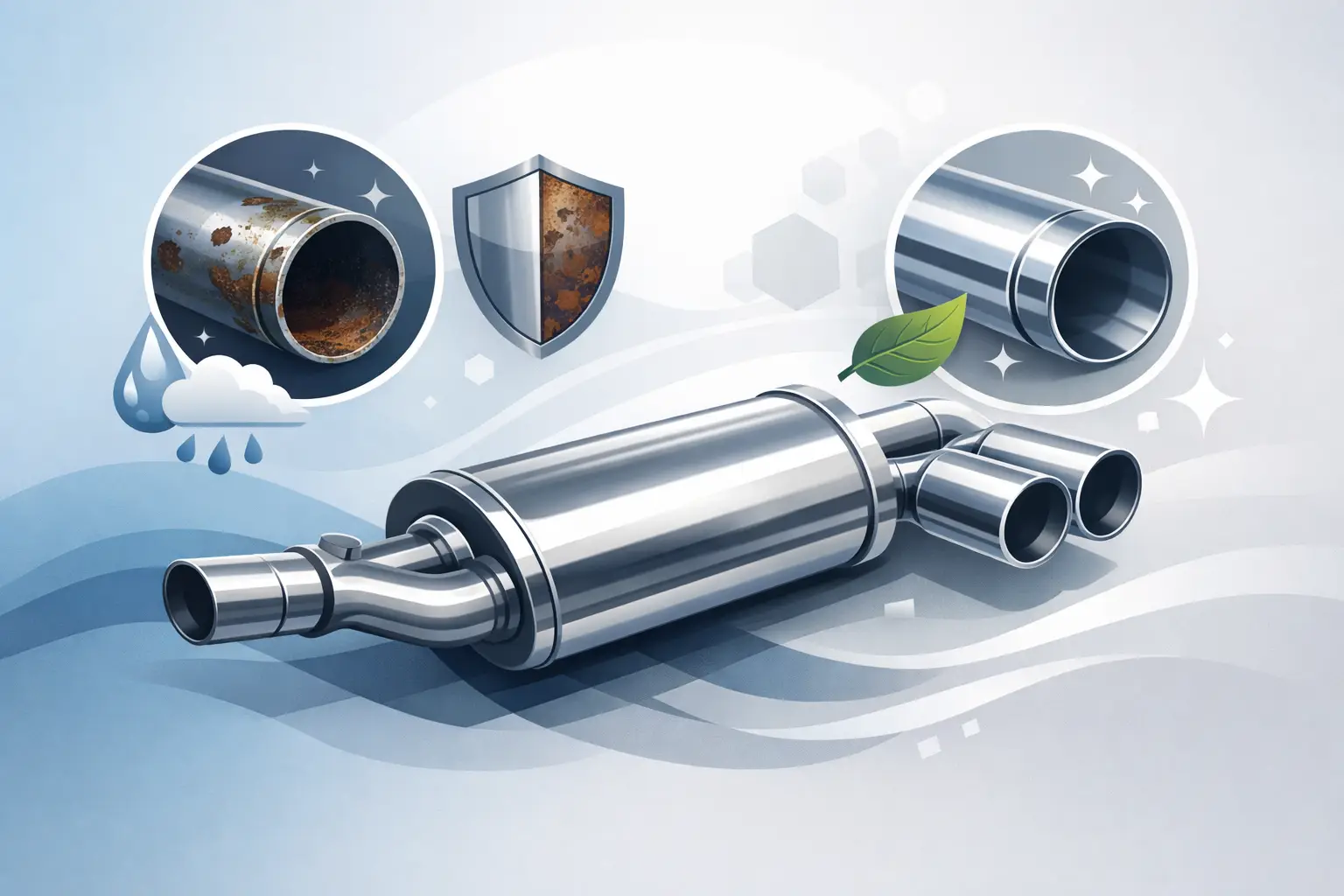
A rusty exhaust usually announces itself before you ever see it. You hear the change in tone, notice the rough-looking pipe, or spot flaky metal around a weld. That is where stainless exhaust corrosion benefits stand out fast – not as marketing language, but as a real material advantage that affects service life, appearance, and replacement cost.
For drivers who expect more than a temporary fix, exhaust material matters. On a daily commuter, a work truck, or a Jeep that sees wet roads and seasonal grime, corrosion is one of the main reasons an exhaust system fails. Stainless steel does not make an exhaust indestructible, but it changes the timeline in a big way.
Why stainless exhaust corrosion benefits matter
Exhaust systems live in a harsh environment. Heat cycles are constant. Moisture collects inside the pipes during short trips. Road salt, mud, and water attack the outside. Add vibration, debris impact, and ordinary age, and mild steel starts losing ground quickly.
Stainless steel helps because it contains chromium, which forms a thin passive layer on the surface. That layer slows oxidation and helps the metal resist the kind of rust that spreads, weakens walls, and eventually creates leaks. In practical terms, that means less visible corrosion, fewer premature failures, and a better chance that your exhaust still looks presentable after years on the vehicle.
For many buyers, the payoff is simple: you replace it less often. For others, especially enthusiasts and shops, the appeal goes further. A stainless component supports a cleaner finish, a more premium appearance under the vehicle, and better long-term confidence in the parts they install.
The real-world benefits of stainless exhaust corrosion resistance
The biggest benefit is durability. A corrosion-resistant exhaust has a better chance of surviving wet climates, salted winter roads, coastal air, and repeated temperature swings. If your vehicle sees all-season use, stainless can be the difference between years of dependable service and an early replacement.
There is also a maintenance benefit. Rusted fasteners, seized connections, and weakened pipe sections turn a routine exhaust job into a frustrating one. Stainless systems are not immune to every installation headache, but they generally age in a more controlled way than lower-grade steel. That matters whether you are handling the work in your garage or ordering parts for a shop install.
Appearance is another factor, and it is not just cosmetic vanity. Clean material condition often reflects how well a part is holding up structurally. Stainless exhaust pipes and tips tend to maintain a sharper, more finished look over time, which fits vehicles where the exhaust is visible and part of the overall build. Technology as an art form only works when the hardware still looks like it belongs there.
Then there is value over time. Stainless usually costs more upfront than aluminized or basic steel options. But if it lasts significantly longer, especially in rust-prone conditions, the long-term cost can make better sense. Fewer replacements, fewer labor events, and less chance of a leak-related issue all add up.
Not all stainless exhaust materials perform the same
This is where the details matter. Stainless is not one universal grade, and buyers who understand that usually make better decisions.
409 stainless
409 stainless is common in automotive exhaust applications because it balances corrosion resistance, heat tolerance, and cost. It can develop surface discoloration and light surface rust over time, so it may not stay bright and polished like a show part. But compared with plain steel, it offers a clear upgrade in service life and rust resistance.
For many daily drivers and OE-style replacements, 409 is a practical choice. It is built for function first and tends to deliver strong durability where it counts.
304 stainless
304 stainless is often the premium step up. It generally offers stronger corrosion resistance than 409 and is favored for higher-end exhaust parts, polished finishes, and builds where long-term appearance matters as much as performance. If you want an exhaust component that holds up well and keeps a cleaner visual finish, 304 is often worth serious consideration.
That said, 304 usually costs more. If the vehicle is a basic commuter in a mild climate, the extra spend may not always be necessary. If the vehicle is a long-term keeper, sees harsh weather, or has visible performance styling, the case gets stronger.
Stainless exhaust corrosion benefits in different driving conditions
Where and how you drive has a major effect on exhaust life.
In snow-belt states, road salt is the obvious enemy. Salt accelerates corrosion on standard steel exhaust parts, especially at seams, clamps, and low points where moisture sits. Stainless offers a meaningful buffer against that attack, which is one reason it is such a smart material choice for year-round vehicles in northern climates.
In coastal regions, humid air and salt exposure create a similar challenge. Even if the roads are not salted in winter, the environment itself is harder on metal. Stainless helps slow the external corrosion that can make an exhaust look worn well before its time.
Short-trip driving is another overlooked factor. If the exhaust does not get hot enough long enough, condensation inside the system may not fully burn off. That trapped moisture can corrode the exhaust from the inside out. Stainless steel is not magic here, but it handles this kind of repeated moisture exposure better than lower-grade alternatives.
Off-road and utility use add their own stress. Mud, water crossings, gravel, and impact exposure can damage protective coatings on ordinary steel. Stainless does not rely on a simple surface coating in the same way, which gives it a more durable edge when the environment gets rough.
When stainless is worth the extra cost
If you plan to keep the vehicle for years, stainless usually makes sense. The same goes for trucks, Jeeps, and SUVs that see hard use or mixed weather. A premium material is easier to justify when replacement labor is inconvenient, downtime matters, or you simply do not want to repeat the job.
It also makes sense on vehicles where the exhaust is visible. Muffler tips, tailpipes, and performance-oriented systems contribute to the overall look of the build. Corrosion resistance protects that investment and keeps the visual finish aligned with the rest of the vehicle.
For shops and resellers, stainless can reduce comeback risk tied to early rust complaints. Customers notice when an exhaust still looks solid after real use. That kind of result supports confidence in the part choice.
The trade-off is budget. If the goal is the lowest initial cost on an older vehicle with limited expected service life, a lower-cost exhaust option may still be the right move. Material choice should fit the vehicle, the climate, and how long the owner plans to keep it.
What stainless steel does not solve
A smart buyer should know the limits. Stainless steel resists corrosion, but it does not eliminate every failure point.
Poor weld quality can still shorten the life of an exhaust part. Bad fitment can create stress and vibration issues. Hangers, clamps, and connected hardware may not all be stainless, so weaker supporting components can still become the problem first. And if the exhaust takes a hard impact off-road, corrosion resistance will not protect it from physical damage.
Surface color change is also normal with heat. Blueing, gold tones, and darker areas can appear on stainless after repeated use. That is not the same as destructive rust. It is simply part of how the material reacts to temperature.
How to choose the right stainless exhaust part
Start with the application. If you need a dependable replacement for a daily driver, focus on fitment, material grade, and overall construction quality. If you are buying for a performance or appearance upgrade, finish quality and visible design become more important.
Check whether the part is built from 409 or 304 stainless, and decide based on your climate and expectations. For harder environments or more visible components, higher corrosion resistance is usually money well spent. For practical replacement use, a well-made 409 part may be the right balance.
Also consider the complete setup. A stainless exhaust pipe paired with low-grade hardware can still create installation and service issues later. The best result comes from matching quality across the system, especially in clamps, tips, and connection points.
Stainless exhaust corrosion benefits are not theoretical. They show up in fewer rust-related failures, better long-term appearance, and a more confident ownership experience. If you want an exhaust part that works hard and still looks like it belongs on the vehicle, stainless is one of the clearest upgrades you can make.