
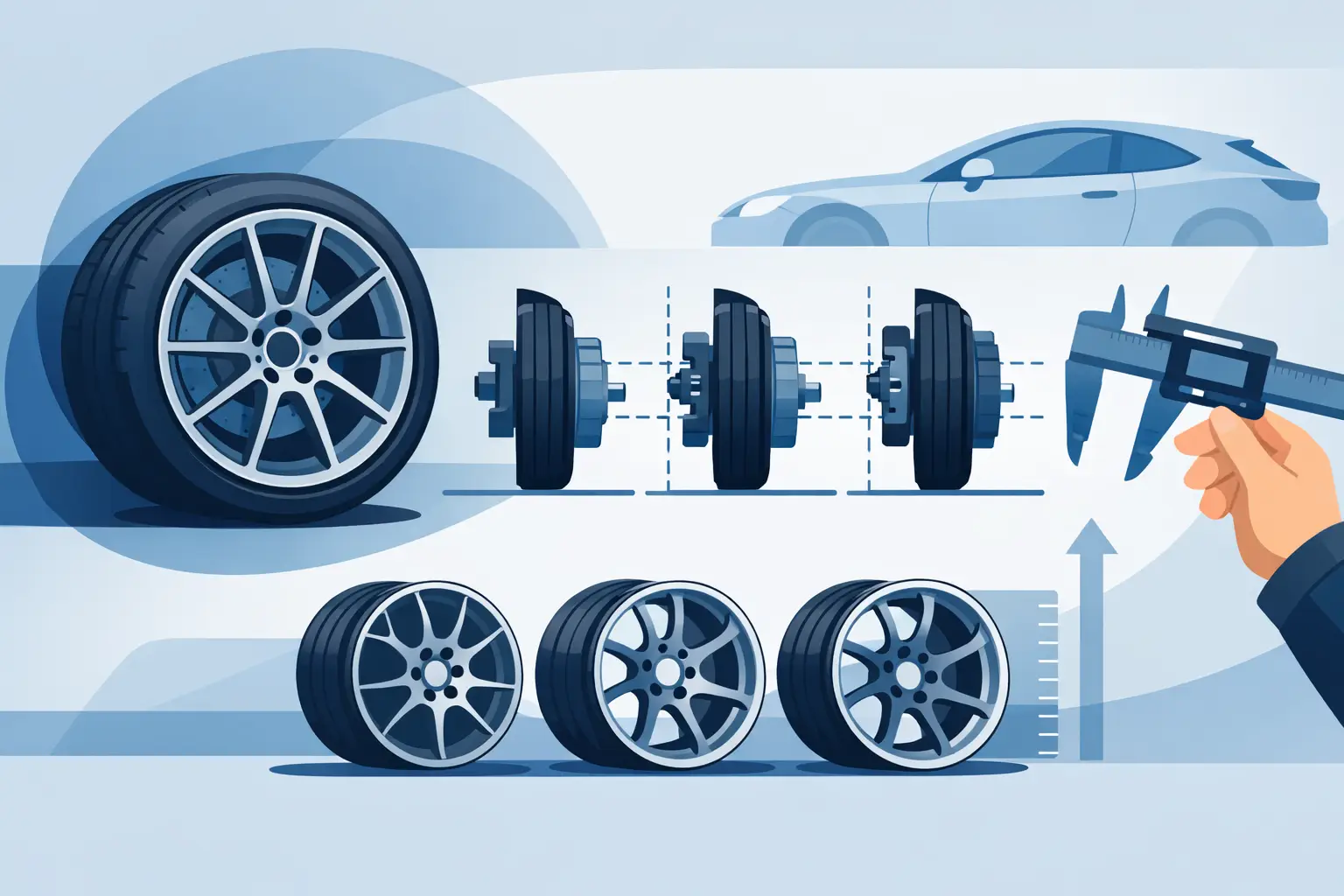
A wheel can look perfect on screen and still be completely wrong once it hits the hub. That usually comes down to offset. If you are figuring out how to pick wheel offset, you are really balancing four things at once – fitment, clearance, handling, and appearance.
Offset is not just a style number. It changes where the wheel sits relative to the suspension, fenders, brakes, and tires. Get it right and the vehicle looks planted and drives the way it should. Get it wrong and you can end up with rubbing, poor steering feel, extra stress on components, or a setup that simply does not sit right.
What wheel offset actually means
Wheel offset is the distance between the wheel’s mounting pad and the wheel’s centerline. It is usually measured in millimeters. A positive offset means the mounting surface sits closer to the outside face of the wheel, which pulls the wheel farther inward toward the suspension. A negative offset moves the mounting surface toward the back of the wheel, pushing the wheel outward toward the fender.
Zero offset places the mounting pad right on the wheel centerline. That sounds simple enough, but small changes matter. A 10 mm difference can be the line between clean clearance and constant rubbing.
For most late-model passenger cars and many crossovers, factory wheels tend to use positive offset. Many trucks, Jeeps, and off-road builds move toward lower positive offset or negative offset to create a wider stance and more outer clearance. That does not automatically make lower offset better. It depends on the wheel width, tire size, suspension geometry, and how the vehicle is used.
How to pick wheel offset for your vehicle
The cleanest way to choose offset is to start with your current setup, not the wheel you want to buy. Factory fitment gives you a working baseline. Once you know where the stock wheel sits, you can calculate how far in or out the new wheel will move.
Start with the original wheel width and offset. Then compare those numbers to the new wheel width and offset. Width and offset always work together. A wider wheel with the same offset will already sit closer to both the suspension and the fender. Change the offset too, and the wheel position shifts even more.
Here is the practical way to think about it. Lower offset pushes the wheel outward. Higher offset pulls it inward. More wheel width adds material on both sides of the mounting face unless offset changes to compensate.
If you are staying close to stock tire size and stock suspension, small offset changes are usually easier to manage. If you are also lifting, lowering, upsizing tires, or upgrading brakes, offset becomes much less forgiving.
Step 1: Know your factory wheel specs
Before you shop, confirm the stock wheel diameter, width, and offset for your exact trim. Do not assume every model in a platform uses the same setup. Brake packages, suspension options, and OEM wheel packages can change fitment.
This is your control point. Without it, every other decision is guesswork.
Step 2: Decide what matters most
Some drivers want flush fitment with the fender. Others need brake clearance for a performance build. Truck and Jeep owners may want a wider stance for larger tires or trail presence. Daily drivers may care more about clean steering feel and no rubbing in tight parking maneuvers.
That matters because the right offset for a show-focused street build is not always the right offset for a work truck or winter wheel package. The best fitment is the one that matches how the vehicle is actually used.
Step 3: Check inner and outer clearance
Inner clearance is the space between the wheel and suspension components like the strut, upper control arm, or inner liner. Outer clearance is the space between the tire and the fender edge or wheel arch. Offset affects both.
If you move the wheel inward too much with a high positive offset, you risk hitting suspension or brake components. If you push it outward too far with a lower or negative offset, you risk fender rubbing and debris spray, and in some states you may also run into tire coverage issues.
Step 4: Factor in tire size
A wheel does not rub. The tire does. That is why offset can never be chosen in isolation.
A wider tire section width can create problems even if the wheel itself technically clears. Sidewall shape also matters. Two tires with the same labeled size can measure differently by brand and model. On cars and SUVs, this often shows up at the strut perch or fender liner. On trucks and Jeeps, it often shows up at the bumper edge, body mount, or during full lock turns.
Common offset mistakes
One of the biggest mistakes is focusing only on stance. An aggressive offset may look excellent in photos, but if the tire catches the fender on compression or the steering gets heavier and less precise, the setup stops being practical fast.
Another common mistake is copying someone else’s specs without matching their full build. If another vehicle runs a certain offset with no issues, that does not mean it will work on yours. Tire brand, suspension height, alignment settings, brake package, and even fender tolerances all change the result.
The third mistake is ignoring scrub radius and load on steering and suspension parts. Moving the wheel farther outward changes leverage on wheel bearings and suspension components. On some builds, especially heavy trucks and SUVs, a dramatic offset change can affect tracking, steering feel, and long-term wear.
How wheel offset affects driving
Offset is not only about fit. It changes the way the vehicle behaves.
A wheel pushed farther outward can create a broader visual stance and sometimes improve outer brake clearance, but it may also increase steering effort, road feedback, and component load. On lowered street cars, it can make fender clearance tighter under compression. On lifted trucks, it can help clear inner suspension parts with larger tires, but may create more rubbing at the outer edges or during turns.
A wheel that sits farther inward can keep the tire tucked and protected, but too much positive offset may interfere with struts, control arms, or brake hardware. It can also leave the vehicle looking too narrow for the wheel width you chose.
There is always a trade-off. The cleanest setup is usually not the most extreme one.
How to pick wheel offset when changing wheel width
This is where many fitment problems start. If you move from an 8-inch-wide wheel to a 9-inch-wide wheel, half of that added width goes inward and half goes outward if offset stays the same. That means even before offset changes, clearance changes on both sides.
If you want the inner barrel to stay close to the same position as stock, you may need a lower positive offset as width increases. If you want the outer face to stay close to stock, you may need a higher offset. Which way you go depends on whether your tighter limit is inside or outside.
This is why width and offset should always be evaluated together, not as separate specs.
A simple example
Suppose your factory wheel is 18×8 with a +40 offset, and you want an 18×9 wheel. If you choose the same +40 offset, the new wheel will sit about half an inch wider overall, split inward and outward. If inner clearance is already tight, that may be a problem. Choosing a slightly lower offset can move some of that added width outward instead.
That may solve the strut issue, but it also brings the tire closer to the fender. Better inner clearance can mean worse outer clearance. That is the fitment game.
Cars, trucks, Jeeps, and SUVs need different thinking
Passenger cars usually have less room for aggressive offset changes, especially on lowered suspension. Fender clearance becomes the limiting factor quickly, and steering geometry is often more sensitive.
Trucks and body-on-frame SUVs tend to allow more flexibility, but larger tires complicate things. A lower offset can help clear upper control arms, yet still rub on the bumper or rear of the wheel well at full lock. Leveling kits and lifts change the equation, but they do not erase it.
Jeeps often run lower offsets for stance and tire clearance, especially with wider all-terrain or mud-terrain setups. Even then, the right number depends on backspacing, tire width, axle setup, and whether the build is aimed at street, trail, or mixed use.
The smartest way to buy wheels
If you want the shortest path to a setup that fits right, build from verified specs. Start with your exact vehicle, current wheel and tire size, and intended use. Then compare wheel width, offset, and tire dimensions together. If brake upgrades, suspension changes, or oversized tires are involved, treat offset as a fitment requirement first and a style choice second.
That approach is faster, cheaper, and cleaner than chasing a look and fixing the consequences afterward. It is also how experienced buyers avoid returns, spacers they did not plan for, and a vehicle that drives worse than it should.
At FORTLUFT, that same principle applies across every aftermarket category – the best upgrade is the one that fits the vehicle, the purpose, and the finish you want.
Wheel offset is one of those specs that rewards restraint. A few millimeters can change everything, and the best choice is usually the one that gives you the look you want without asking the rest of the vehicle to compromise for it.