
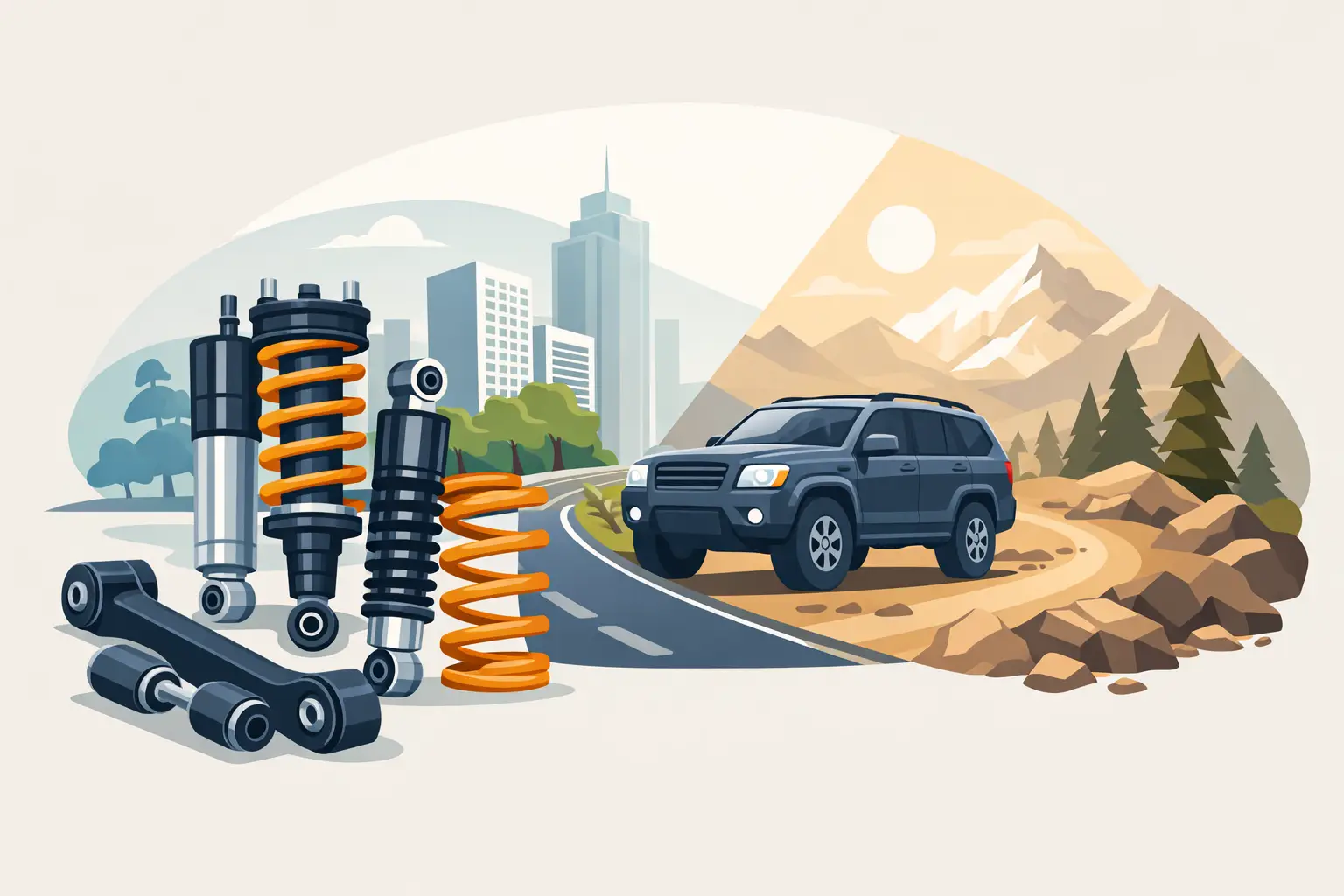
A suspension upgrade can make a truck feel controlled instead of floaty, a Jeep feel planted instead of unsettled, or a daily driver look right without ruining the ride. That is why a smart suspension upgrade buying guide starts with one question, not a product name: what do you want the vehicle to do better?
Too many buyers start with lift height, brand hype, or the most aggressive photo they saw online. The better approach is to match the parts to the job. Ride quality, tire clearance, towing stability, cornering feel, stance, and load support all pull the suspension in different directions. The right setup is the one that improves your actual use case, not the one with the loudest marketing.
What a suspension upgrade really changes
Suspension parts do more than alter ride height. They control how the vehicle handles weight transfer, absorbs bumps, keeps tires in contact with the road, and responds when you brake, turn, accelerate, or carry cargo. That means even a simple shock upgrade can change confidence behind the wheel more than many buyers expect.
The trade-off is just as real. A firmer setup can sharpen response but feel harsher on broken pavement. A taller setup can increase clearance but affect steering feel, center of gravity, and fuel economy. A lowered setup can improve appearance and road feel but reduce travel and ground clearance. There is no universal best option. There is only the right balance for the way you drive.
Start this suspension upgrade buying guide with your vehicle use
If your vehicle spends most of its life commuting, highway ride control and noise matter more than maximum articulation. If you tow, squat control and stability matter more than an ultra-soft ride. If you run trails, wheel travel, damping control, and clearance move up the list fast.
Be specific with yourself. A half-ton truck that tows a boat on weekends needs a different setup than a truck built mainly for appearance. A Jeep that sees forest roads and mild weekend trails needs something different than one built for rock crawling. A lowered SUV that still carries family and gear has to keep enough comfort to stay usable.
That clarity narrows the field quickly and helps you avoid buying parts twice.
The main suspension upgrade categories
Shocks and struts
For many vehicles, this is the smartest first move. Fresh, better-quality dampers can tighten body control, reduce bounce, improve braking stability, and make the ride feel more composed without dramatically changing geometry.
If your factory suspension feels worn out, underdamped, or too soft for cargo and highway speed, shocks and struts may solve most of the problem. They are often the highest-value upgrade because they improve function directly and do not force a major change in the rest of the system.
Springs
Coil springs and leaf springs support weight and set ride height. Changing springs is how you usually alter stance, load capacity, and sometimes ride character. The important detail is spring rate. Stiffer is not automatically better. If the rate is too high for the vehicle and load, the ride can become choppy and traction can suffer on rough surfaces.
For trucks and SUVs, rear spring changes are common when carrying tools, gear, or trailer tongue weight. For cars and crossovers, lowering springs are often chosen for appearance and handling. In both cases, the springs have to work with the dampers, not against them.
Leveling kits, lift kits, and lowering kits
These are goal-specific packages. A leveling kit typically raises the front of a truck to reduce rake and improve tire fitment. A lift kit raises overall height for clearance and off-road capability. A lowering kit reduces ride height for stance and a tighter on-road feel.
The package matters. A low-cost height change without the supporting components may give you the look you want while introducing poor ride quality, accelerated wear, or alignment limitations. Quality kits account for geometry, travel, and hardware rather than just forcing the vehicle higher or lower.
Air helper springs and load support parts
If your main issue is rear sag under cargo or towing, this category makes more sense than a full lift or stiff spring swap. Air helper systems, overload solutions, and related load-support components help keep the vehicle level under changing weight.
This is a practical upgrade for work trucks and SUVs that alternate between empty daily use and heavy weekend loads. You get support when needed without locking yourself into a harsh unloaded ride.
Fitment comes before features
A premium part that does not match the vehicle configuration is still the wrong part. Fitment is not just year, make, and model. You also need to account for drivetrain, cab or body style, factory ride package, existing modifications, wheel and tire size, and intended ride height.
This becomes even more important with trucks, Jeeps, and SUVs. A lift that works with stock wheels may behave differently with wider wheels and more aggressive tire offsets. A shock designed for stock height may top out or underperform with a taller spring. A lowered setup may require additional correction parts to maintain alignment and tire wear.
That is where a product-driven supplier matters. Buyers need suspension parts that are clearly organized by vehicle application and by function, not just marketed by appearance.
How to choose the right setup for common goals
Better daily driving
Start with quality shocks or struts, then inspect the rest of the wear items around them. If bushings, mounts, links, or springs are tired, new dampers alone will not deliver the full result. For a daily driver, balance matters more than extremes. You want controlled movement without turning every expansion joint into a reminder that you modified the car.
Towing and hauling
Focus on stability under load. Rear support and damping control should come first. You want less squat, more predictable braking, and less side-to-side motion. A small, smart upgrade in this category often does more for confidence than a cosmetic lift.
Off-road and overland use
Think in systems, not just inches of lift. Clearance matters, but so do suspension travel, shock quality, and component durability. An overbuilt setup for hardcore trails may feel unnecessary on a vehicle that mostly sees gravel roads and camping gear. Buy for the terrain you actually drive.
Street performance and lowered stance
A lower center of gravity can improve response and appearance, but the details matter. If you lower the vehicle without matching dampers and correcting geometry where needed, you may get a bouncy ride and uneven tire wear instead of a sharper feel. The best lowered setups look clean and still feel engineered.
Budgeting without buying twice
The cheapest route is often the most expensive after labor, alignment, and replacement parts add up. If you know you want a complete transformation, it usually makes more sense to buy a coordinated setup once than to stack random parts over time.
That does not mean you need the most expensive kit on the shelf. It means the parts should match your goal. Spend where performance and durability actually matter – damping quality, proper spring rates, complete hardware, and fitment confidence. Save money by avoiding unnecessary complexity, not by cutting the parts that make the system work.
Don’t ignore the supporting parts
Suspension upgrades put attention on the visible components, but the surrounding hardware determines how well the whole system performs. Worn control arm bushings, sway bar links, ball joints, mounts, and bump stops can undermine a new setup fast.
Alignment is also part of the upgrade, not an optional extra. Any meaningful height or geometry change should be followed by a proper alignment. If your wheel and tire package is changing too, check clearance at full lock and full compression before calling the job done.
A few mistakes that cost buyers time and money
One common mistake is choosing height based only on looks. Another is buying for the most extreme use case a vehicle might see once a year instead of the miles it drives every week. A third is assuming all kits at the same advertised height will ride and handle the same. They will not.
It is also easy to underestimate how much wheel and tire choice affects the final result. Offset, width, sidewall, and tire weight all change how the suspension feels and what it clears. Suspension and rolling stock should be planned together whenever possible.
For buyers who want a clean path from fitment to function, FORTLUFT’s approach to aftermarket parts makes that process easier to navigate. The goal is not just to add parts. It is to select components that work together, look right, and perform like they belong on the vehicle.
The best suspension upgrade buying guide ends with honesty
If you want one rule to keep, use this one: buy the suspension that fits your real-world miles. The setup that feels right on your commute, your jobsite route, your trail weekend, or your towing run is the one you will appreciate every time you drive. Style matters. Performance matters. The best upgrade is where both meet without compromise you will regret next month.