
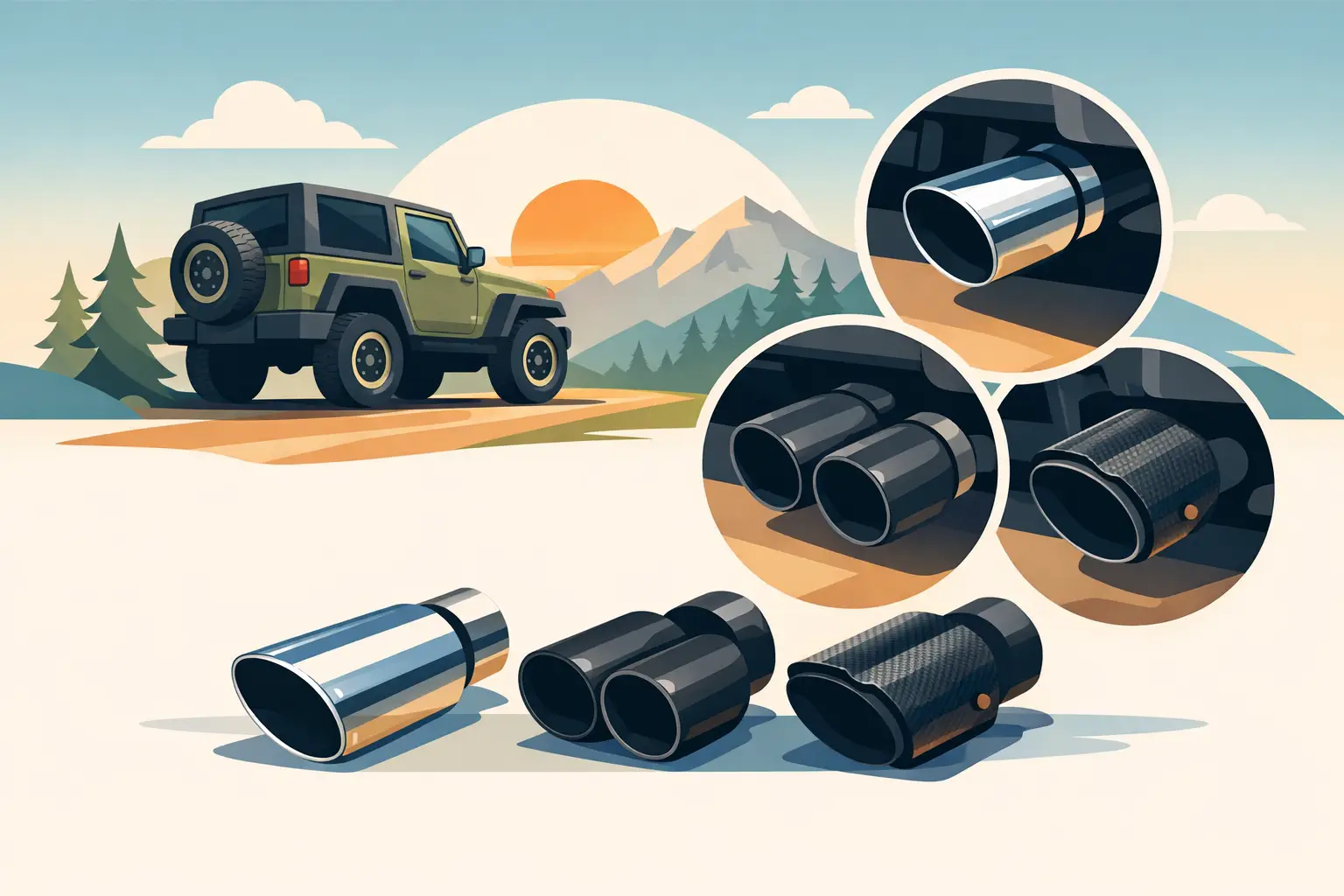
A Jeep’s rear bumper tells people what kind of build they are looking at before the engine ever starts. Tires and lift height get attention, but the exhaust outlet is one of the cleanest ways to finish the look. The best Jeep exhaust tip styles balance visual impact with practical fitment, using materials and finishes that can handle heat, road grit, water crossings, and the occasional trail scrape.
An exhaust tip does not create major horsepower on its own, and it will not transform a quiet factory muffler into a deep performance system. What it can do is refine the final detail of your exhaust, protect the visible pipe end, and give a stock, replacement, or upgraded system a more intentional appearance. The right choice depends on your Jeep model, bumper clearance, tailpipe diameter, driving conditions, and the overall direction of the build.
Start With Fitment, Not Finish
Before choosing polished stainless or carbon fiber, measure the existing tailpipe. Most universal tips are sized by inlet diameter, meaning the inside diameter of the tip must match the outside diameter of the exhaust pipe. A tip that is too loose can rattle, leak exhaust soot around the joint, or eventually work its way out. A tip that is too small simply will not install without modifications.
Measure the pipe at the point where the tip will sit, not at a bent or expanded section. Also check available length behind the bumper and clearance around the spare tire, hitch, tow hooks, and plastic bumper trim. On many Wrangler and Gladiator builds, a larger outlet looks right only when it remains tucked close enough to the bumper to avoid becoming a trail obstacle.
Clamp-on tips are practical for straightforward installs and future changes. Weld-on tips provide the most permanent connection and a cleaner custom-exhaust appearance. If your Jeep sees frequent off-road use, a secure attachment matters more than an oversized outlet.
Best Jeep Exhaust Tip Styles by Build Type
Polished Stainless Steel for a Clean Factory-Plus Look
Polished stainless steel is the safe choice for Jeep owners who want a noticeable upgrade without making the rear end look overbuilt. Its reflective finish works especially well with stock paint, chrome accents, polished wheels, or a well-kept street-driven Wrangler, Grand Cherokee, or Gladiator.
A straight-cut polished tip has a crisp, classic look. It is also easy to clean after road driving, although it will show water spots and soot sooner than a darker finish. Choose high-quality stainless steel for real corrosion resistance, particularly in regions where winter road salt is part of the ownership experience.
This style is not limited to show vehicles. A polished tip can suit a daily-driven Jeep if it is properly positioned and made from durable material. The trade-off is maintenance: if the rest of the build is matte, blacked-out, and trail-focused, bright metal may require more attention than it deserves.
Black Stainless Steel for Modern Off-Road Builds
Black exhaust tips pair naturally with black wheels, rock rails, bumpers, roof racks, and fender accents. They create a lower-profile look than polished stainless while still giving the exhaust a finished, purposeful outlet. For dark-colored Jeeps, black tips can blend into the build; on white, silver, or bright-color vehicles, they create contrast without the flash of chrome.
The quality of the finish is the deciding factor. Heat, impact, and road debris can expose weaknesses in low-grade coatings, so look for a tip designed for exhaust temperatures and outdoor use. Black stainless steel offers a more premium, durable direction than a thin cosmetic finish on basic steel.
A black angle-cut tip is especially effective on a lifted Wrangler or Gladiator. The angled opening follows the vehicle’s aggressive lines and gives the outlet more depth. Keep the outlet pointed away from bumper surfaces, though. Excessive proximity can leave soot marks or create heat discoloration over time.
Carbon Fiber Tips for a High-Contrast Performance Finish
Carbon fiber exhaust tips bring a technical, design-forward finish to a Jeep build. They work best when carbon fiber already appears elsewhere, such as on exterior trim, a hood detail, interior accents, or performance-focused wheel choices. The material creates contrast against raw metal and dark paint without looking like traditional chrome.
This style fits a street-oriented Grand Cherokee, a performance SUV, or a carefully curated Gladiator build particularly well. It can also sharpen the rear profile of a Wrangler that has upgraded lighting, bumpers, and wheels but does not need an oversized exhaust outlet.
Carbon fiber is a style choice first, so inspect how it is constructed. The metal inner structure and connection point must manage heat reliably, while the visible carbon section should be protected from discoloration and damage. A low-mounted tip that regularly meets rocks, deep ruts, or trailer ramps may be better served by stainless steel.
Dual-Wall Tips for a Thicker, Premium Profile
Dual-wall exhaust tips have an inner and outer layer at the outlet, creating a thicker rolled edge. From behind the vehicle, they look more substantial than a single-wall tip, even when the overall diameter remains reasonable. This is one of the best options for Jeep owners who want an elevated finish without changing the vehicle’s basic character.
The style works with polished, brushed, black, and carbon fiber exterior treatments. A dual-wall round tip offers restrained refinement, while a dual-wall angle-cut version adds more attitude. Because the outlet edge is more pronounced, it also tends to look better on larger-diameter replacement exhaust pipes.
For a Jeep with a factory-style rear bumper, this added visual weight can be enough. There is no need to force an excessively large tip into a limited opening just to make a statement.
Rolled-Edge and Straight-Cut Tips for Traditional Utility
Not every Jeep needs a performance-inspired exhaust finish. Rolled-edge and straight-cut tips keep the look simple, durable, and easy to match with replacement exhaust components. They are often the right answer for work vehicles, fleet Jeeps, older models, and owners focused on a clean repair rather than a custom build.
A straight-cut tip offers a square, direct profile. A rolled edge softens the opening and gives the outlet a more finished appearance. Both are dependable choices when made from corrosion-resistant stainless steel, and both avoid the clearance concerns that come with oversized, heavily angled designs.
For shops and commercial buyers, these styles also make sense because they suit a broad range of customer preferences. They deliver visible value without asking the customer to commit to a highly specific aesthetic.
Round, Oval, or Rectangular: Choose the Outlet Shape Carefully
Round is the most versatile exhaust tip shape for Jeeps. It complements factory tailpipe routing, fits most aftermarket exhaust systems, and works with nearly every style direction. A slightly larger round outlet can make a factory pipe look more substantial without crowding the bumper.
Oval tips can look wider and more modern, particularly on SUVs with broad rear bumpers. They require careful alignment, however, because a crooked oval tip is much more obvious than a slightly off-center round one. Rectangular tips are generally best reserved for custom bumper openings or vehicle-specific applications. On a typical Wrangler, they can look out of place unless the entire rear bumper and exhaust system were designed around them.
Diameter should be proportional. A tip that is modestly larger than the tailpipe usually looks intentional. A very large outlet on a small factory pipe can draw attention to the mismatch. For most builds, visual balance beats maximum diameter.
Installation Details That Protect the Upgrade
Install the tip only after the exhaust has cooled completely. Clean rust, soot, and loose scale from the pipe so the clamp or weld area sits evenly. Position the outlet with enough clearance from the bumper, hitch hardware, shocks, and suspension components, then check the angle from directly behind the Jeep before tightening anything.
Do not assume a centered tip is always correct. Factory exhaust routing may place the tailpipe slightly to one side, and forcing it to center can create contact under suspension movement. Check clearance with the vehicle on level ground and account for articulation if the Jeep is lifted or trail-driven.
After several heat cycles, recheck clamp hardware. Exhaust systems expand when hot, and a clamp-on tip that felt secure during installation can need a final adjustment. A small amount of routine inspection helps prevent a simple style upgrade from becoming trail debris.
FORTLUFT exhaust components and tips are selected for drivers who want the practical confidence of durable materials with the visual discipline of a finished build. Technology as an art form starts with details that work as hard as they look.
Let the Jeep’s Use Decide
The best exhaust tip for a weekend crawler is rarely the same one that suits a daily-driven Grand Cherokee or a polished overland Gladiator. A trail Jeep benefits from compact stainless construction, secure mounting, and generous clearance. A street-focused build can lean into black stainless, dual-wall construction, or carbon fiber accents. A replacement-focused repair may call for a simple rolled-edge stainless tip that outlasts the original part.
Choose the style that supports the way your Jeep is actually used, then install it with the same care you would give wheels, tires, or suspension. A properly fitted exhaust tip is a small component with a visible job: it gives the rear of the vehicle a finished, confident signature.