
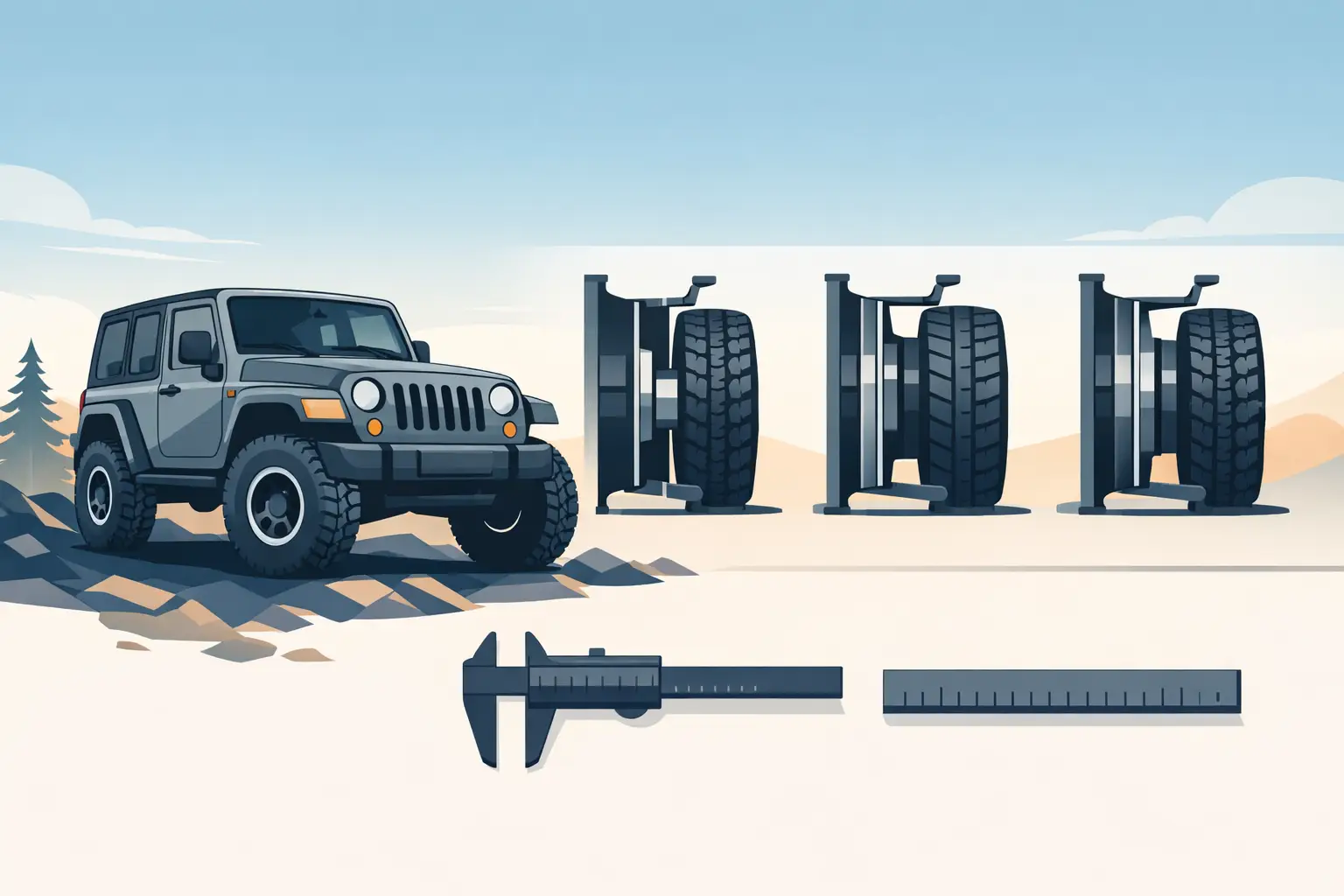
A Jeep can clear a tire on the showroom floor and still rub a control arm at full lock, clip a fender under compression, or throw road spray down both sides of the body. That is why the best Jeep wheel offset options are not simply the ones with the most aggressive stance. The right offset puts the tire where your suspension, steering, brakes, and intended use can support it.
For a daily-driven Wrangler, a moderate offset often delivers the cleanest result: more room for a wider tire without pushing the wheel excessively beyond the fender. For a dedicated trail build, the calculation may favor additional clearance and a wider track. Start with the vehicle, wheel width, tire size, lift height, and the kind of driving the Jeep will actually do.
What Wheel Offset Changes on a Jeep
Offset is the distance between the wheel’s centerline and its mounting surface, measured in millimeters. Positive offset moves the wheel inward toward the suspension. Negative offset moves it outward toward the fender. A zero-offset wheel places the mounting pad on the wheel centerline.
On many late-model Wranglers, factory wheels use substantial positive offset. This keeps the tires tucked under the body and preserves factory steering geometry. It also means that moving to a wider aftermarket wheel or tire without changing offset can reduce clearance at the control arms, sway-bar links, and inner fender areas.
Wheel width matters just as much. A 17×8.5 wheel at 0 mm offset will sit differently than a 17×9 wheel at 0 mm offset because the wider wheel adds material to both sides of its centerline. Backspacing tells the same fitment story from another angle: it measures from the mounting face to the wheel’s inner lip. Less backspacing generally moves the wheel outward.
Best Jeep Wheel Offset Options by Build Type
There is no single offset that fits every Jeep. A wheel choice that looks right on a lifted JL with 37-inch tires can be impractical on a stock-height JK used for commuting. These ranges are useful starting points, but they are not a substitute for checking vehicle-specific fitment.
Factory-style replacement: +25 to +45 mm
A positive offset close to factory specifications is the sensible choice for stock tire sizes, road-focused use, and drivers who want minimal changes to steering feel and fender coverage. It keeps the tire tucked in, limits bearing leverage, and usually reduces the amount of debris thrown onto the paint.
This setup is especially appropriate when replacing damaged wheels or maintaining a clean, original profile. The trade-off is limited room on the inside for substantially wider tires. Before choosing a high-positive-offset wheel, confirm that the tire’s sidewall will not contact suspension components at full steering lock.
Balanced daily-driver fitment: +12 to +20 mm
For many Jeep owners stepping up modestly in tire width, a +12 to +20 mm offset is the practical middle ground. It moves the wheel outward enough to improve inner clearance while avoiding the exaggerated poke associated with deeply negative offsets. The result is often a controlled stance that works well for street use, weekend trails, and mild lifts.
This range can be a strong fit for 33-inch or 35-inch tire builds, depending on wheel width, tire brand, and suspension configuration. Tire dimensions vary more than the sidewall label suggests, so a 35-inch mud-terrain from one manufacturer may occupy noticeably more space than another 35-inch all-terrain.
Aggressive all-terrain stance: 0 to +12 mm
Zero to mildly positive offset is one of the most common directions for Jeeps running wider tires and aftermarket suspension. It generally creates useful clearance between the tire and inner suspension while giving the Jeep a broader, more planted appearance.
For many Wrangler applications, this is where appearance and function meet. The wheel sits visibly farther out than stock but can remain manageable with the right tire width and fender setup. It is a better choice than a spacer-only solution when purchasing new wheels because the wheel itself is engineered around the desired mounting position.
Expect a little more steering feedback and additional spray along the doors in wet conditions. If the tire extends beyond the fender, check local coverage requirements and consider appropriate fender extensions for a finished look.
Wide-track trail builds: -12 to 0 mm
Negative offset can make sense on Jeeps built around wide tires, beadlock-capable wheels, long-travel suspension, or a distinctly broad stance. Moving the wheels outward can create valuable inner clearance and improve stability on off-camber terrain. It can also support the visual proportion of a Jeep with high-clearance fenders and larger tires.
The cost is real. More negative offset increases scrub radius and places additional leverage on wheel bearings, ball joints, steering components, and axle hardware. It may also make the tires contact fenders or flare edges sooner during suspension compression. Negative offset is a build decision, not a cosmetic shortcut.
Check These Fitment Details Before Ordering
Offset alone cannot confirm that a wheel will fit. Verify the bolt pattern, center bore, load rating, brake-caliper clearance, wheel diameter, width, and lug-seat style. Wrangler JK, JL, and Gladiator JT applications do not all share the same wheel specifications, and older Jeep platforms have their own requirements.
Pay close attention to brake clearance when selecting smaller-diameter wheels. A 17-inch wheel is popular for off-road tire availability, but not every 17-inch design clears every brake package. Wheel spoke shape, barrel profile, and caliper dimensions all matter.
Also evaluate the tire at full lock and full compression, not just while parked. A Jeep can appear to have generous clearance in a driveway yet rub when the suspension cycles on a trail or when the steering is loaded during a tight turn. Test-fit one wheel and tire combination whenever possible before committing to a full build.
Why Spacers Are Not Always the Answer
Wheel spacers can create clearance when retaining factory wheels, and a quality hub-centric spacer installed to the correct torque specification has a place in some builds. Still, they add another bolted interface and do not change the fundamental limits of wheel width, tire size, fender clearance, or steering geometry.
If you are already buying wheels for a new tire package, selecting the correct offset is usually the cleaner approach. It reduces unnecessary complexity and lets you choose a wheel that supports both the vehicle’s mechanical needs and its finished appearance. FORTLUFT customers shopping wheels and related Jeep upgrades should treat fitment as a system, not an isolated specification.
A Practical Way to Choose Your Offset
Begin with your tire target. Decide whether the Jeep will remain on factory-size tires, move to 33s or 35s, or support a larger off-road package. Then choose wheel width that matches the tire manufacturer’s approved range. Only after those two decisions should you narrow the offset.
For a conservative street build, stay closer to positive factory-style numbers. For a versatile 33- or 35-inch setup, a moderate positive or near-zero offset frequently offers the best balance. For large tires and specialized suspension, negative offset may be justified, but it should be paired with realistic expectations about component wear, fender coverage, and steering behavior.
A wheel is more than a visual upgrade. Its offset determines how the Jeep carries its tires through every turn, bump, and articulation cycle. Choose the position that gives your build enough room to work hard, while keeping its stance purposeful and its mechanical demands honest.