
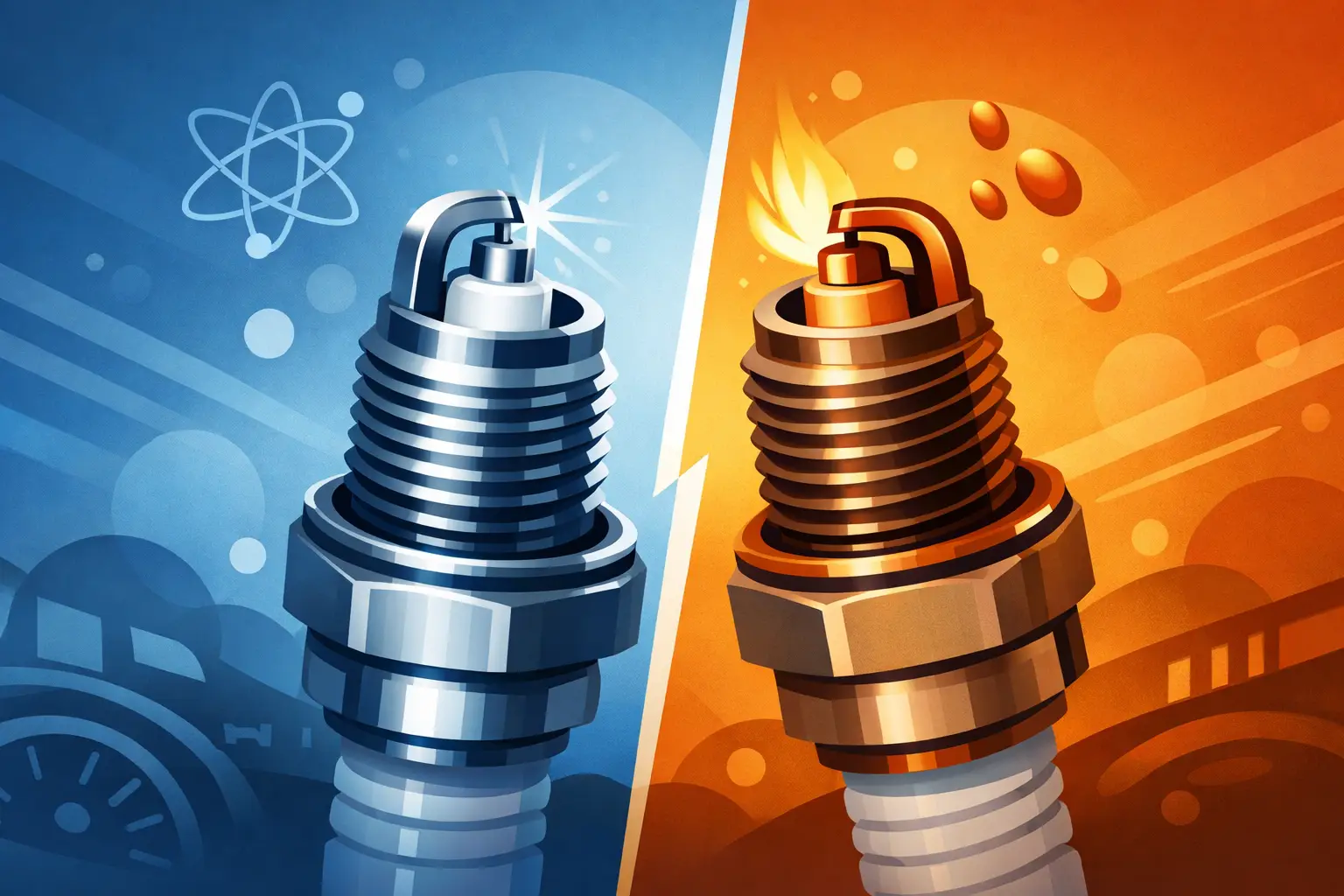
A spark plug is a small part with a direct effect on how an engine starts, idles, accelerates, and uses fuel. The iridium vs copper spark plugs decision is not simply about choosing the most expensive option. It is about matching electrode material, heat range, gap, and service interval to the engine in your car, truck, Jeep, or SUV.
For most late-model vehicles, the best answer starts with the manufacturer specification. Many engines were designed around long-life iridium or platinum plugs and their ignition systems expect that smaller, more durable center electrode. Older vehicles, certain modified engines, and some performance applications may benefit from a copper-core plug instead. The right choice is the one that supports clean combustion without creating a maintenance problem you did not need.
Iridium vs Copper Spark Plugs: The Core Difference
The phrase “copper spark plug” can be slightly misleading. Nearly all conventional plugs use a copper core because copper moves heat efficiently. What people usually mean by a copper plug is a conventional plug with a larger nickel-alloy center electrode over that copper core.
An iridium plug uses a very fine center electrode tipped with iridium, an exceptionally hard metal that resists wear and high combustion temperatures. Because the electrode can be smaller, it takes less voltage to create a consistent spark across the gap. That design helps modern coil-on-plug ignition systems fire reliably over a much longer service interval.
The materials create two distinct strengths. Copper-core plugs transfer heat well and are affordable, but their nickel electrodes wear relatively quickly. Iridium plugs cost more upfront, yet their fine-wire electrodes hold their shape and gap for far longer.
Why Electrode Material Changes Engine Behavior
Spark does not need to be dramatic to be effective. It needs to happen at the right moment, consistently, under cold starts, idle, highway cruise, towing load, and full-throttle acceleration. As a conventional electrode wears, the spark gap gradually grows. The ignition coil must work harder to jump that wider gap.
On a healthy older engine, the change may be subtle at first. Over time, a worn plug can contribute to hard starting, a rough idle, hesitation, reduced fuel economy, or a misfire under load. Iridium slows that wear substantially, which is why it is common in vehicles with 60,000- to 120,000-mile plug replacement intervals.
The fine electrode also exposes less surface area to the air-fuel mixture, helping the flame kernel begin more consistently. That does not mean iridium automatically adds noticeable horsepower to a stock engine. It means the plug is better at maintaining its intended performance for a long time.
When Iridium Spark Plugs Make Sense
Iridium is usually the practical choice for a newer daily driver, especially when replacing plugs requires significant labor. On many V6 and V8 engines, access to the rear bank can involve removing intake components or other hardware. Paying for a longer-lasting plug makes sense when the labor cost or DIY time is the larger part of the job.
Choose iridium plugs when your vehicle came from the factory with iridium plugs, when the owner’s manual specifies them, or when you want the longest normal service interval. They are also a strong fit for turbocharged and direct-injected engines, which can place greater demands on ignition components under cylinder pressure.
For trucks and SUVs used for commuting, towing, or long-distance driving, long-term consistency is the main advantage. A correctly specified iridium plug helps preserve dependable starts and stable operation between maintenance services. It is a maintenance decision, not a cosmetic upgrade, but it supports the same principle as every well-chosen component: performance should remain purposeful over time.
There are limits. An iridium plug will not correct a failing ignition coil, leaking valve cover gasket, clogged injector, vacuum leak, or low compression. If plugs show heavy oil deposits, wet fuel fouling, or unusual ash buildup, diagnose the cause before installing another set.
When Copper Spark Plugs Are the Better Fit
Copper-core plugs remain a smart choice in the right engine. Many older vehicles were engineered around conventional nickel-electrode plugs, and installing the specified copper plug can deliver excellent results at a lower purchase cost. They are easy to source, straightforward to replace, and well suited to engines with short recommended plug intervals.
Some performance builders also prefer conventional copper plugs because they can be changed frequently and read easily during tuning. In a supercharged, turbocharged, nitrous, or heavily modified application, plug inspection is part of checking fuel delivery, timing, detonation risk, and overall combustion health. Replacing a lower-cost plug more often may be preferable to running a long-life plug for extended mileage.
Copper is also useful when the correct plug for a particular application is a conventional design. The key word is correct. Heat range, reach, seat type, resistor design, projected or non-projected tip, and gap matter more than choosing a material based on price alone.
A copper plug is not inferior by default. It simply has a shorter electrode life. If your vehicle calls for one and you are comfortable servicing plugs at the recommended interval, it can be the right fit.
Do Not Treat Iridium as a Universal Upgrade
Switching from copper to iridium without checking specifications can create problems. Spark plugs are engineered for specific combustion chambers and ignition systems. A plug with the wrong reach can sit too far from the chamber or extend too far into it. The wrong heat range can encourage fouling or overheating. An incorrect gap can increase coil stress or cause a misfire under load.
Heat range deserves special attention. A hotter plug retains more heat at the tip and can resist fouling in low-load operation. A colder plug transfers heat away faster and is often needed for higher cylinder pressures or modified engines. Neither is inherently better. The engine combination determines the requirement.
Also avoid assuming every iridium plug should be regapped. Fine-wire iridium center electrodes can be damaged by aggressive gapping tools. If a gap adjustment is permitted by the plug manufacturer, use the correct tool carefully and never pry against the center electrode. When in doubt, select a properly pre-gapped plug for the application and verify the gap before installation.
Cost, Service Life, and Real Value
Copper plugs generally cost less per plug, while iridium plugs can cost several times more. That price difference is real, especially on engines that use six or eight plugs. But the full maintenance cost includes labor, access, downtime, and the risk of leaving worn plugs in service too long.
A set of copper plugs may need replacement around 20,000 to 30,000 miles, depending on the engine and driving conditions. Iridium plugs commonly last 60,000 miles or more, with many factory applications rated well beyond that. These are general ranges, not a substitute for your vehicle’s maintenance schedule.
For an easy-to-service four-cylinder, either option may be economical if both are approved for the engine. For a difficult V6, V8, or tightly packaged SUV engine, iridium often offers better long-term value because it reduces how often the job must be done.
Installation Details That Protect the Repair
A quality plug can still fail early if installation is careless. Work on a cool engine, confirm each plug part number, and inspect the ignition boots or coil boots for carbon tracking, tears, or oil contamination. Blow debris away from the plug wells before removing old plugs so dirt does not fall into the cylinder.
Thread plugs by hand first to avoid cross-threading an aluminum cylinder head. Use the specified torque rather than guessing by feel. Too little torque can prevent proper heat transfer and sealing; too much can damage threads or the plug shell. Most modern plugs are plated and do not need anti-seize unless the plug maker or vehicle manufacturer specifically calls for it.
If you find one plug that looks very different from the rest, pause before installing the replacements. A single fouled cylinder often points to a localized issue such as an injector concern, a weak coil, oil entry, or a coolant leak. New plugs may temporarily improve operation, but they will not remove the underlying cause.
Choose for the Engine You Have
Iridium vs copper spark plugs comes down to the vehicle’s specification and how you use it. Iridium is the dependable long-service choice for most modern factory applications. Copper is a cost-effective, proven option for older engines and setups that receive frequent inspection or tuning.
Start with the exact application, then match the required heat range, gap, and plug design before comparing materials. A spark plug is a small component, but it sits at the center of combustion. Give it the same attention you would give any precision replacement part, and your engine will reward you with cleaner starts, smoother power, and fewer surprises on the road.