
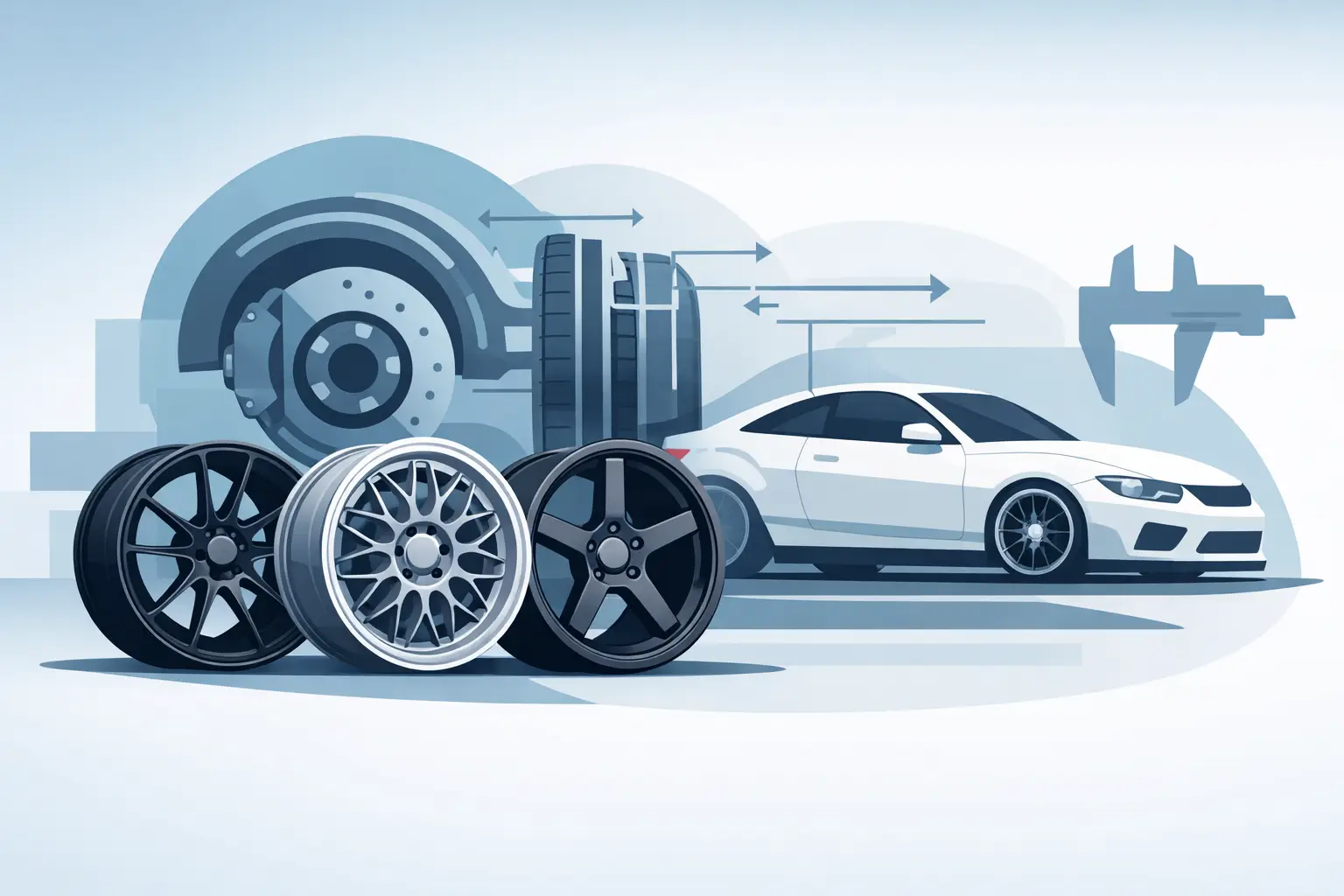
A wheel can look perfect in the product photo and still be completely wrong for your vehicle. That usually comes down to fitment, not style. This aftermarket wheel fitment guide is built to help you sort the specs that actually matter before you buy, so your new setup clears the brakes, sits where it should, and drives the way it should.
What matters most in an aftermarket wheel fitment guide
Most fitment mistakes happen because buyers focus on diameter and finish first. Those matter, but they are only part of the picture. Real wheel fitment starts with bolt pattern, wheel width, offset, center bore, and brake clearance. Tire size then has to work with all of it.
If one of those numbers is off, the result can be rubbing on the suspension, contact with the fender liner, a wheel that sits too far inboard, or a setup that pushes too far outside the body. On trucks, Jeeps, and SUVs, aggressive wheel choices can also change steering feel and increase the chance of rubbing at full lock or during suspension travel.
That is why wheel fitment is not just cosmetic. It affects safety, drivability, and the finished stance of the vehicle.
Start with your factory specs
Before comparing aftermarket options, get clear on the original wheel and tire specs for your exact vehicle, trim, and brake package. Factory variations matter more than many buyers expect. A performance trim may have larger brakes. An off-road package may change wheel width or tire diameter. Even within the same model year, there can be differences that affect what fits.
The key factory dimensions to confirm are wheel diameter, wheel width, bolt pattern, offset, center bore, and the stock tire size. If your vehicle is already modified with a lift, leveling kit, lowering springs, spacers, or a brake upgrade, use the current setup as your starting point, not the original brochure specs.
Bolt pattern is non-negotiable
Bolt pattern tells you how many lug holes the wheel has and the diameter of the circle they form. Common examples include 5×114.3, 6×139.7, and 8×170. The first number is the lug count. The second is the bolt circle diameter in millimeters.
This is one spec you cannot approximate. A wheel either matches your hub pattern or it does not. Adapters exist, but they add complexity, change spacing, and are not the right answer for every build. For most buyers, the correct direct-fit bolt pattern is the cleanest and safest route.
If you are shopping for a truck, Jeep, or SUV, double-check this number. Many platforms look similar, but their bolt patterns are not interchangeable.
Offset and backspacing decide where the wheel sits
Offset is one of the most misunderstood wheel specs. It measures the distance between the wheel’s mounting pad and its centerline. Positive offset places the mounting surface closer to the outside face of the wheel, pulling the wheel farther inward. Negative offset pushes the wheel outward for a more aggressive stance.
Backspacing is closely related, but it measures from the mounting pad to the inner edge of the wheel. Both numbers help predict clearance to suspension components, inner fenders, and brakes.
A small offset change can have a big visual and mechanical effect. More aggressive offsets can give a wider stance and more presence, but they may also increase fender rubbing, add stress to wheel bearings over time, and throw more road debris along the body. A more conservative offset keeps the wheel tucked in, though it can create inner clearance issues if the wheel gets too close to struts or control arms.
There is no universal best offset. It depends on your vehicle, wheel width, tire size, ride height, and what kind of look and use you want.
Wheel width affects more than tire fit
Wheel width changes the tire’s shape and how the wheel fills the wheel well. A wider wheel can support a wider tire and sharpen the visual stance, but it also changes sidewall profile and clearance.
For example, a tire mounted on a wider wheel will often have a squarer shoulder and less sidewall bulge. That can improve response on the street, but it may reduce forgiveness over rough surfaces. On a truck or Jeep, too much wheel width can expose the rim more to trail damage if the tire sidewall does not extend beyond it.
The safest approach is to match the wheel width to the tire manufacturer’s approved range. That keeps the tire working as designed instead of stretching it too far or pinching it too tightly.
Center bore and hub fit still matter
The center bore is the hole in the middle of the wheel that fits over the vehicle hub. Some wheels are hub-centric, meaning the center bore matches the hub closely and helps support the wheel’s position. Others are lug-centric and rely on the lug hardware to center the wheel.
A wheel with a center bore that is too small simply will not fit. A wheel with a larger center bore may fit, but it often benefits from hub-centric rings to reduce the chance of vibration. This is one of those details buyers ignore until they feel a shake at highway speed.
For a clean installation and predictable road manners, center bore should be part of the fitment check from the start.
Brake clearance can stop a wheel choice fast
Not every wheel that matches the bolt pattern will clear the brakes. Spoke design, barrel shape, wheel diameter, and offset all affect brake clearance. This is especially important on performance trims, heavy-duty trucks, and vehicles with upgraded calipers or larger rotors.
A 17-inch wheel might fit one version of a model and fail on another because the brake package changed. Even if the diameter is technically large enough, the inside of the wheel may contact the caliper depending on the spoke profile.
This is why test-fit data and application-specific confirmation are so valuable. Brake clearance is one area where guessing gets expensive.
Tire size is part of the same decision
An aftermarket wheel fitment guide is incomplete without tire sizing. Wheels and tires work as a system. If you change wheel diameter or width, the tire size often needs to change too.
Many buyers want a larger wheel for a sharper look. That usually means using a lower-profile tire to keep the overall diameter close to stock. If overall diameter grows too much, you can run into rubbing, altered speedometer readings, slower acceleration, and shift behavior changes on some vehicles.
On the other side, truck and SUV owners often want a taller tire for added presence or off-road capability. That can work well, but it increases the need to check fender, liner, mud flap, and suspension clearance at full steering lock and under compression.
A good-looking fitment is one thing. A usable fitment is better.
Suspension changes shift the answer
Lift kits, leveling kits, lowering springs, coilovers, and spacers all change fitment math. A wheel and tire package that works on a stock vehicle may rub once it is lowered, or it may fit better after a mild lift. But suspension changes do not solve every conflict.
For example, lifting a truck can create more vertical room for a taller tire, but the tire may still rub at the rear of the front wheel well during turns. Lowering a car may reduce fender gap and improve appearance, yet require more careful offset selection to avoid contacting the fender lip.
This is where honest trade-offs matter. The most aggressive stance is rarely the easiest setup to live with every day.
Common mistakes buyers make
The first mistake is assuming same bolt pattern means full compatibility. It does not. Offset, center bore, and brake clearance still need to line up.
The second is copying a setup from another vehicle without matching trim, ride height, and tire brand. Two tires with the same labeled size can measure differently in the real world. That extra half inch can be the difference between clean clearance and constant rubbing.
The third is buying for appearance only. Deep lip, flush fitment, and oversized diameter can look strong, but they should not come at the cost of steering feel, ride quality, or reliable clearance.
How to choose the right setup for your goals
If your priority is daily driving, stay close to factory overall diameter and choose a conservative offset that improves the look without creating headaches. If your priority is performance street use, focus on brake clearance, tire support, and offsets that work with your suspension geometry. If your goal is an aggressive truck or Jeep stance, expect more compromise and confirm clearances carefully before going wider, taller, or more negative on offset.
This is also where material quality and finish matter. Wheels are a visual upgrade, but they are also exposed to road salt, brake dust, heat, and impact. A wheel that fits correctly and holds up well is always a smarter buy than one that only looks right for the first month.
FORTLUFT’s approach to aftermarket parts reflects that balance – functional fit first, finished style second, and both should work together.
The smartest way to read fitment specs
Treat every wheel listing like a technical product, not just a style choice. Look at the full specification set together. Ask how the wheel sits relative to stock, what tire size it is meant to support, whether your brakes will clear, and how your suspension setup changes the answer.
Fitment is where design meets engineering. Get it right, and the result looks sharper, drives properly, and feels intentional every time you walk up to the vehicle. That is the difference between a wheel upgrade and a wheel mistake.