
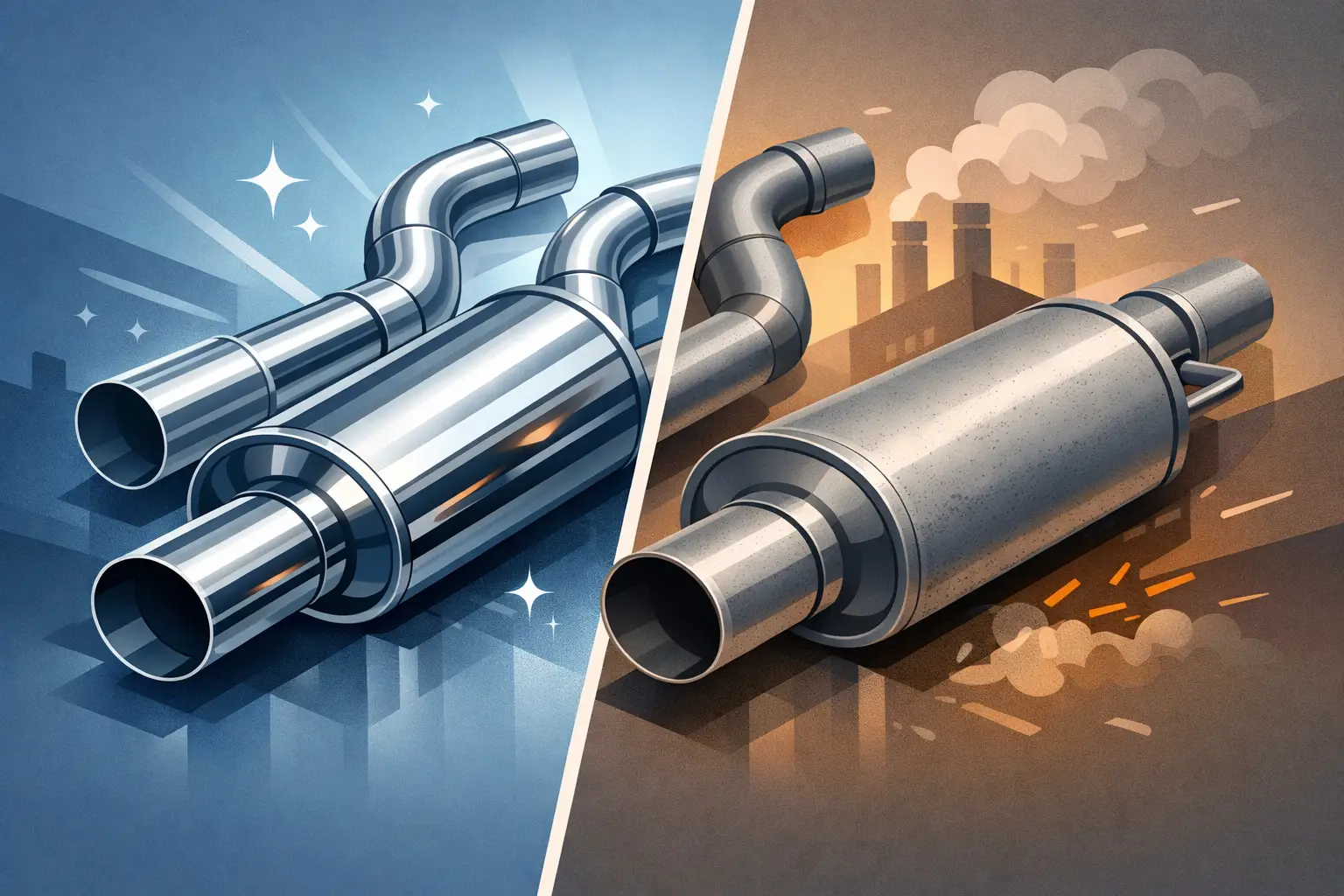
If you have ever looked under a truck in the Rust Belt and then compared it to one that lives in Arizona, you already know why stainless steel vs aluminized exhaust is not a small decision. Exhaust material changes how long the system lasts, how it looks after a few winters, and how much value you get for the money.
For most buyers, the right choice comes down to climate, budget, and how long they plan to keep the vehicle. There is no one-size-fits-all answer. A daily driver that sees salted roads has very different needs than a weekend Jeep, a shop build, or a work truck that gets turned over every few years.
Stainless steel vs aluminized exhaust: what changes in the real world
On paper, both materials do the same job. They route exhaust gases, support emissions components, and help control sound. In practice, they age very differently.
Aluminized steel is regular steel coated with an aluminum-silicon alloy. That coating helps resist corrosion better than bare steel, and it keeps cost down. For many replacement systems, that makes aluminized exhaust a practical option.
Stainless steel contains chromium and, depending on the grade, other alloying elements that improve corrosion resistance throughout the metal itself. That matters because an exhaust system gets scratched, heated, cooled, and exposed to moisture from both outside conditions and internal condensation. When the material has corrosion resistance built in, not just applied on the surface, it tends to hold up much better over time.
The result is simple. Aluminized exhaust usually wins on upfront price. Stainless steel usually wins on lifespan, appearance, and long-term durability.
Why aluminized exhaust still makes sense
Aluminized exhaust is not the cheap throwaway option some people assume it is. In the right use case, it is a smart buy.
If your vehicle lives in a dry climate, aluminized piping can last a long time. Heat cycles and normal road use still take a toll, but the lack of road salt and constant moisture changes the equation. If you are replacing a stock system on an older SUV, light-duty pickup, or commuter car and want solid function without paying a premium for material, aluminized steel is often enough.
It also makes sense when the vehicle is not a long-term keeper. If you expect to sell or trade in the next few years, the extra spend on stainless may not deliver a meaningful return. The same goes for budget-focused repairs where restoring quiet operation and dependable flow matters more than building a premium underbody.
That said, aluminized exhaust has limits. Once the coating is compromised by chips, abrasions, poor weld areas, or long-term exposure, corrosion can move faster than many drivers expect. That is where geography starts to matter.
The climate factor most buyers underestimate
Road salt is brutal. Snow, slush, humidity, and repeated short trips are also brutal. If your exhaust never gets fully hot for long enough to burn off internal moisture, condensation collects inside the pipes and mufflers. Add salt outside the system and you get corrosion from both directions.
This is why aluminized systems can look decent for a while, then fall off quickly in northern states. A truck used through multiple winters, parked outside, and driven on short city runs lives a much harder life than a highway-only vehicle in a dry region.
Where stainless steel earns its price
Stainless steel exhaust costs more, but it buys more than just bragging rights. It buys staying power.
For drivers in wet, snowy, or coastal areas, stainless can be the difference between replacing an exhaust once and replacing it again. It is especially attractive for trucks, Jeeps, and SUVs that see year-round use, towing, off-road exposure, or frequent washdowns. If the vehicle is part utility and part pride of ownership, stainless fits both roles.
It also has a visual advantage. A stainless exhaust system or stainless tip tends to maintain a cleaner, more premium appearance under the vehicle and at the rear exit. For many enthusiasts, that matters. FORTLUFT’s design-minded approach to exhaust parts speaks directly to this point – the material is not only functional, it becomes part of the vehicle’s finished look.
There is another value angle here. Stainless steel can reduce long-term replacement labor, especially for shops or fleet buyers who think beyond initial part cost. Paying more once can be cheaper than repeating the same repair cycle in a harsh environment.
Not all stainless is the same
This is where buyers need to slow down. “Stainless” on a product listing does not always mean the entire system offers the same level of corrosion resistance.
Two common grades in exhaust are 409 and 304 stainless. 409 is widely used because it is more affordable and still offers much better corrosion resistance than aluminized steel. It may surface discolor or develop cosmetic oxidation, but it generally holds together well. 304 stainless is more corrosion resistant and often more desirable for premium builds, show-quality appearance, or very harsh conditions, but it comes at a higher cost.
So if you are comparing options, ask what grade you are getting. Stainless is not a single category. It is a range, and the grade affects both price and performance.
Stainless steel vs aluminized exhaust on sound and performance
A lot of buyers want to know whether the material changes exhaust tone or horsepower. The honest answer is: a little, but usually less than system design.
Pipe diameter, muffler construction, resonator design, bends, and overall layout have a bigger impact on sound and flow than whether the pipe is stainless or aluminized. If two systems share the same dimensions and design, the material alone is not the main driver of performance.
Sound can vary slightly because different materials and wall thicknesses resonate differently, but it is not the deciding factor for most street vehicles. If your goal is a deeper tone, more aggressive note, or improved flow, focus first on the system’s design and fitment. Then use material as the durability and appearance decision.
Which option is better for your type of vehicle?
For an everyday commuter in a mild climate, aluminized exhaust can be the practical value play. It restores function, controls cost, and may last long enough to make perfect sense.
For a truck or SUV that works hard, racks up miles, or stays in service for years, stainless usually looks stronger. These vehicles often see more exposure to weather, payload, towing heat, and underbody abuse. Paying for better material is easier to justify.
For Jeeps and off-road builds, stainless has a clear appeal. Mud, water crossings, trail debris, and open exposure accelerate wear. A more corrosion-resistant system is not just cleaner looking – it is better suited to the environment.
For performance-minded owners, the answer depends on the build goal. If you are investing in upgraded tips, polished finishes, or a more refined rear-end appearance, stainless complements that direction better. Technology as an art form only works when the material supports both the engineering and the visual result.
How to choose without overbuying
The smartest way to decide is to match the exhaust material to the life your vehicle actually lives.
If you live in a dry state, drive moderate miles, and need a cost-effective replacement, aluminized is often enough. If you live where roads are salted, plan to keep the vehicle long term, or care about lasting appearance, stainless is usually worth the premium.
Also think about labor. On some vehicles, exhaust replacement is simple. On others, rusted hardware, seized clamps, and awkward routing make the job more expensive than expected. When labor is a factor, buying a longer-lasting material gets easier to justify.
Finally, be realistic about ownership. If this is a short-term repair on a vehicle nearing the end of its service life, premium stainless may be unnecessary. But if you are building a reliable daily, refreshing a truck you plan to keep, or upgrading with appearance in mind, stainless often aligns better with the bigger picture.
The better value is not always the lower price
Price matters, but value is what you keep after seasons of use. Aluminized exhaust can be the right answer when budget and climate line up. Stainless steel can be the better answer when durability, presentation, and long-term ownership matter more.
The best exhaust choice is the one that fits your vehicle, your environment, and your standards. Buy for the way you drive now, not just for the checkout total you see today.