
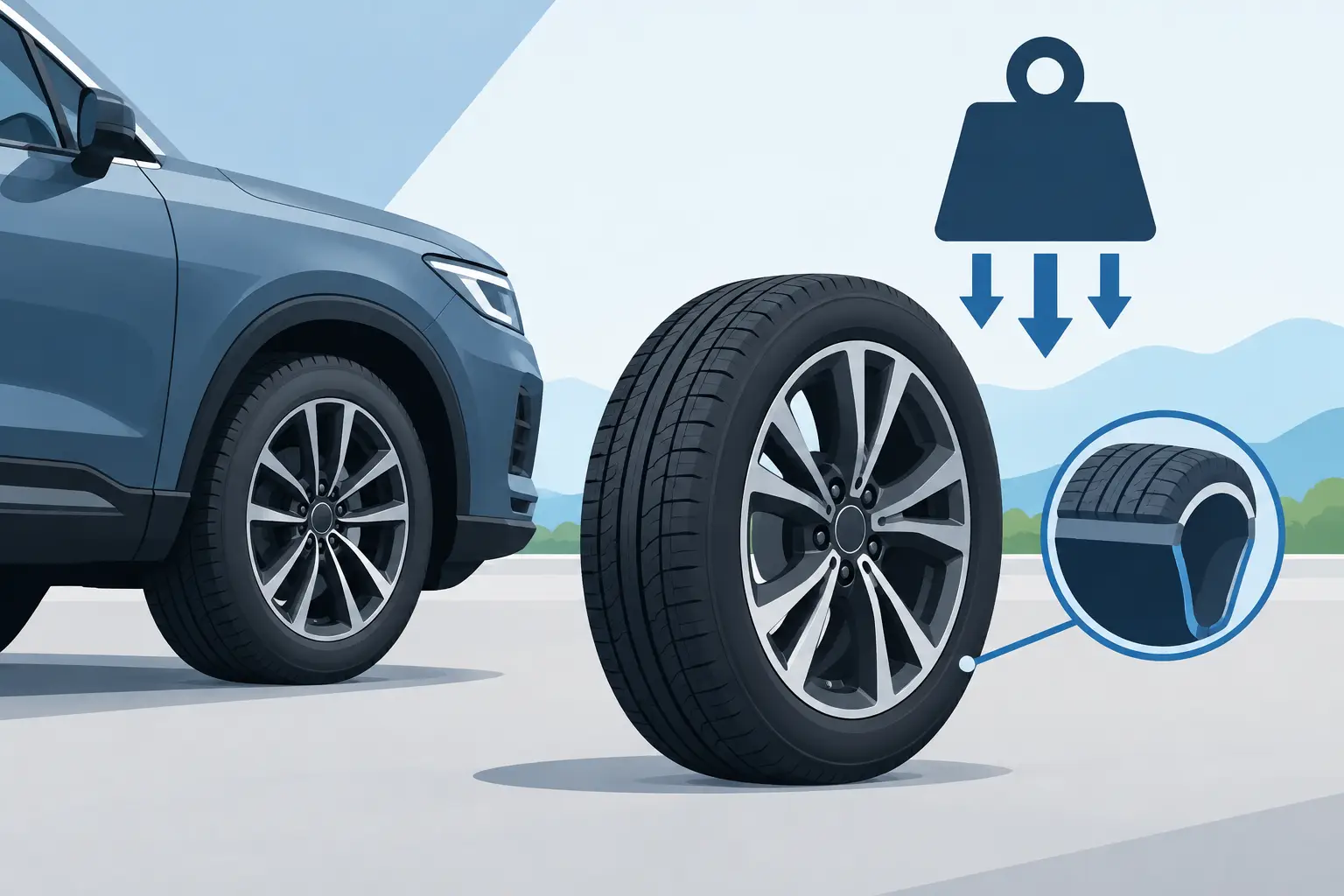
A wheel can have the bolt pattern, finish, and offset you want and still be the wrong choice for the job. Aftermarket wheel load rating is the specification that tells you how much weight one wheel is designed to carry. Get it wrong, and a set of wheels that looks right in the driveway may be working beyond its intended capacity when the vehicle is loaded, towing, or traveling over rough pavement.
For cars, a wheel upgrade is often a straightforward fitment decision. For trucks, Jeeps, SUVs, and work-focused vehicles, load rating needs to be part of the first conversation. Cargo, passengers, trailer tongue weight, recovery gear, bed racks, and larger tires can all place more demand on the wheel than a curb-weight calculation suggests.
What an Aftermarket Wheel Load Rating Means
A wheel load rating is the maximum load assigned to one wheel, usually expressed in pounds. You may find it cast, stamped, or printed on the back of a wheel near the hub area, spokes, or barrel. It may also appear in the manufacturer’s technical documentation. A marking such as Max Load 2,500 lb means that one wheel is rated to support up to 2,500 pounds under the manufacturer’s specified conditions.
That number is not the same as vehicle weight, tire load capacity, or axle rating. It is one part of a system. The wheel, tire, axle, suspension, and vehicle structure all have limits. The component with the lowest applicable capacity sets the limit.
A higher-rated wheel does not increase your truck’s payload or towing rating. It simply provides a wheel with enough capacity for the vehicle’s approved axle loads and the way you intend to use it. Think of it as selecting the right foundation for the rest of the fitment, not as a shortcut to a higher-capacity vehicle.
Wheel construction alone does not tell the full story. A forged wheel, cast wheel, beadlock-style wheel, or heavy-looking design should never be judged by appearance. Confirm the stated rating for that exact wheel size, width, finish, and application.
Start With Axle Ratings, Not GVWR
The most useful figures are the front and rear Gross Axle Weight Ratings, commonly called GAWR. These are listed on the vehicle certification label, usually on the driver-side door jamb. The front and rear axle ratings can be very different, especially on pickups and SUVs set up to tow.
For a vehicle with one wheel at each end of an axle, divide that axle’s GAWR by two. A rear GAWR of 5,600 pounds requires wheels rated for at least 2,800 pounds each on the rear axle. A 4,200-pound front GAWR calls for at least 2,100 pounds per front wheel.
That calculation establishes the minimum based on the axle rating. In real use, choosing a wheel with sensible capacity above that minimum is often the better move, particularly for off-road use, frequent towing, commercial loads, or vehicles that see potholes and uneven terrain. Dynamic forces from braking, cornering, impacts, and trail obstacles can be far greater than the static weight measured while parked.
Do not divide the Gross Vehicle Weight Rating by four and call the result your wheel requirement. Vehicle weight does not always distribute evenly, and added load often shifts rearward. Trailer tongue weight, a loaded truck bed, rear cargo carriers, and overlanding equipment can place a disproportionate share of the load on the rear axle.
Dually trucks require extra care. Their rear axle uses four wheels, but wheel, tire, and vehicle manufacturer guidance must all be considered for the specific dual-wheel setup. Do not assume a simple calculation covers every fitment detail.
When Your Vehicle Needs More Rating Than Stock Use
A stock daily driver that carries passengers and normal cargo may only need a wheel that meets the factory axle requirements. Once the vehicle’s role changes, the margin matters more.
A half-ton pickup used for occasional light hauling has different needs than the same truck with a slide-in camper, loaded toolbox, roof tent, trailer, and oversized all-terrain tires. A Jeep that spends most of its time on pavement has a different load profile than one that regularly encounters rocks, ruts, and abrupt suspension compression.
Pay close attention when adding equipment that stays on the vehicle. Steel bumpers, winches, auxiliary fuel, drawer systems, skid plates, spare tire carriers, and commercial service bodies add permanent weight. Those additions may also change front-to-rear balance. Checking actual axle weights at a public scale is a smart step for heavily equipped vehicles, especially before selecting wheels for towing or off-road duty.
How to Match Aftermarket Wheel Load Rating to Fitment
Load rating should be verified alongside the rest of the fitment specifications. A wheel can be adequately rated and still create a problem if its bolt pattern, center bore, offset, backspacing, diameter, or width is incorrect.
Before ordering, confirm these four points:
- The front and rear GAWR listed on the vehicle certification label
- The stated load rating for each exact aftermarket wheel
- The tire load capacity at the pressure you will actually run
- The wheel’s vehicle-specific fitment, including bolt pattern, offset, center bore, and brake clearance
Tire capacity deserves equal attention. If a wheel is rated at 3,000 pounds but the installed tire can only support 2,500 pounds at its specified inflation pressure, the tire becomes the limiting component. The same principle applies to valves, TPMS hardware, lug hardware, and any approved wheel adapters or spacers.
A wheel’s diameter does not automatically determine its rating. A larger wheel may be rated higher, lower, or similarly to a smaller option depending on its construction and intended application. The product specification is the answer, not the diameter stamped on the tire sidewall.
For staggered setups, check the front and rear wheels individually. For custom builds, lowered trucks, lifted SUVs, or brake upgrades, verify caliper clearance and suspension clearance in addition to capacity. Style and performance should work together, not compete.
Read the Rating in Context
Some wheel markings include a maximum load and a maximum inflation pressure. These markings should be read together with the wheel manufacturer’s application data. Never exceed the rated load, pressure, or hardware requirements. If the rating is missing, unclear, or does not match the listing details, stop and verify it before installation.
Be cautious with used wheels that have an unknown history. Curb strikes, hard off-road impacts, corrosion, improperly repaired damage, and previous overloading can compromise a wheel even when it still looks acceptable from the front. Inspect the inner barrel, bead seat, hub area, and spokes for cracks, bends, dents, or evidence of welding and repair.
Installation also affects how a wheel performs. Use the correct lug seat style, whether conical, ball, or mag-seat, and use hardware with the proper thread engagement. Torque lug nuts or bolts to the vehicle manufacturer’s specification using a calibrated torque wrench. Recheck torque after the initial drive period specified by the wheel or vehicle manufacturer.
Common Questions About Wheel Load Ratings
Can I use a wheel rated exactly at my axle requirement?
Technically, a wheel that meets the per-wheel requirement based on GAWR may be acceptable when all other specifications are correct. For towing, off-road travel, frequent hauling, or heavily accessorized vehicles, additional rating margin is a practical choice. It gives your build more room for real operating conditions without changing the vehicle’s legal axle limits.
Does a higher wheel load rating make my vehicle safer?
Only when it is part of a properly matched setup. A higher-rated wheel can provide suitable capacity, but safety still depends on tires, inflation pressure, axle condition, suspension, fitment, and correct installation. It cannot compensate for overloaded axles or damaged components.
Where can I find the load rating on my current wheels?
Check the rear of the spokes, the hub mounting area, and the inside of the barrel. Factory wheels may have markings that are less obvious than aftermarket wheels. If you cannot locate a readable rating or reliable manufacturer documentation, do not estimate based on wheel size or appearance.
The right wheel should carry your vehicle’s load with confidence while matching the stance, finish, and purpose of the build. At FORTLUFT, that means treating every wheel specification as part of the finished vehicle – practical capacity engineered to support a design that looks as intentional as it performs.