
A flush stance can make a truck look planted, a Jeep look purposeful, and an SUV or car look properly finished instead of tucked in like the factory played it too safe. That is usually where the wheel spacers vs offset wheels question starts – not in theory, but in the garage, during a tire upgrade, or right before ordering a new set of wheels.
The short answer is simple. Both can push the wheel outward. The better answer is that they do it in different ways, with different costs, fitment limits, and long-term implications. If you want the right result instead of an expensive guess, it helps to know where each option makes sense.
Wheel spacers vs offset wheels: what changes?
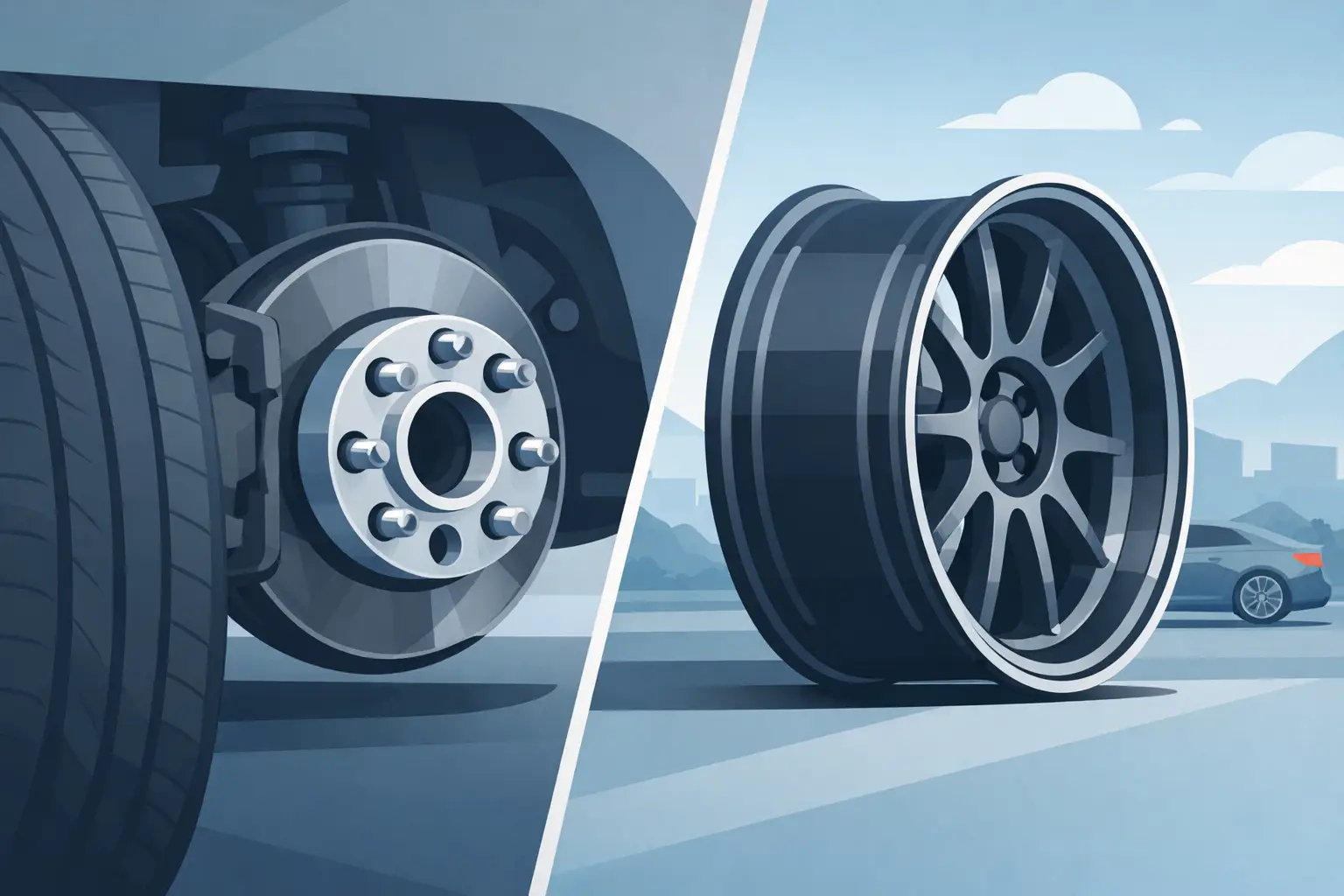
Wheel spacers sit between the hub and the wheel. Their job is to move the wheel mounting surface outward, which pushes the wheel and tire farther away from the suspension and closer to the fender edge. A 1-inch spacer adds about 1 inch of track width per side.
Offset wheels change that position by design. Wheel offset is the distance between the wheel’s centerline and its mounting pad. A lower positive offset, or a move into negative offset depending on the vehicle and wheel size, pushes the wheel outward without adding a separate part between the hub and the wheel.
That sounds like the same end result, and visually it often is. Mechanically, though, the path matters. Spacers add another interface. Offset wheels build the change into the wheel itself. That distinction affects cost, fitment, hardware, and how clean the setup feels over time.
When wheel spacers make more sense
Spacers are often the fastest answer when the wheels you already own are close to working. Maybe your new tires rub the upper control arm by a small margin. Maybe your factory wheels sit too far inside after a suspension upgrade. Maybe you want a wider stance without buying four new wheels.
In those cases, spacers can be a practical move. They usually cost far less than replacing the entire wheel package, and they can solve minor clearance problems quickly. For many truck and Jeep owners, that matters. If your current wheels are in good condition and the look is almost right, spacers can bridge the gap.
They also let you keep an OEM wheel style you like. That is a real advantage for owners who want a more aggressive stance without giving up a factory design, load rating, or finish.
But there is a limit to how much correction spacers should be expected to do. If you need a dramatic change in position, or if the wheel width and tire size are already pushing the edge of the fender, spacers can turn a near-fit into a problem. More poke can mean fender contact, mud spray, faster wear on some components, and a setup that looks forced instead of intentional.
When offset wheels are the better choice
If you are already shopping for wheels, offset is usually the cleaner way to get the stance and clearance you want. Instead of adapting an existing wheel, you are selecting a wheel with the right mounting position from the start.
That tends to simplify the setup. You avoid stacking extra hardware into the equation, and you can choose width, diameter, and offset together so the final fitment makes sense as a complete package. For buyers building a more refined look, this matters. The best wheel setups do not look improvised. They look engineered.
Offset wheels also give you more control over appearance. Spoke profile, lip depth, concavity, and brake clearance all play into the final result. If style is part of the goal – and with most aftermarket wheel buyers it is – a wheel chosen with the correct offset usually delivers a stronger finish than trying to force the factory wheels outward.
The trade-off is cost. New wheels are a larger purchase, and they can trigger follow-on decisions about tires, TPMS compatibility, lug hardware, and suspension clearance. Offset wheels are often the better long-term answer, but not always the cheapest path to get there.
Fitment is where the decision gets real
The biggest mistake in this category is treating stance as the only variable. Pushing a wheel outward changes more than the view from the side of the vehicle.
Inner clearance is one factor. You may need more room around brake calipers, struts, shocks, or control arms. Outer clearance is another. The farther the wheel moves toward the fender, the more likely it is to rub during turns, compression, or articulation. This is especially relevant on lifted trucks, leveled setups, and Jeeps that actually see trail use.
Wheel width changes the math too. A half-inch or one-inch increase in width combined with a more aggressive offset can create a much larger real-world shift than expected. Tire section width and sidewall shape also matter. Two tires labeled the same size can fit differently depending on brand and tread design.
That is why wheel spacers vs offset wheels should never be reduced to a style decision alone. Proper fitment is part measurement, part intended use. A mall-crawling SUV, a daily-driven half-ton, and a trail Jeep may all want a wider stance for different reasons, but they should not all be set up the same way.
Safety and hardware matter more than internet opinions
Spacers get a lot of noise online. Some people treat them like a guaranteed failure. Others act like they are never an issue. Neither view is especially useful.
Quality and fitment matter more than the category itself. Hub-centric spacers that are properly machined, matched to the vehicle, and installed with the correct hardware are very different from cheap universal parts with questionable tolerances. Torque spec matters. Stud engagement matters. Re-torque intervals matter. So does using the right spacer thickness for the application.
The same goes for wheels. A poorly selected offset wheel can create clearance issues, rubbing, or excess stress just as easily as a bad spacer setup can. Buying the right wheel is not only about bolt pattern and diameter. Offset, center bore, load rating, brake clearance, and intended use all need to line up.
If your vehicle tows, hauls, sees rough roads, or spends time off-road, the margin for error gets smaller. Trucks and SUVs often ask more from wheels and hardware than a lightly driven commuter car. That does not automatically rule out spacers, but it does raise the standard for parts quality and installation.
Cost, value, and what you are really buying
Spacers usually win on upfront cost. If your current wheels work and you only need a modest adjustment, they can deliver a noticeable visual and functional change for much less money. That is the practical appeal.
Offset wheels often win on total result. You are not just paying to move the wheel outward. You are buying a complete visual upgrade, a fitment solution designed into the wheel, and in many cases better control over width, brake clearance, and finish. For enthusiasts who care how the whole vehicle comes together, that added value is real.
This is where the buying decision becomes less about absolute right and wrong, and more about project stage. If the wheels are staying, spacers may be smart. If new wheels are already on the list, choosing the right offset from the start is usually the better investment.
How to choose without regretting it
Start with the reason for the change. If you need a small clearance correction or want to push factory wheels outward slightly, spacers can be the efficient answer. If you are rebuilding the look of the vehicle or replacing wheels anyway, offset wheels deserve first consideration.
Then measure the vehicle honestly. Check inner clearance, outer fender space, suspension travel, brake size, and tire dimensions. Think about how the vehicle is actually used, not just how you want it to look in photos. A clean street stance and a usable truck setup are not always the same thing.
Finally, buy for fitment quality, not just appearance. Good parts save time, prevent vibration, and reduce the chance of chasing issues later. That applies whether you are ordering spacers, wheels, or both as part of a larger build. At FORTLUFT, that mindset is simple: the right hardware should perform well, fit right, and look like it belongs on the vehicle.
A better stance always gets attention, but the best setups do more than look good parked. They stay quiet at highway speed, clear under load, and feel right every time you turn the wheel.