Jeep Suspension Lift Guide for Real-World Use

A Jeep with the wrong lift looks right until you drive it. Then the steering feels vague, the ride gets choppy, the tires rub at full lock, and the extra clearance you paid for comes with trade-offs nobody mentioned. A solid jeep suspension lift guide should do more than sell height – it should help you choose a setup that fits how your Jeep is actually used.

For some owners, that means room for larger tires and better breakover angle on the trail. For others, it means a more aggressive stance without turning a daily driver into a project. The best lift is not the tallest one. It is the one that matches tire size, suspension geometry, ride expectations, and the parts you are willing to replace the first time.

What a suspension lift really changes

A suspension lift raises the vehicle by changing spring height, shock length, mounting points, or a mix of all three. That creates more room for tires and more underbody clearance, but it also changes steering angles, driveline angles, center of gravity, and how the suspension cycles.

That is why lift height alone never tells the full story. A basic 2-inch kit and a well-engineered 2-inch kit can drive very differently. The difference usually comes down to included components, shock tuning, and how well the system corrects geometry instead of just pushing the body higher.

If you are shopping for looks only, that might sound like overkill. It is not. Even a modest lift affects alignment, handling, and wear over time. A Jeep is one of the most modification-friendly platforms on the road, but it still rewards doing things in the right order.

Jeep suspension lift guide by lift height

The easiest way to narrow your options is to start with height, then work backward into supporting parts.

1 to 2 inches

This is where many daily driven Jeeps should start. A lift in this range can improve stance, add room for slightly larger tires, and preserve much of the factory ride and handling when the kit is properly designed. It is often the best balance for owners who want a cleaner look and moderate trail capability without opening the door to major driveline and steering corrections.

At this height, you may still need to think about bump stops, sway bar links, and alignment correction, but the install is usually more straightforward than taller systems. Tire fitment gets easier, but not unlimited. Wheel offset still matters, and so does how aggressively you plan to articulate off-road.

2.5 to 3.5 inches

This is the range where a Jeep starts to look and perform distinctly different. You gain more practical tire clearance and more off-road capability, but geometry correction becomes much more important. Control arm angles change enough to affect ride quality. Track bar positioning, caster, and brake line length all deserve attention.

For many Wrangler owners, this is the sweet spot. It can support a serious tire upgrade and stronger trail performance while staying manageable on the street if the rest of the system is addressed properly. If it is not, this is also the range where people start chasing vibrations, wandering steering, and uneven component wear.

4 inches and up

This is no longer a cosmetic change. It is a full build decision. At this level, you should expect to address control arms, track bars, driveshaft angles, shock travel, steering correction, bump stops, and possibly gearing depending on tire size. Installation complexity and total cost rise fast, even if the base kit price looks attractive.

A tall lift can be the right answer for dedicated off-road use or a Jeep built around major tire clearance. It is usually not the best first modification for a daily driver that still needs clean road manners, easy entry, and predictable braking and cornering.

The parts that matter most

A lift kit is only as good as the components that control what changed. Springs set ride height, but they do not fix geometry. Shocks influence ride control more than many buyers expect, especially on pavement where poor valving can make a new setup feel cheap no matter how good the stance looks.

Control arms matter because they influence axle position and caster. Fixed arms may work on some mild lifts, but adjustable arms give you room to dial things in, especially when you want road stability after changing height. Track bars recenter the axles under the Jeep. Skip that correction and your Jeep may sit visibly off-center even if the lift height is technically correct.

Brake line extensions or longer lines become relevant as droop increases. Bump stops protect tires, fenders, and shocks from harsh contact at full compression. Sway bar links affect articulation and handling balance. None of these parts are glamorous, but they are where a lift goes from acceptable to properly sorted.

Tire size, wheels, and why fitment gets expensive fast

Most lift decisions are really tire decisions. Owners often start by asking how much lift they need, when the better question is what tire they want to run and how they use the Jeep. A mild trail build on 33s calls for a different setup than a show-focused street Jeep or a rock-crawling build aiming for 35s or larger.

Wheel width and offset are part of that equation. A tire that clears with one wheel may rub with another. More aggressive offset can help clear suspension components, but it can also push the tire outward, increase scrub radius, and change the look and feel of the Jeep. That can be good or bad depending on the goal.

This is also where budget planning matters. Tire size increases can lead to gearing concerns, heavier steering feel, longer braking distances, and extra strain on factory components. A lift kit is rarely the only line item.

Ride quality versus off-road performance

There is always a trade-off. A suspension tuned for flex and trail absorption may feel softer or less precise on the highway. A setup built for crisp street manners can limit articulation or feel harsh over rough terrain. The right answer depends on whether your Jeep spends more time commuting, overlanding, crawling, or parked where stance matters as much as function.

That does not mean you have to choose one extreme. Many modern systems are designed for mixed use, but realistic expectations still matter. If you want factory-like comfort, larger tires, more clearance, and maximum articulation all at once, you are asking one suspension to do conflicting jobs. Good parts help, but physics still sets the limit.

Installation choices and where owners get into trouble

A basic spacer lift can be tempting because it is affordable and quick to install. For some uses, it works. But spacers do not improve spring rate, shock control, or geometry on their own. They create height, not a full suspension solution.

A complete kit costs more because it addresses more of the system. That can mean better springs, matched shocks, correction brackets, track bars, and hardware designed to work together. For buyers who want a Jeep that drives as cleanly as it looks, complete systems usually make more sense than stacking piecemeal parts over time.

Professional installation can also be money well spent, especially once lift height moves beyond the mild range. Alignment is not optional. Torque specs matter. So does checking driveline vibration, steering wheel centering, and brake line routing after the install. A Jeep can feel almost right and still be wrong enough to create problems later.

How to choose the right setup the first time

The best approach is brutally simple. Decide how the Jeep is used, pick the tire size, then choose the minimum lift that supports that goal with the ride quality you can live with. That usually leads to a smarter build than buying height first and solving problems afterward.

If the Jeep is a daily driver with weekend trail use, a modest suspension lift with quality shocks and proper correction parts is often the strongest value. If the Jeep is built around harder off-road use, you can justify more height and more supporting hardware. If appearance is the top priority, be honest about that too. There is nothing wrong with building for style, as long as the parts still support safe, predictable performance.

This is where a retailer with broad aftermarket coverage helps. FORTLUFT serves buyers who care about function and finish, which is exactly the mindset a Jeep build needs. Suspension should perform, but it should also look intentional – technology as an art form only works when the engineering holds up on the road and off it.

A final thought on this jeep suspension lift guide

The right lift should make your Jeep feel more capable, not more compromised. If you choose based on real use, match the supporting parts to the height, and respect the fitment details, you end up with a build that looks sharp, drives right, and stays enjoyable long after the install day excitement wears off.

Aftermarket Auto Parts Guide for Smarter Buys

A bad parts purchase usually does not fail at checkout. It fails a week later, when the fit is off, the finish looks cheap, the install takes twice as long, or the part simply does not hold up. That is why an aftermarket auto parts guide matters – not as theory, but as a practical way to buy smarter for your car, truck, Jeep, or SUV.

The aftermarket gives you more choice than OEM ever will. That is the upside. The trade-off is that more choice also means more variation in quality, fitment, materials, and intended use. Some parts are built for basic replacement. Others are designed to improve durability, appearance, or performance. The right buy depends on what you expect the vehicle to do.

What this aftermarket auto parts guide is really about

At the simplest level, aftermarket parts are components made by companies other than the vehicle’s original manufacturer. That does not automatically make them better or worse. It means you need to judge them on fit, construction, application, and value instead of assuming the badge tells the whole story.

For most buyers, the decision comes down to three lanes. You may be replacing a worn part to restore factory function. You may be upgrading a component that was adequate from the factory but not ideal for your use. Or you may be changing the vehicle’s look and feel while keeping it road-ready. A daily driver with 120,000 miles needs a different buying mindset than a weekend truck build or a Jeep set up for larger tires and rougher terrain.

That is where a practical filter helps. Before you buy, define the job the part has to do. If the answer is simply “get me back on the road,” your priorities are reliability, fitment, and price discipline. If the answer includes stance, sound, finish, or improved response, then material quality and design start carrying more weight.

Start with fitment, not features

The most common mistake in aftermarket buying is shopping by appearance first. A polished muffler tip, a more aggressive wheel design, or a suspension upgrade may look right on the page, but if fitment is wrong, nothing else matters.

Year, make, model, engine, drivetrain, body style, and trim can all affect compatibility. On trucks and SUVs, cab configuration, bed length, ride height, and wheel offset matter too. Exhaust parts are especially sensitive. Pipe diameter, inlet and outlet sizing, bend geometry, mounting position, and emissions-related placement all have to line up with the vehicle’s setup.

Even when a part is technically compatible, there can be shades of compatibility. Some components are direct fit. Others are universal or semi-universal and may require fabrication, adapters, or custom mounting. Neither is inherently bad. It depends on your expectations and who is installing the part. A shop may be comfortable modifying an exhaust setup. A DIY buyer working in the garage on a Sunday may want a cleaner, faster install.

Material quality changes the ownership experience

An aftermarket part is not just a shape. It is also a material choice, and that choice affects durability, appearance, and long-term value.

In exhaust categories, this is a big dividing line. Stainless steel generally offers better corrosion resistance than plain steel, which matters if the vehicle sees rain, snow, road salt, or year-round use. A nonmagnetic stainless construction can also signal a more premium build in certain applications, especially when finish and longevity matter as much as function. For visible components like exhaust pipes and muffler tips, material is not only about surviving heat and moisture. It is also about whether the part still looks right after months of use.

The same logic applies elsewhere. Suspension parts need to handle load and repeated impact. Wheels need strength as well as style. Wiper and washer components need to perform in ugly weather, not just look acceptable in the box. If the part lives in a harsh environment, low-grade material usually reveals itself quickly.

A lower price can still make sense for some jobs. If you are refreshing an older vehicle on a tight budget, a basic replacement part may be the right call. But for parts exposed to heat, corrosion, or constant wear, buying solely on price often becomes expensive later.

Replacement parts and upgrade parts are not the same purchase

One of the most useful distinctions in any aftermarket auto parts guide is the difference between restoring function and changing capability.

Replacement parts are there to bring the vehicle back to normal operation. Think ignition components, wiper hardware, suspension wear items, or exhaust pieces that solve rust, leaks, or damage. Here, the smartest buy is usually the one that matches the vehicle’s needs without unnecessary complexity.

Upgrade parts are different. They may improve appearance, sharpen response, add durability, or create a more customized finish. Wheels can shift the whole stance of a truck or SUV. Exhaust tips can clean up the rear profile and add a more intentional look. A suspension change can alter ride height, handling feel, and load behavior. These purchases are more personal, which means there is no single “best” option.

The trade-off is that upgrades tend to affect more than one thing at once. A larger wheel may improve appearance but influence ride comfort and tire cost. A more aggressive exhaust setup may look and sound better but require more attention to fitment and local compliance. A suspension modification may improve capability for one use and compromise comfort for another. Good buying starts when you accept that every upgrade is a set of choices, not just a product.

How to evaluate parts categories like a smart buyer

Different categories call for different standards. Exhaust components should be judged on fitment, material, weld quality, corrosion resistance, and visual finish. If the part is visible, the design matters. If it sits under the vehicle in a high-heat environment, durability matters even more.

Tires and wheels deserve a balanced view. Style matters because they define the vehicle’s presence, but load rating, sizing, offset, bolt pattern, and intended use are what keep the vehicle functional and safe. A wheel that looks perfect but creates rubbing, clearance issues, or poor ride quality is not a good buy.

Suspension parts should be matched to how the vehicle is actually driven. Daily commuting, towing, off-road use, and appearance-driven lowering all create different priorities. “Better” suspension is never universal. The right setup is the one that fits the vehicle’s weight, use case, and desired ride behavior.

Ignition and wiper-related components are less glamorous, but they are where reliability shows up in daily life. A clean cold start, stable running, and clear visibility in bad weather matter more than many buyers admit. These are practical categories where consistency and fit often beat novelty.

Price matters, but value is the real target

Most buyers compare price first. That is normal. But a better question is what the part costs over time.

A cheaper component that fails early, fits poorly, or creates extra labor is rarely the real bargain. This is especially true for parts that are expensive to replace twice because of installation time. Exhaust systems, suspension components, and wheel-related purchases can all become costly if the first decision was based on price alone.

On the other hand, the highest price is not automatically the smart move. Some premium products justify their cost through material quality, finish, design, and expected lifespan. Others charge for branding more than substance. The goal is not to buy the most expensive part on the page. The goal is to buy the right level of part for the vehicle, the driver, and the job.

Buying for a daily driver versus a build

Daily drivers need parts that reduce hassle. Predictable fitment, reliable materials, and straightforward installation usually matter more than pushing every spec to the edge. If the vehicle is how you get to work, school, or job sites, downtime is a cost.

A build vehicle changes the equation. If you are shaping a truck, Jeep, or SUV around a specific look or function, the parts need to work together visually and mechanically. That is where details start to matter more – finish consistency, wheel design, exhaust tip style, stance, and how one upgrade affects the next. This is where the idea of technology as an art form actually makes sense. The best aftermarket choices do their job and look intentional while doing it.

For business buyers and shops, consistency is often the deciding factor. You need inventory that meets customer expectations, installs without surprises, and supports repeat purchasing. That is why a retailer with clear category structure and dependable product standards can save more than just money. It saves time.

FORTLUFT speaks to that middle ground well – practical replacement needs on one side, design-aware upgrades on the other.

The best aftermarket decision is usually the clearest one

You do not need to overcomplicate the process. Know the vehicle. Know the job. Check fitment closely. Pay attention to material quality. Be honest about whether you are replacing, upgrading, or customizing. And when a part affects how the vehicle looks, sounds, or drives, treat that as part of the value, not a side note.

Good aftermarket buying is not about chasing the lowest number or the flashiest finish. It is about choosing parts that fit the vehicle, match the use, and still feel right after the install is done. That is when a purchase stops being just another part and starts feeling like the right move.

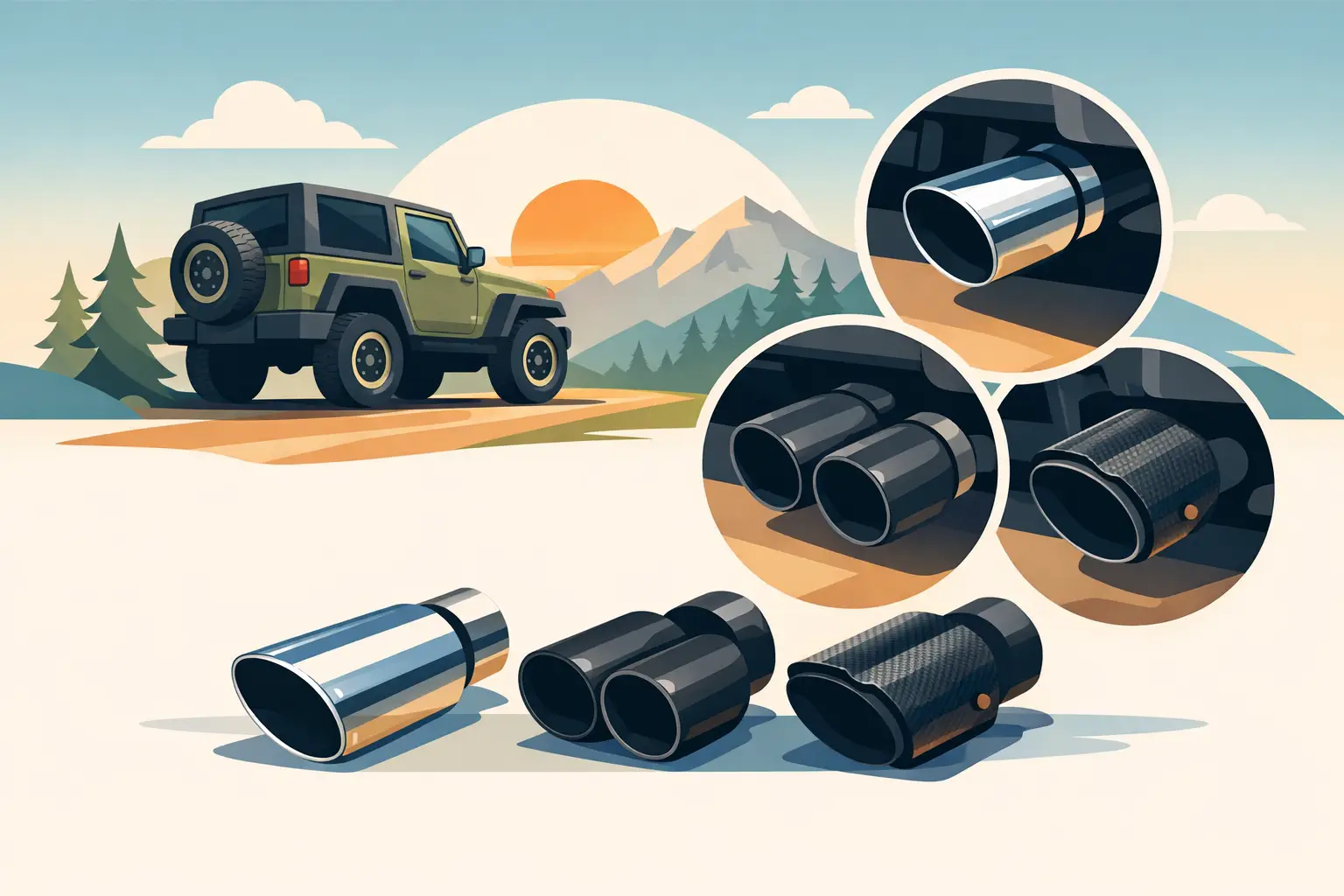
Carbon Fiber vs Stainless Tips

If you are choosing between carbon fiber vs stainless tips, you are not deciding on looks alone. The right muffler tip changes how the rear of the vehicle reads, how much maintenance it needs, and how well it holds up to real heat, road grime, and daily use. On a street truck, weekend Jeep, or performance-minded SUV, that decision should match both the build and the way the vehicle actually gets driven.

Carbon fiber vs stainless tips: what really changes?

At a glance, both options finish the exhaust system with a cleaner, more intentional look. The difference is in the material behavior and the visual message each one sends.

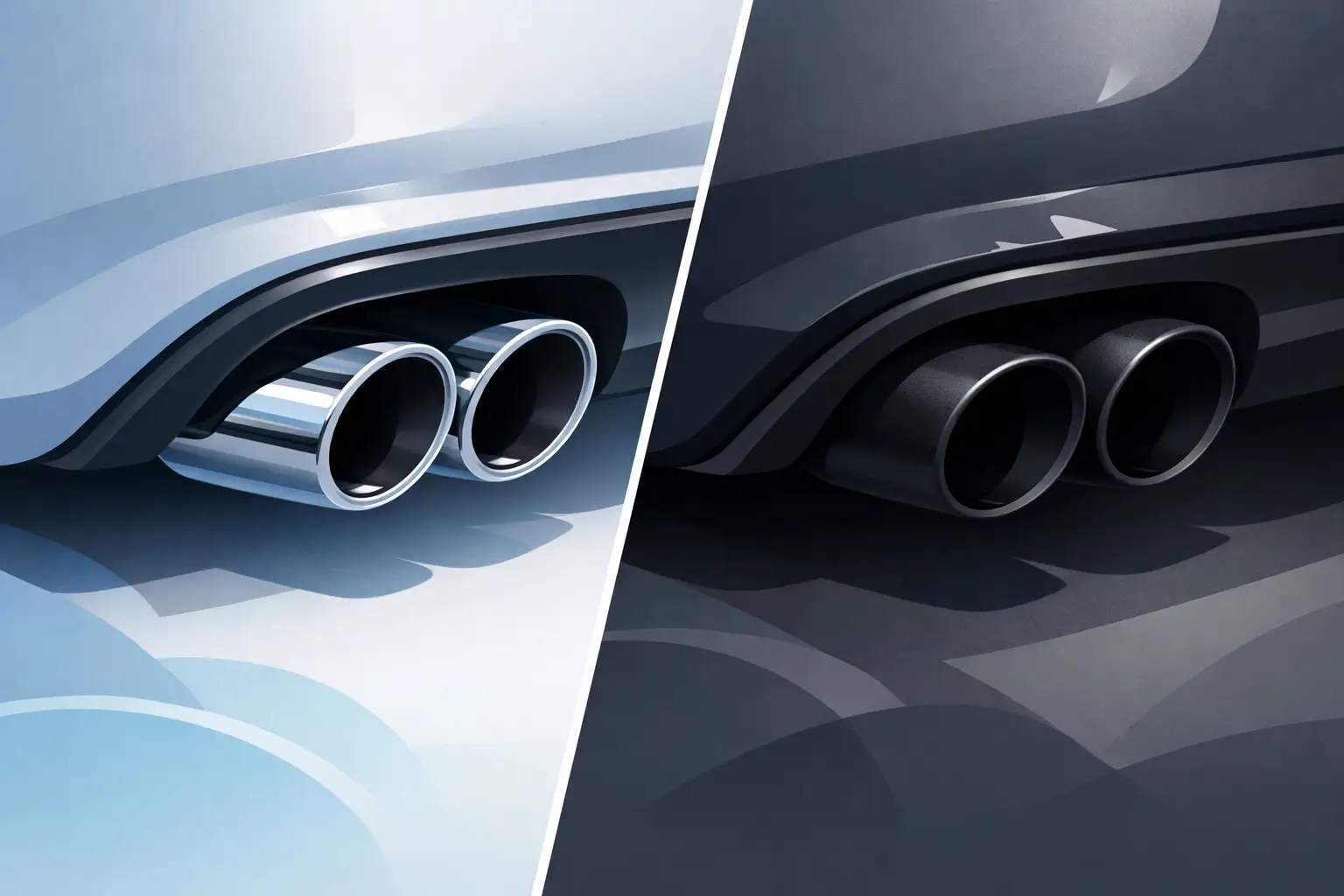
Stainless steel tips are the classic performance choice. They look precise, mechanical, and durable. Depending on the finish, they can appear bright and polished, brushed and understated, or blacked out and aggressive. They fit almost any style direction because stainless is neutral enough to work on daily drivers and serious builds alike.

Carbon fiber tips push the design further. They bring a premium, motorsport-inspired texture that stands out immediately, especially on modern vehicles with gloss black trim, larger wheels, and more sculpted rear fascias. For buyers who care about visual impact, carbon fiber usually looks more exclusive right away.

That said, appearance is only part of the decision. Heat management, long-term wear, and maintenance all matter just as much.

Stainless tips: the practical benchmark

Stainless steel remains the standard for a reason. It is strong, corrosion-resistant, and well suited to the harsh conditions an exhaust outlet sees every day. Heat cycles, water, road salt, soot, and debris are all part of normal operation, and stainless is built for that environment.

For many drivers, the biggest advantage is predictability. A quality stainless tip is straightforward to own. It can take abuse, it is easier to clean, and it does not ask much from the owner beyond occasional polishing or wiping down. If the vehicle is a daily commuter, work truck, or all-season SUV, stainless often makes the most sense because it balances durability, value, and style.

It also gives you more flexibility if your build may evolve. Stainless tips tend to pair cleanly with a wider range of exterior styles. They do not lock you into a high-contrast, show-focused aesthetic the way carbon fiber sometimes can.

Carbon fiber tips: premium style with more specific use cases

Carbon fiber tips are chosen for one main reason – they look exceptional on the right vehicle. They add texture, contrast, and a higher-end finish that complements modern performance styling. When matched well, they can elevate the rear view more than plain metal ever will.

Most carbon fiber muffler tips are not made from carbon fiber alone. They typically combine a metal inner structure with an outer carbon fiber sleeve or shell. That construction matters because the tip still needs metal where exhaust heat is most intense. A well-designed piece accounts for this and uses the carbon fiber as a visual and structural element without exposing it to conditions it cannot handle directly.

This is where quality becomes critical. A well-made carbon fiber tip can look sharp and hold up properly. A poor one may discolor, crack, or age badly when exposed to repeated heat and weather. If your vehicle runs hotter, tows often, has a modified exhaust, or sees long highway miles under load, material quality and design are not small details. They are the whole game.

Heat tolerance and real-world durability

This is usually where the carbon fiber vs stainless tips decision gets practical fast.

Stainless steel has the advantage in raw heat tolerance. It is better suited for sustained exhaust temperatures and heavy-duty use. If you have a truck that tows, a performance vehicle with an aggressive tune, or any setup that tends to run hot, stainless provides more margin. It is simply the safer choice when heat exposure is a major concern.

Carbon fiber can still work well, but it depends heavily on the tip design and the surrounding exhaust setup. Premium carbon fiber tips are engineered to manage heat through the internal metal layer and proper spacing. Even so, they are generally less forgiving than stainless when pushed hard over time. That does not mean they are fragile. It means they are more sensitive to poor construction and misuse.

Road conditions matter too. Stainless handles winter driving, salt, rain, and grit with fewer worries. Carbon fiber can hold up well, but repeated impacts, neglected cleaning, and harsh conditions can shorten its cosmetic life faster. If your vehicle sees all four seasons and lives outside, stainless is usually the easier long-term answer.

Maintenance and day-to-day ownership

If low effort matters, stainless wins again.

Stainless steel tips are easier to clean after soot builds up. Light metal polish, soap and water, or a suitable exhaust cleaner usually gets the job done. Small marks are often less noticeable, especially on brushed finishes. Even when they get dirty, stainless tends to age in a way that still feels acceptable on a working vehicle.

Carbon fiber needs a little more care if you want it to stay sharp. The finish is part of the appeal, so haze, staining, or surface wear will show sooner. Cleaning should be gentler, and harsh products are a bad idea. If the goal is a premium rear-end detail, expect to treat it like one.

For some owners, that is not a drawback. If you already wash your vehicle carefully and pay attention to trim, wheels, and exhaust finishers, carbon fiber maintenance may feel normal. If you want to install it and forget it, stainless is the better fit.

Which one looks better?

That depends less on the tip itself and more on the vehicle around it.

Stainless looks right on almost anything. It works on older trucks, newer SUVs, Jeeps with functional builds, and sedans with tasteful exhaust upgrades. It gives a clean, technical finish that says the vehicle is upgraded without trying too hard. If your build mixes utility and style, stainless usually lands in the sweet spot.

Carbon fiber looks best when the rest of the vehicle supports it. Black trim packages, performance wheels, rear diffusers, dark paint, and modern body lines all help. On the right build, carbon fiber feels deliberate and high-end. On the wrong one, it can feel added on for effect.

That is why fit and finish matter more with carbon fiber. The tip shape, weave quality, gloss level, and how it integrates with the bumper opening all affect the result. When done right, it aligns with the idea that technology can also be visual. That is where products like this stop being basic parts and start acting like design elements.

Cost and value

In most cases, carbon fiber tips cost more than stainless steel tips. That premium reflects both material complexity and the visual positioning of the product. You are paying for appearance as much as function.

Stainless tends to deliver stronger value for buyers focused on durability per dollar. It is practical, proven, and available across a wider range of finishes and price points. For fleets, work vehicles, and buyers who want reliable aftermarket upgrades without paying extra for cosmetic exclusivity, stainless is hard to beat.

Carbon fiber makes more sense when the visual payoff is part of the purchase decision. If the vehicle is already getting appearance-focused upgrades, spending more on a premium tip finish can be justified. The value is not just lifespan. It is the overall presentation.

How to choose the right option for your build

If your vehicle is a daily driver that sees long commutes, winter roads, towing, or frequent heavy use, stainless is usually the smart buy. It asks less, tolerates more, and still looks finished and performance-oriented.

If your vehicle is a style-forward build, a weekend cruiser, or a modern truck or SUV where exterior detail matters, carbon fiber may be worth the extra cost. It brings a sharper visual signature and a more premium feel, especially when paired with the right rear-end styling.

For many buyers, the real answer is simple. Choose stainless when function leads and choose carbon fiber when function and design carry equal weight.

A quality aftermarket catalog should make room for both because they serve different priorities. At FORTLUFT, that distinction matters. Some owners want maximum practicality. Others want an exhaust finish that completes the vehicle visually, not just mechanically.

The best tip is the one that still looks right after months of driving, washing, and living with the vehicle. Pick the material that matches your use, your climate, and the standard you want every time you walk up behind it.

How to Select Exhaust Pipe Diameter

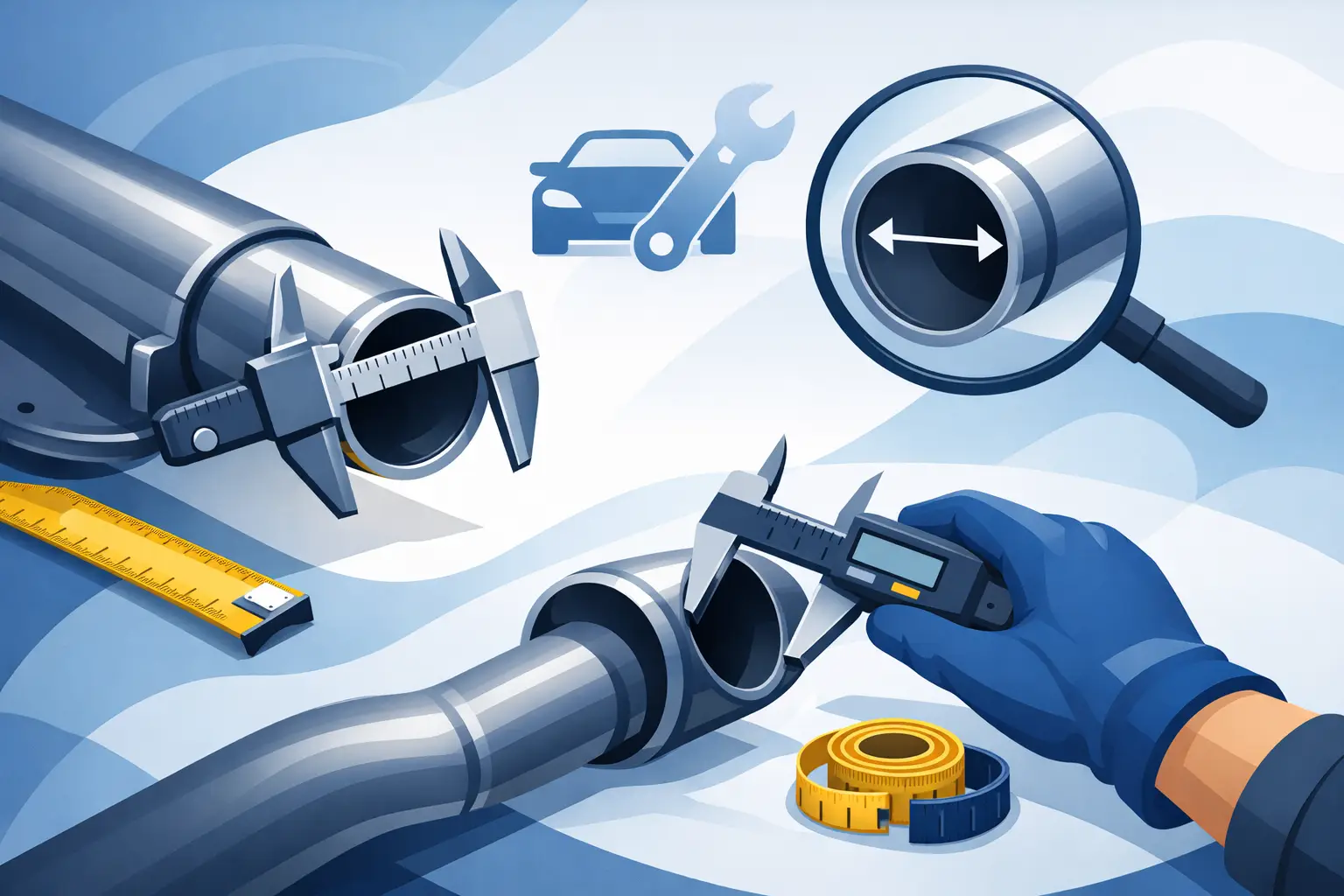
A 3-inch pipe can look right under a truck and feel completely wrong on a mild street build. That is the real challenge in how to select exhaust pipe diameter – not finding the biggest pipe, but choosing the size that matches your engine, power goals, vehicle use, and available space.

Exhaust sizing is one of those decisions that affects more than one thing at once. Pipe diameter changes flow, sound, low-end response, packaging, and overall appearance. Go too small and you create restriction. Go too large and you can lose exhaust velocity, weaken torque in the lower RPM range, and end up with a system that feels less responsive than it should.

For most street-driven cars, trucks, Jeeps, and SUVs, the best diameter is the one that supports the engine you have now, with only a little room for where the build is headed next. Bigger is not automatically better. Better is better.

How to select exhaust pipe diameter for your build

Start with the engine’s actual output, not guesswork. Horsepower is the cleanest baseline because exhaust flow demand rises with power. A stock or lightly modified daily driver does not need the same diameter as a boosted setup, a V8 truck with towing demands, or a high-revving performance build.

As a practical rule, many street applications fall into a few common ranges. A naturally aspirated four-cylinder often works well with 2-inch to 2.5-inch piping. Many V6 applications land around 2.25-inch to 2.5-inch. Mild to moderate V8 street builds often perform well with 2.5-inch systems, while stronger combinations may want 3-inch piping. Turbo builds can shift larger because the turbine already changes the flow dynamics and backpressure picture.

Those are starting points, not hard laws. Cam profile, displacement, induction type, RPM range, and whether you are running a single or dual system all matter. So does the vehicle itself. A heavy SUV used for daily driving and towing has different priorities than a weekend coupe built for top-end power.

Match diameter to horsepower and use case

If your goal is a responsive street vehicle, prioritize balance. A pipe that is too large can slow gas velocity enough to soften throttle response where you spend most of your time. That matters more on a commuter, trail rig, or tow vehicle than peak power at the very top of the rev range.

If your build lives at higher RPM or is pushing significantly more horsepower than stock, a larger pipe can make sense because the engine needs more total flow capacity. This is why a diameter that feels oversized on a stock daily driver may be exactly right on a built turbo setup.

A useful way to think about it is simple: choose the smallest diameter that will comfortably support your power level without becoming the choke point. That usually gives the best street manners and cleaner fitment.

Single exhaust vs dual exhaust changes the math

Pipe count matters as much as pipe size. A dual exhaust system splits flow between two paths, so two smaller pipes can often support similar output to one larger single pipe. That is why a dual 2.25-inch or dual 2.5-inch setup may be appropriate where a single system would need a larger main pipe.

This also affects sound and packaging. Dual systems can deliver a different tone and appearance, but they take more room and add complexity around routing, hangers, and axle clearance. On trucks and SUVs, underbody space may make one layout much easier than another.

Diameter affects sound, not just performance

Exhaust pipe sizing changes the voice of the vehicle. Larger diameter piping usually produces a deeper, more open sound. Smaller piping tends to keep the note tighter and sometimes slightly sharper. Muffler design, resonators, bends, catalytic converter configuration, and tip shape still matter, but pipe diameter is part of the final character.

That matters because the right exhaust is not only about numbers. It also has to feel right every time you start the engine. A daily driver with oversized piping can develop a tone that is louder or boomier than expected, especially in the cabin. On the other hand, a well-sized stainless system with the right tip can deliver a cleaner, more premium finish both visually and acoustically.

For a brand like FORTLUFT, that balance between function and appearance is the whole point. Technology as an art form only works when the system performs properly and looks intentional under the vehicle.

Common sizing ranges by vehicle type

There is no universal chart that replaces proper measurement and build planning, but broad categories help narrow the field.

A stock compact car or small naturally aspirated four-cylinder usually does not need more than 2.25 inches unless it has meaningful power upgrades. Many midsize V6 street vehicles work well in the 2.25-inch to 2.5-inch range. Full-size trucks with V8 engines often start at 2.5 inches, with 3-inch systems becoming more common on performance-oriented or heavily worked applications.

Turbocharged engines often tolerate and benefit from larger sizing earlier in the build. That is especially true after the downpipe, where freeing flow can support power gains and reduce unwanted restriction. But even here, oversized piping can create fitment headaches and a sound profile that may not suit a daily-driven vehicle.

The key is not to copy someone else’s build without context. The same 3-inch system can be right for one truck and excessive for another with the same engine family but different modifications, use, and layout.

Fitment matters as much as flow

A diameter that looks ideal on paper still has to fit the vehicle. Ground clearance, crossmembers, axle travel, suspension movement, heat shielding, and muffler placement all shape what is realistic.

This is where many buyers get tripped up. They choose the largest pipe that should support the horsepower target, then find out the routing becomes tighter, bends become more restrictive, or the system hangs lower than expected. In real-world terms, that can cancel out the theoretical benefit of going larger.

Bend quality matters here too. Mandrel-bent piping keeps a more consistent internal diameter through turns, while crush bends reduce cross-sectional area. If the system uses tight crush bends, a larger nominal pipe size may not deliver the flow you expected. Material also matters. Stainless steel offers durability and a cleaner long-term finish, which is especially valuable on vehicles exposed to weather, salt, and regular use.

Don’t ignore the rest of the exhaust system

Pipe diameter is only one part of the system. Headers or manifolds, catalytic converters, resonators, mufflers, and tips all influence total flow. If one section is significantly more restrictive than the rest, upsizing a downstream pipe may not produce much real benefit.

That is why smart exhaust planning looks at the full path from front to back. A balanced system usually performs better than one oversized section paired with bottlenecks elsewhere. If you are upgrading in stages, size the new parts so they work well now and still make sense with your next planned changes.

Mistakes people make when choosing pipe size

The most common mistake is buying for appearance alone. A larger diameter can fill the space and deliver a more aggressive visual, but if it does not match the engine, the result may be more noise, less drivability, and no meaningful power gain.

The second mistake is sizing only for a future build that may never happen. If your vehicle is stock today and you are choosing around a hypothetical high-horsepower setup later, you may compromise current performance for a plan that stays on paper.

The third mistake is treating internet advice like a rulebook. Forum recommendations often come from very specific combinations. Gear ratio, transmission, tune, displacement, and intended use can all change what the right answer looks like.

A better approach is to be honest about three things: current power level, next-step upgrades, and how the vehicle is actually used. That usually points you toward the correct diameter faster than chasing the biggest number available.

A simple way to make the right call

If the vehicle is mostly stock or lightly modified, stay close to proven street sizes for that engine type. If the build has real airflow upgrades, increased boost, or a clear horsepower target, step up only as much as needed. If you are torn between two sizes, the smaller of the two is often the safer choice for drivability unless the engine’s output clearly demands more.

And remember that exhaust is not only about peak power. It is about how the vehicle feels when you pull away from a light, merge onto the highway, climb a grade, or idle in the driveway. The right diameter supports the full experience – performance, sound, fitment, and finish.

Choose the pipe size that makes the whole system work better, not just the spec sheet look better.

Best Wheels and Tires for 2026 Chevy Silverado

A Silverado can look factory-fresh and still feel wrong on the road if the wheel and tire package misses the mark. Choosing the right wheels and tires for 2026 Chevy Silverado trucks is less about chasing the biggest setup and more about matching fitment, load rating, ride quality, and stance to how the truck actually works.

What matters most when choosing wheels and tires

Most Silverado owners are balancing three things at once: appearance, capability, and daily comfort. The right setup should support all three, but every change shifts the balance a little.

A larger wheel usually sharpens the look and opens up more aggressive styling options. It also reduces sidewall height if overall tire diameter stays close to stock, which can make the ride firmer and leave less cushion over broken pavement. A taller tire adds sidewall and often improves ride compliance off-road, but it can also add weight, soften steering response, and affect gearing feel.

That is why there is no single best answer for every 2026 Silverado. A truck used for highway commuting and occasional Home Depot runs needs something different from a work truck pulling trailers every week or a lifted build that spends weekends on trails.

Wheels and tires for 2026 Chevy Silverado by use case

Daily driving and clean street fitment

If your Silverado is mostly a pavement truck, the sweet spot is usually a moderate wheel diameter with a tire that keeps enough sidewall to preserve ride quality. Many owners gravitate toward 20-inch wheels because they deliver a modern, upscale look without pushing too far into low-profile territory.

For this type of setup, tire choice matters as much as wheel choice. A highway terrain or mild all-terrain tire keeps road noise under control, tracks better at speed, and usually wears more evenly in daily use. You still get a stronger visual upgrade than stock, but the truck remains easy to live with in traffic, parking lots, and long highway stretches.

Offset is where street builds often go wrong. A more aggressive offset can push the wheel outward for a stronger stance, but too much poke can create rubbing, throw debris along the body, and add stress to suspension geometry. Clean fitment looks intentional. Forced fitment looks expensive later.

Towing and hauling

If your Silverado earns its keep, wheel style should take a back seat to rating and tire construction. Load capacity is the first filter. The wheel and tire package has to match the truck’s real-world demands, not just the visual target.

This is where heavier-duty tires with the right load range come into play. They help manage trailer tongue weight, cargo, and heat under stress. A flashy wheel that is not built for the job is the wrong part, even if it looks right in product photos.

For towing-focused trucks, many owners stay close to stock diameter and overall tire height. That preserves predictable braking, steering feel, and power delivery. It also reduces the chance of speedometer errors and unnecessary strain on the drivetrain.

Off-road and leveled or lifted builds

Off-road setups shift the priority toward tire sidewall, tread design, and clearance. A smaller wheel paired with a taller all-terrain or mud-terrain tire is often the practical move because it gives the tire more room to flex and absorb rough surfaces.

That said, bigger is not always better. Oversized tires can trigger rubbing at the fender liners, control arms, mud flaps, or bumper corners, especially once suspension compresses or the wheel is turned under load. A leveled or lifted truck may clear more tire, but clearance still depends on wheel width, offset, tire shape, and suspension travel.

This is where build planning matters. If the goal is a capable off-road look with minimal compromise, a moderate increase in tire size often delivers better results than jumping straight to the tallest size you can physically mount.

Wheel size, tire size, and why proportion matters

The best-looking Silverado setups usually get the proportions right. That means the wheel does not overpower the truck and the tire does not look stuffed or stretched.

On a full-size truck, 18-inch wheels with taller tires often look purposeful and functional. They suit work and off-road builds well. Twenty-inch wheels hit a versatile middle ground and work across street, towing, and mild all-terrain applications. Twenty-two-inch wheels can create a bold custom appearance, but they typically ask for more trade-off in ride quality and tire cost.

Tire diameter changes more than appearance. Go too tall and acceleration can feel softer, braking distances may grow, and fuel economy can dip. Go too short and the truck can lose visual balance while riding harsher than it should. The goal is not just to fill the wheel wells. It is to keep the truck driving like a Silverado, not a compromise.

Fitment details that deserve attention

Bolt pattern, center bore, and lug seat

Before style, there is fitment. The wheel has to match the truck’s bolt pattern and seat correctly with the right hardware. Center bore also matters. A poor match here can lead to vibration issues or improper mounting.

These details sound basic, but they are where rushed purchases turn into returns, delays, or unsafe installs. For a truck platform with multiple trims and possible suspension differences, verified fitment is worth more than guessing from appearance alone.

Offset and backspacing

Offset controls where the wheel sits relative to the hub. It affects stance, inner clearance, and outer clearance at the fender. A wheel can have the right diameter and width and still be a poor fit if the offset is too aggressive or too conservative.

Backspacing works with offset to determine how close the inner wheel barrel and tire sidewall sit to suspension components and brakes. If you are changing wheel width or tire width, these measurements become even more important.

Brake clearance

Not every aftermarket wheel clears every brake package equally. Larger calipers or specific trim-level hardware can limit wheel choices. This is one of those details that does not show up in a glamour shot but matters the second you try to install the wheel.

Tire type changes the truck more than many owners expect

A lot of buyers focus on wheel finish first, then choose a tire later. In practice, the tire has a bigger impact on how the Silverado feels every day.

Highway terrain tires are the smart choice for drivers who want smooth road manners, lower noise, and efficient wear. All-terrain tires bring a more aggressive sidewall and tread pattern, along with better loose-surface confidence. The trade-off is usually more noise, added weight, and sometimes shorter tread life depending on the compound.

Mud-terrain tires create the boldest look and offer serious off-road bite, but they are the least forgiving on pavement. If the truck spends most of its life on asphalt, that extra aggression can become a constant compromise.

In winter-prone regions, true winter tires or severe snow-rated all-terrain options may make more sense than a year-round compromise tire. The right answer depends on climate as much as style.

Finish, material, and long-term ownership

Wheels are visual hardware, but they are also exposed hardware. Brake dust, road salt, gravel, and curb contact all shape how a finish ages.

Gloss black remains popular because it works on nearly every Silverado color and trim package. Machined and two-tone finishes can brighten the truck and add a more premium look. Bronze and gunmetal options lean more enthusiast and can give the build a custom identity without overdoing it.

Material and construction matter too. Cast wheels are common and cost-effective for many street and light truck applications. Higher-end construction can reduce weight or improve strength, but the right value depends on how the truck is used. A daily driver does not need race-inspired marketing. A hard-use truck does need durability.

How to buy smarter the first time

The easiest mistake is shopping by look alone. The smarter approach is to start with the truck’s job, then narrow by fitment, then by load requirements, and only then by finish and style.

If you tow, start with ratings. If you run rough terrain, start with tire construction and clearance. If the truck is your daily, focus on ride quality and road noise before chasing the most aggressive stance on the screen. That sequence saves money and usually leads to a setup that still feels right six months later.

For buyers who want both utility and appearance, that middle ground is often the best place to be. A Silverado does not need extremes to stand out. It needs a wheel and tire package that looks engineered for the truck, not borrowed from a trend.

That is where a strong aftermarket catalog earns its place. A retailer like FORTLUFT speaks to that balance directly – practical fitment, real truck use, and style that feels intentional. Technology as an art form only works when the truck still does its job on Monday morning.

Choose the setup that matches your roads, your load, and your standards. When those three line up, the Silverado looks better because it performs better.

Direct Fit Exhaust Pipe Replacement Guide

A bad exhaust pipe usually announces itself before you ever get the vehicle on a lift. You hear a sharper note on cold start, catch a metallic rattle under load, or notice fumes where they should never be. When that happens, direct fit exhaust pipe replacement is usually the fastest path back to factory routing, clean installation, and predictable results.

For most drivers, the appeal is simple. A direct-fit part is built around the original vehicle layout, so you are not buying extra fabrication work just to solve a worn, cracked, or rusted section of exhaust. That matters whether you are maintaining a daily driver, repairing a work truck, or keeping a Jeep or SUV road-ready without turning a straightforward job into a custom project.

What direct fit exhaust pipe replacement actually means

A direct-fit exhaust pipe is designed to match a specific application’s bends, length, hanger locations, and connection points as closely as possible. In practical terms, that means less cutting, fewer adjustments, and a better chance of installing the part with standard hand tools and proper hardware.

That does not mean every direct-fit pipe drops in with zero effort. Rusted fasteners, heat-cycled flanges, stretched rubber hangers, and old clamps can still slow the job down. But compared with universal piping, a direct-fit replacement removes a lot of the guesswork. You are replacing the failed section with something engineered around the original path under the vehicle, not forcing a generic tube to work.

For buyers, that distinction saves time in two ways. First, it reduces install complexity. Second, it lowers the risk of ordering the wrong style of part for a repair that should have been routine.

When a direct-fit exhaust pipe replacement is the right move

The right time to replace an exhaust pipe is not always when it completely fails. Small leaks around seams, flange corrosion, impact damage from road debris, and rust perforation can all justify replacement before the issue becomes louder, hotter, and more expensive.

A direct-fit option makes the most sense when the rest of the system is still serviceable and you want to restore original function without fabrication. If the muffler is solid, the catalytic converter is intact, and the hangers are still in the right places, replacing the damaged pipe section can be the smart middle ground between doing nothing and replacing a full exhaust assembly.

There are cases where it depends. If multiple sections are heavily corroded, replacing one pipe may only buy limited time. If you are already dealing with a failing muffler, weakened flanges, or worn mounting points, it can be more efficient to handle adjacent components at the same time. The cheapest single part is not always the lowest-cost repair once labor and repeat downtime enter the picture.

Why fitment matters more than most buyers think

Exhaust routing is tighter than it looks from under the vehicle. Pipes need to clear the floor pan, suspension travel, drivetrain components, and heat-sensitive areas while maintaining proper sealing at each joint. A part that is close but not exact can create contact points, alignment stress, or leaks.

That is why fitment details matter as much as material. Pipe diameter, wheelbase, engine configuration, cab style, bed length, drivetrain layout, and emissions setup can all affect what actually fits. Two trucks that look identical from ten feet away may use different exhaust sections underneath.

This is where careful application matching pays off. Buyers who confirm year, make, model, engine, and trim are far less likely to end up with a part that almost fits. In exhaust work, almost is expensive.

The most common fitment mistakes

One of the biggest mistakes is assuming a universal part will save money. It can, but only if you already have fabrication capability or are paying a shop that plans to modify it. For a standard repair, universal piping often adds labor and uncertainty.

Another common mistake is overlooking mid-year changes and sub-model differences. Manufacturers change flange styles, sensor placement, and pipe routing more often than many people expect. The right listing details are not filler. They are the difference between a clean install and a return.

Material choice affects more than appearance

Exhaust parts live in one of the harshest environments on the vehicle. Heat cycles, moisture, road salt, vibration, and debris all work against service life. That is why material deserves close attention.

Aluminized steel is common and usually budget-friendly. It works well for many repairs, especially in milder climates or on vehicles that are not exposed to long winters and salted roads. Stainless steel, on the other hand, generally offers better corrosion resistance and longer-term value, especially for drivers who plan to keep the vehicle for years or want a cleaner-looking underbody component.

For buyers who care about both function and finish, stainless has another advantage. It holds its appearance better and aligns with a more premium build approach. At FORTLUFT, that balance between performance-minded practicality and visual refinement is part of the appeal – technology as an art form only works when the part also does its job.

Direct fit does not mean install is effortless

A direct-fit exhaust pipe replacement is usually simpler than building an exhaust section from scratch, but the install still depends on the condition of the vehicle. On newer vehicles from dry climates, this can be a manageable DIY repair. On older trucks and SUVs from rust-belt states, seized bolts and fused connections can turn a basic replacement into a grinder-and-torch job.

Before ordering, it helps to inspect the surrounding system. Check flange condition, gasket surfaces, rubber isolators, clamps, and neighboring sections. If one pipe failed from corrosion, nearby components may not be far behind. Replacing a pipe onto badly compromised mating surfaces can lead to leaks even if the new part itself is perfect.

DIY or shop install?

If you have safe lift access, basic exhaust tools, penetrating oil, and experience dealing with rusted hardware, many direct-fit replacements are realistic DIY jobs. The shape is already handled for you, which removes the biggest hurdle.

If the system is heavily corroded, packed tightly around rear suspension components, or tied into emissions hardware that must remain undisturbed, a shop may be the better choice. Paying for professional installation can be cheaper than damaging an adjacent part or spending a weekend wrestling with broken studs.

What to check before you buy

The smart purchase starts with application data, but it should not end there. Look closely at connection style, flange count, pipe diameter, hanger configuration, and whether clamps or gaskets are included. Product photos help, but specs matter more.

It also helps to think about repair goals. Are you trying to restore stock operation and move on? Are you upgrading to a longer-lasting material while staying with original routing? Are you maintaining a fleet where repeatability and quick turnaround matter more than cosmetic finish? The same category can serve different priorities, and the right answer depends on how the vehicle is used.

For commercial buyers and shops, consistency matters just as much as unit price. A direct-fit pipe that installs predictably saves labor time, reduces customer comebacks, and keeps bays moving. For individual owners, the value is confidence – ordering once, installing once, and getting back on the road without improvising around a poor fit.

The real value of direct-fit replacement

The strongest case for direct fit exhaust pipe replacement is not just convenience. It is control. You know the route, the connection points, and the intended application. That makes the repair more predictable, especially when compared with universal parts that depend on fabrication skill and extra adjustments.

There is also a quality-of-use factor that gets overlooked. A correctly fitted exhaust pipe is less likely to rattle, leak, or sit under stress after installation. That means better long-term behavior, from sound quality to heat management to overall durability. A pipe that lines up correctly from day one usually ages better than one that had to be forced into place.

If your current exhaust pipe is cracked, rusted through, or no longer sealing the way it should, this is one of those repairs where matching the part to the vehicle pays off immediately. The best replacement is not the one with the most aggressive marketing. It is the one that fits the application, suits the climate, and gives you a clean, durable result without extra drama in the driveway or the shop.

Aftermarket Exhaust System Buyer Guide

A new exhaust can fix more than a worn-out factory part. It can clean up the rear profile of a truck, sharpen the sound of a Jeep, reduce restriction on a daily driver, or replace rust-prone piping with stainless steel that looks as good as it performs. That is why an aftermarket exhaust system buyer guide matters before you spend money on parts that may fit your vehicle on paper but miss the mark in tone, finish, or real-world use.

What this aftermarket exhaust system buyer guide should help you decide

Most buyers start with one question: cat-back, axle-back, muffler, tip, or full replacement? The right answer depends less on hype and more on your vehicle, your goals, and how you actually drive.

If your factory system is failing from rust, impact damage, or age, a direct replacement approach makes sense. If the goal is a more aggressive look and sound without changing everything under the vehicle, an axle-back or muffler-and-tip upgrade may be enough. If you want a broader change in flow, tone, and appearance, a cat-back system usually gives you the most noticeable result without pushing into a more complex emissions-related setup.

This is where smart buying beats impulse buying. An exhaust system is not just tubing and clamps. It is fitment, material quality, weld quality, sound character, finish, and how all of that holds up after heat cycles, rain, road salt, and highway miles.

Start with fitment, not sound clips

Sound is often the first thing people shop for, but fitment should be first every time. A system designed for a specific year, make, model, engine, wheelbase, bed length, or body style will save time and frustration. Trucks and SUVs are especially sensitive here because cab configuration and drivetrain layout can change routing points and hanger locations.

For Jeeps, off-road clearance and suspension travel matter. For performance cars, underbody space and rear valance design matter. For work trucks, towing use and heat management around cargo areas can matter more than peak sound. If the system does not fit correctly, none of the marketing claims help.

You also need to confirm whether you are buying a full system, a section of pipe, a muffler, or just tips. Plenty of returns happen because buyers assumed one item included all the hardware or all the sections needed to complete the job.

Pay attention to vehicle-specific details

A few details can change the purchase completely. Engine size affects exhaust diameter and tone. Existing factory dual or single exit layouts affect compatibility. Lift kits or lowered suspensions can alter clearance. Some rear bumper designs work better with certain tip lengths and exit angles than others.

A good buyer looks at the entire rear and underbody package, not just the product photo.

Choose the material based on climate and ownership plans

Material is where value shows up long after installation day. Aluminized steel can be a cost-effective option for budget-driven replacements, especially in drier climates or on vehicles you do not plan to keep for many years. Stainless steel is usually the better long-term play, particularly in regions with moisture, snow, and road salt.

For many buyers, stainless is the sweet spot because it combines durability with a cleaner premium look. It also supports the visual side of an upgrade, which matters when the exhaust is part of the vehicle’s overall finish. Technology as an art form only works when the part still looks right after a season of real driving.

Nonmagnetic stainless components are especially appealing when appearance and corrosion resistance both matter. That is relevant for visible exhaust sections and for buyers who care about keeping their build sharp, not just functional.

Muffler tips are not a small decision

Tips can seem cosmetic, but they influence the final look more than almost any other visible exhaust component. Stainless steel and carbon fiber styles deliver very different finishes. Angle-cut, rolled-edge, double-wall, black-coated, and polished options each send a different signal.

The trade-off is simple. A bold tip can elevate the rear view of the vehicle, but it has to match the body style and stance. Oversized tips on a subtle daily driver can look forced. Modest tips on an aggressive truck build can look unfinished. Good design is restraint applied in the right place.

Understand what changes performance and what mostly changes sound

Not every exhaust upgrade adds meaningful horsepower, and serious buyers should be skeptical of vague claims. On most street-driven vehicles, gains are often modest unless the exhaust upgrade is paired with other modifications. What you are more likely to notice is better throttle feel, a different sound profile, and sometimes reduced overall weight.

That does not make the upgrade less worthwhile. It just means the value may be in the complete ownership experience, not just dyno numbers. A well-designed system can improve tone, clean up the look, and replace restrictive or aging components with better materials and smoother flow.

Larger diameter piping is not automatically better. Too large, and you may lose low-end response on some setups. Too small, and you may choke flow. The right diameter depends on engine output, intended use, and the rest of the system. Street vehicles need balance more than bragging rights.

Sound quality matters more than sound volume

The best exhaust note is not always the loudest one. Daily drivers need a tone you can live with during cold starts, highway cruising, and long trips. Trucks and SUVs often sound better with a deeper, controlled note than a harsh high-volume setup. Performance cars may benefit from a sharper edge, but even then, drone can ruin the experience.

If you commute, tow, or carry family regularly, think hard about cabin noise. What sounds perfect in a 20-second clip may become exhausting at 70 mph. If your vehicle sees mixed use, moderate sound is often the smarter call.

Decide how much installation complexity you want

Some buyers want a straightforward bolt-on upgrade they can install in the garage with common tools. Others are comfortable with cutting, adapting, or welding. Be honest about where you fall.

A direct-fit system is usually worth the premium if you value speed, predictable installation, and cleaner results. Universal components can be useful, especially for custom applications, but they demand more planning and fabrication. That can work well for experienced shops and builders, less so for someone who just wants a clean weekend install.

Hardware matters here too. Clamps, hangers, flange design, and weld consistency all affect how easily the system goes on and how well it stays aligned. A low-cost system that needs repeated adjustment is not really the cheaper option.

Think about emissions and local compliance before checkout

Exhaust shopping gets expensive when buyers ignore regulations. Depending on the part category and your location, emissions rules may affect what you can legally install on a street-driven vehicle. This is especially important when catalytic converter-related components enter the conversation.

For many drivers, the safest route is to focus on legal, vehicle-appropriate upgrades such as cat-back systems, axle-back systems, replacement pipes where permitted, and appearance-focused components like muffler tips. If your build goals go further, confirm the rules first, not after the boxes arrive.

Price the system by lifespan, not just cart total

A cheaper system can cost more over time if it corrodes quickly, fits poorly, or fails to deliver the finish you wanted in the first place. A better way to compare options is to look at purchase price, expected service life, installation effort, and the likelihood that you will still like the sound and appearance a year from now.

That is where premium materials and cleaner construction often justify the spend. If the part lives under the vehicle through heat, debris, water, and road salt, build quality is not a luxury feature. It is the product.

For commercial buyers and shops, this matters even more. Comebacks, fitment issues, and customer dissatisfaction eat margin fast. Buying with confidence means fewer surprises in the bay and fewer headaches after delivery.

The smartest buyers match the exhaust to the vehicle’s job

A weekend toy can tolerate more sound and more visual aggression. A work truck may need durability, clean fitment, and a tone that does not wear you out. A Jeep may benefit from clearance-conscious routing and rugged materials. A family SUV may only need a refined replacement with a better finish than stock.

That is the real filter for any aftermarket exhaust system buyer guide. The best system is not the loudest, the most expensive, or the most talked about. It is the one that fits your vehicle correctly, supports how you use it, and delivers the right mix of durability, style, and tone.

If you buy with that standard, your exhaust will do what great aftermarket parts should do – perform with purpose and look like it belongs there.

Best Wheels and Tires for 2026 Ram 2500

A 2026 Ram 2500 can look factory-clean, jobsite-tough, or fully built depending on what sits at the corners. Choosing the right wheels and tires for 2026 Ram 2500 is not just about style. It affects payload confidence, ride quality, steering response, brake clearance, and how the truck feels every day when it is loaded, towing, or running empty.

That is why this category deserves more attention than a quick size match. A heavy-duty truck asks more from a wheel and tire package than a half-ton does. If you get the look right but miss the load rating, offset, or overall diameter, the result can be expensive fast.

What matters most when choosing wheels and tires

The 2026 Ram 2500 sits in a category where capability comes first. Even if the truck is mostly used as a daily driver, it is still built around heavier suspension components, larger brakes, and higher load demands. That changes the buying decision.

Wheel construction matters because strength and weight are always in tension. A heavier cast wheel may offer the look and durability many owners want at a more accessible price point. A higher-end forged option can reduce weight and add strength, but that usually comes at a premium. There is no universal winner here. It depends on whether the truck is primarily a work tool, a tow rig, or a visual upgrade project.

Tire choice matters just as much. An aggressive all-terrain can sharpen the truck’s stance and improve loose-surface grip, but it may add road noise and reduce fuel economy. A highway-terrain tire will usually ride quieter and wear more evenly on pavement, though it will not deliver the same off-road bite in mud, gravel, or deep ruts.

Wheels and tires for 2026 Ram 2500 by use case

The smartest way to shop wheels and tires for 2026 Ram 2500 is to start with how the truck is actually used. Not the once-a-year trip. The weekly routine.

For daily driving and highway miles

If the truck spends most of its time on pavement, a moderate wheel diameter with a highway-terrain or mild all-terrain tire usually makes the most sense. This setup keeps ride quality more composed, helps control noise, and reduces the harshness that can come with oversized wheel packages.

For many owners, this is the sweet spot between appearance and practicality. You still get a stronger visual presence than stock, but the truck remains comfortable and predictable on longer drives.

For towing and work use

If the truck tows regularly or carries equipment, load rating moves to the top of the list. That applies to both the wheel and the tire. A great-looking setup is not the right setup if it cannot support the real demands of the truck.

In this case, sidewall stability, tread life, and heat management matter more than maximum tread aggression. A tire that stays planted under load and wears consistently is often a better choice than one built mainly for off-road styling.

For off-road builds and larger stance

If the goal is more ground presence, more sidewall, and better trail capability, larger all-terrain or mud-terrain tires paired with the right offset can transform the truck. But this is where trade-offs get real. More aggressive sizing can introduce rubbing, require trimming, change steering feel, and affect fuel economy and braking performance.

A bigger setup can absolutely work well, but fitment should be planned rather than guessed.

Understanding wheel size, offset, and backspacing

A lot of wheel problems start with diameter getting all the attention while width and offset get ignored. On a heavy-duty truck, that is a mistake.

Diameter determines brake clearance and overall appearance, but width and offset shape how the wheel sits in relation to suspension components and fenders. A more aggressive offset can push the wheel outward for a wider stance. That can improve visual impact, but it may also increase scrub radius, throw more debris down the side of the truck, and raise the chance of rubbing with larger tires.

Backspacing matters for inner clearance. If the wheel sits too far inward, it can interfere with suspension or steering components. If it sits too far outward, it may create fitment issues at the fender edge. The right balance depends on tire width, ride height, and whether the truck is leveled or lifted.

Stock-style fitment vs aggressive fitment

Stock-style fitment usually keeps the tire tucked closer to factory geometry. That is the safer path for owners who want clean installation, predictable driving manners, and fewer surprises.

Aggressive fitment is about stance and presence. It can look excellent on a 2026 Ram 2500, especially with a level or lift, but it needs matching tire size, suspension clearance, and realistic expectations. Good fitment is engineered, not improvised.

Tire sizing: bigger is not always better

There is a strong temptation to go as large as possible because the truck can visually support it. Sometimes that works. Sometimes it creates more compromise than benefit.

A taller tire adds sidewall and can improve off-road cushioning, but it also changes effective gearing and can soften acceleration. A wider tire can improve footprint and visual width, though it may follow road grooves more and place added demand on steering components. If the truck is used for towing, very oversized tires can work against the stable, controlled feel most owners want.

This is where honest priorities matter. If the truck is a weekend statement piece, you can lean harder into appearance. If it is used for work, daily driving, or long-distance hauling, balance usually wins.

Load rating and tire type are non-negotiable

This is the part buyers should never gloss over. A 2026 Ram 2500 is not the place for underbuilt tires.

Load range, ply construction, and overall carrying capacity need to match the truck’s intended use. Even if the truck is not maxed out every day, it should still have tires designed for the platform. The same thinking applies to wheels. The right bolt pattern is only the beginning. The wheel has to be rated appropriately for a heavy-duty application.

That may sound obvious, but plenty of appearance-focused setups fall short here. A proper HD package should deliver the right look without stepping away from real-world strength.

Ride quality, road noise, and daily livability

A wheel and tire package can look perfect in photos and still feel wrong on the road. That happens when the setup is chosen only for visual impact.

Larger wheels with lower-profile tires tend to sharpen appearance, but they can also make the truck feel stiffer over broken pavement. More aggressive tire tread can improve traction in dirt, snow, or mud, but often adds hum at highway speed. Some owners are fine with that. Others get tired of it within a month.

There is no wrong preference, only mismatched expectations. If the truck is driven every day, comfort and noise should be part of the buying decision from the start.

Matching the wheel finish to the truck

Style still matters. On a truck like the 2026 Ram 2500, finish choice changes the whole character.

Gloss black delivers contrast and a more modern custom look. Matte and satin finishes tend to feel more understated and work well on trucks built around utility. Machined accents can add brightness without going full chrome. Bronze and gunmetal are increasingly popular for owners who want a more design-forward finish that still looks tough.

The best choice depends on the truck’s paint color, trim details, and overall build direction. A heavy-duty truck does not need flashy design to stand out. Clean proportions and the right finish usually do more than overstyled hardware.

When a leveling kit changes the conversation

Many Ram 2500 owners add a leveling kit before changing wheels and tires. That opens the door to larger fitments and gives the truck a more balanced stance, but it also changes clearance points.

A tire size that works on a stock truck may behave differently once the front ride height changes. The opposite can also be true. A leveled truck may comfortably accept a size that would be tight in factory form. Because of that, wheel and tire planning should happen with the suspension setup in mind, not as a separate decision.

For buyers building a truck with both visual presence and working capability, this integrated approach is where the best results usually come from.

Buying smarter, not just bigger

The best wheel and tire package for a 2026 Ram 2500 is the one that fits the truck’s job, supports its weight, and still looks right parked or moving. That may mean a clean, stock-friendly wheel with an HD all-terrain tire. It may mean a more aggressive offset and a taller tire on a leveled truck. It depends on how the truck earns its keep.

At FORTLUFT, that balance between function and appearance is the point. Technology as an art form only works when the truck still performs like a Ram 2500 should. Choose a setup that carries the load, clears the hardware, and matches the way you actually drive – then the style will look earned, not forced.

A strong build starts at ground level, and the right package should make your truck feel more capable every time you walk up to it.

Exhaust Pipes: What Actually Matters

A rusty exhaust pipe rarely gives you much warning. One day the system sounds normal, and the next you hear a rasp at startup, a deeper note under load, or a vibration that was not there last week. For drivers who use their car, truck, Jeep, or SUV every day, exhaust pipes are not just tubes under the vehicle. They shape flow, control how the system fits and lasts, and play a real role in the way the vehicle looks and feels.

That is why choosing the right pipe matters. Some buyers need a direct replacement to get back on the road fast. Others want cleaner appearance, stainless construction, or a better foundation for a custom setup. Both are valid. The right choice depends on how you drive, what you expect from the vehicle, and how much you care about long-term durability versus lowest upfront cost.

What exhaust pipes actually do

At a basic level, exhaust pipes move spent gases from the engine through the exhaust system and out of the vehicle. But in practice, they do more than route flow. Pipe diameter, bends, material, and layout all affect restriction, sound character, heat management, and ground clearance.

On a stock daily driver, the factory pipe size is usually designed to balance emissions equipment, noise control, fuel economy, and packaging. For many owners, staying close to OE dimensions makes the most sense. It keeps the system predictable and avoids the common mistake of going too large, which can reduce low-end response on some setups.

For upgraded applications, the pipe becomes part of the performance conversation. Less restrictive flow can support higher output, but there is always a trade-off. Bigger is not automatically better. If the pipe diameter is oversized for the engine and build, the result can be more noise without meaningful gains.

Exhaust pipes and material choice

Material is often where smart buyers separate a short-term fix from a lasting repair. The most common options are aluminized steel and stainless steel, and they do not perform the same over time.

Aluminized steel is typically more budget-friendly. It works well for many replacement jobs, especially in drier climates or on vehicles that are not kept for the long haul. The downside is corrosion resistance. If the vehicle sees winter roads, moisture, mud, or repeated temperature cycles, aluminized pipe can wear out much faster.

Stainless steel costs more, but it earns that price in many cases. It resists rust better, holds its appearance longer, and fits the needs of buyers who care about both function and finish. On trucks, Jeeps, and SUVs that see hard use or outdoor storage, stainless often makes more sense as the value option over time, not just the premium option at checkout.

This is where the design side also starts to matter. Exhaust components are visible on many vehicles, especially with rear-exit or side-exit setups. Clean bends, consistent finish, and quality welds do not just look better. They usually signal better manufacturing discipline.

How to choose the right exhaust pipes

Fitment should come first. Before thinking about sound or style, make sure the pipe matches the vehicle application, engine configuration, wheelbase where relevant, and the rest of the exhaust layout. A part that is close is not the same as a part that fits correctly.

Diameter comes next. If you are replacing a damaged section on an otherwise stock vehicle, matching the factory size is usually the safest move. If you are building a custom exhaust or pairing the pipe with other upgrades, the right diameter depends on the full system, not one isolated part. Mufflers, catalytic converter setup, engine output, and intended use all affect the answer.

Then look at bend quality. Mandrel-bent pipes maintain more consistent internal diameter through the curve, which helps preserve flow. Crush bends are more affordable but create narrower sections at the bend. For many daily drivers, that difference may not be dramatic. For performance-minded builds, it becomes more relevant.

Connection style matters too. Some buyers want clamp-on convenience for easier installation and service. Others prefer welded connections for a cleaner, more permanent setup. Neither is universally better. Clamp-on can save time and simplify future changes, while welded systems often provide a more integrated finish.

When replacement is enough and when an upgrade makes sense

Not every exhaust issue calls for a full custom solution. If the goal is restoring quiet operation, passing inspection, or replacing a corroded section, a straightforward replacement pipe is often the right call. It keeps costs controlled and gets the vehicle back to normal function.

An upgrade makes more sense when the current system is already being modified, when appearance matters, or when durability is a priority. Many owners start with a replacement need and realize they would rather install a better material once instead of repeating the job later. That is especially true for vehicles exposed to salt, towing loads, off-road grime, or long highway use.

There is also the visual factor. On enthusiast-owned vehicles, the exhaust is part of the finished look. A well-chosen pipe and tip setup can sharpen the rear profile without going over the top. That balance matters. Good aftermarket design should look intentional, not improvised.

Common mistakes buyers make with exhaust pipes

The biggest mistake is buying by diameter alone. A pipe can be the right size on paper and still be wrong for the vehicle, routing, or connection points. Application details matter.

Another common error is focusing only on sound. Louder does not always mean better, and pipe changes alone can create drone, harshness, or an uneven tone if they are not matched to the rest of the system. A clean exhaust note usually comes from a balanced setup, not a random mix of oversized parts.

Material shortcuts are another issue. Saving money upfront can make sense on a temporary repair, but on a vehicle you plan to keep, cheap pipe can become expensive once corrosion returns and labor has to be repeated.

Installation assumptions can also cause problems. Even experienced DIY buyers know that clearance, hanger position, and alignment can make or break the job. A pipe that contacts the chassis or sits poorly at the outlet will not just look off. It can rattle, stress joints, and wear prematurely.

Exhaust pipes for trucks, Jeeps, and SUVs

Larger vehicles bring different priorities. Trucks and SUVs often need exhaust components that can handle heavier use, more exposure, and longer service life. Ground clearance and routing become more important, especially on lifted vehicles or models used for towing and trail driving.

For Jeeps, suspension travel and off-road clearance can influence pipe choice more than buyers expect. A setup that looks good in the garage may be less impressive once it sees articulation, mud, and repeated impacts from debris. In these cases, durability and routing discipline matter as much as finish.

For pickup owners, appearance is often part of the buying decision. A visible exhaust system should work hard and look right. Stainless construction and quality tips make sense here because utility and style are not competing priorities. They support each other.

Why design still matters in a functional part

Automotive buyers do not have to choose between practical and refined. That is especially true in exhaust. A well-made pipe should install properly, resist corrosion, and maintain flow. It should also look like it belongs on the vehicle.

That is the difference between a commodity part and a part chosen with intent. When the material is right, the fit is right, and the finish is right, the exhaust system does more than solve a problem. It completes the build. FORTLUFT approaches this category with that exact standard in mind – technology as an art form, backed by the kind of fitment and material focus serious buyers actually care about.

If you are shopping for exhaust pipes, the smartest move is to start with how the vehicle is used, then choose the material, size, and layout that match that reality. The best part is not the loudest or the cheapest. It is the one you install once, trust every day, and still like looking at months later.

7 Best Suspension Upgrades for Towing

A trailer that makes your truck feel loose, squat hard, or wander in crosswinds is telling you something. The best suspension upgrades for towing are not about making a vehicle look tougher in the driveway. They are about keeping the chassis level, the tires planted, and the steering predictable when real weight is on the hitch.

Towing puts stress on parts that may feel perfectly fine during daily driving. Add tongue weight, cargo, passengers, or uneven road surfaces, and stock suspension can start to show its limits fast. The right upgrade depends on what you tow, how often you tow, and whether your vehicle needs more load support, more stability, or both.

What towing does to your suspension

When you hook up a trailer, the rear of the vehicle takes a concentrated load. That load can compress the springs, reduce front-end weight, and change alignment angles just enough to affect braking, steering feel, and tire wear. Even if you stay within your tow rating, the suspension may still feel underdamped or too soft for the job.

That is why the smartest towing upgrades are usually focused on control rather than pure lift. A tall stance may look right, but towing performance comes from managing weight transfer and keeping the suspension operating in a stable range.

Best suspension upgrades for towing by priority

1. Air helper springs

If one upgrade solves the widest range of towing problems, it is air helper springs. Airbags mounted between the frame and suspension add adjustable support to the rear, helping reduce squat under trailer tongue weight. That keeps the vehicle closer to level and can improve headlight aim, steering response, and overall composure.

Their biggest advantage is flexibility. You can run lower pressure unloaded for a more comfortable ride, then add pressure when towing. That makes them a strong fit for trucks and SUVs that split time between commuting and hauling.

There are trade-offs. Air systems need correct installation, pressure management, and occasional inspection. They support load well, but they do not replace a vehicle’s factory payload rating. They also will not fix poor shock control if the dampers are already overwhelmed.

2. Heavy-duty rear shocks

Springs hold the weight. Shocks control the motion. When towing, that control matters every second. A good set of heavy-duty shocks can reduce bouncing after dips, settle rear-end movement over expansion joints, and improve confidence during lane changes or windy highway driving.

This is often the upgrade drivers overlook because worn shocks do not always fail dramatically. They just slowly lose authority. If your vehicle porpoises after bumps or feels unsettled with a trailer attached, shocks deserve a close look.

For many vehicles, upgrading shocks is one of the best-value suspension improvements you can make. Just remember that firmer is not always better. The right valving should match the vehicle’s weight, spring rate, and actual towing use.

3. Upgraded rear leaf springs or add-a-leaf kits

For pickups with leaf-spring rear suspension, stronger leaf packs or add-a-leaf kits can provide more consistent load support than stock springs. This can be a smart option if the truck tows frequently, carries bed cargo regularly, or already sags under moderate load.

Compared with airbags, upgraded leaf springs are more permanent. There is no pressure adjustment and no air system to maintain. The downside is that unloaded ride quality may become firmer, especially on rough pavement. If the truck is a work tool first and a daily driver second, that trade-off can make sense. If it is your commuter all week and your tow rig a few weekends a month, airbags may be the more balanced move.

4. Weight-distributing hitch with integrated sway control

This is not a suspension component in the strictest sense, but it affects suspension behavior so directly that it belongs in the conversation. A weight-distributing hitch shifts some trailer tongue weight forward to the tow vehicle’s front axle and rearward to the trailer axles. That can restore front-end balance and improve braking and steering feel.

When paired with sway control, it also helps reduce trailer oscillation caused by wind, passing trucks, or sudden steering corrections. For many half-ton trucks, SUVs, and crossovers towing near the upper end of their practical comfort zone, this can be a major stability upgrade.

The key is correct setup. Too much or too little distribution can work against you. This is one area where proper adjustment matters as much as the hardware itself.

5. Rear anti-sway bar upgrades

A heavier-duty rear sway bar helps limit body roll and side-to-side lean. That can make a noticeable difference when towing taller trailers or carrying uneven loads. If your vehicle feels top-heavy through curves or unsettled during quick direction changes, this upgrade can sharpen chassis control.

It is not a cure for rear squat, and it will not increase load capacity. What it does is improve lateral stability. Think of it as a control upgrade rather than a support upgrade.

This is especially useful for SUVs and trucks with a softer factory tuning. For drivers who tow enclosed trailers or travel trailers, a sway bar can help the vehicle feel more precise without making the suspension harsh.

6. Progressive-rate or overload springs

Progressive-rate springs increase resistance as they compress. Overload springs stay less involved under normal conditions and engage more when the vehicle is carrying heavier weight. Both designs aim to preserve everyday drivability while adding support under load.

These can be an excellent middle ground if you want more towing capability than stock suspension delivers but do not want the fully adjustable nature of airbags. They are also simpler mechanically. The trade-off is that tuning is fixed. If your loads vary a lot from trip to trip, an adjustable system still has the edge.

7. Front suspension support upgrades

Most towing conversations stay focused on the rear, but the front suspension matters too. If rear squat unloads the front axle, steering can feel lighter and less planted. In some cases, upgraded front shocks or struts help restore control, especially on vehicles with high miles or soft factory damping.

This is not the first place most people should spend money, but it is often the missing piece in a complete towing setup. A tow vehicle should feel balanced front to rear. If the rear gets all the attention and the front is left tired and underdamped, the result can still feel vague on the road.

How to choose the right setup

The best suspension upgrades for towing depend on how your vehicle is actually used. If you tow a camper six times a year and daily-drive the same truck, airbags and quality shocks are usually the most practical combination. If you tow heavy equipment often and the vehicle lives under load, stronger leaf springs may be the better long-term solution.

Trailer type matters too. A low utility trailer behaves very differently from a tall enclosed trailer that catches wind. One may need load support more than sway control. The other may need both. Short-wheelbase SUVs often benefit more from hitch setup and sway management than owners expect.

It also depends on what problem you are trying to fix. Rear squat points toward load support. Repeated bouncing suggests shock control. Lean in turns or crosswind nervousness may call for sway management. If everything feels wrong at once, start by checking the condition of the existing suspension before stacking upgrades on worn parts.

What suspension upgrades will not do

No suspension product changes the legal tow rating, axle rating, or payload rating of your vehicle. That is a hard line. Better springs or airbags can make a vehicle feel more stable, but they do not make an overloaded setup safe.

They also cannot compensate for poor trailer loading. Too much rear trailer weight, too little tongue weight, mismatched tires, or bad brake adjustment will create handling problems that suspension parts alone cannot solve. The cleanest towing setup always starts with correct loading, proper tire pressure, and a trailer that is mechanically sound.

A smart upgrade path

If you want the most effective route without wasting money, start with inspection and basics. Make sure shocks, bushings, tires, and factory springs are in good condition. Then match the upgrade to the problem.

For many drivers, the best first step is heavy-duty shocks or airbags. If towing is frequent and heavy, step up to rear spring upgrades. If trailer sway or front-end lightness is the issue, focus on hitch setup and sway control. A balanced combination almost always works better than one oversized fix.

That is the practical side of smart towing. The design side is just as clear – the right suspension setup makes the whole vehicle feel more composed, more capable, and more intentional. At FORTLUFT, that kind of performance matters because real technology should do more than bolt on. It should make every mile under load feel controlled, confident, and ready for the next job.

Before you buy, be honest about your trailer, your weight, and your driving habits. The best result is not the stiffest setup on the market. It is the one that makes your vehicle tow with calm, predictable control every time you hitch up.