
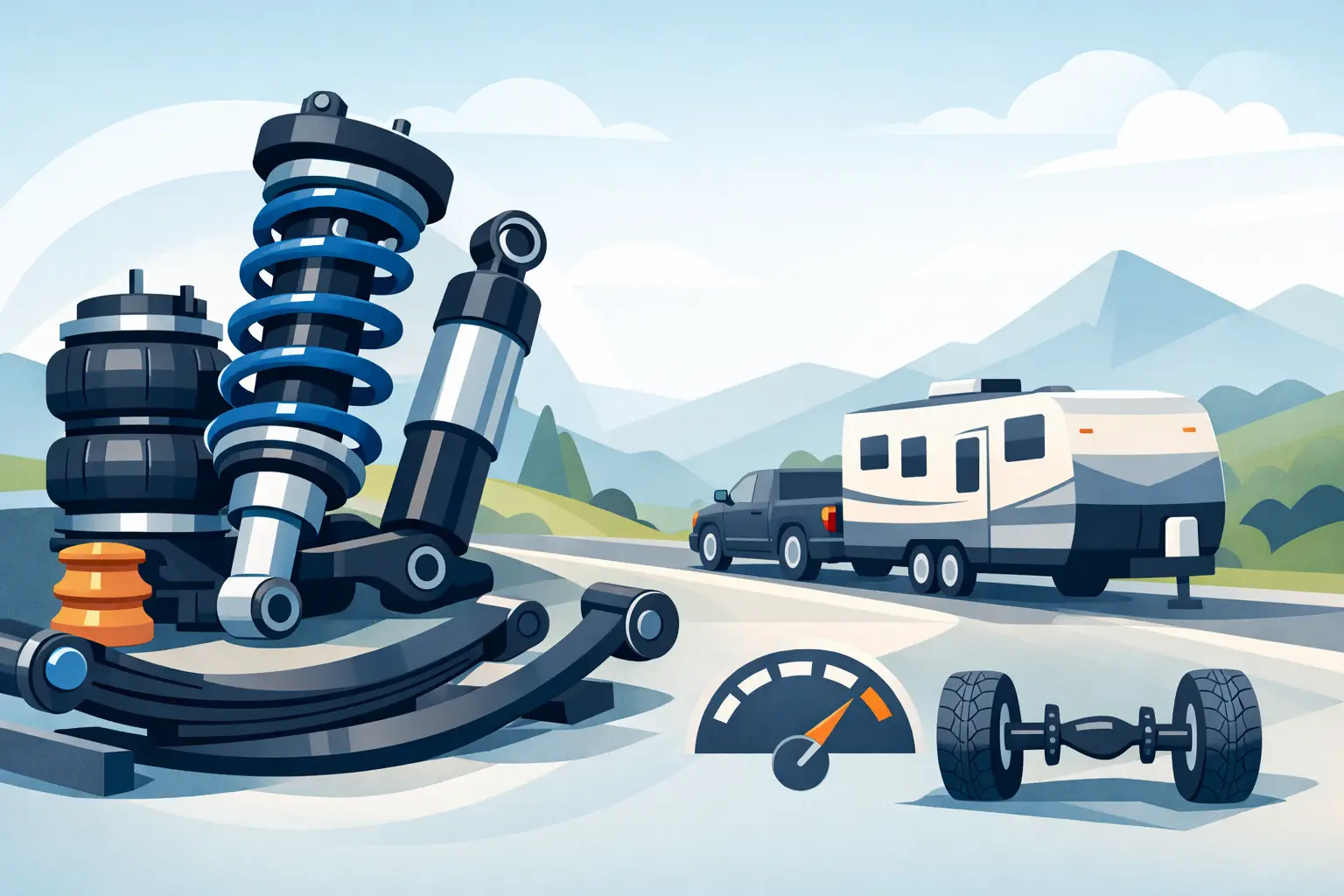
A trailer that makes your truck feel loose, squat hard, or wander in crosswinds is telling you something. The best suspension upgrades for towing are not about making a vehicle look tougher in the driveway. They are about keeping the chassis level, the tires planted, and the steering predictable when real weight is on the hitch.
Towing puts stress on parts that may feel perfectly fine during daily driving. Add tongue weight, cargo, passengers, or uneven road surfaces, and stock suspension can start to show its limits fast. The right upgrade depends on what you tow, how often you tow, and whether your vehicle needs more load support, more stability, or both.
What towing does to your suspension
When you hook up a trailer, the rear of the vehicle takes a concentrated load. That load can compress the springs, reduce front-end weight, and change alignment angles just enough to affect braking, steering feel, and tire wear. Even if you stay within your tow rating, the suspension may still feel underdamped or too soft for the job.
That is why the smartest towing upgrades are usually focused on control rather than pure lift. A tall stance may look right, but towing performance comes from managing weight transfer and keeping the suspension operating in a stable range.
Best suspension upgrades for towing by priority
1. Air helper springs
If one upgrade solves the widest range of towing problems, it is air helper springs. Airbags mounted between the frame and suspension add adjustable support to the rear, helping reduce squat under trailer tongue weight. That keeps the vehicle closer to level and can improve headlight aim, steering response, and overall composure.
Their biggest advantage is flexibility. You can run lower pressure unloaded for a more comfortable ride, then add pressure when towing. That makes them a strong fit for trucks and SUVs that split time between commuting and hauling.
There are trade-offs. Air systems need correct installation, pressure management, and occasional inspection. They support load well, but they do not replace a vehicle’s factory payload rating. They also will not fix poor shock control if the dampers are already overwhelmed.
2. Heavy-duty rear shocks
Springs hold the weight. Shocks control the motion. When towing, that control matters every second. A good set of heavy-duty shocks can reduce bouncing after dips, settle rear-end movement over expansion joints, and improve confidence during lane changes or windy highway driving.
This is often the upgrade drivers overlook because worn shocks do not always fail dramatically. They just slowly lose authority. If your vehicle porpoises after bumps or feels unsettled with a trailer attached, shocks deserve a close look.
For many vehicles, upgrading shocks is one of the best-value suspension improvements you can make. Just remember that firmer is not always better. The right valving should match the vehicle’s weight, spring rate, and actual towing use.
3. Upgraded rear leaf springs or add-a-leaf kits
For pickups with leaf-spring rear suspension, stronger leaf packs or add-a-leaf kits can provide more consistent load support than stock springs. This can be a smart option if the truck tows frequently, carries bed cargo regularly, or already sags under moderate load.
Compared with airbags, upgraded leaf springs are more permanent. There is no pressure adjustment and no air system to maintain. The downside is that unloaded ride quality may become firmer, especially on rough pavement. If the truck is a work tool first and a daily driver second, that trade-off can make sense. If it is your commuter all week and your tow rig a few weekends a month, airbags may be the more balanced move.
4. Weight-distributing hitch with integrated sway control
This is not a suspension component in the strictest sense, but it affects suspension behavior so directly that it belongs in the conversation. A weight-distributing hitch shifts some trailer tongue weight forward to the tow vehicle’s front axle and rearward to the trailer axles. That can restore front-end balance and improve braking and steering feel.
When paired with sway control, it also helps reduce trailer oscillation caused by wind, passing trucks, or sudden steering corrections. For many half-ton trucks, SUVs, and crossovers towing near the upper end of their practical comfort zone, this can be a major stability upgrade.
The key is correct setup. Too much or too little distribution can work against you. This is one area where proper adjustment matters as much as the hardware itself.
5. Rear anti-sway bar upgrades
A heavier-duty rear sway bar helps limit body roll and side-to-side lean. That can make a noticeable difference when towing taller trailers or carrying uneven loads. If your vehicle feels top-heavy through curves or unsettled during quick direction changes, this upgrade can sharpen chassis control.
It is not a cure for rear squat, and it will not increase load capacity. What it does is improve lateral stability. Think of it as a control upgrade rather than a support upgrade.
This is especially useful for SUVs and trucks with a softer factory tuning. For drivers who tow enclosed trailers or travel trailers, a sway bar can help the vehicle feel more precise without making the suspension harsh.
6. Progressive-rate or overload springs
Progressive-rate springs increase resistance as they compress. Overload springs stay less involved under normal conditions and engage more when the vehicle is carrying heavier weight. Both designs aim to preserve everyday drivability while adding support under load.
These can be an excellent middle ground if you want more towing capability than stock suspension delivers but do not want the fully adjustable nature of airbags. They are also simpler mechanically. The trade-off is that tuning is fixed. If your loads vary a lot from trip to trip, an adjustable system still has the edge.
7. Front suspension support upgrades
Most towing conversations stay focused on the rear, but the front suspension matters too. If rear squat unloads the front axle, steering can feel lighter and less planted. In some cases, upgraded front shocks or struts help restore control, especially on vehicles with high miles or soft factory damping.
This is not the first place most people should spend money, but it is often the missing piece in a complete towing setup. A tow vehicle should feel balanced front to rear. If the rear gets all the attention and the front is left tired and underdamped, the result can still feel vague on the road.
How to choose the right setup
The best suspension upgrades for towing depend on how your vehicle is actually used. If you tow a camper six times a year and daily-drive the same truck, airbags and quality shocks are usually the most practical combination. If you tow heavy equipment often and the vehicle lives under load, stronger leaf springs may be the better long-term solution.
Trailer type matters too. A low utility trailer behaves very differently from a tall enclosed trailer that catches wind. One may need load support more than sway control. The other may need both. Short-wheelbase SUVs often benefit more from hitch setup and sway management than owners expect.
It also depends on what problem you are trying to fix. Rear squat points toward load support. Repeated bouncing suggests shock control. Lean in turns or crosswind nervousness may call for sway management. If everything feels wrong at once, start by checking the condition of the existing suspension before stacking upgrades on worn parts.
What suspension upgrades will not do
No suspension product changes the legal tow rating, axle rating, or payload rating of your vehicle. That is a hard line. Better springs or airbags can make a vehicle feel more stable, but they do not make an overloaded setup safe.
They also cannot compensate for poor trailer loading. Too much rear trailer weight, too little tongue weight, mismatched tires, or bad brake adjustment will create handling problems that suspension parts alone cannot solve. The cleanest towing setup always starts with correct loading, proper tire pressure, and a trailer that is mechanically sound.
A smart upgrade path
If you want the most effective route without wasting money, start with inspection and basics. Make sure shocks, bushings, tires, and factory springs are in good condition. Then match the upgrade to the problem.
For many drivers, the best first step is heavy-duty shocks or airbags. If towing is frequent and heavy, step up to rear spring upgrades. If trailer sway or front-end lightness is the issue, focus on hitch setup and sway control. A balanced combination almost always works better than one oversized fix.
That is the practical side of smart towing. The design side is just as clear – the right suspension setup makes the whole vehicle feel more composed, more capable, and more intentional. At FORTLUFT, that kind of performance matters because real technology should do more than bolt on. It should make every mile under load feel controlled, confident, and ready for the next job.
Before you buy, be honest about your trailer, your weight, and your driving habits. The best result is not the stiffest setup on the market. It is the one that makes your vehicle tow with calm, predictable control every time you hitch up.