
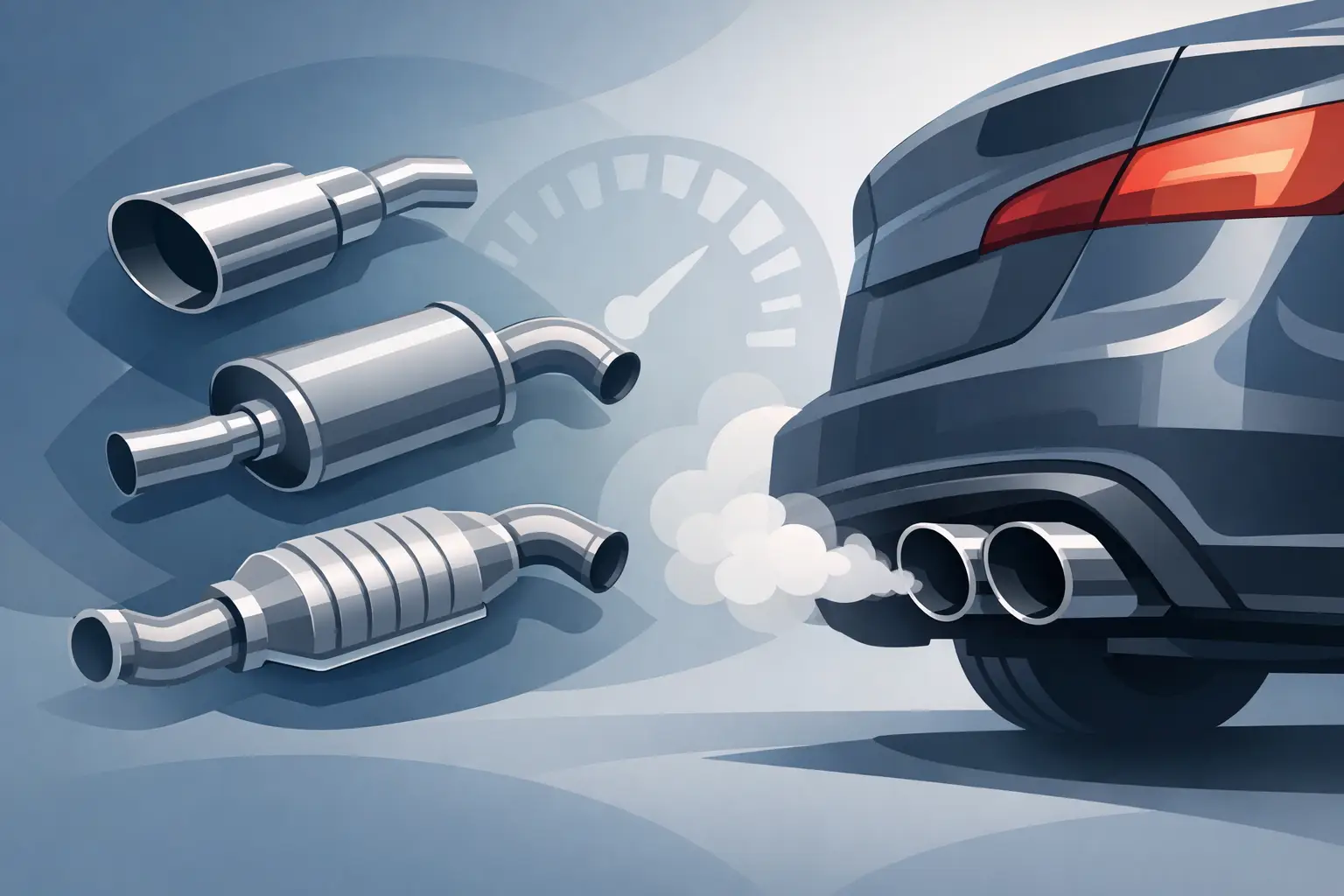
A rusty exhaust pipe rarely gives you much warning. One day the system sounds normal, and the next you hear a rasp at startup, a deeper note under load, or a vibration that was not there last week. For drivers who use their car, truck, Jeep, or SUV every day, exhaust pipes are not just tubes under the vehicle. They shape flow, control how the system fits and lasts, and play a real role in the way the vehicle looks and feels.
That is why choosing the right pipe matters. Some buyers need a direct replacement to get back on the road fast. Others want cleaner appearance, stainless construction, or a better foundation for a custom setup. Both are valid. The right choice depends on how you drive, what you expect from the vehicle, and how much you care about long-term durability versus lowest upfront cost.
What exhaust pipes actually do
At a basic level, exhaust pipes move spent gases from the engine through the exhaust system and out of the vehicle. But in practice, they do more than route flow. Pipe diameter, bends, material, and layout all affect restriction, sound character, heat management, and ground clearance.
On a stock daily driver, the factory pipe size is usually designed to balance emissions equipment, noise control, fuel economy, and packaging. For many owners, staying close to OE dimensions makes the most sense. It keeps the system predictable and avoids the common mistake of going too large, which can reduce low-end response on some setups.
For upgraded applications, the pipe becomes part of the performance conversation. Less restrictive flow can support higher output, but there is always a trade-off. Bigger is not automatically better. If the pipe diameter is oversized for the engine and build, the result can be more noise without meaningful gains.
Exhaust pipes and material choice
Material is often where smart buyers separate a short-term fix from a lasting repair. The most common options are aluminized steel and stainless steel, and they do not perform the same over time.
Aluminized steel is typically more budget-friendly. It works well for many replacement jobs, especially in drier climates or on vehicles that are not kept for the long haul. The downside is corrosion resistance. If the vehicle sees winter roads, moisture, mud, or repeated temperature cycles, aluminized pipe can wear out much faster.
Stainless steel costs more, but it earns that price in many cases. It resists rust better, holds its appearance longer, and fits the needs of buyers who care about both function and finish. On trucks, Jeeps, and SUVs that see hard use or outdoor storage, stainless often makes more sense as the value option over time, not just the premium option at checkout.
This is where the design side also starts to matter. Exhaust components are visible on many vehicles, especially with rear-exit or side-exit setups. Clean bends, consistent finish, and quality welds do not just look better. They usually signal better manufacturing discipline.
How to choose the right exhaust pipes
Fitment should come first. Before thinking about sound or style, make sure the pipe matches the vehicle application, engine configuration, wheelbase where relevant, and the rest of the exhaust layout. A part that is close is not the same as a part that fits correctly.
Diameter comes next. If you are replacing a damaged section on an otherwise stock vehicle, matching the factory size is usually the safest move. If you are building a custom exhaust or pairing the pipe with other upgrades, the right diameter depends on the full system, not one isolated part. Mufflers, catalytic converter setup, engine output, and intended use all affect the answer.
Then look at bend quality. Mandrel-bent pipes maintain more consistent internal diameter through the curve, which helps preserve flow. Crush bends are more affordable but create narrower sections at the bend. For many daily drivers, that difference may not be dramatic. For performance-minded builds, it becomes more relevant.
Connection style matters too. Some buyers want clamp-on convenience for easier installation and service. Others prefer welded connections for a cleaner, more permanent setup. Neither is universally better. Clamp-on can save time and simplify future changes, while welded systems often provide a more integrated finish.
When replacement is enough and when an upgrade makes sense
Not every exhaust issue calls for a full custom solution. If the goal is restoring quiet operation, passing inspection, or replacing a corroded section, a straightforward replacement pipe is often the right call. It keeps costs controlled and gets the vehicle back to normal function.
An upgrade makes more sense when the current system is already being modified, when appearance matters, or when durability is a priority. Many owners start with a replacement need and realize they would rather install a better material once instead of repeating the job later. That is especially true for vehicles exposed to salt, towing loads, off-road grime, or long highway use.
There is also the visual factor. On enthusiast-owned vehicles, the exhaust is part of the finished look. A well-chosen pipe and tip setup can sharpen the rear profile without going over the top. That balance matters. Good aftermarket design should look intentional, not improvised.
Common mistakes buyers make with exhaust pipes
The biggest mistake is buying by diameter alone. A pipe can be the right size on paper and still be wrong for the vehicle, routing, or connection points. Application details matter.
Another common error is focusing only on sound. Louder does not always mean better, and pipe changes alone can create drone, harshness, or an uneven tone if they are not matched to the rest of the system. A clean exhaust note usually comes from a balanced setup, not a random mix of oversized parts.
Material shortcuts are another issue. Saving money upfront can make sense on a temporary repair, but on a vehicle you plan to keep, cheap pipe can become expensive once corrosion returns and labor has to be repeated.
Installation assumptions can also cause problems. Even experienced DIY buyers know that clearance, hanger position, and alignment can make or break the job. A pipe that contacts the chassis or sits poorly at the outlet will not just look off. It can rattle, stress joints, and wear prematurely.
Exhaust pipes for trucks, Jeeps, and SUVs
Larger vehicles bring different priorities. Trucks and SUVs often need exhaust components that can handle heavier use, more exposure, and longer service life. Ground clearance and routing become more important, especially on lifted vehicles or models used for towing and trail driving.
For Jeeps, suspension travel and off-road clearance can influence pipe choice more than buyers expect. A setup that looks good in the garage may be less impressive once it sees articulation, mud, and repeated impacts from debris. In these cases, durability and routing discipline matter as much as finish.
For pickup owners, appearance is often part of the buying decision. A visible exhaust system should work hard and look right. Stainless construction and quality tips make sense here because utility and style are not competing priorities. They support each other.
Why design still matters in a functional part
Automotive buyers do not have to choose between practical and refined. That is especially true in exhaust. A well-made pipe should install properly, resist corrosion, and maintain flow. It should also look like it belongs on the vehicle.
That is the difference between a commodity part and a part chosen with intent. When the material is right, the fit is right, and the finish is right, the exhaust system does more than solve a problem. It completes the build. FORTLUFT approaches this category with that exact standard in mind – technology as an art form, backed by the kind of fitment and material focus serious buyers actually care about.
If you are shopping for exhaust pipes, the smartest move is to start with how the vehicle is used, then choose the material, size, and layout that match that reality. The best part is not the loudest or the cheapest. It is the one you install once, trust every day, and still like looking at months later.