
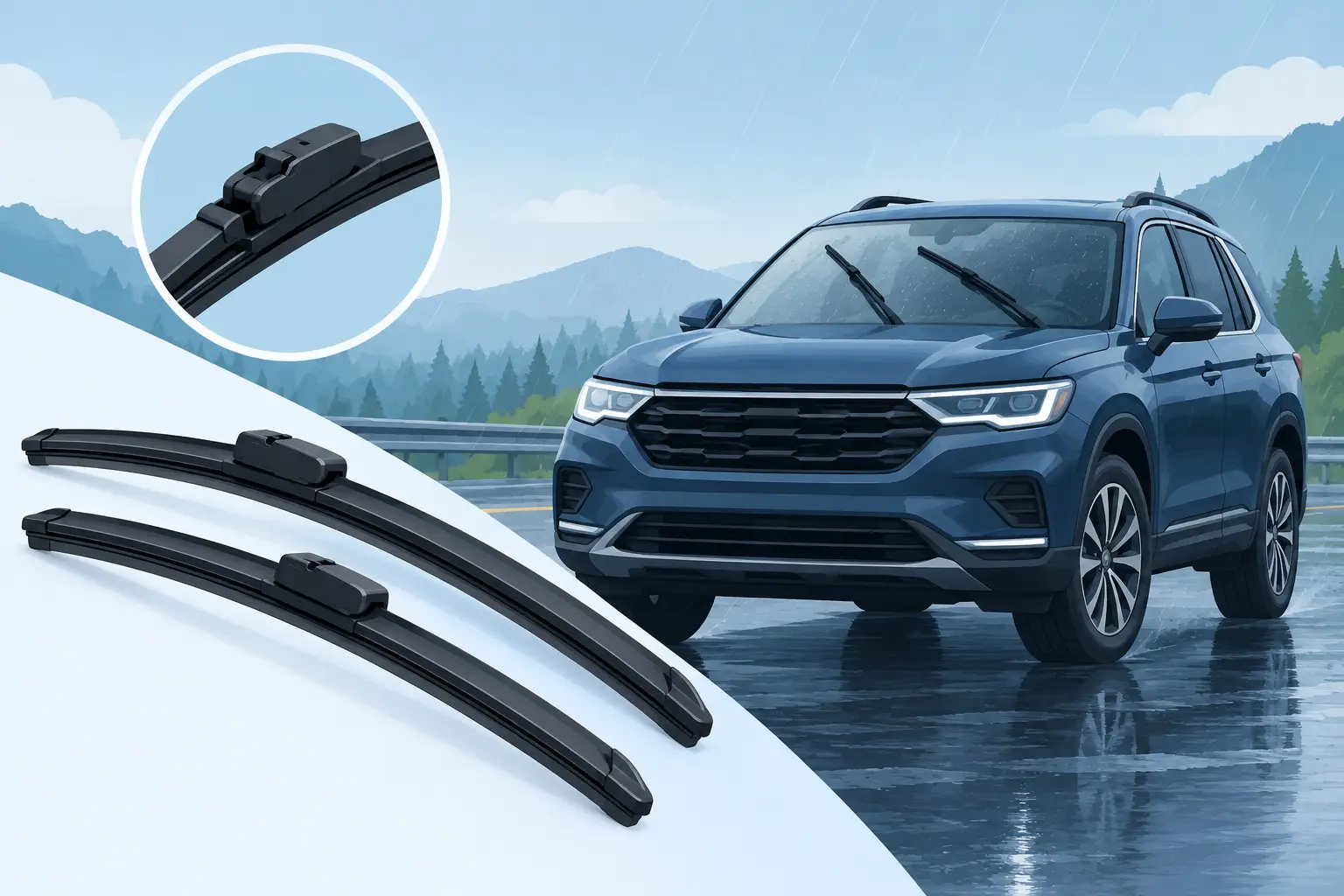
A rainstorm exposes weak wiper blades fast. Streaks across the driver’s view, chattering over the glass, and a blade that lifts at highway speed are not small annoyances when your SUV is carrying family, gear, or a full load. The best SUV rain wiper blades match the windshield’s shape, stay planted in moving air, and clear water cleanly without damaging the glass.
For most SUV owners, the right answer is not simply the most expensive blade on the shelf. Blade design, vehicle-specific length, weather conditions, and installation connection all matter. A quality pair should make wet-weather driving feel controlled and clear, whether you are commuting through heavy rain, heading to the trailhead, or running daily shop errands.
What Makes the Best SUV Rain Wiper Blades?
SUV windshields are often taller and more curved than sedan windshields. That larger sweep area puts more demand on the wiper frame, rubber element, and spring tension in the wiper arm. A blade that works adequately on a compact car may leave missed sections or chatter on a broad SUV windshield.
The best fit starts with the exact blade lengths specified for your year, make, and model. Driver and passenger blades are commonly different lengths, and some SUVs use a dedicated rear blade with a separate attachment style. Measuring an old blade can help, but fitment information is more reliable. An incorrect blade may strike the windshield trim, overlap the opposite blade, or fail to cover the area you need most.
Pressure distribution is equally important. A wiper needs even contact from end to end. If the blade’s frame cannot follow the windshield curve, it may wipe well near the center and leave water at the outer edges. That is why modern beam and hybrid designs are popular for SUVs, particularly for drivers who see frequent rain, snow, or highway miles.
Choose the Right Wiper Blade Design
There is no single blade style that wins for every vehicle and climate. The practical choice depends on your windshield profile, local weather, and how long you expect a blade to last.
Conventional frame blades
Conventional blades use a visible metal or composite frame with multiple pressure points. They are generally affordable, straightforward to replace, and effective in moderate conditions. For an older SUV with a relatively flat windshield, a quality conventional blade can still be a sensible maintenance choice.
Their limitation is exposure. Ice, road salt, and packed snow can collect in the frame and reduce movement. They also tend to create more wind noise at speed than low-profile options. If your vehicle spends winters outdoors in a northern climate, a basic framed blade may require more frequent attention.
Beam blades
Beam blades have a clean, frameless profile and an internal spring-steel structure that spreads pressure across the windshield. This design follows curved glass especially well and has fewer places for snow and debris to build up. It is often the strongest all-weather choice for late-model SUVs, crossovers, and Jeeps.
A well-made beam blade is also more likely to remain stable during highway rain. The trade-off is price: beam blades usually cost more than conventional options. Still, the improved coverage, quieter operation, and winter performance can justify that difference for a daily-driven SUV.
Hybrid blades
Hybrid blades combine a pressure frame with a streamlined outer shell. They offer much of the windshield contact of a beam blade while retaining the support structure of a conventional design. This makes them a strong middle ground for owners who want better weather protection and a more refined appearance without moving to the highest-priced option.
Hybrid blades can be particularly useful for SUVs that see varied conditions, from summer storms to slushy winter roads. As with any blade, quality matters. A poorly made hybrid can look substantial but still use a rubber element that wears quickly.
Winter blades
Winter blades use protective coverings and flexible wiping elements designed to resist ice buildup. They are worthwhile when freezing rain, snow, and repeated defrost cycles are normal parts of the season. Their bulkier design may be less aerodynamic and less polished-looking than a premium beam blade, but winter visibility is a fair trade.
Many drivers run winter blades through the coldest months, then switch back to beam or hybrid blades in spring. If your area gets only occasional snow, an all-weather beam blade may be the more efficient year-round choice.
Material Matters More Than the Package Claims
The wiping edge is where performance is won or lost. Natural rubber blades are common and can provide smooth, clean wiping at a lower cost. They are a reasonable option for vehicles driven lightly or in mild climates, but heat, ultraviolet exposure, and ozone can harden the rubber over time.
Synthetic rubber compounds usually offer better resistance to temperature swings. Silicone blades cost more, but they can remain flexible longer and may leave a water-repellent effect on the glass. That benefit depends on the specific blade and windshield condition, so it should not replace proper cleaning or a dedicated glass treatment.
Look for a blade with a durable, precision-cut wiping edge rather than focusing only on coatings and marketing language. A clean edge with consistent pressure will outperform a premium material installed on the wrong vehicle or used on a dirty windshield.
Fitment and Adapters: Avoid the Easy Mistake
A wiper blade is only as good as its connection to the wiper arm. SUVs use several arm styles, including J-hook, push-button, pinch-tab, side-lock, and bayonet connections. Many replacement blades include adapters, but not every adapter fits every arm securely.
Before buying, confirm the blade length and connector type for your specific SUV. Check whether the package includes the required adapter and whether the rear wiper requires a separate part. For shop buyers and fleet managers, verifying fitment before ordering reduces return time and prevents a vehicle from sitting with poor wet-weather visibility.
Installation should take only a few minutes, but do not force the connection. The blade should click or lock into place without excessive pressure. After installation, gently pull on the blade to confirm it is secure, then test the sweep with washer fluid before driving in the rain.
Get Better Wipe Performance From Any Blade
New blades cannot compensate for contaminated glass or worn wiper arms. Before installation, clean the windshield thoroughly to remove road film, wax residue, bug debris, and oily buildup. A clean microfiber towel and automotive glass cleaner are enough for routine preparation.
Also inspect the wiper arm. If it is bent, loose, or lacks spring tension, even a premium blade can skip or leave streaks. A blade that lifts at highway speed may indicate weak arm tension, not a bad blade. If one side of the windshield consistently wipes poorly, compare the arm angle and contact pressure with the other side.
Do not run wipers over a dry, dusty windshield unless necessary. Grit can wear the wiping edge and create fine scratches in the glass. Use washer fluid, especially after parking outside during pollen season or after driving on salted roads.
When Should SUV Wiper Blades Be Replaced?
Most wiper blades last about six to 12 months, but mileage and climate can shorten that range. Summer heat can dry and crack rubber, while winter ice can tear the edge or deform the frame. Waiting until a heavy storm to find out that a blade has failed is the wrong maintenance schedule.
Replace blades when you notice persistent streaking, skipping, squeaking, split rubber, bent frames, or missed areas that remain after cleaning the windshield. A brief squeak on nearly dry glass is not always a concern. Repeated chatter on a wet, clean windshield usually means the rubber has hardened, the blade is contaminated, or the fit is wrong.
For dependable visibility, inspect the blades when you check other seasonal items such as tire tread, washer fluid, and exterior lighting. This is a small replacement that protects a much bigger part of the driving experience: the ability to see hazards early and react with confidence.
The right wiper blades are a practical upgrade with an immediate payoff. Choose the correct fitment, select a design suited to your climate, and maintain the glass around it. At FORTLUFT, the best replacement parts are the ones that perform cleanly, fit precisely, and keep every mile looking as controlled as it feels.