
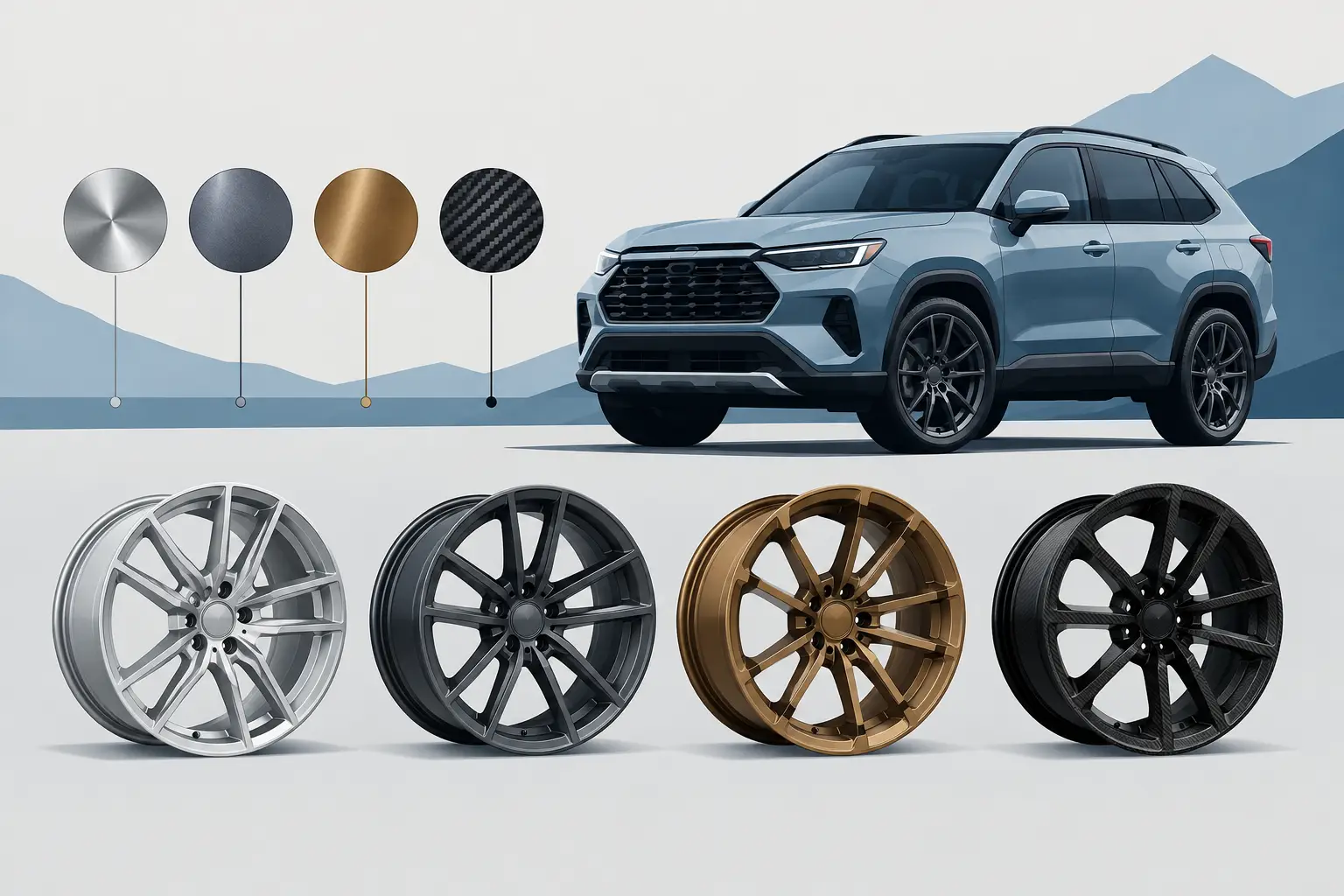
A wheel that looks right on a lifted SUV can still be the wrong wheel for the job. A heavy steel set may be ideal for a winter-driven work vehicle, while a light forged aluminum set can sharpen steering response on a performance-oriented crossover. The best aftermarket SUV wheel materials are not defined by appearance alone. They come down to load capacity, vehicle use, wheel construction, finish durability, and the road or trail conditions your SUV sees most often.
For most buyers, aluminum alloy and steel are the two realistic choices. Carbon fiber, magnesium, and other specialty materials exist, but they serve narrow applications and usually carry a price that does not match everyday SUV ownership. Understanding what each material does well makes it easier to buy a wheel set that performs as confidently as it looks.
Best Aftermarket SUV Wheel Materials for Real Use
Aluminum alloy: the balanced choice for most SUVs
Aluminum alloy is the most common material in the aftermarket wheel market, and for good reason. It offers an effective balance of weight, strength, styling flexibility, and corrosion resistance. Most alloy wheels use aluminum combined with other elements to create a material that can be cast, flow formed, or forged into a wide range of spoke patterns and finishes.
Compared with steel, an aluminum alloy wheel is usually lighter. Reducing unsprung weight can help suspension components react more quickly to bumps, which may improve ride control and steering feel. The difference is especially noticeable when replacing a heavy factory wheel-and-tire package with a properly matched aftermarket setup. It will not transform every SUV into a sports car, but it can make the vehicle feel more precise.
Alloy also gives designers more freedom. Deep concave profiles, thin spokes, machined faces, satin black finishes, and detailed accents are all more practical with aluminum. For SUV owners building a clean street look, an overland setup, or a tougher truck-inspired stance, alloy wheels offer the broadest selection.
The trade-off is impact behavior. A hard pothole strike can bend or crack an aluminum wheel depending on its design, construction, and the severity of the impact. A bent wheel may sometimes be repairable, but a cracked wheel needs professional evaluation and is often replaced. A wheel’s load rating, spoke design, barrel thickness, tire sidewall, and offset all matter alongside the material itself.
Steel: practical strength at a lower cost
Steel wheels are familiar for fleet vehicles, winter packages, basic off-road builds, and drivers who prioritize function over cosmetic detail. They are generally less expensive than alloy wheels and often tolerate minor impacts differently. Rather than cracking, steel is more likely to bend, which can make damage easier to identify and, in some cases, repair.
For an SUV used on rough access roads, through harsh winters, or as a daily work vehicle, steel can be a smart material choice. A simple painted steel wheel is not precious. Scratches from gravel, road salt, or trail debris are less painful when the wheel is built for utility rather than show-quality presentation.
Weight is the compromise. Steel wheels are commonly heavier than comparable alloy wheels, increasing unsprung and rotational mass. That additional weight can affect acceleration, braking response, fuel economy, and ride quality to a degree. On a full-size SUV with all-terrain tires, the total difference can be substantial.
Steel also needs attention in corrosive environments. Paint chips can expose the metal, allowing rust to form over time. Regular washing during salt season and prompt touch-up of damaged coating will help extend service life. If your SUV spends winter outside in the Northeast or Midwest, finish maintenance is part of owning steel wheels.
Forged aluminum: premium strength with lower weight
Forged aluminum wheels start as a solid billet or forged blank that is shaped under extreme pressure. That process aligns the material structure differently than a traditional cast wheel, allowing manufacturers to create wheels that are often lighter and stronger for a given design. The result is a premium option for performance SUVs, high-load applications, and owners who want a refined wheel with a serious engineering advantage.
A quality forged wheel can reduce weight without relying on overly thin sections. That matters when you want a larger diameter wheel, a wider tire, or a wheel that supports demanding driving. The lower mass can improve steering response and reduce strain associated with a heavier wheel package, although correct fitment remains essential.
Price is the obvious barrier. Forged wheels cost more because the manufacturing process, material use, and machining requirements are more involved. They make the most sense for drivers who value weight savings, high-end finishes, motorsport-inspired design, or specific load requirements. For a standard daily-driven SUV on stock-size tires, the benefit may not justify the additional investment over a well-made cast or flow-formed alloy wheel.
Flow-formed aluminum: a strong middle ground
Flow forming is not a separate wheel material. It is a manufacturing method used with aluminum alloy. The wheel begins as a cast center, then the barrel is formed under heat and pressure. This process can strengthen and thin the barrel compared with a conventional cast wheel, reducing weight while preserving useful durability.
That makes flow-formed wheels one of the strongest value options in the aftermarket. They often cost less than fully forged wheels but can provide better weight and strength characteristics than basic cast designs. For a daily-driven SUV that sees highway miles, occasional gravel roads, or spirited driving, flow-formed aluminum deserves serious consideration.
As with any wheel, do not treat the construction label as a complete quality guarantee. Compare the stated load rating, intended application, size, offset, and warranty. A properly engineered cast wheel can be the right fit for one vehicle, while a flow-formed wheel may be worth the step up for another.
Construction Matters as Much as Material
When comparing aftermarket SUV wheels, material tells only part of the story. The construction method determines how that material is shaped, where strength is concentrated, and how much weight can be removed safely. A lightweight wheel with an insufficient load rating is not an upgrade, no matter how aggressive its design looks.
Check the wheel’s load rating against your SUV’s gross axle weight rating, not just its curb weight. This becomes more important if you carry recovery gear, roof cargo, camping equipment, tools, or a full-size spare. Towing also adds demands to the rear axle. The wheel must support the vehicle’s real operating load with an appropriate margin.
Fitment is equally critical. Verify bolt pattern, center bore, offset, width, brake clearance, and tire compatibility. A wheel that contacts a brake caliper, pushes the tire beyond the fender, or changes scrub radius excessively can create problems that material quality cannot solve. If you are changing diameter or width, account for tire size and overall rolling diameter as well.
Choosing Material by SUV Driving Style
A commuter SUV that needs a cleaner, more personal look is usually best served by cast or flow-formed aluminum. These wheels provide broad style options, manageable weight, and pricing that leaves room in the budget for quality tires. Choose a durable finish if the vehicle sees regular rain, road grit, or curbside parking.
For a performance SUV or street-focused build, flow-formed or forged aluminum is the better direction. The emphasis is on lowering weight, maintaining strength, and selecting a design that complements larger brakes and a responsive tire package. Avoid chasing the lightest advertised wheel without confirming its load rating.
An overland SUV or trail vehicle may call for a different calculation. Steel is sensible when cost, field-service practicality, and tolerance for cosmetic abuse are priorities. A high-load-rated alloy wheel can also be an excellent choice when weight matters, particularly with larger all-terrain tires. Look for a design with adequate spoke and barrel clearance for mud, rocks, and brake heat.
For winter use, both materials can work. Steel keeps the initial cost low and is easy to treat as a dedicated seasonal setup. Aluminum alloy offers less weight and more visual refinement, but the finish must be maintained carefully. Frequent washing is the best defense against road salt on either material.
What about carbon fiber and magnesium?
Carbon fiber wheels can be exceptionally light and visually striking, but they remain a specialty product with high cost and limited practicality for most SUV owners. Their damage characteristics, repair options, and replacement expense demand careful consideration. They are not the default answer for a daily driver, off-road SUV, or value-focused build.
Magnesium is also lightweight, but it is far less common in modern aftermarket SUV applications. Corrosion concerns, cost, and specialized use cases keep it outside the mainstream. For nearly every US-market SUV owner, a quality aluminum alloy or steel wheel is the more practical decision.
Finish Protection Is Part of Wheel Material Choice
Material affects durability, but finish determines how the wheel looks after seasons of use. Painted, powder-coated, machined, polished, and clear-coated surfaces each require different care. Powder coating is popular for its durable appearance, while machined faces can deliver sharp contrast but may show corrosion if coating damage is ignored.
Use pH-balanced wheel cleaner, avoid harsh abrasives, and wash brake dust away before it bakes onto the finish. If your SUV travels on salted roads or beaches, rinse the wheels and inner barrels regularly. This small maintenance habit protects both the finish and the hardware around it.
A wheel is a working component first and a design statement second. Choose the material that fits your SUV’s load, terrain, climate, and driving habits, then select the finish and profile that make the vehicle feel like yours. That is where practical engineering and purposeful style meet – technology as an art form.