
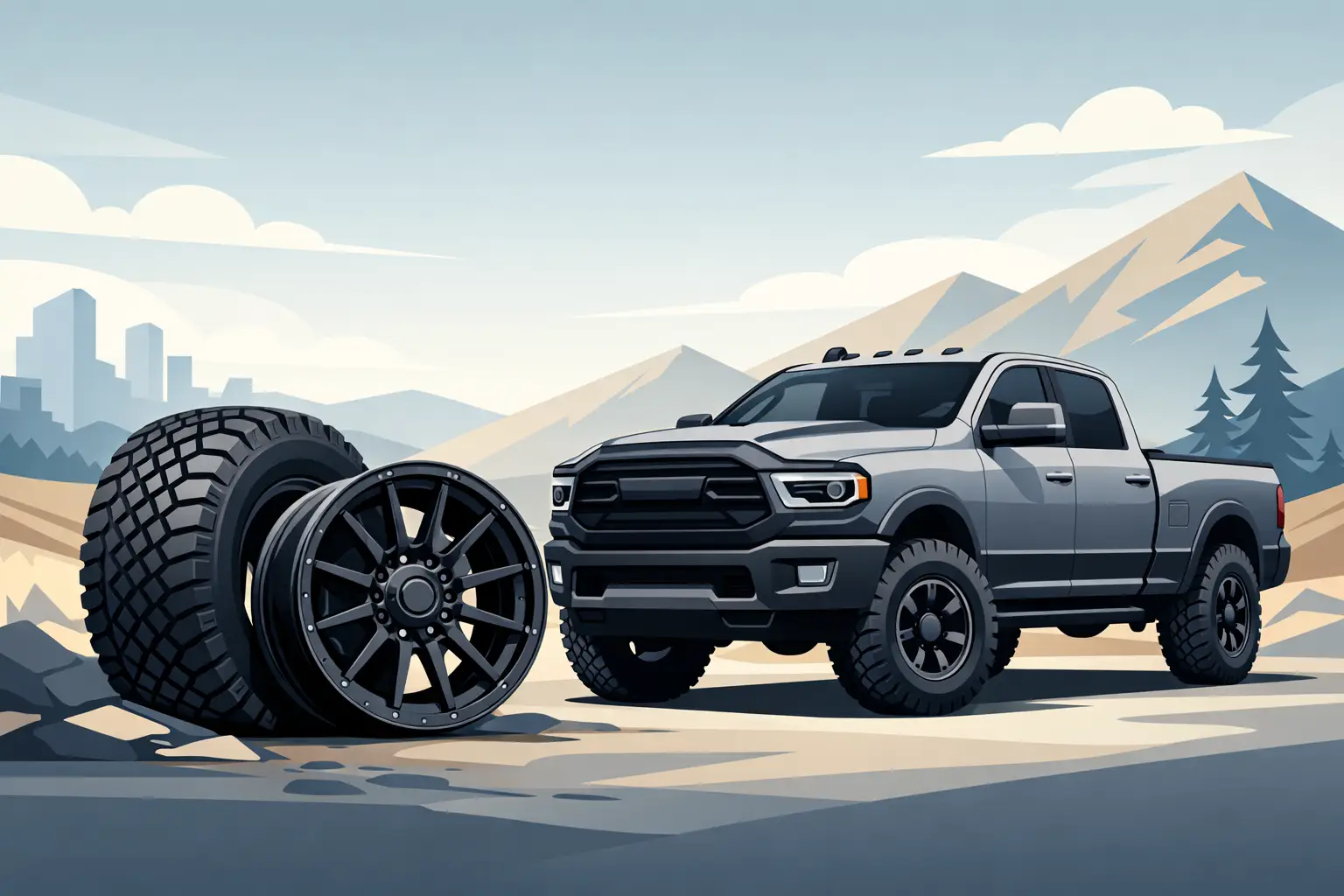
A 2026 Ram 2500 can look factory-clean, jobsite-tough, or fully built depending on what sits at the corners. Choosing the right wheels and tires for 2026 Ram 2500 is not just about style. It affects payload confidence, ride quality, steering response, brake clearance, and how the truck feels every day when it is loaded, towing, or running empty.
That is why this category deserves more attention than a quick size match. A heavy-duty truck asks more from a wheel and tire package than a half-ton does. If you get the look right but miss the load rating, offset, or overall diameter, the result can be expensive fast.
What matters most when choosing wheels and tires
The 2026 Ram 2500 sits in a category where capability comes first. Even if the truck is mostly used as a daily driver, it is still built around heavier suspension components, larger brakes, and higher load demands. That changes the buying decision.
Wheel construction matters because strength and weight are always in tension. A heavier cast wheel may offer the look and durability many owners want at a more accessible price point. A higher-end forged option can reduce weight and add strength, but that usually comes at a premium. There is no universal winner here. It depends on whether the truck is primarily a work tool, a tow rig, or a visual upgrade project.
Tire choice matters just as much. An aggressive all-terrain can sharpen the truck’s stance and improve loose-surface grip, but it may add road noise and reduce fuel economy. A highway-terrain tire will usually ride quieter and wear more evenly on pavement, though it will not deliver the same off-road bite in mud, gravel, or deep ruts.
Wheels and tires for 2026 Ram 2500 by use case
The smartest way to shop wheels and tires for 2026 Ram 2500 is to start with how the truck is actually used. Not the once-a-year trip. The weekly routine.
For daily driving and highway miles
If the truck spends most of its time on pavement, a moderate wheel diameter with a highway-terrain or mild all-terrain tire usually makes the most sense. This setup keeps ride quality more composed, helps control noise, and reduces the harshness that can come with oversized wheel packages.
For many owners, this is the sweet spot between appearance and practicality. You still get a stronger visual presence than stock, but the truck remains comfortable and predictable on longer drives.
For towing and work use
If the truck tows regularly or carries equipment, load rating moves to the top of the list. That applies to both the wheel and the tire. A great-looking setup is not the right setup if it cannot support the real demands of the truck.
In this case, sidewall stability, tread life, and heat management matter more than maximum tread aggression. A tire that stays planted under load and wears consistently is often a better choice than one built mainly for off-road styling.
For off-road builds and larger stance
If the goal is more ground presence, more sidewall, and better trail capability, larger all-terrain or mud-terrain tires paired with the right offset can transform the truck. But this is where trade-offs get real. More aggressive sizing can introduce rubbing, require trimming, change steering feel, and affect fuel economy and braking performance.
A bigger setup can absolutely work well, but fitment should be planned rather than guessed.
Understanding wheel size, offset, and backspacing
A lot of wheel problems start with diameter getting all the attention while width and offset get ignored. On a heavy-duty truck, that is a mistake.
Diameter determines brake clearance and overall appearance, but width and offset shape how the wheel sits in relation to suspension components and fenders. A more aggressive offset can push the wheel outward for a wider stance. That can improve visual impact, but it may also increase scrub radius, throw more debris down the side of the truck, and raise the chance of rubbing with larger tires.
Backspacing matters for inner clearance. If the wheel sits too far inward, it can interfere with suspension or steering components. If it sits too far outward, it may create fitment issues at the fender edge. The right balance depends on tire width, ride height, and whether the truck is leveled or lifted.
Stock-style fitment vs aggressive fitment
Stock-style fitment usually keeps the tire tucked closer to factory geometry. That is the safer path for owners who want clean installation, predictable driving manners, and fewer surprises.
Aggressive fitment is about stance and presence. It can look excellent on a 2026 Ram 2500, especially with a level or lift, but it needs matching tire size, suspension clearance, and realistic expectations. Good fitment is engineered, not improvised.
Tire sizing: bigger is not always better
There is a strong temptation to go as large as possible because the truck can visually support it. Sometimes that works. Sometimes it creates more compromise than benefit.
A taller tire adds sidewall and can improve off-road cushioning, but it also changes effective gearing and can soften acceleration. A wider tire can improve footprint and visual width, though it may follow road grooves more and place added demand on steering components. If the truck is used for towing, very oversized tires can work against the stable, controlled feel most owners want.
This is where honest priorities matter. If the truck is a weekend statement piece, you can lean harder into appearance. If it is used for work, daily driving, or long-distance hauling, balance usually wins.
Load rating and tire type are non-negotiable
This is the part buyers should never gloss over. A 2026 Ram 2500 is not the place for underbuilt tires.
Load range, ply construction, and overall carrying capacity need to match the truck’s intended use. Even if the truck is not maxed out every day, it should still have tires designed for the platform. The same thinking applies to wheels. The right bolt pattern is only the beginning. The wheel has to be rated appropriately for a heavy-duty application.
That may sound obvious, but plenty of appearance-focused setups fall short here. A proper HD package should deliver the right look without stepping away from real-world strength.
Ride quality, road noise, and daily livability
A wheel and tire package can look perfect in photos and still feel wrong on the road. That happens when the setup is chosen only for visual impact.
Larger wheels with lower-profile tires tend to sharpen appearance, but they can also make the truck feel stiffer over broken pavement. More aggressive tire tread can improve traction in dirt, snow, or mud, but often adds hum at highway speed. Some owners are fine with that. Others get tired of it within a month.
There is no wrong preference, only mismatched expectations. If the truck is driven every day, comfort and noise should be part of the buying decision from the start.
Matching the wheel finish to the truck
Style still matters. On a truck like the 2026 Ram 2500, finish choice changes the whole character.
Gloss black delivers contrast and a more modern custom look. Matte and satin finishes tend to feel more understated and work well on trucks built around utility. Machined accents can add brightness without going full chrome. Bronze and gunmetal are increasingly popular for owners who want a more design-forward finish that still looks tough.
The best choice depends on the truck’s paint color, trim details, and overall build direction. A heavy-duty truck does not need flashy design to stand out. Clean proportions and the right finish usually do more than overstyled hardware.
When a leveling kit changes the conversation
Many Ram 2500 owners add a leveling kit before changing wheels and tires. That opens the door to larger fitments and gives the truck a more balanced stance, but it also changes clearance points.
A tire size that works on a stock truck may behave differently once the front ride height changes. The opposite can also be true. A leveled truck may comfortably accept a size that would be tight in factory form. Because of that, wheel and tire planning should happen with the suspension setup in mind, not as a separate decision.
For buyers building a truck with both visual presence and working capability, this integrated approach is where the best results usually come from.
Buying smarter, not just bigger
The best wheel and tire package for a 2026 Ram 2500 is the one that fits the truck’s job, supports its weight, and still looks right parked or moving. That may mean a clean, stock-friendly wheel with an HD all-terrain tire. It may mean a more aggressive offset and a taller tire on a leveled truck. It depends on how the truck earns its keep.
At FORTLUFT, that balance between function and appearance is the point. Technology as an art form only works when the truck still performs like a Ram 2500 should. Choose a setup that carries the load, clears the hardware, and matches the way you actually drive – then the style will look earned, not forced.
A strong build starts at ground level, and the right package should make your truck feel more capable every time you walk up to it.