
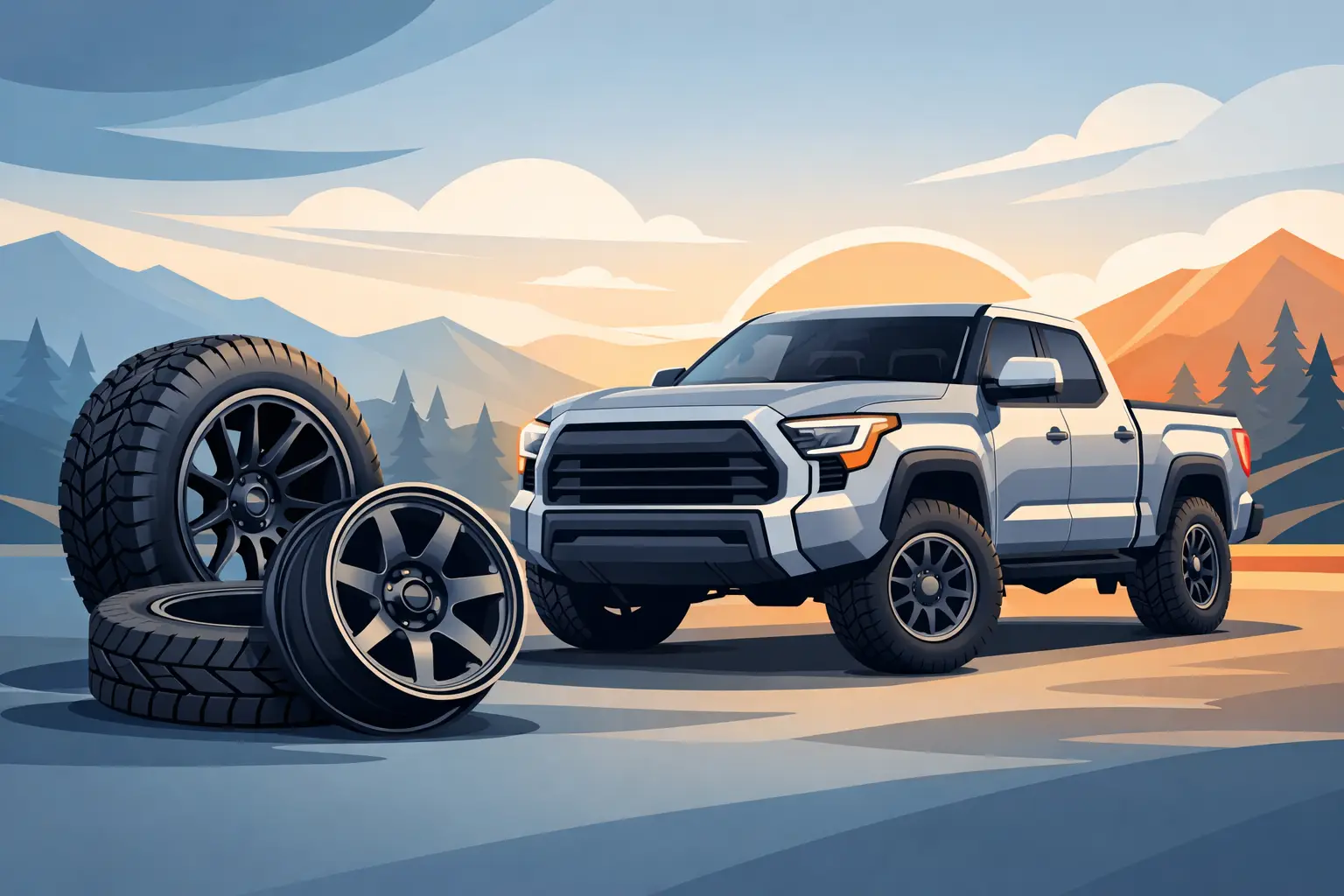
The wrong wheel and tire package can make a new truck feel expensive in all the wrong ways. A 2026 Toyota Tundra deserves a setup that matches how it actually works – towing, commuting, trail use, or simply looking sharper in the parking lot. If you’re shopping for wheels and tires for 2026 Tundra models, fitment matters just as much as style.
A Tundra has the size and stance to carry a bold wheel design, but bigger is not always better. The best result comes from balancing diameter, width, offset, tire construction, and load rating. Get that mix right, and the truck looks planted, drives cleanly, and keeps the capability that made you buy a full-size pickup in the first place.
How to choose wheels and tires for 2026 Tundra
Start with use, not appearance. That sounds backward if you’re chasing a more aggressive stance, but the truck’s job should drive the decision. A daily-driven Tundra that sees long highway miles has very different needs than a crew cab built for jobsite duty or weekend trails.
If your truck spends most of its life on pavement, a mild plus-size setup usually gives the best return. Think cleaner wheel design, a slightly wider footprint, and a tire with controlled road noise. You get a more premium look without sacrificing ride quality or fuel economy more than necessary.
For mixed-use driving, the sweet spot is often an all-terrain tire paired with a wheel that keeps practical dimensions. This is where many owners overshoot. They jump to an oversized wheel and lose sidewall, which hurts ride comfort and reduces protection when the truck leaves the pavement. On a Tundra, sidewall is part of the visual package and part of the performance package.
For dedicated off-road use, durability moves to the front of the line. That means stronger construction, enough sidewall flex, and an offset that improves stance without creating rubbing, excess spray, or steering issues. There is a difference between a capable setup and a truck that looks aggressive but fights you every time you park or hit a bump.
Wheel size options that make sense
Most Tundra owners land in the 18-inch, 20-inch, or 22-inch range. Each has a place.
An 18-inch wheel is usually the most functional choice if you value ride quality and off-road performance. It leaves room for a taller tire sidewall, which helps absorb impacts and gives the truck a more substantial, purpose-built look. For drivers who tow, travel rough roads, or want an all-terrain setup that still feels composed, 18s are hard to beat.
A 20-inch wheel is the middle ground and often the most versatile upgrade. It fills the wheel well nicely, supports a wide range of tire options, and can look upscale or aggressive depending on the design. For a Tundra that has to do a bit of everything, this size usually offers the best blend of style and function.
A 22-inch wheel is more appearance-focused. On the right truck, it can deliver a clean street presence with a premium finish and strong visual impact. The trade-off is less sidewall, a firmer ride, and reduced tolerance for rough surfaces. If your Tundra is primarily an urban or highway truck, 22s can work well. If it regularly carries gear off pavement, they are harder to justify.
Tire types for the way a Tundra is used
Tire choice changes the truck more than most owners expect. You notice it in braking, steering feel, cabin noise, wet-weather grip, and even how the truck holds a line with a trailer behind it.
All-season tires are the practical option for owners who stay on-road and want quiet, predictable performance. They work well for commuting, family use, and light-duty hauling. Their limitation shows up when conditions get loose, muddy, or rocky.
All-terrain tires are the most popular upgrade because they add visual edge and usable traction without turning the truck into a dedicated trail rig. A modern all-terrain can still behave well on pavement, but there is always a trade-off. Expect some added weight, some road noise, and in many cases a small hit to fuel economy.
Mud-terrain tires are a specialized choice. They deliver strong off-road bite and an unmistakably aggressive look, but they are not ideal for every Tundra owner. On-road noise increases, wet-road manners can suffer compared with milder tread patterns, and tread wear may be less friendly for high-mileage drivers. They look serious because they are serious, but they make the most sense when the truck actually sees that kind of terrain.
Fitment details that matter more than style
A good-looking wheel is easy to spot. Good fitment is easier to miss until it’s wrong.
Bolt pattern, center bore, width, and offset all matter, and offset is often where builds go off track. Push the wheel too far outward and you may get the stance you wanted, but also rubbing, heavier steering feel, and more debris thrown down the body. Stay too conservative and the truck can look tucked in, especially with wider tires.
Wheel width should match the tire you’re planning to run, not the other way around. A stretched or pinched fit might work on some platforms visually, but a full-size truck benefits from proper support and load stability. That is especially true if the truck tows, hauls, or sees uneven surfaces.
Load rating is non-negotiable. A 2026 Tundra is not a lightweight street crossover. Wheels and tires need the right capacity for the truck itself, plus passengers, cargo, and trailer weight when applicable. A stylish wheel with the wrong rating is not an upgrade.
Brake clearance also deserves attention, particularly if you’re changing wheel diameter or moving to an aftermarket design with different spoke geometry. Not every wheel that technically fits the hub will clear the brakes the way it should.
Stock-friendly vs lifted setups
If your Tundra is at factory ride height, the smartest move is usually a stock-friendly wheel and tire combination. That keeps rubbing risk lower, maintains predictable steering geometry, and protects daily drivability. You can still get a stronger stance with the right width and offset, especially paired with a slightly larger tire.
A leveled or lifted Tundra opens more room, but that extra room should not be treated like permission to ignore balance. Larger tires add rotating mass. That affects acceleration, braking, and transmission behavior. They can also expose weak choices in wheel offset much faster.
The cleanest builds usually show restraint. A well-measured setup with proper clearance looks more premium than a truck that appears oversized but scrubs at full lock or crashes over every expansion joint. Technology as an art form only works when the engineering side holds up.
What different Tundra owners should buy
For a daily driver, look for a 20-inch wheel with a highway-terrain or mild all-terrain tire. This gives the truck a stronger presence without making it feel busy or harsh. It is the best choice for owners who want upgraded style and dependable year-round road manners.
For towing and work use, prioritize load-rated wheels and tires with stable sidewalls and predictable highway behavior. An 18-inch or 20-inch setup usually makes the most sense here. Flash matters less than control when the bed is full or a trailer is attached.
For an off-road-focused truck, an 18-inch wheel with a quality all-terrain or mud-terrain tire is the more capable route. More sidewall helps on rough surfaces, and the right tread pattern adds real function instead of just visual noise.
For a street build, a 22-inch wheel can deliver the clean, custom look many owners want, especially in gloss black, machined, or metallic finishes. Just be honest about use. A truck that mostly sees pavement can support a more style-forward setup than one that regularly works hard.
The finish and design side of the decision
Wheel finish changes the truck’s personality immediately. Satin black and gloss black keep things modern and aggressive. Machined faces add contrast and tend to suit Tundras with chrome or mixed trim. Bronze and gunmetal can look excellent on earth-tone, gray, white, and black trucks when the goal is something more custom without feeling loud.
Spoke design also changes how large the wheel looks. Open, angular designs often appear bigger and more performance-oriented. Tighter multi-spoke designs can feel more refined. Neither is better by default. The right answer depends on whether your Tundra is supposed to look tougher, cleaner, or more premium.
This is where a retailer with real category depth matters. A truck owner should not have to choose between utility and design. The best aftermarket setups do both, which is exactly why buyers shop brands like FORTLUFT.
Avoid the common mistakes
The biggest mistake is buying based on diameter alone. The second is ignoring tire weight and load rating. The third is chasing an aggressive offset without accounting for clearance, suspension travel, and how the truck will actually be driven.
Another common miss is copying a setup from a photo without checking whether that truck is leveled, lifted, or trimmed for clearance. What works on one build may be wrong for another, even when the trucks look similar at first glance.
A 2026 Tundra responds well to the right wheel and tire package because the platform already has presence. You do not need gimmicks. You need proportions that suit the truck, ratings that support the work, and a finish that complements the build. Pick with that mindset, and the result will look right every time you walk up to it and feel right every mile after.