
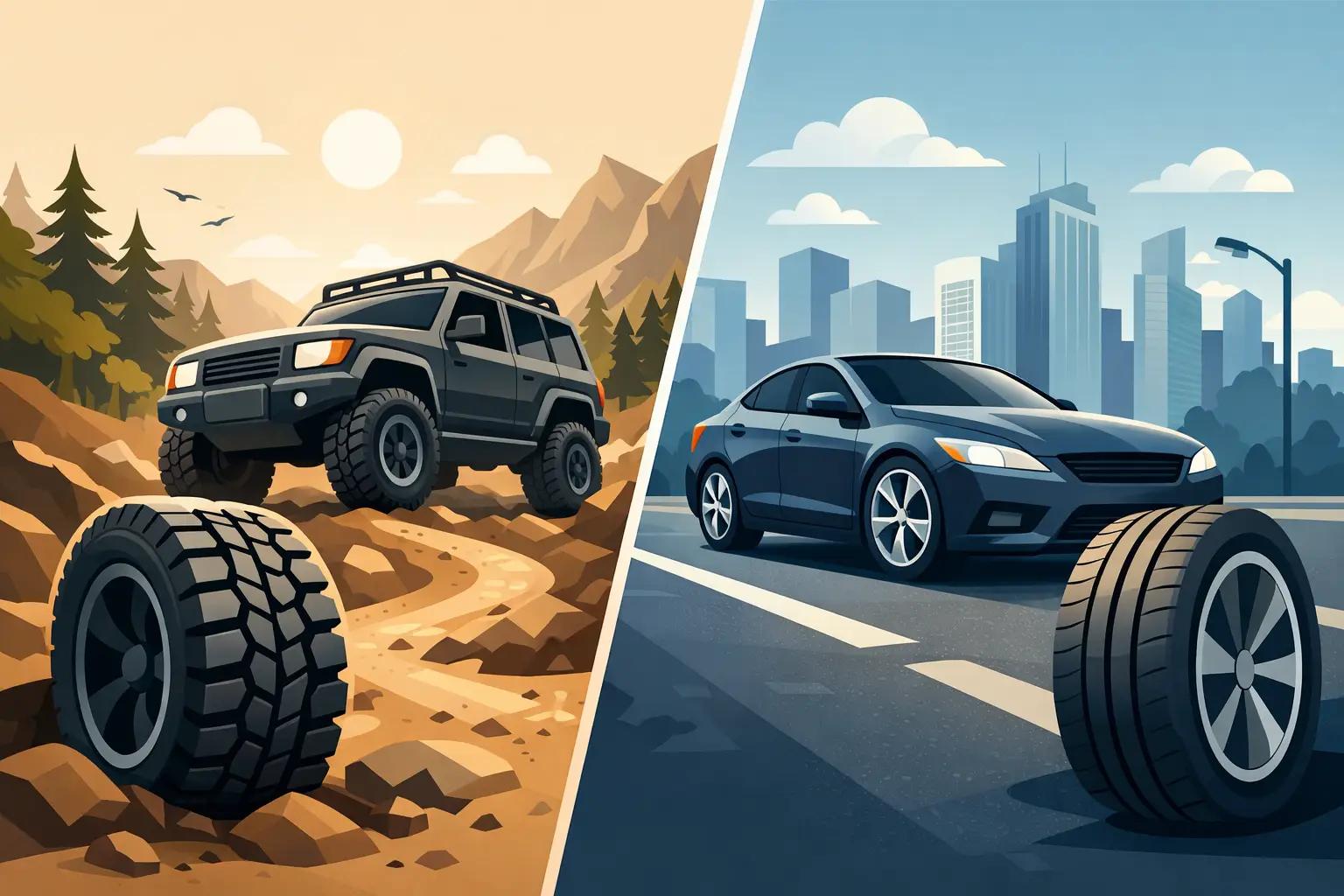
A tire choice can change the whole character of your vehicle faster than almost any other upgrade. Swap a quiet highway-focused set for aggressive tread, and your truck, Jeep, or SUV may look tougher instantly – but it may also ride louder, steer differently, and wear at a different rate. That is the real question behind off road vs street tires: not which one looks better in photos, but which one actually fits how you drive.
For some owners, the answer is easy. If your vehicle spends nearly all its time on pavement, street tires usually make more sense. If you regularly drive through mud, loose gravel, rocks, ruts, or unmaintained trails, off-road tires bring traction and durability that standard road-focused tires simply do not. The hard part is the middle ground, where many drivers actually live.
Off road vs street tires: the real difference
The biggest difference between these two tire types is tread design. Off-road tires use larger tread blocks, deeper voids, and tougher sidewall construction to grip unstable surfaces and resist cuts or punctures. Street tires are designed for consistent contact on paved roads, with tread patterns built for predictable handling, better wet braking, quieter operation, and longer highway life.
That design split affects everything else. Off-road tires often have stronger shoulders and more aggressive side biters to help when the surface shifts under the vehicle. Street tires focus more on even load distribution and precise road manners. One is engineered to keep moving when the terrain gets ugly. The other is engineered to stay composed where most people actually drive.
There is also a practical point many buyers miss: not all off-road tires are the same. An all-terrain tire is very different from a mud-terrain tire, and both behave differently than a typical highway tire. When people compare off road vs street tires, they are often comparing an all-terrain setup with a standard all-season or highway-terrain design. That is an important distinction because the trade-offs become less extreme with all-terrains and much more noticeable with mud-focused tires.
How street tires behave on pavement
Street tires are made for pavement first. That sounds obvious, but it matters because pavement is where braking distances, lane changes, fuel efficiency, and daily ride comfort become most noticeable. A quality street tire usually delivers cleaner steering response, less tread noise, and more stable high-speed behavior than an off-road-focused option.
For daily commuting, grocery runs, long highway stretches, and city driving, street tires also tend to feel more refined. The tread is usually tighter, which helps reduce vibration and road hum. That more continuous contact patch also improves road feel, especially in dry conditions.
Wet weather is another area where street tires can have a real advantage. Many are built with siping and groove patterns specifically tuned to evacuate water and maintain grip on slick pavement. An aggressive off-road tire can still perform well in some wet conditions, but large tread blocks do not automatically mean better braking on rain-soaked roads.
Then there is wear. If your vehicle sees mostly asphalt, street tires generally last longer and wear more evenly. They also tend to support better fuel economy because they create less rolling resistance. For a daily-driven SUV or pickup, that matters over thousands of miles.
Where off-road tires earn their place
Off-road tires start making sense when the road ends – or when the road gets rough enough that traction becomes unpredictable. Loose dirt, gravel, sand, shallow mud, rocky trails, and uneven terrain ask more from a tire than regular pavement ever will. That is where deeper tread voids and stronger sidewalls stop being a styling choice and become a functional advantage.
An off-road tire can bite into loose surfaces instead of skating across them. It can clear mud more effectively. It can tolerate impacts from rocks and trail debris with more confidence than a typical street-oriented tire. If you air down for trail use, many off-road tires also respond better because their construction is designed with that kind of use in mind.
For trucks and Jeeps that see hunting land, job sites, forest roads, or weekend trail driving, that added capability is often worth the compromise. The vehicle may feel more planted when the surface is broken, softer, or shifting underneath it. On a lifted build or a vehicle with upgraded suspension, the right off-road tire also completes the package visually and functionally.
That said, capability is not free. More tread aggression usually means more noise, more weight, and a less precise feel on pavement. You are buying extra traction for conditions that may only show up part of the time. Whether that trade works for you depends on how often those conditions are real, not hypothetical.
Off road vs street tires for daily driving
If your vehicle is a daily driver, this is the section that matters most. Most owners do not need maximum off-road capability. They need reliability Monday through Friday, decent comfort on the interstate, solid wet-road braking, and enough versatility for occasional dirt, gravel, or winter weather.
That is why many truck and SUV owners end up in the middle, choosing all-terrain tires instead of going fully street or fully mud-focused. A modern all-terrain can provide a tougher look, improved loose-surface traction, and stronger sidewall confidence without completely giving up daily usability. It is often the best answer for drivers who want flexibility without turning every commute into a soundtrack of tread noise.
But even here, honesty matters. If your truck never leaves pavement and you are mainly after appearance, a highway-terrain or premium street-oriented tire is still likely the better fit. It will usually ride better, stop better on pavement, and cost less over time through longer wear and improved efficiency.
On the other hand, if your SUV regularly sees washboard roads, camp access trails, muddy lots, or rural property, a move toward all-terrain or off-road rubber is easier to justify. Capability should match use. That is the cleanest way to decide.
Ride quality, noise, and tread life
This is where many buyers feel the difference first. Street tires are typically quieter because the tread pattern is designed to reduce harmonic noise at road speeds. They also tend to ride smoother, especially on vehicles with factory suspension tuned around standard tire construction.
Off-road tires, especially aggressive all-terrain and mud-terrain models, can introduce more hum, more vibration, and a firmer feel. Some of that comes from larger tread blocks. Some of it comes from tougher construction. On a heavy-duty truck, the change may feel acceptable. On a midsize SUV used for family travel, it may wear thin quickly.
Tread life can be just as significant. Street tires usually deliver stronger mileage on pavement because the tread compound and pattern are optimized for that environment. Off-road tires may wear faster if they spend most of their time on hot asphalt, especially if they are not rotated consistently or if inflation is not closely managed.
Alignment matters too. A more aggressive tire will often make existing suspension or steering issues more obvious. If your vehicle already has uneven wear patterns, worn components, or poor alignment, switching to off-road tires will not hide it. It may amplify it.
Choosing the right tire for your vehicle
The best choice comes down to where your vehicle actually goes and what you expect it to do once it gets there. A half-ton truck used for commuting and towing on paved roads needs different tire priorities than a Jeep built for trail weekends. A full-size SUV hauling family and gear needs a different balance than a work truck that sees gravel every day.
Start with surface. If at least 80 to 90 percent of your driving is on pavement, street tires or highway-terrain tires deserve serious consideration. If your use regularly includes dirt, gravel, rocks, mud, or uneven terrain, move toward all-terrain or more specialized off-road options.
Then think about climate and load. Rain, snow, heat, towing, payload, and long-distance highway use all shape tire performance. The right tire is not just about tread style. It is also about load rating, sidewall strength, compound, and how the tire works with your wheel size and suspension setup.
This is also where buying from a parts-focused retailer matters. Tire choice is part of a broader vehicle setup. Wheels, suspension, ride height, intended use, and fitment all connect. A good-looking tire that compromises clearance, ride quality, or real-world function is not really an upgrade.
FORTLUFT approaches aftermarket parts with that balance in mind – performance, fit, and appearance working together instead of fighting each other. That same thinking applies here. The best tire choice should make your vehicle more capable in the conditions you actually face, while still fitting the way you want it to look and feel.
If you want one clean rule, use this: buy tires for your most common driving, not your most ambitious weekend plan. The right set should make every mile better, not just the occasional one.