
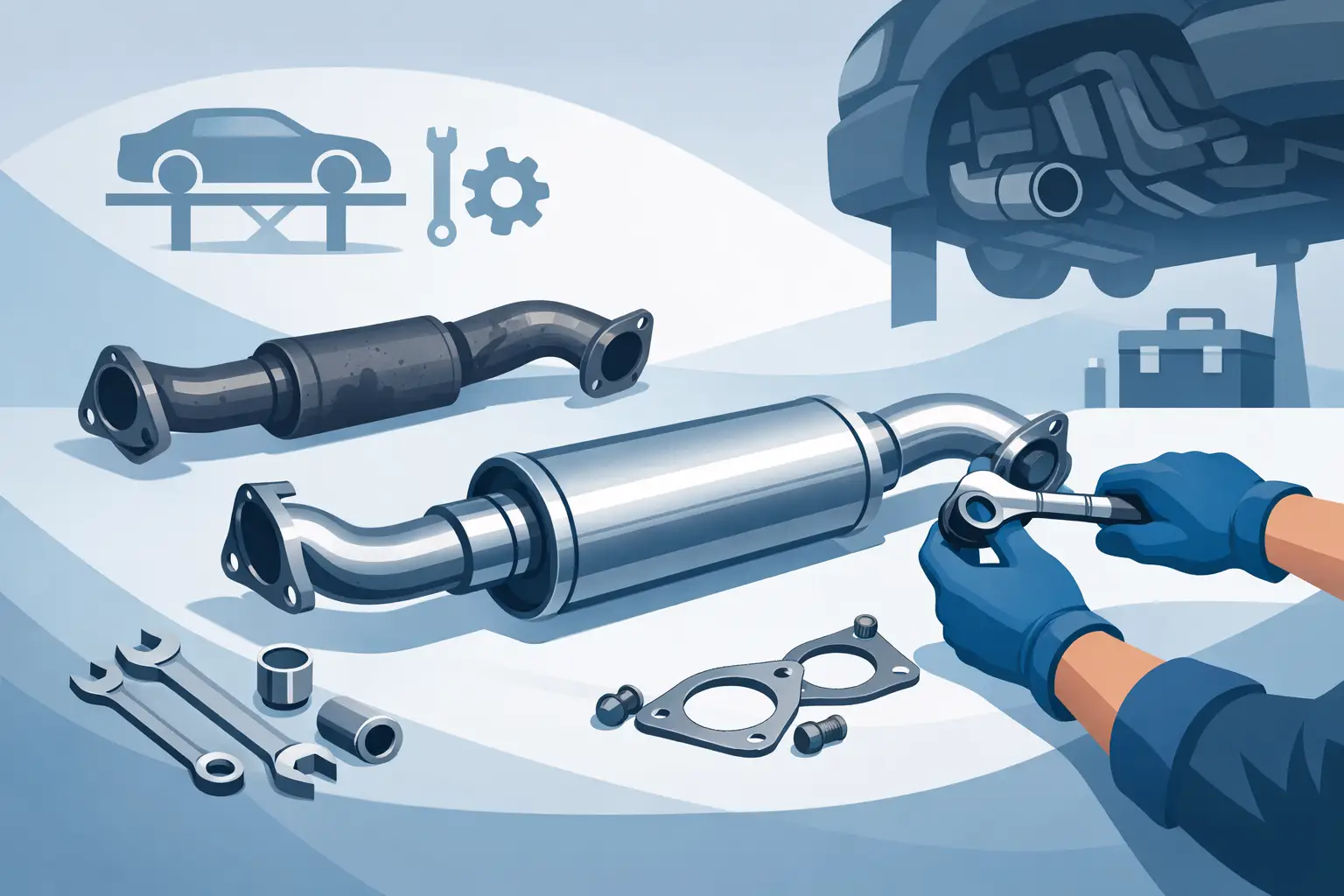
A bad exhaust pipe usually announces itself before you ever get the vehicle on a lift. You hear a sharper note on cold start, catch a metallic rattle under load, or notice fumes where they should never be. When that happens, direct fit exhaust pipe replacement is usually the fastest path back to factory routing, clean installation, and predictable results.
For most drivers, the appeal is simple. A direct-fit part is built around the original vehicle layout, so you are not buying extra fabrication work just to solve a worn, cracked, or rusted section of exhaust. That matters whether you are maintaining a daily driver, repairing a work truck, or keeping a Jeep or SUV road-ready without turning a straightforward job into a custom project.
What direct fit exhaust pipe replacement actually means
A direct-fit exhaust pipe is designed to match a specific application’s bends, length, hanger locations, and connection points as closely as possible. In practical terms, that means less cutting, fewer adjustments, and a better chance of installing the part with standard hand tools and proper hardware.
That does not mean every direct-fit pipe drops in with zero effort. Rusted fasteners, heat-cycled flanges, stretched rubber hangers, and old clamps can still slow the job down. But compared with universal piping, a direct-fit replacement removes a lot of the guesswork. You are replacing the failed section with something engineered around the original path under the vehicle, not forcing a generic tube to work.
For buyers, that distinction saves time in two ways. First, it reduces install complexity. Second, it lowers the risk of ordering the wrong style of part for a repair that should have been routine.
When a direct-fit exhaust pipe replacement is the right move
The right time to replace an exhaust pipe is not always when it completely fails. Small leaks around seams, flange corrosion, impact damage from road debris, and rust perforation can all justify replacement before the issue becomes louder, hotter, and more expensive.
A direct-fit option makes the most sense when the rest of the system is still serviceable and you want to restore original function without fabrication. If the muffler is solid, the catalytic converter is intact, and the hangers are still in the right places, replacing the damaged pipe section can be the smart middle ground between doing nothing and replacing a full exhaust assembly.
There are cases where it depends. If multiple sections are heavily corroded, replacing one pipe may only buy limited time. If you are already dealing with a failing muffler, weakened flanges, or worn mounting points, it can be more efficient to handle adjacent components at the same time. The cheapest single part is not always the lowest-cost repair once labor and repeat downtime enter the picture.
Why fitment matters more than most buyers think
Exhaust routing is tighter than it looks from under the vehicle. Pipes need to clear the floor pan, suspension travel, drivetrain components, and heat-sensitive areas while maintaining proper sealing at each joint. A part that is close but not exact can create contact points, alignment stress, or leaks.
That is why fitment details matter as much as material. Pipe diameter, wheelbase, engine configuration, cab style, bed length, drivetrain layout, and emissions setup can all affect what actually fits. Two trucks that look identical from ten feet away may use different exhaust sections underneath.
This is where careful application matching pays off. Buyers who confirm year, make, model, engine, and trim are far less likely to end up with a part that almost fits. In exhaust work, almost is expensive.
The most common fitment mistakes
One of the biggest mistakes is assuming a universal part will save money. It can, but only if you already have fabrication capability or are paying a shop that plans to modify it. For a standard repair, universal piping often adds labor and uncertainty.
Another common mistake is overlooking mid-year changes and sub-model differences. Manufacturers change flange styles, sensor placement, and pipe routing more often than many people expect. The right listing details are not filler. They are the difference between a clean install and a return.
Material choice affects more than appearance
Exhaust parts live in one of the harshest environments on the vehicle. Heat cycles, moisture, road salt, vibration, and debris all work against service life. That is why material deserves close attention.
Aluminized steel is common and usually budget-friendly. It works well for many repairs, especially in milder climates or on vehicles that are not exposed to long winters and salted roads. Stainless steel, on the other hand, generally offers better corrosion resistance and longer-term value, especially for drivers who plan to keep the vehicle for years or want a cleaner-looking underbody component.
For buyers who care about both function and finish, stainless has another advantage. It holds its appearance better and aligns with a more premium build approach. At FORTLUFT, that balance between performance-minded practicality and visual refinement is part of the appeal – technology as an art form only works when the part also does its job.
Direct fit does not mean install is effortless
A direct-fit exhaust pipe replacement is usually simpler than building an exhaust section from scratch, but the install still depends on the condition of the vehicle. On newer vehicles from dry climates, this can be a manageable DIY repair. On older trucks and SUVs from rust-belt states, seized bolts and fused connections can turn a basic replacement into a grinder-and-torch job.
Before ordering, it helps to inspect the surrounding system. Check flange condition, gasket surfaces, rubber isolators, clamps, and neighboring sections. If one pipe failed from corrosion, nearby components may not be far behind. Replacing a pipe onto badly compromised mating surfaces can lead to leaks even if the new part itself is perfect.
DIY or shop install?
If you have safe lift access, basic exhaust tools, penetrating oil, and experience dealing with rusted hardware, many direct-fit replacements are realistic DIY jobs. The shape is already handled for you, which removes the biggest hurdle.
If the system is heavily corroded, packed tightly around rear suspension components, or tied into emissions hardware that must remain undisturbed, a shop may be the better choice. Paying for professional installation can be cheaper than damaging an adjacent part or spending a weekend wrestling with broken studs.
What to check before you buy
The smart purchase starts with application data, but it should not end there. Look closely at connection style, flange count, pipe diameter, hanger configuration, and whether clamps or gaskets are included. Product photos help, but specs matter more.
It also helps to think about repair goals. Are you trying to restore stock operation and move on? Are you upgrading to a longer-lasting material while staying with original routing? Are you maintaining a fleet where repeatability and quick turnaround matter more than cosmetic finish? The same category can serve different priorities, and the right answer depends on how the vehicle is used.
For commercial buyers and shops, consistency matters just as much as unit price. A direct-fit pipe that installs predictably saves labor time, reduces customer comebacks, and keeps bays moving. For individual owners, the value is confidence – ordering once, installing once, and getting back on the road without improvising around a poor fit.
The real value of direct-fit replacement
The strongest case for direct fit exhaust pipe replacement is not just convenience. It is control. You know the route, the connection points, and the intended application. That makes the repair more predictable, especially when compared with universal parts that depend on fabrication skill and extra adjustments.
There is also a quality-of-use factor that gets overlooked. A correctly fitted exhaust pipe is less likely to rattle, leak, or sit under stress after installation. That means better long-term behavior, from sound quality to heat management to overall durability. A pipe that lines up correctly from day one usually ages better than one that had to be forced into place.
If your current exhaust pipe is cracked, rusted through, or no longer sealing the way it should, this is one of those repairs where matching the part to the vehicle pays off immediately. The best replacement is not the one with the most aggressive marketing. It is the one that fits the application, suits the climate, and gives you a clean, durable result without extra drama in the driveway or the shop.