
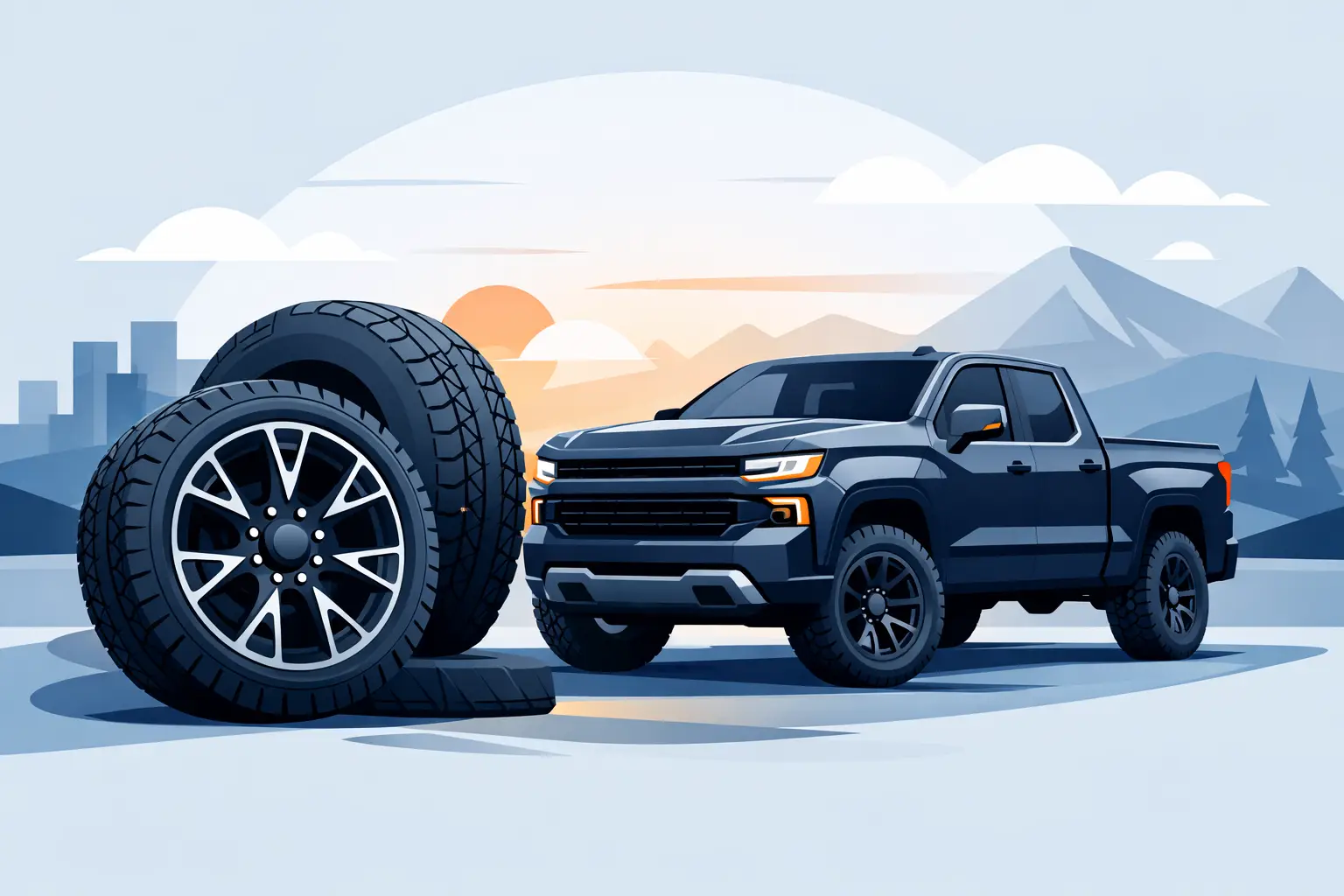
A Silverado can look factory-fresh and still feel wrong on the road if the wheel and tire package misses the mark. Choosing the right wheels and tires for 2026 Chevy Silverado trucks is less about chasing the biggest setup and more about matching fitment, load rating, ride quality, and stance to how the truck actually works.
What matters most when choosing wheels and tires
Most Silverado owners are balancing three things at once: appearance, capability, and daily comfort. The right setup should support all three, but every change shifts the balance a little.
A larger wheel usually sharpens the look and opens up more aggressive styling options. It also reduces sidewall height if overall tire diameter stays close to stock, which can make the ride firmer and leave less cushion over broken pavement. A taller tire adds sidewall and often improves ride compliance off-road, but it can also add weight, soften steering response, and affect gearing feel.
That is why there is no single best answer for every 2026 Silverado. A truck used for highway commuting and occasional Home Depot runs needs something different from a work truck pulling trailers every week or a lifted build that spends weekends on trails.
Wheels and tires for 2026 Chevy Silverado by use case
Daily driving and clean street fitment
If your Silverado is mostly a pavement truck, the sweet spot is usually a moderate wheel diameter with a tire that keeps enough sidewall to preserve ride quality. Many owners gravitate toward 20-inch wheels because they deliver a modern, upscale look without pushing too far into low-profile territory.
For this type of setup, tire choice matters as much as wheel choice. A highway terrain or mild all-terrain tire keeps road noise under control, tracks better at speed, and usually wears more evenly in daily use. You still get a stronger visual upgrade than stock, but the truck remains easy to live with in traffic, parking lots, and long highway stretches.
Offset is where street builds often go wrong. A more aggressive offset can push the wheel outward for a stronger stance, but too much poke can create rubbing, throw debris along the body, and add stress to suspension geometry. Clean fitment looks intentional. Forced fitment looks expensive later.
Towing and hauling
If your Silverado earns its keep, wheel style should take a back seat to rating and tire construction. Load capacity is the first filter. The wheel and tire package has to match the truck’s real-world demands, not just the visual target.
This is where heavier-duty tires with the right load range come into play. They help manage trailer tongue weight, cargo, and heat under stress. A flashy wheel that is not built for the job is the wrong part, even if it looks right in product photos.
For towing-focused trucks, many owners stay close to stock diameter and overall tire height. That preserves predictable braking, steering feel, and power delivery. It also reduces the chance of speedometer errors and unnecessary strain on the drivetrain.
Off-road and leveled or lifted builds
Off-road setups shift the priority toward tire sidewall, tread design, and clearance. A smaller wheel paired with a taller all-terrain or mud-terrain tire is often the practical move because it gives the tire more room to flex and absorb rough surfaces.
That said, bigger is not always better. Oversized tires can trigger rubbing at the fender liners, control arms, mud flaps, or bumper corners, especially once suspension compresses or the wheel is turned under load. A leveled or lifted truck may clear more tire, but clearance still depends on wheel width, offset, tire shape, and suspension travel.
This is where build planning matters. If the goal is a capable off-road look with minimal compromise, a moderate increase in tire size often delivers better results than jumping straight to the tallest size you can physically mount.
Wheel size, tire size, and why proportion matters
The best-looking Silverado setups usually get the proportions right. That means the wheel does not overpower the truck and the tire does not look stuffed or stretched.
On a full-size truck, 18-inch wheels with taller tires often look purposeful and functional. They suit work and off-road builds well. Twenty-inch wheels hit a versatile middle ground and work across street, towing, and mild all-terrain applications. Twenty-two-inch wheels can create a bold custom appearance, but they typically ask for more trade-off in ride quality and tire cost.
Tire diameter changes more than appearance. Go too tall and acceleration can feel softer, braking distances may grow, and fuel economy can dip. Go too short and the truck can lose visual balance while riding harsher than it should. The goal is not just to fill the wheel wells. It is to keep the truck driving like a Silverado, not a compromise.
Fitment details that deserve attention
Bolt pattern, center bore, and lug seat
Before style, there is fitment. The wheel has to match the truck’s bolt pattern and seat correctly with the right hardware. Center bore also matters. A poor match here can lead to vibration issues or improper mounting.
These details sound basic, but they are where rushed purchases turn into returns, delays, or unsafe installs. For a truck platform with multiple trims and possible suspension differences, verified fitment is worth more than guessing from appearance alone.
Offset and backspacing
Offset controls where the wheel sits relative to the hub. It affects stance, inner clearance, and outer clearance at the fender. A wheel can have the right diameter and width and still be a poor fit if the offset is too aggressive or too conservative.
Backspacing works with offset to determine how close the inner wheel barrel and tire sidewall sit to suspension components and brakes. If you are changing wheel width or tire width, these measurements become even more important.
Brake clearance
Not every aftermarket wheel clears every brake package equally. Larger calipers or specific trim-level hardware can limit wheel choices. This is one of those details that does not show up in a glamour shot but matters the second you try to install the wheel.
Tire type changes the truck more than many owners expect
A lot of buyers focus on wheel finish first, then choose a tire later. In practice, the tire has a bigger impact on how the Silverado feels every day.
Highway terrain tires are the smart choice for drivers who want smooth road manners, lower noise, and efficient wear. All-terrain tires bring a more aggressive sidewall and tread pattern, along with better loose-surface confidence. The trade-off is usually more noise, added weight, and sometimes shorter tread life depending on the compound.
Mud-terrain tires create the boldest look and offer serious off-road bite, but they are the least forgiving on pavement. If the truck spends most of its life on asphalt, that extra aggression can become a constant compromise.
In winter-prone regions, true winter tires or severe snow-rated all-terrain options may make more sense than a year-round compromise tire. The right answer depends on climate as much as style.
Finish, material, and long-term ownership
Wheels are visual hardware, but they are also exposed hardware. Brake dust, road salt, gravel, and curb contact all shape how a finish ages.
Gloss black remains popular because it works on nearly every Silverado color and trim package. Machined and two-tone finishes can brighten the truck and add a more premium look. Bronze and gunmetal options lean more enthusiast and can give the build a custom identity without overdoing it.
Material and construction matter too. Cast wheels are common and cost-effective for many street and light truck applications. Higher-end construction can reduce weight or improve strength, but the right value depends on how the truck is used. A daily driver does not need race-inspired marketing. A hard-use truck does need durability.
How to buy smarter the first time
The easiest mistake is shopping by look alone. The smarter approach is to start with the truck’s job, then narrow by fitment, then by load requirements, and only then by finish and style.
If you tow, start with ratings. If you run rough terrain, start with tire construction and clearance. If the truck is your daily, focus on ride quality and road noise before chasing the most aggressive stance on the screen. That sequence saves money and usually leads to a setup that still feels right six months later.
For buyers who want both utility and appearance, that middle ground is often the best place to be. A Silverado does not need extremes to stand out. It needs a wheel and tire package that looks engineered for the truck, not borrowed from a trend.
That is where a strong aftermarket catalog earns its place. A retailer like FORTLUFT speaks to that balance directly – practical fitment, real truck use, and style that feels intentional. Technology as an art form only works when the truck still does its job on Monday morning.
Choose the setup that matches your roads, your load, and your standards. When those three line up, the Silverado looks better because it performs better.