
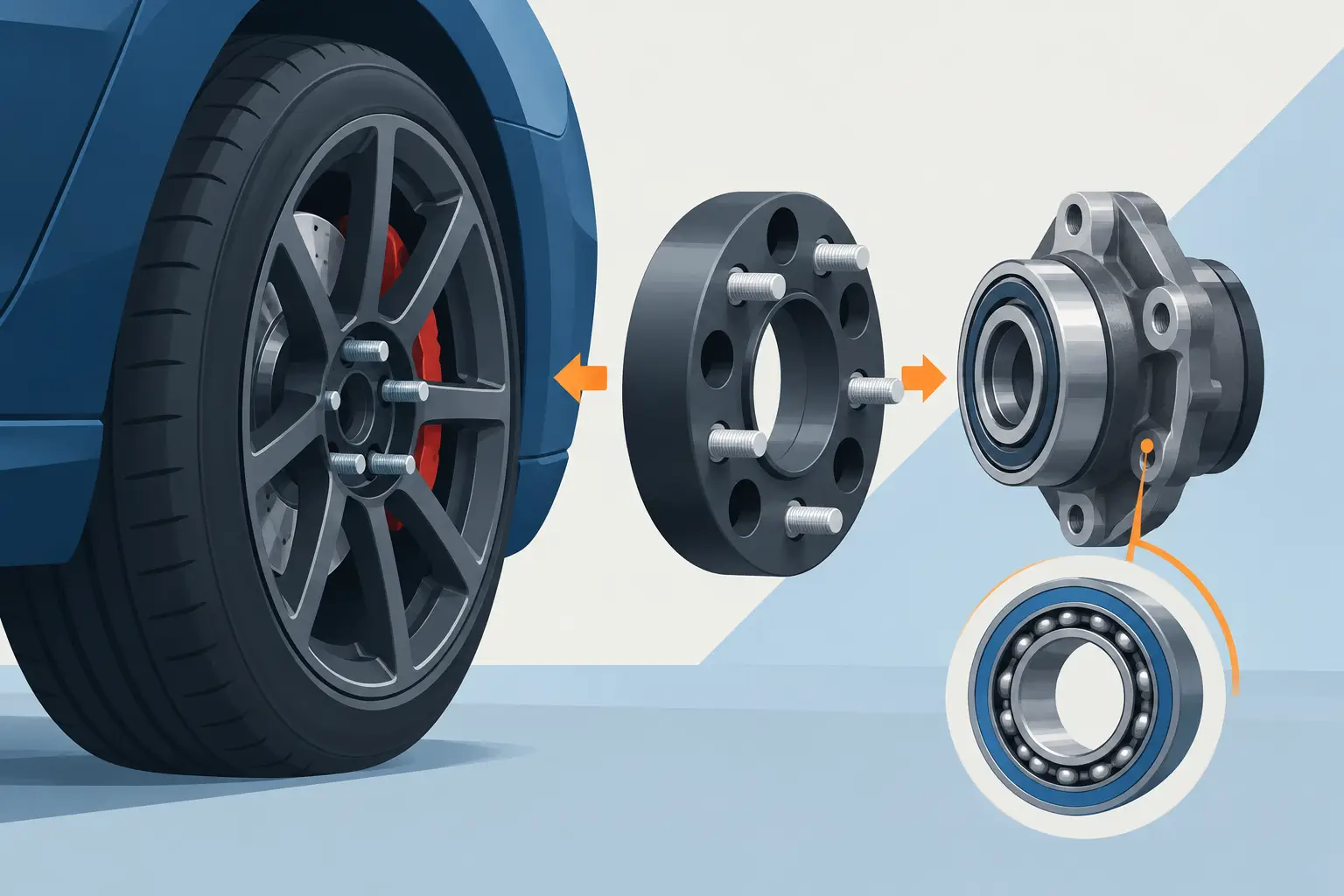
A wheel spacer can give a truck, Jeep, SUV, or car the planted stance its wheel setup was missing. It can also solve clearance issues around brakes, suspension components, or larger tires. But do wheel spacers affect bearings? Yes, they can increase the load a wheel bearing sees, especially when they move the tire significantly farther from the hub. That does not mean every spacer installation causes bearing failure. Fitment, spacer design, wheel offset, tire size, and installation quality determine the real outcome.
Do Wheel Spacers Affect Bearings? Yes, Through Leverage
A wheel bearing supports the vehicle’s weight while allowing the hub and wheel to rotate. From the factory, the wheel’s mounting position, offset, tire size, and suspension geometry are engineered to keep loads within a planned range.
Installing a spacer moves the wheel mounting surface outward. That outward shift increases the distance between the center of the tire contact patch and the bearing assembly. The farther the load acts from the bearing, the more leverage it creates. In practical terms, the bearing has to manage a greater bending force, even if the vehicle weight itself has not changed.
Think of carrying a full tool box close to your body versus holding it at arm’s length. The weight is identical, but holding it farther out places more strain on your arm. A wheel spacer creates a similar change at the hub.
The effect is generally proportional to spacer thickness. A 5 mm spacer makes a smaller change than a 25 mm spacer, but spacer thickness is not the only number that matters. A wheel that already has low or negative offset, combined with a thick spacer and wide tire, can put considerably more demand on bearings, hubs, studs, ball joints, and suspension bushings.
Offset Matters More Than Spacer Thickness Alone
Wheel offset is the distance between the wheel’s centerline and its mounting surface. Positive offset places the mounting pad toward the outside face of the wheel, pulling the wheel inward. Lower positive offset or negative offset moves the wheel outward.
A spacer effectively reduces positive offset by its thickness. For example, adding a 15 mm spacer to a wheel with a +45 mm offset creates an effective offset close to +30 mm. The wheel moves 15 mm outward, which may be exactly what is needed for brake-caliper clearance or a flush fitment.
The concern begins when the final position is far outside the vehicle’s original geometry. Many factory wheels have relatively high positive offset, so a modest spacer may still leave the setup in a reasonable operating range. By contrast, a wide aftermarket wheel with aggressive offset may already extend beyond that range before any spacer is added.
This is why the right question is not simply, “Are spacers bad for bearings?” The useful question is: how far will this complete wheel-and-tire package sit from its intended hub position?
Wider Tires Add Another Variable
Tire width and weight matter. Larger all-terrain, mud-terrain, or oversized truck tires are heavier than stock highway tires and can place their mass farther outward. Their deeper tread and larger diameter can also increase forces during braking, cornering, and impacts.
A moderate spacer on a stock-size tire may create a manageable change. The same spacer paired with heavy 35-inch tires, low-offset wheels, and frequent off-road use creates a much harder environment for wheel bearings. That setup may still be appropriate for the vehicle’s purpose, but it should be built with realistic maintenance expectations.
When Spacers Are More Likely to Shorten Bearing Life
Wheel spacers do not have a fixed mileage limit for bearings. Some vehicles run quality spacers for years without an issue, while others develop hub or bearing problems sooner because several load-increasing factors stack together.
Bearing wear becomes more likely when spacers are thick, wheels sit far outside the fenders, tires are oversized or unusually heavy, or the vehicle is driven hard over potholes, curbs, rocks, and washboard trails. Towing and hauling can add to the stress because they increase the load already being carried through the hub assemblies.
Vehicle design also matters. Modern unitized hub bearings are durable, but many are sealed assemblies that are replaced as a complete unit rather than serviced or adjusted. On a heavy truck or SUV, a front hub may already manage steering forces, braking forces, vehicle weight, and four-wheel-drive loads. A major change in wheel position asks more of that assembly.
Spacers can also affect steering feel and scrub radius, which is the relationship between the steering axis and tire contact patch. Moving the tire outward can increase steering effort, alter kickback through the wheel, and change how the vehicle reacts under braking on uneven pavement. These effects are often most noticeable on lifted trucks and Jeeps with larger tires.
Quality Fitment Protects More Than the Bearings
The spacer itself does not need to be exotic, but it must be correctly engineered for the vehicle. A low-quality spacer or poor installation can create problems that are more immediate than long-term bearing load.
Hub-centric spacers are preferred when the vehicle and wheel design call for the hub to carry and center the wheel. The spacer’s center bore should match the vehicle hub, and the spacer should provide the correct centering lip for the wheel when required. This helps keep the assembly centered and reduces the chance of vibration caused by an off-center wheel.
Bolt-on spacers use their own studs and fasten directly to the factory hub. Slip-on spacers fit over the existing studs and may require longer wheel studs to maintain proper thread engagement. Neither design is automatically better in every application. The correct choice depends on thickness, hub dimensions, wheel bore, stud length, and the intended vehicle use.
Never use a spacer that prevents the wheel from seating flat against the mounting surface. Rust, paint buildup, dirt, damaged threads, mismatched lug nuts, or a spacer that contacts the wrong part of the hub can leave the wheel slightly loose or misaligned. That can lead to vibration, stud damage, brake rotor runout concerns, and accelerated wear throughout the hub area.
Use the vehicle manufacturer’s wheel-lug torque specification and tighten lugs in the proper sequence. After installation, check torque again after the initial drive period recommended for the hardware or wheel application. Do not rely on an impact gun alone to set final torque.
Signs Your Hub or Bearing Setup Needs Attention
A spacer does not create a unique bearing sound. The warning signs are the same symptoms found on vehicles without spacers, but they deserve faster attention when wheel position has been changed. Watch for these four issues:
- A humming, growling, or roaring sound that changes with road speed or while turning.
- Noticeable play when the wheel is checked off the ground, or a loose, vague feeling at the steering wheel.
- Repeated wheel vibration after balancing has been confirmed, particularly at highway speed.
- Uneven tire wear, changing alignment behavior, or a vehicle that pulls or wanders after a wheel-and-tire modification.
A failed bearing should not be ignored. In severe cases, excess play can affect braking, wheel-speed sensor readings, tire wear, and safe vehicle control. If the noise changes when loading one side of the vehicle in a turn, have the hub, bearing, tire condition, and suspension components inspected by a qualified technician.
Choosing a Sensible Spacer Setup
The best spacer setup is the smallest one that safely accomplishes the goal. If you need 5 mm for brake clearance, there is little reason to install 25 mm. If the goal is a wider stance, start with the final effective offset, tire width, fender clearance, and suspension travel instead of choosing a spacer only by appearance.
Check clearance at full steering lock and through suspension movement. A tire that clears while parked may rub the liner, control arm, sway bar, fender edge, or suspension component when the vehicle compresses or turns. For trucks, Jeeps, and SUVs used off-road, check with the suspension loaded as well as at ride height.
It is also smart to inspect bearings and hubs before modifying the wheel position. A bearing that already has wear or play will not improve with a more aggressive wheel setup. Starting with sound hub assemblies, correct alignment, quality tires, and accurately balanced wheels gives the new fitment the best chance of performing as intended.
A wider stance can look purposeful and improve the clearance needed for a carefully planned build. Treat wheel spacers as a fitment component, not a cosmetic shortcut: select the right size, verify every contact surface, and give the hub assembly the inspection attention that a more demanding wheel setup deserves.