
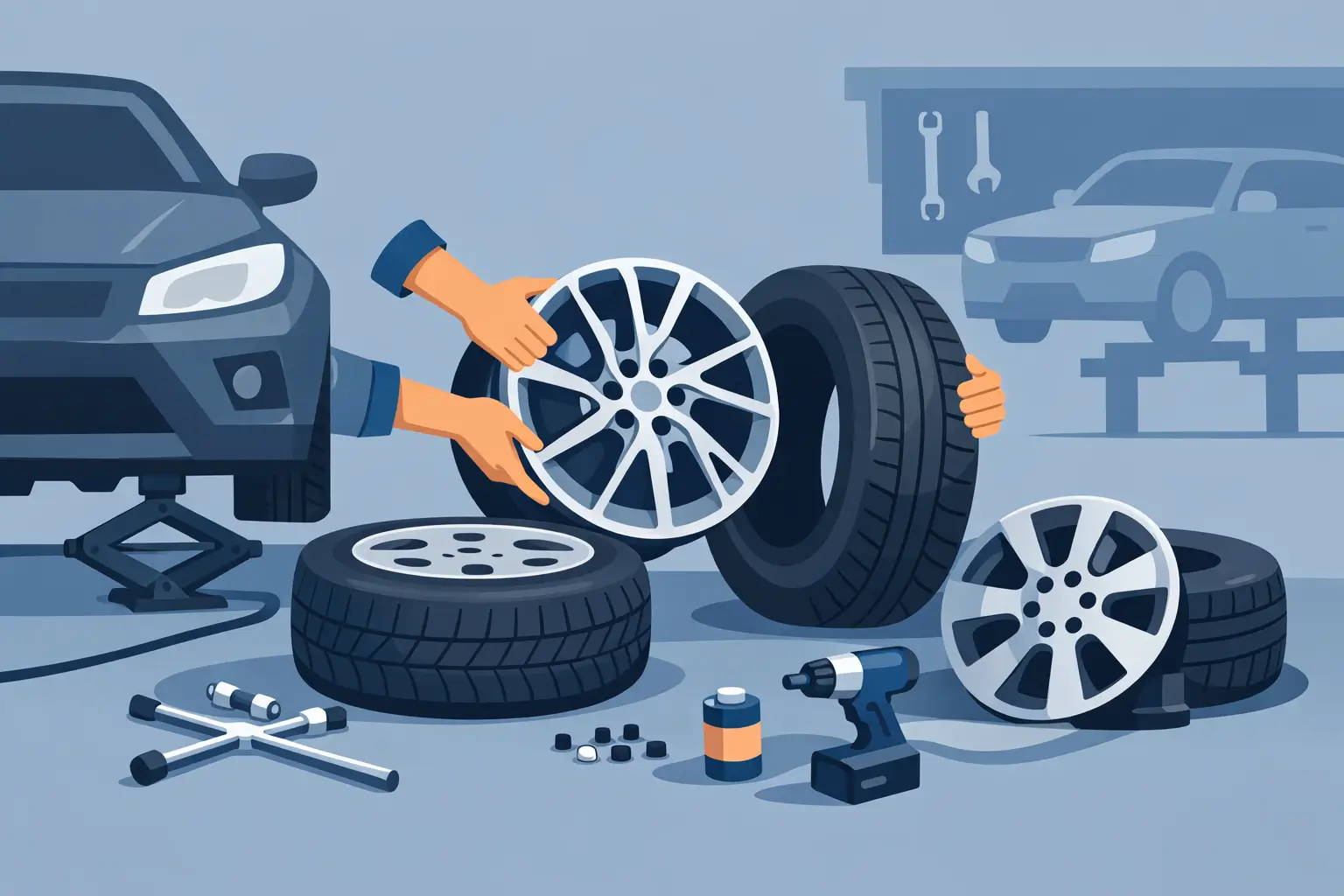
A bad wheel swap usually starts with confidence. The jack goes under the wrong point, the lug nuts come off in a rush, and the new rim looks perfect right up until vibration shows up at 55 mph. If you are learning how to change tires and rims, the goal is not just getting the vehicle back on the ground. It is getting the fit, torque, and contact patch right so the vehicle drives the way it should.
For DIY owners, this job sits at the intersection of maintenance and style. A fresh set of tires restores grip and braking. A new set of rims can sharpen the entire stance of a car, truck, Jeep, or SUV. Done correctly, the result is functional and visual. Done carelessly, it can create safety issues, uneven wear, or damage to studs, sensors, and suspension components.
What to know before you change tires and rims
Before touching a lug nut, confirm that the new tire and wheel package actually fits your vehicle. That means more than matching bolt count. You need the correct bolt pattern, wheel diameter, wheel width, center bore, offset, and tire size. If one of those is off, the wheel may bolt on but still rub the brake caliper, sit too far inward, or push too far outward.
This is where many swaps go wrong. A rim that looks aggressive on a product page may not work with your brake setup or suspension travel. Tire size matters just as much. Going too tall can affect speedometer accuracy and clearance. Going too wide can change steering feel and increase rubbing at full lock. There is no single best upgrade size for every vehicle. It depends on intended use, suspension height, and how much ride comfort you want to keep.
If your vehicle uses a tire pressure monitoring system, plan for that too. Some wheels accept factory sensors easily. Others require a different sensor shape, valve stem, or relearn procedure after installation.
Tools that make the job cleaner and safer
You do not need a full shop, but you do need the right basics. A quality floor jack is better than the emergency jack included with most vehicles. Jack stands are not optional if the vehicle will be off the ground for more than a quick roadside tire change. You will also want a lug wrench or breaker bar, a torque wrench, wheel chocks, gloves, and a tire pressure gauge.
If you are changing the tire on the rim, not just swapping complete wheel-and-tire assemblies, that is a different level of job. Mounting and balancing tires properly requires dedicated equipment. Most DIY owners should remove the old assemblies and have the tires mounted and balanced by a shop. It is faster, more precise, and easier on the wheel finish.
How to change tires and rims step by step
Start on a flat, solid surface. Put the vehicle in park or in gear if it is a manual, set the parking brake, and chock the wheels that will stay on the ground. Then loosen the lug nuts slightly before lifting the vehicle. Do not remove them yet. Breaking them loose while the tire is still planted keeps the wheel from spinning.
Next, place the jack at the correct lift point. Your owner’s manual shows these locations, and using them matters. Lift the vehicle until the tire clears the ground, then support it with jack stands if you will be working for more than a moment.
Remove the lug nuts fully and pull the wheel off. If it sticks from corrosion, do not hammer the rim face. A firm hit to the tire sidewall with your hand or a rubber mallet usually frees it. Once the wheel is off, inspect the hub surface. Dirt, rust, and scale can keep the new rim from sitting flush, which leads to wobble and improper torque. Clean the mounting surface with a wire brush until it is smooth.
Now test-fit the new rim before committing to the full swap. Check caliper clearance, center bore fit, and stud engagement. If the wheel needs hub-centric rings, install them now. If your setup uses a specific lug seat style, make sure your lug nuts match the wheel. Conical-seat, ball-seat, and shank-style hardware are not interchangeable just because they thread on.
Mount the new wheel and hand-thread the lug nuts. Tighten them in a star pattern so the wheel seats evenly against the hub. Lower the vehicle just enough for the tire to touch the ground lightly, then use a torque wrench to tighten the lug nuts to the vehicle manufacturer’s specification, again in a star pattern. Final torque matters. Too loose and the wheel can work itself free. Too tight and you risk stretched studs or warped brake components.
Repeat the process at each corner. After that, set tire pressure to the correct spec for your vehicle and tire setup. If you installed a different wheel and tire package, the pressure printed on the tire sidewall is not the target number. Use the vehicle recommendation as your baseline, then adjust only if your application calls for it.
Changing tires on rims is not the same as swapping assemblies
A lot of people use the phrase how to change tires and rims when they mean replacing one complete wheel assembly with another. That is the easy version. The harder version is separating the tire from the old rim, mounting it onto a new rim, and balancing it.
That second job requires a tire machine, a balancer, and enough care to avoid scratching the wheel or pinching the bead. Low-profile tires and larger aftermarket rims make it even more demanding. If your goal is a professional result, especially on a premium finish, this is usually where a shop earns its keep.
There is no loss of DIY credibility in outsourcing mounting and balancing. In fact, it is often the smarter move. Handle the fitment planning and vehicle-side installation yourself, and let a machine do the part that needs machine-level precision.
Fitment details that affect performance and appearance
Rims change more than looks. Offset alters where the wheel sits relative to the hub. A lower offset pushes the wheel outward for a wider stance, but too much can increase scrub radius, stress wheel bearings, and throw debris down the body side. A higher offset pulls the wheel inward, which may clean up the look but can create suspension or brake clearance issues.
Wheel width and tire width should also work together. Stretching a narrow tire onto a wide rim may create a certain style, but it reduces rim protection and can compromise how the tire behaves under load. On the other hand, an oversized tire on a narrow wheel can feel vague and unstable. The right pairing keeps the sidewall shape controlled and the contact patch predictable.
For trucks and Jeeps, the trade-off often comes down to road comfort versus off-road clearance and presence. Larger wheels with shorter sidewalls can look sharper on pavement, but they generally give up some ride compliance. Smaller wheels with taller sidewalls often perform better off-road and absorb impacts more effectively. Style matters, but use matters more.
Common mistakes to avoid
The most common mistake is assuming all five-lug wheels fit all five-lug vehicles. Bolt pattern must match exactly. The second is ignoring center bore and offset. The third is using the wrong lug nuts. Hardware is not a detail. It is the connection between the wheel and the vehicle.
Another frequent issue is skipping the re-torque. After driving 50 to 100 miles on freshly installed wheels, check lug nut torque again. New wheels can settle slightly against the hub, especially if the mounting surface had minor debris or fresh coating.
Finally, do not forget balance and alignment. If you install a new tire and rim package and the steering wheel shakes, the issue may be wheel balance, not the wheel itself. If the vehicle pulls or the tires begin wearing unevenly, alignment may need attention, especially if the new setup changes overall diameter or width.
When a shop is the better call
Some jobs look simple until the details stack up. If your vehicle has large brake calipers, aftermarket suspension, wheel spacers, or TPMS complications, professional installation can save time and prevent expensive mistakes. The same goes for vehicles with corrosion-heavy hubs or lug nuts that have been overtorqued by impact guns.
For many owners, the best approach is hybrid. Source the right parts, confirm fitment carefully, and handle the wheel removal and installation if you are comfortable. Use a tire shop for mounting, balancing, and sensor service. That gives you control without forcing every part of the process into a home garage.
A tire and rim change is one of the fastest ways to alter how a vehicle feels and how it presents itself. Treat it like both a maintenance job and a design decision, and the result will look right, drive right, and stay right long after the first test drive.