
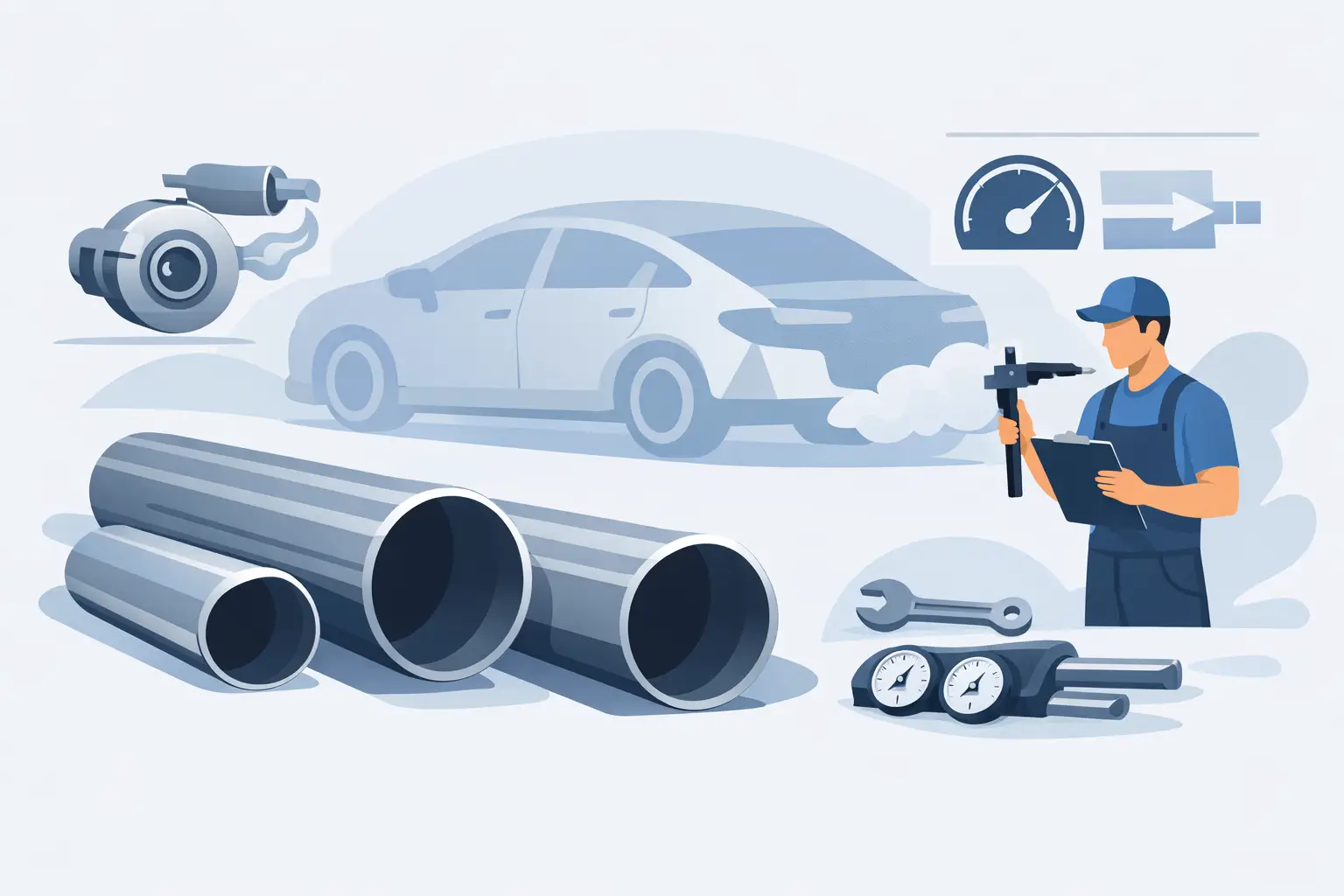
A 3-inch pipe can look right under a truck and feel completely wrong on a mild street build. That is the real challenge in how to select exhaust pipe diameter – not finding the biggest pipe, but choosing the size that matches your engine, power goals, vehicle use, and available space.
Exhaust sizing is one of those decisions that affects more than one thing at once. Pipe diameter changes flow, sound, low-end response, packaging, and overall appearance. Go too small and you create restriction. Go too large and you can lose exhaust velocity, weaken torque in the lower RPM range, and end up with a system that feels less responsive than it should.
For most street-driven cars, trucks, Jeeps, and SUVs, the best diameter is the one that supports the engine you have now, with only a little room for where the build is headed next. Bigger is not automatically better. Better is better.
How to select exhaust pipe diameter for your build
Start with the engine’s actual output, not guesswork. Horsepower is the cleanest baseline because exhaust flow demand rises with power. A stock or lightly modified daily driver does not need the same diameter as a boosted setup, a V8 truck with towing demands, or a high-revving performance build.
As a practical rule, many street applications fall into a few common ranges. A naturally aspirated four-cylinder often works well with 2-inch to 2.5-inch piping. Many V6 applications land around 2.25-inch to 2.5-inch. Mild to moderate V8 street builds often perform well with 2.5-inch systems, while stronger combinations may want 3-inch piping. Turbo builds can shift larger because the turbine already changes the flow dynamics and backpressure picture.
Those are starting points, not hard laws. Cam profile, displacement, induction type, RPM range, and whether you are running a single or dual system all matter. So does the vehicle itself. A heavy SUV used for daily driving and towing has different priorities than a weekend coupe built for top-end power.
Match diameter to horsepower and use case
If your goal is a responsive street vehicle, prioritize balance. A pipe that is too large can slow gas velocity enough to soften throttle response where you spend most of your time. That matters more on a commuter, trail rig, or tow vehicle than peak power at the very top of the rev range.
If your build lives at higher RPM or is pushing significantly more horsepower than stock, a larger pipe can make sense because the engine needs more total flow capacity. This is why a diameter that feels oversized on a stock daily driver may be exactly right on a built turbo setup.
A useful way to think about it is simple: choose the smallest diameter that will comfortably support your power level without becoming the choke point. That usually gives the best street manners and cleaner fitment.
Single exhaust vs dual exhaust changes the math
Pipe count matters as much as pipe size. A dual exhaust system splits flow between two paths, so two smaller pipes can often support similar output to one larger single pipe. That is why a dual 2.25-inch or dual 2.5-inch setup may be appropriate where a single system would need a larger main pipe.
This also affects sound and packaging. Dual systems can deliver a different tone and appearance, but they take more room and add complexity around routing, hangers, and axle clearance. On trucks and SUVs, underbody space may make one layout much easier than another.
Diameter affects sound, not just performance
Exhaust pipe sizing changes the voice of the vehicle. Larger diameter piping usually produces a deeper, more open sound. Smaller piping tends to keep the note tighter and sometimes slightly sharper. Muffler design, resonators, bends, catalytic converter configuration, and tip shape still matter, but pipe diameter is part of the final character.
That matters because the right exhaust is not only about numbers. It also has to feel right every time you start the engine. A daily driver with oversized piping can develop a tone that is louder or boomier than expected, especially in the cabin. On the other hand, a well-sized stainless system with the right tip can deliver a cleaner, more premium finish both visually and acoustically.
For a brand like FORTLUFT, that balance between function and appearance is the whole point. Technology as an art form only works when the system performs properly and looks intentional under the vehicle.
Common sizing ranges by vehicle type
There is no universal chart that replaces proper measurement and build planning, but broad categories help narrow the field.
A stock compact car or small naturally aspirated four-cylinder usually does not need more than 2.25 inches unless it has meaningful power upgrades. Many midsize V6 street vehicles work well in the 2.25-inch to 2.5-inch range. Full-size trucks with V8 engines often start at 2.5 inches, with 3-inch systems becoming more common on performance-oriented or heavily worked applications.
Turbocharged engines often tolerate and benefit from larger sizing earlier in the build. That is especially true after the downpipe, where freeing flow can support power gains and reduce unwanted restriction. But even here, oversized piping can create fitment headaches and a sound profile that may not suit a daily-driven vehicle.
The key is not to copy someone else’s build without context. The same 3-inch system can be right for one truck and excessive for another with the same engine family but different modifications, use, and layout.
Fitment matters as much as flow
A diameter that looks ideal on paper still has to fit the vehicle. Ground clearance, crossmembers, axle travel, suspension movement, heat shielding, and muffler placement all shape what is realistic.
This is where many buyers get tripped up. They choose the largest pipe that should support the horsepower target, then find out the routing becomes tighter, bends become more restrictive, or the system hangs lower than expected. In real-world terms, that can cancel out the theoretical benefit of going larger.
Bend quality matters here too. Mandrel-bent piping keeps a more consistent internal diameter through turns, while crush bends reduce cross-sectional area. If the system uses tight crush bends, a larger nominal pipe size may not deliver the flow you expected. Material also matters. Stainless steel offers durability and a cleaner long-term finish, which is especially valuable on vehicles exposed to weather, salt, and regular use.
Don’t ignore the rest of the exhaust system
Pipe diameter is only one part of the system. Headers or manifolds, catalytic converters, resonators, mufflers, and tips all influence total flow. If one section is significantly more restrictive than the rest, upsizing a downstream pipe may not produce much real benefit.
That is why smart exhaust planning looks at the full path from front to back. A balanced system usually performs better than one oversized section paired with bottlenecks elsewhere. If you are upgrading in stages, size the new parts so they work well now and still make sense with your next planned changes.
Mistakes people make when choosing pipe size
The most common mistake is buying for appearance alone. A larger diameter can fill the space and deliver a more aggressive visual, but if it does not match the engine, the result may be more noise, less drivability, and no meaningful power gain.
The second mistake is sizing only for a future build that may never happen. If your vehicle is stock today and you are choosing around a hypothetical high-horsepower setup later, you may compromise current performance for a plan that stays on paper.
The third mistake is treating internet advice like a rulebook. Forum recommendations often come from very specific combinations. Gear ratio, transmission, tune, displacement, and intended use can all change what the right answer looks like.
A better approach is to be honest about three things: current power level, next-step upgrades, and how the vehicle is actually used. That usually points you toward the correct diameter faster than chasing the biggest number available.
A simple way to make the right call
If the vehicle is mostly stock or lightly modified, stay close to proven street sizes for that engine type. If the build has real airflow upgrades, increased boost, or a clear horsepower target, step up only as much as needed. If you are torn between two sizes, the smaller of the two is often the safer choice for drivability unless the engine’s output clearly demands more.
And remember that exhaust is not only about peak power. It is about how the vehicle feels when you pull away from a light, merge onto the highway, climb a grade, or idle in the driveway. The right diameter supports the full experience – performance, sound, fitment, and finish.
Choose the pipe size that makes the whole system work better, not just the spec sheet look better.