
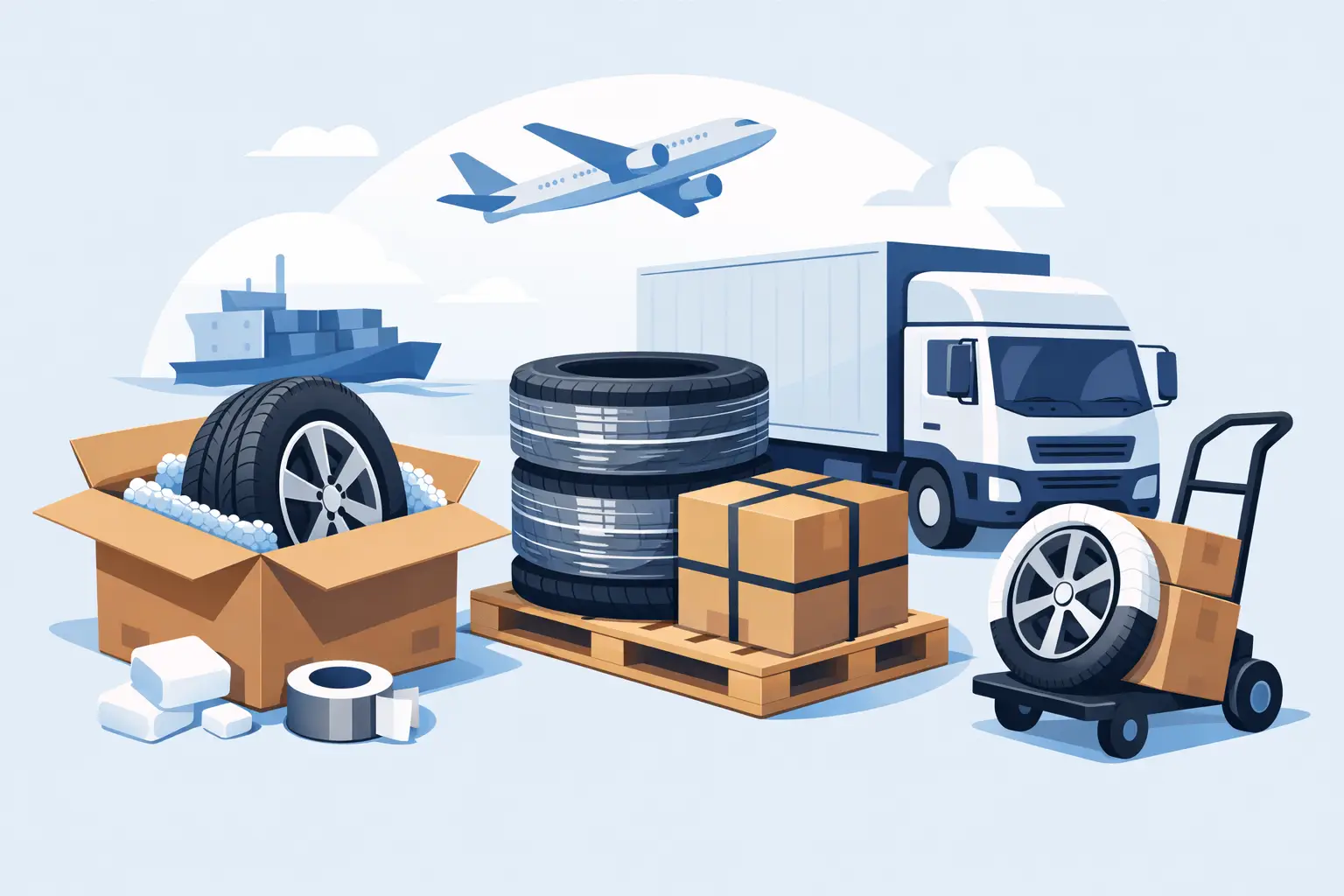
A bent lip, scraped finish, or damaged bead seat can turn a good sale or a planned install into a headache fast. If you need to know how to ship tires and wheels, the real goal is not just getting them from point A to point B. It is getting them there clean, protected, and ready to mount.
Shipping tires by themselves is fairly simple. Shipping wheels takes more care. Shipping mounted tire and wheel sets sits in the middle – easier in some ways, heavier and more expensive in others. The right method depends on what you are sending, how far it is going, and how much risk you are willing to accept.
How to ship tires and wheels without damage
The first decision is whether you are shipping tires only, wheels only, or complete mounted assemblies. Each one needs a different packing approach.
Bare tires are the least fragile. They can often ship with minimal packaging because rubber handles normal transit well. Wheels are different. Painted, polished, machined, or powder-coated finishes can be marked up by rough handling, and the outer lip is especially vulnerable. Mounted sets add sidewall protection and reduce direct contact with the wheel face, but they also bring more weight and bulk, which pushes shipping costs higher.
If appearance matters – and with aftermarket wheels, it usually does – package for impact, not just for dirt. A shipping label stuck on an exposed wheel may get it delivered, but it will not protect the finish.
Shipping tires only
For tires without wheels, start by cleaning off loose dirt and small stones. That keeps the package cleaner and avoids extra handling issues. Then measure the tire’s overall diameter and section width so you can estimate shipping charges accurately.
Many carriers accept tires with a label attached directly to the tread, but that does not always mean it is the best choice. Wrapping the tire in heavy plastic or shrink wrap gives it a cleaner presentation and helps protect the label. Some shippers use cardboard discs on both sides if they want more structure, especially for higher-value performance tires.
If you are shipping a pair, do not assume strapping them together is the cheapest or safest option. Sometimes two separate packages move more cleanly through the network than one bulky bundle. It depends on carrier pricing and dimensional weight.
Shipping wheels only
Wheels need more protection than most people expect. The face, lip, and back pad can all be damaged in transit if the box is too thin or the wheel is allowed to shift.
Start with a clean wheel so tape, foam, and wrap sit flat. Cover the face with a foam sheet or thick cardboard disc. Do the same on the back side. Then wrap the entire wheel in bubble wrap or foam, paying extra attention to the outer edge. Put it in a strong corrugated box sized closely enough that the wheel cannot move around.
Void fill matters here. If the wheel slides inside the box, the box is not doing much. Use packing paper, foam, or additional padding to lock it in place. Double boxing is worth considering for premium wheels, larger diameters, or any finish that marks easily.
Shipping mounted tire and wheel sets
Mounted sets are common in the aftermarket because they simplify installation for the buyer. They can also protect the wheel lip somewhat, since the tire takes some of the abuse. But they still need proper packaging.
The standard method is to place a heavy cardboard disc over the wheel face and another over the back, then shrink wrap or stretch wrap the entire assembly. Some shippers also add edge guards or foam around the rim area before wrapping. For high-value sets, boxing each assembly is the safer move, though it costs more.
If the wheels have exposed spokes and a deep lip, use thicker face protection. A thin disc alone may not prevent pressure damage if another package is stacked against it.
The materials that actually make a difference
If you are learning how to ship tires and wheels for the first time, do not overcomplicate it. A few materials do most of the work.
Strong corrugated boxes are the foundation for wheels. Not lightweight moving boxes – shipping-grade cartons that can handle weight. Cardboard discs protect the faces. Foam sheets, bubble wrap, and stretch wrap prevent scuffs and surface abrasion. Reinforced packing tape helps the box stay closed under load. Labels should go on a flat, secure surface where they will not peel off.
For mounted assemblies or tires only, heavy plastic wrap can be enough when allowed by the carrier, but exposed labels and weak wrapping can fail in transit. If the shipment matters, cleaner packaging usually pays off.
Carrier choice, cost, and trade-offs
There is no single best carrier for every tire or wheel shipment. Parcel carriers work well for many single wheels, single tires, and smaller sets. Freight becomes more attractive when you are shipping multiple wheels, oversized truck tires, or several mounted sets at once.
Parcel shipping is usually easier for residential delivery and one-off orders. Freight can lower the per-unit cost on larger shipments, but it requires more coordination and may involve palletizing, business delivery hours, or liftgate fees.
Dimensional weight also changes the math. Tires are bulky. Wheels are dense. Mounted assemblies are both. A package can cost more because of size even when it does not seem especially heavy. Measure carefully and compare rates before choosing a method.
Insurance deserves a quick reality check. It can help with loss or major transit damage, but reimbursement often depends on proper packaging. If the wheel was sent with minimal protection and arrives scratched, a claim may not go your way. Pack like you expect scrutiny.
Labeling and documentation
Bad labeling ruins good packaging. Make sure the shipping label is clear, complete, and firmly attached. If you are boxing wheels, put the label on the top face of the carton, not over seams or heavy tape lines where it may wrinkle.
It also helps to place a copy of the shipping information inside the box or under the wrap. If the outer label gets damaged, the carrier still has a way to identify the shipment.
For resale, return processing, or B2B orders, keep records of the wheel size, tire specs, finish, and quantity before the shipment leaves. A quick photo of each item and the final packaging condition can save time if there is a damage claim or a receiving dispute.
Common mistakes that cost money
The most common mistake is underpacking the wheel face. Cosmetic damage does not always look dramatic, but it is enough to trigger a return, discount request, or unhappy customer.
The second is using oversized boxes. Extra room inside the package turns every bump into movement, and movement is what damages finishes, lips, and edges.
Another frequent issue is skipping measurements and relying on rough estimates. Shipping charges on tires and wheels can swing fast based on size, zone, and package shape. If you sell or ship parts regularly, accurate dimensions are not optional.
Finally, do not ignore the destination. A single wheel going to a commercial address may be straightforward. Four 35-inch mud tires going to a residence with limited access is a different job. The best packaging and shipping method depends on the full picture.
A practical packing standard to follow
If you want a reliable baseline, use this approach. Ship bare tires clean and tightly wrapped, with secure labels and optional side discs for added structure. Ship bare wheels in snug, heavy-duty boxes with front and rear face protection, full edge padding, and no internal movement. Ship mounted sets with thick cardboard discs on both sides, strong wrap, and boxing when the finish or value justifies it.
That standard is not flashy, but it works. It protects the part, supports cleaner delivery, and reduces the kind of avoidable damage that eats margin.
For enthusiasts, shops, and resellers, details matter. Tires and wheels are not just functional components. Fitment, finish, and presentation all count. That is why smart packaging is part of the product experience, not an afterthought.
At FORTLUFT, that mindset applies across the aftermarket – parts should arrive ready to perform and ready to look the part. When you ship with that standard in mind, you protect more than freight. You protect the value of what is inside the package.
The best shipping method is usually the one that matches the part, not the cheapest option on the screen. Pack for impact, measure honestly, and give the finish the same respect you gave the purchase.