
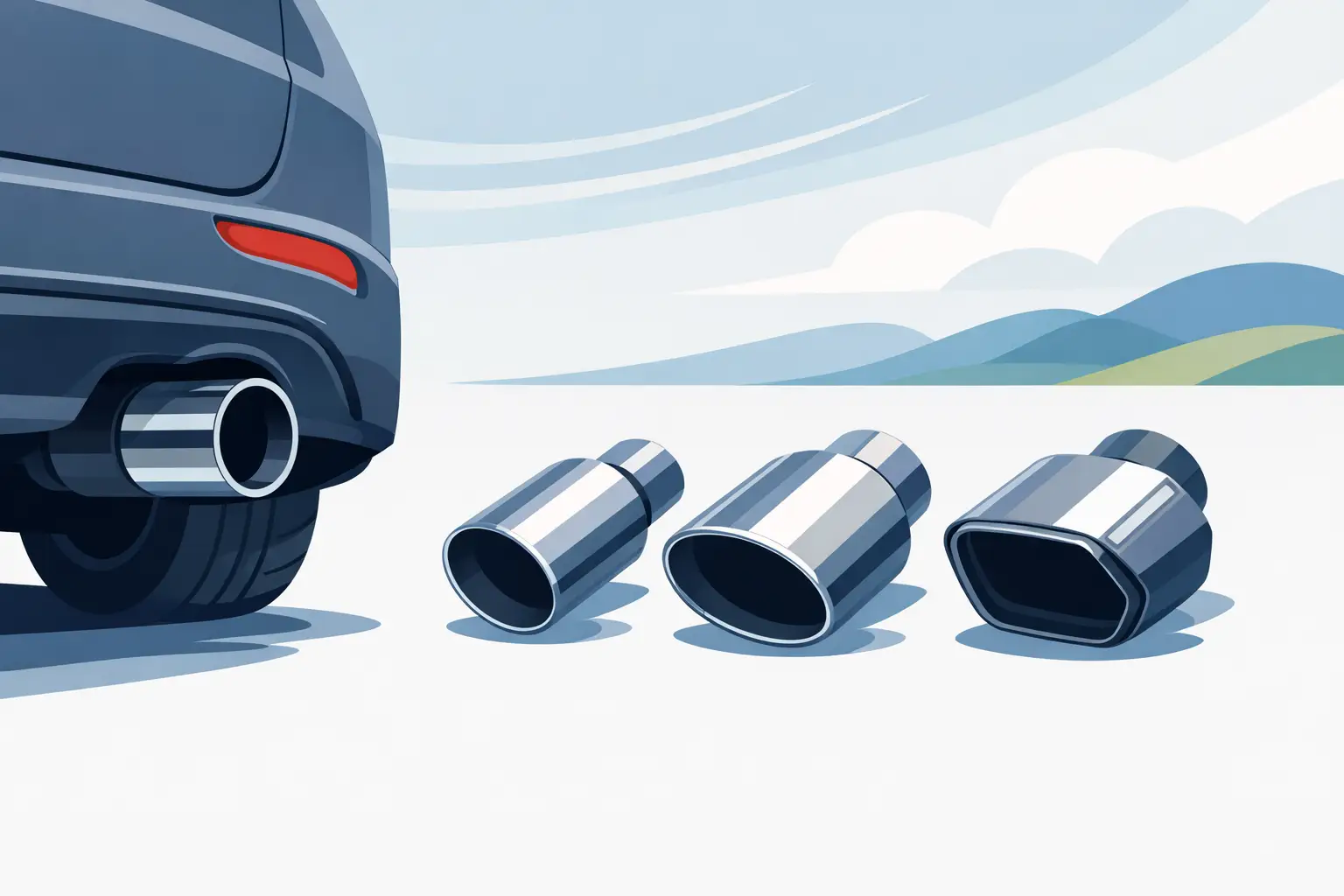
A muffler tip that looks perfect on the screen can show up at your door and be wrong in two different ways – too loose to mount properly or too oversized for the rear of the vehicle. If you are asking what size muffler tip fits, the answer starts with one number that matters most: your exhaust pipe’s outside diameter.
The rest comes down to fit style, tip length, outlet size, and how much visual presence you want at the back of the car, truck, Jeep, or SUV. Get those details right, and the tip looks intentional instead of tacked on.
What size muffler tip fits your vehicle?
In most cases, the right muffler tip has an inlet size that matches your exhaust pipe’s outside diameter. If your tailpipe measures 2.5 inches across on the outside, you typically need a 2.5-inch inlet muffler tip. That is the core fitment rule.
Where buyers get tripped up is assuming every 2.5-inch exhaust setup uses the same tip. It does not. Some vehicles have rolled pipe ends, some have limited bumper clearance, and some need a clamp-on design while others are better suited to weld-on installation. The correct size is not just about the pipe diameter. It is also about how the tip sits under the vehicle and how it finishes the rear profile.
Start with the inlet size, not the outlet
The inlet is the side of the muffler tip that slips over or attaches to the exhaust pipe. This is the fitment measurement. The outlet is the visible opening at the end of the tip, and that dimension is more about appearance than compatibility.
A lot of shoppers focus on the outlet because that is what they see in photos. A 4-inch or 5-inch outlet can look aggressive and clean, especially in polished stainless or carbon fiber, but it does not matter if the inlet does not match the pipe. If the inlet is wrong, the tip is wrong.
For clamp-on tips, the match needs to be especially close. For weld-on tips, there can sometimes be a little more flexibility depending on the installer and the pipe condition, but the cleanest result still comes from choosing the proper inlet size from the start.
How to measure your exhaust pipe correctly
Measure the outside diameter of the tailpipe, not the inside. That point matters because muffler tips are commonly sized by the pipe they fit over.
Use a tape measure or caliper at the very end of the exhaust pipe. If the pipe is rusty, damaged, or has an expanded end, measure a clean and consistent section near the outlet. On some factory systems, the end of the pipe may be slightly shaped or flared, so checking more than one point is smart.
If you only have circumference, divide that number by 3.1416 to get diameter. It is more accurate to use a caliper, but a careful tape measurement is usually enough for selecting a tip.
Common inlet sizes
Most aftermarket muffler tips are built around a few standard inlet sizes, including 1.75 inches, 2 inches, 2.25 inches, 2.5 inches, 3 inches, and 3.5 inches. Passenger cars often land in the 2-inch to 2.5-inch range, while trucks and performance applications may use 3-inch or larger outlets.
That said, there is no universal size by vehicle type. A compact sport sedan with an aftermarket cat-back may use a larger pipe than a stock full-size SUV. Measure first, buy second.
The part most buyers overlook – tip length and clearance
Even when the inlet size is correct, a muffler tip can still fit poorly if the body is too long or the outlet is too wide for the space around the bumper cutout.
Tip length changes the final look more than many people expect. A shorter tip usually gives a tighter, more factory-style finish. A longer tip pushes the design outward and can create a more custom or performance-focused appearance. The trade-off is heat exposure near the bumper and the risk of the tip sticking out too far.
Clearance matters on lifted trucks, SUVs with molded rear valances, and vehicles with tight factory exhaust exits. Before buying, look at the available space above, below, and around the pipe. If the tip is too large in diameter, it may interfere with the bumper line or simply look out of scale.
Clamp-on vs weld-on fit
If you want straightforward installation, clamp-on muffler tips are the practical choice. They are easier for many DIY buyers and let you change styles later without cutting and rewelding. The downside is that they depend heavily on accurate sizing and proper tightening. If the inlet is even slightly off, the tip may not seat securely or may sit crooked.
Weld-on tips offer a more permanent finish and can look cleaner once installed. They are often preferred when building a polished custom exhaust setup or when long-term durability is the priority. The trade-off is less flexibility and more installation effort.
For either style, the fit still starts with the tailpipe diameter. That is the non-negotiable dimension.
Choosing the right outlet size for the look you want
Once you know what size muffler tip fits at the inlet, you can choose the outlet based on design. This is where function meets style.
A smaller outlet tends to look closer to OEM-plus – refined, understated, and clean. A larger outlet creates more presence and works well on trucks, Jeeps, muscle cars, and performance builds. Stainless steel gives a sharp, technical finish. Black coatings can blend more cleanly into dark trim. Carbon fiber tips push further into the premium performance look.
There is no single correct outlet size because visual balance depends on the vehicle. A 5-inch outlet may look right on a full-size truck and oversized on a small crossover. The best fit is the one that matches both the exhaust pipe and the vehicle’s rear design.
What size muffler tip fits if your exhaust has dual outlets?
Dual exhaust setups are simple in one sense and easy to mess up in another. You need to measure each tailpipe independently, because not every system is perfectly symmetrical after years of use, modification, or repair.
If both pipes measure the same, use matching tips for a consistent finish. If one side sits tighter to the bumper or tow hardware, you may need to account for body length or outlet shape even if the inlet size is identical. On dual systems, small visual differences stand out fast.
Angle-cut, rolled-edge, and straight-cut designs can all work, but they create different impressions. Rolled-edge tips often feel more finished and upscale. Straight-cut tips lean more performance-oriented. Angle-cut tips can help complement certain bumper lines but need to be positioned carefully.
When a “universal” muffler tip is not really universal
Universal fitment usually means the tip is designed to work across a broad range of vehicles, not that it fits every pipe without checking measurements. That language can be useful for browsing categories, but it should never replace an actual measurement.
This is especially true if your vehicle has an aftermarket exhaust, a trimmed pipe, or a factory outlet hidden behind the bumper. In those cases, the tip may technically mount but still fail to look right. Good fitment is part measurement and part proportion.
That is where material and finish also come into play. A well-sized nonmagnetic stainless steel tip can sharpen the rear view of the vehicle without looking excessive. If you want the appearance upgrade to feel intentional, size and finish should work together.
Quick mistakes to avoid before you buy
The most common mistake is measuring the inside diameter instead of the outside. The second is buying based only on outlet size. The third is ignoring length and bumper clearance.
Another issue is assuming a larger tip always looks better. Sometimes it does. Sometimes it overwhelms the rear of the vehicle and draws attention for the wrong reason. Clean fitment almost always looks more premium than oversized hardware.
If you are shopping for a style-driven upgrade, think about the full rear profile. The best results come from matching inlet diameter correctly, choosing an outlet size that suits the vehicle, and selecting a material that holds up to heat, weather, and daily use. That is the difference between a quick add-on and a finished exhaust detail.
A muffler tip is a small part, but it changes the final impression of the whole vehicle. Measure carefully, respect the clearances, and choose a size that fits both the pipe and the design. That is how a functional exhaust part becomes technology as an art form.