
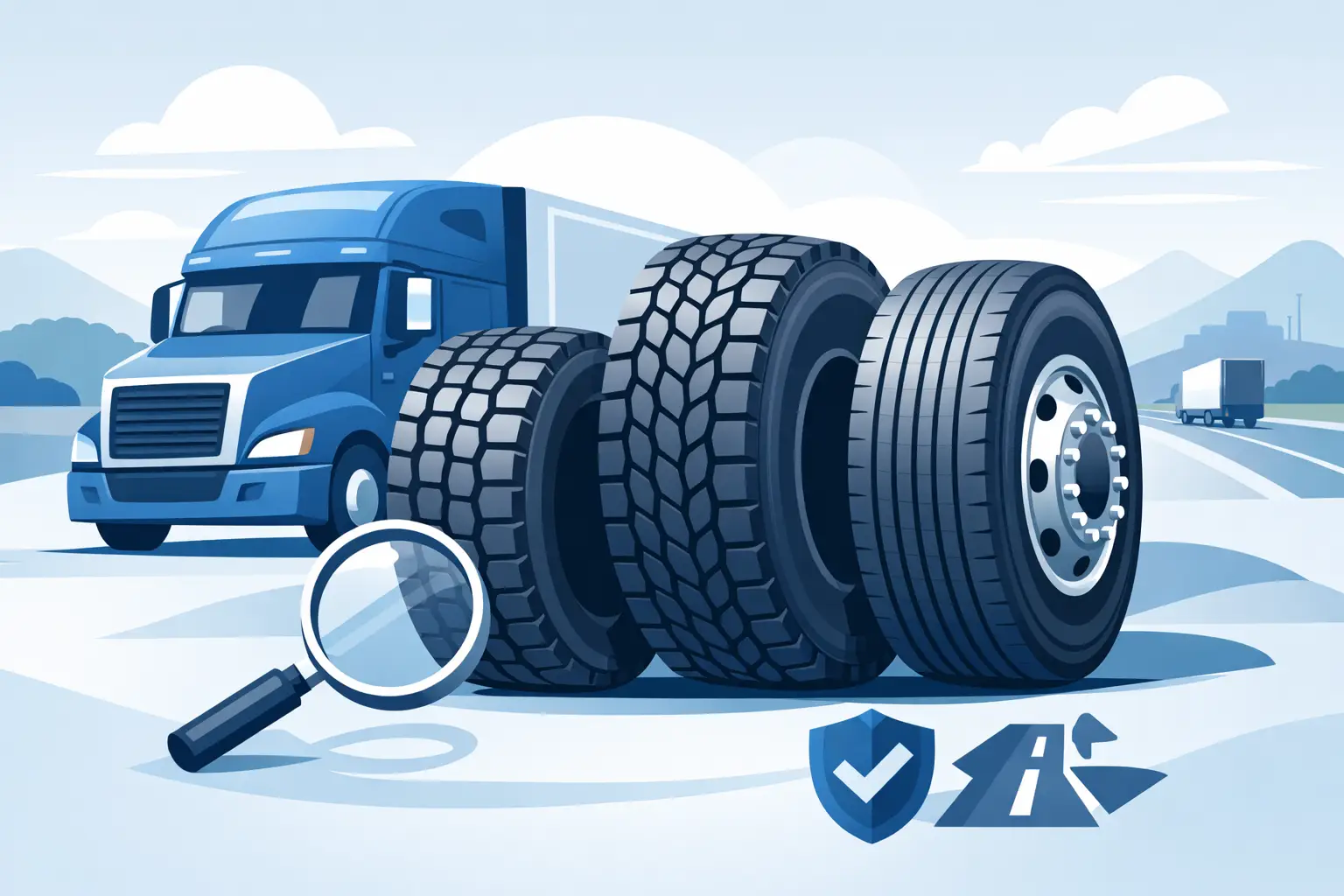
A truck can look ready for anything and still be held back by the four contact patches beneath it. The right truck tires determine how confidently you tow, how stable the truck feels with a loaded bed, how it brakes in rain, and how much road noise follows you home. Size alone is not the answer. The best fit comes from matching tire construction and tread design to the work your truck actually does.
For a daily-driven pickup that sees occasional trailer duty, a quiet all-terrain may make more sense than an aggressive mud-terrain. For a work truck that spends long days under load, load capacity and casing strength should lead the decision. Choosing well protects handling, ride quality, fuel use, and the parts that work hard around the tires – suspension, steering, brakes, and wheel bearings.
Start With the Truck Tire Size and Load Rating
The placard inside the driver-side door jamb is the first place to look. It identifies the original tire size, recommended cold inflation pressure, and vehicle load information. That baseline is more useful than choosing by appearance or wheel diameter alone.
A tire size such as LT275/70R18 tells a clear story. LT means Light Truck construction, 275 is the tire width in millimeters, 70 is the sidewall height expressed as a percentage of width, R identifies radial construction, and 18 is the wheel diameter in inches. Changing any of these numbers can affect clearance, speedometer accuracy, gearing, braking behavior, and steering feel.
Load rating deserves equal attention. Passenger-metric tires can work well on lighter trucks used primarily for commuting, but they are not automatically the right choice for regular hauling or towing. LT tires are built for greater load capability and typically use tougher sidewalls. The trade-off is real: they can weigh more, ride firmer, and slightly reduce fuel economy. For many half-ton trucks, the right answer depends on whether the bed is usually empty or routinely carrying equipment, materials, or a tongue-heavy trailer.
Never select a tire based only on a familiar label such as Load Range E. Confirm the tire’s actual load capacity at the intended inflation pressure, then compare it with the truck’s axle ratings and expected use. The tire must meet the vehicle’s requirements at every wheel position, not just look capable.
Match Truck Tires to the Miles You Drive
Tread pattern changes the way a truck behaves. Consider where the truck spends most of its time, then choose for that environment rather than for the occasional extreme trip.
Highway and touring tires
Highway tires suit trucks that spend most of their lives on pavement, especially unloaded daily drivers and long-distance work vehicles. Their closely spaced tread blocks generally deliver predictable road manners, lower noise, and efficient wear. Many also provide strong wet-road performance when the tread depth is maintained.
This category is a practical choice for drivers who tow on paved roads and want stability without the hum and weight of a highly aggressive tread. It is less convincing in deep mud, loose sand, and sharp rocky terrain.
All-terrain tires
All-terrain tires are the middle ground for many pickup, Jeep, and SUV owners. They use more open tread blocks and stronger shoulders than highway tires, improving grip on gravel, dirt roads, light snow, and uneven job sites. Modern all-terrains can remain civilized on pavement, though they usually produce more noise and may not last as long as a dedicated highway design.
Look closely at the tire’s winter marking if snow is part of the equation. The Three-Peak Mountain Snowflake symbol indicates performance that meets a defined severe-snow standard. An all-terrain with this marking can be a valuable year-round option in colder regions, but it does not replace careful driving or adequate tread depth on ice.
Mud-terrain tires
Mud-terrain tires prioritize clearing loose material from the tread and gripping uneven off-road surfaces. Their large voids, reinforced construction, and bold sidewalls create a purposeful look and serious trail capability. They also bring compromises: more road noise, less refined wet-pavement behavior, faster wear in some applications, and added rotating weight.
They are a strong match for trucks that regularly see mud, rocks, ruts, or remote worksites. On a highway-only pickup, they are often more tire than the job requires.
Consider Wheels, Clearance, and Suspension Together
A larger tire changes more than stance. Diameter affects effective gearing and speedometer readings, while width and offset influence clearance at the fender liner, control arms, and suspension components. A tire that clears while parked may rub at full steering lock or when the suspension compresses over a driveway or trail obstacle.
Before moving up in size, check wheel width, offset, brake clearance, lift height, and the truck’s full range of steering and suspension travel. A modest increase can work cleanly with the correct wheel setup. An oversized setup may require trimming, recalibration, suspension changes, or different gearing to perform as intended.
The visual result matters, but fitment is function. A properly matched tire-and-wheel combination gives the truck a deliberate stance without creating vibration, rubbing, or unnecessary strain. Technology as an art form starts with components that work together.
Do Not Overlook Date Codes and Tread Depth
A tire can appear new and still be older inventory. Check the Department of Transportation date code on the sidewall. The final four digits show the week and year of manufacture. For example, 1825 means the tire was made in the 18th week of 2025. Fresh inventory matters because rubber changes over time, even before significant mileage is added.
Once tires are in service, inspect tread depth across the full width, not just in the center. Center wear often points to overinflation, while wear on both shoulders can suggest underinflation. Feathering or uneven wear may indicate an alignment issue, worn suspension parts, or a balance problem. On a truck, those patterns can develop quickly when the vehicle is frequently loaded or driven on rough surfaces.
Replace tires when tread is no longer safe for the conditions you face, when there is sidewall damage, or when cracking and aging become visible. Do not depend on a single mileage figure. A lightly used truck in high heat, a tow rig carrying heavy loads, and a commuter truck in moderate conditions will not wear tires at the same rate.
Get More Life From Your Truck Tires
Tire maintenance is simple, but it cannot be occasional. Check pressure when tires are cold, ideally at least once a month and before towing or carrying a heavy load. Use the pressure listed on the door placard unless a tire professional has established a different pressure for a specific, approved application. The maximum pressure molded onto a tire sidewall is not a universal daily-use recommendation.
Rotation intervals should follow the vehicle and tire manufacturer guidance. Rotating on schedule helps even out the different demands placed on front and rear tires, especially on trucks that carry variable loads. Keep alignment in check after a hard pothole impact, suspension work, or any sign that the truck is pulling or wearing tires unevenly.
Also inspect tires before long trips. Look for embedded nails, cuts, bulges, exposed cords, and damage around the bead area. A slow leak may be a small repair today, but it can become a heat-related failure when a loaded truck runs for hours at highway speed.
Choose for the Job, Then Drive With Confidence
The right tire is not always the tallest, widest, or most aggressive option. It is the one that supports your truck’s rated capacity, fits correctly, performs in your common conditions, and gives you the control to use the truck as intended. Whether the next miles involve a job site, a trailer, a weekend trail, or a daily commute, give truck tires the same careful attention you give every other working part of the vehicle.