
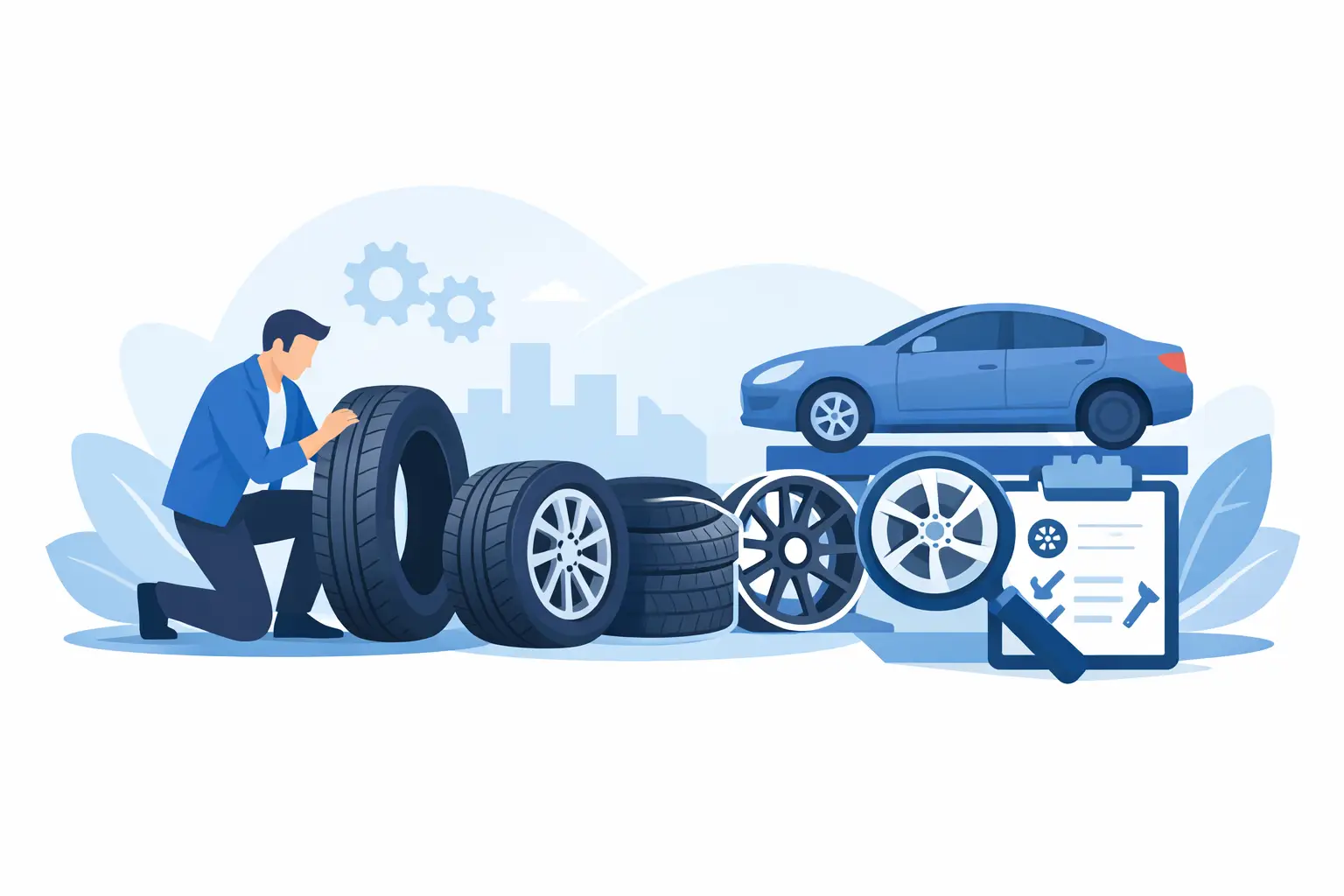
A wheel and tire package can sharpen your vehicle’s stance in one afternoon – or create vibration, rubbing, poor handling, and a return you never wanted to deal with. If you’re figuring out how to buy tires and rims, the smartest move is to treat fitment, performance, and appearance as one decision, not three separate ones.
That matters whether you drive a commuter sedan, a half-ton truck, a Jeep on oversized all-terrains, or an SUV that needs a cleaner street look without giving up daily comfort. Tires and rims affect braking, steering feel, ride quality, fuel economy, road noise, and the way the whole vehicle presents itself. This is one of the few upgrades that is both functional and visual, which means buying on looks alone usually costs more later.
Start with the vehicle, not the wheel design
The first step in how to buy tires and rims is confirming what your vehicle can actually accept. That starts with the factory tire size, wheel diameter, bolt pattern, center bore, offset, and load requirements. If one of those is off, the setup may technically bolt on and still drive badly.
Your current tire sidewall tells you a lot. A size like 265/70R17 breaks down into width, aspect ratio, and wheel diameter. That gives you the baseline for replacement or for upsizing and downsizing. The door jamb sticker adds the manufacturer’s recommended tire size and pressure, and that information matters because it reflects the weight and geometry of your specific vehicle.
Rims need even more attention than many buyers expect. A wheel can share the same diameter as your factory setup and still be wrong if the bolt pattern or offset is off. Offset changes where the wheel sits relative to the hub and fender. Go too far outward and you can create fender rub and extra stress on suspension components. Go too far inward and you may run into brake clearance problems.
How to buy tires and rims without fitment mistakes
The easiest buying error is focusing on diameter because it is the most visible number. A 20-inch wheel sounds simple. In practice, width, offset, and tire sizing determine whether the package works.
Match the bolt pattern and center bore
Bolt pattern has to be exact. Close does not count. A wheel with the wrong pattern is not a workable compromise. Center bore also matters because it affects how the wheel centers on the hub. Some wheels are designed to use hub-centric rings, which can be fine when properly matched, but the setup has to be intentional.
Choose the right wheel width for the tire
Every tire size has an approved wheel width range. Stretching a tire too much or pinching it onto a wheel that is too narrow changes how the tire performs and wears. It can also make the vehicle feel less planted in corners or less stable under load.
Watch overall tire diameter
When buyers move to a larger rim, they often need a shorter sidewall tire to keep the overall diameter close to stock. That helps preserve speedometer accuracy, gearing, and clearance. A dramatic diameter change might look aggressive, but it can affect shift points, braking feel, and ride quality.
Pick tires based on how the vehicle is actually used
This is where buying gets more strategic. The right tire for a lifted truck in snow country is not the right tire for a city SUV, and a performance sedan should not be on a tire chosen only because the tread looks aggressive.
All-season tires make sense for most daily drivers because they balance tread life, road comfort, wet traction, and cost. Summer tires improve grip and steering response but are not built for freezing temperatures. Winter tires are the better answer when cold-weather traction matters more than year-round convenience.
For trucks, Jeeps, and SUVs, the choice usually comes down to highway terrain, all-terrain, or mud-terrain. Highway tires are quieter and smoother on pavement. All-terrains give you more versatility and a stronger visual stance, but they usually add some road noise and may reduce fuel economy. Mud-terrain tires look serious and perform well off-road, but they are often louder, heavier, and less refined for daily commuting.
Load rating is just as important as tread type. A truck or SUV carrying cargo, towing, or running larger aftermarket wheels needs a tire with the right load capacity. If the tire cannot support the vehicle properly, no amount of style makes that a smart buy.
Choose rims that fit the vehicle’s purpose and style
Rims change the character of a vehicle faster than almost any other exterior upgrade. They also change unsprung weight, which affects ride and handling.
Larger wheels usually create a sharper, more modern look. They can improve steering response when paired with lower-profile tires, but the trade-off is a firmer ride and greater exposure to pothole damage. Smaller wheels with taller sidewalls tend to ride better and give more protection, which is a practical advantage for trucks, Jeeps, and rough-road driving.
Material matters too. Many aftermarket wheels are aluminum alloy because they balance weight, strength, corrosion resistance, and design flexibility. Heavier wheels can dull responsiveness. Lighter wheels often feel better on the road, but price usually rises with premium construction and finish quality.
Then there is the visual side, and it should not be treated like an afterthought. Finish, spoke design, lip depth, and overall proportion need to work with the vehicle. A wheel that looks perfect on a lowered sport sedan may look out of place on a full-size truck. Good design in automotive parts is never just decoration. It has to look right because it fits right.
Budget for the full package, not just the sticker price
A lot of buyers compare tires and rims by product price alone, then get surprised at checkout or installation. The full cost usually includes mounting, balancing, valve stems or TPMS service, possible hub rings, lug nuts if the wheel requires a different seat type, and alignment if the old tires showed uneven wear.
It also pays to think about long-term cost. A cheaper tire with short tread life or disappointing wet traction is not always the value option. A low-priced wheel with a finish that degrades quickly can make the whole vehicle look tired faster than expected.
If you are building around a visual goal, be honest about where you want the budget to land. Sometimes the right move is a more refined wheel with a practical all-season tire. Other times it is better to prioritize premium tires first and keep the wheel design simpler. Performance and appearance should work together, but one may deserve priority based on how the vehicle is used.
Common mistakes when buying tires and rims
The biggest mistake is assuming a package that fits one trim level will fit every version of that vehicle. Brake package differences, suspension variations, and factory ride height can all change what works.
Another common miss is choosing an extreme offset for appearance without understanding the side effects. A pushed-out stance may look stronger, but it can increase rubbing, throw more debris against the body, and change steering feel.
Buyers also underestimate sidewall height. Ultra-low-profile tires can look clean and premium, but on rough roads they ride harsher and offer less protection. That may be acceptable on a show-forward street build. It is less appealing on a daily-driven truck or SUV that sees construction zones, winter roads, or broken pavement.
The other mistake is ignoring seasonal reality. If you live where temperatures drop hard or storms are frequent, buying for appearance over traction is usually a short-lived win.
A practical way to make the final decision
If you want a clean path forward, narrow the choice in this order: verify factory specs, confirm wheel fitment, choose the tire category based on real driving conditions, then select the design and finish that match the vehicle. That sequence keeps style from outrunning function.
For most buyers, the best setup is not the most extreme. It is the one that clears properly, carries the load it should, suits the climate, and gives the vehicle a more intentional look. That is where aftermarket buying gets interesting. Done right, it does not just replace worn parts. It upgrades the way the vehicle feels every day.
FORTLUFT’s approach to parts reflects that same standard – practical fitment, real performance, and design that earns its place on the vehicle.
A good wheel and tire setup should make the vehicle look more finished the moment you step back from it, and feel more confident the moment you pull onto the road.