
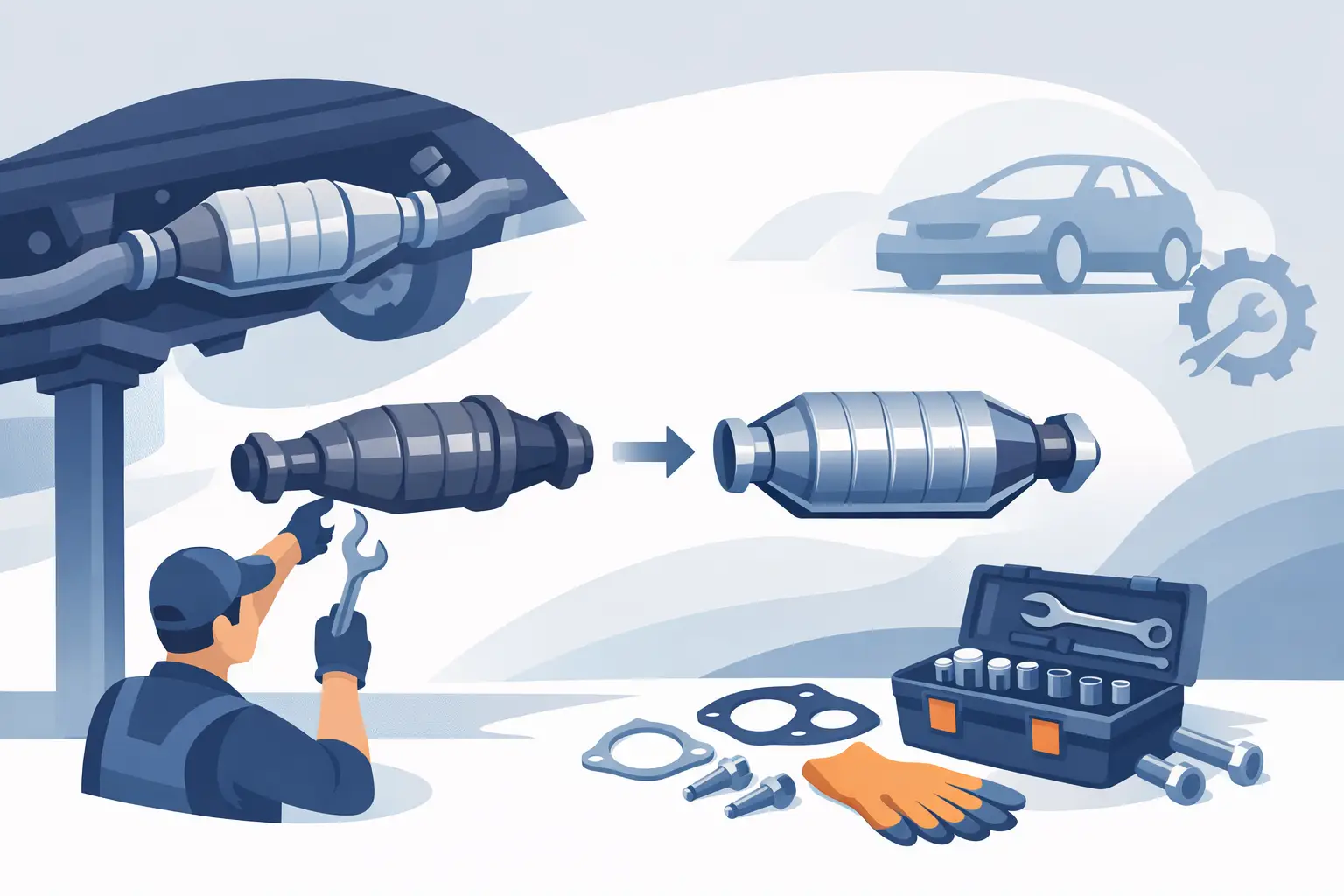
A failing converter rarely announces itself at a convenient time. More often, it shows up as a check engine light, a sulfur smell, sluggish acceleration, or a failed emissions test right when you need the vehicle working. This catalytic converter replacement guide is built for drivers and buyers who want a clear path from diagnosis to the right replacement part without wasting time or money.
The converter sits at the center of emissions control, but the buying decision is not just about compliance. Fitment, substrate quality, shell construction, sensor placement, and state requirements all matter. On trucks, Jeeps, SUVs, and daily drivers alike, the right replacement needs to do two jobs well – restore function and fit the vehicle correctly the first time.
What a catalytic converter actually does
A catalytic converter reduces harmful exhaust emissions by triggering chemical reactions inside the exhaust stream. Its internal substrate is coated with precious metals that help convert pollutants like carbon monoxide, hydrocarbons, and nitrogen oxides into less harmful gases before they exit the tailpipe.
When the converter is working properly, you usually do not think about it. When it starts to fail, performance and drivability can suffer along with emissions compliance. That is why replacement is often both a repair decision and a legal one, depending on your state and vehicle application.
Signs you may need a replacement
Some failures are obvious, while others overlap with ignition, fuel, or sensor issues. The most common warning sign is a check engine light tied to catalyst efficiency codes such as P0420 or P0430. That said, those codes do not automatically mean the converter itself is bad. Upstream engine problems can damage a good converter or trigger misleading readings.
You may also notice reduced throttle response, poor fuel economy, excess exhaust heat, rattling from a broken substrate, or a rotten egg smell. In more severe cases, a clogged converter can create backpressure that makes the engine feel choked under load.
If the converter was stolen, the symptoms are immediate and dramatic – louder exhaust, strong fumes, and often visible cut sections in the exhaust pipe. In that case, the replacement path is usually straightforward, but you still need to confirm the exact configuration before ordering.
Catalytic converter replacement guide: diagnose before you buy
The smartest replacement starts with confirming the root cause. If you skip diagnosis and install a new converter on an engine with unresolved misfires, oil burning, coolant intrusion, or a bad oxygen sensor, the new unit may fail early.
Start by scanning for codes and reviewing freeze-frame data if available. Check for misfires, rich or lean conditions, and sensor faults. Inspect the exhaust for leaks before and after the converter, since leaks can affect oxygen sensor readings and mimic catalyst issues. If the engine is consuming oil or coolant, address that first.
Physical inspection helps too. A converter that rattles internally often has a broken substrate. A unit that glows excessively after driving may be overheating due to unburned fuel entering the exhaust. If theft is involved, inspect nearby pipes, flanges, and sensor wiring so you know whether you need only the converter or additional exhaust components.
Choosing the right replacement converter
Fitment comes first. You need to match year, make, model, engine size, drivetrain where relevant, and emissions configuration. Some vehicles use direct-fit assemblies with flanges, bends, heat shields, and sensor ports positioned for a clean installation. Others can accept universal converters, but those require cutting and welding and are usually better suited to experienced installers or shop work.
Material and construction matter more than many buyers realize. A well-made shell resists corrosion and heat cycling better, especially in regions with road salt or vehicles that see heavy-duty use. Clean welds, consistent port placement, and proper hanger geometry all affect how smoothly the install goes.
Converter loading and certification also matter. Not every aftermarket converter is legal for every vehicle in every state. California and states following California Air Resources Board standards have stricter requirements than federal EPA applications. Before purchase, confirm whether your vehicle needs a CARB-compliant unit or an EPA-compliant unit. That detail is not optional.
Price is part of the equation, but it should not be the only filter. A lower-cost unit may work fine for an older vehicle in a federal-emissions state, while a stricter application may demand a more specific and more expensive replacement. The right choice depends on where the vehicle is registered, how long you plan to keep it, and whether you want the fastest install or the lowest upfront cost.
Direct-fit vs universal converters
Direct-fit converters are usually the better choice for most retail buyers. They are designed around the vehicle layout, which reduces fabrication work and lowers the risk of poor alignment, exhaust leaks, or sensor placement issues. On many modern vehicles, that convenience is worth paying for.
Universal converters can make sense if the vehicle is older, custom exhaust work is already in place, or you are working with a shop that can weld and fabricate properly. They can also be useful in certain repair scenarios where only a section of the system needs to be replaced. The trade-off is more labor, more room for installation error, and more responsibility to confirm compliance.
What replacement usually costs
Catalytic converter replacement cost varies widely by vehicle and by emissions standard. A straightforward aftermarket direct-fit unit on a common vehicle may be relatively manageable, while a multi-converter setup on a late-model truck or SUV can become expensive quickly.
Labor adds another layer. If rusted hardware, seized fasteners, damaged flanges, or stolen sections of pipe are involved, install time goes up. Oxygen sensors may also need replacement if threads are damaged or sensor faults contributed to the original problem. It is often smart to inspect gaskets, clamps, and adjacent exhaust sections at the same time so the repair is complete rather than temporary.
Installation basics that matter
If you are handling the repair yourself, work safely and verify you have the correct tools before starting. Exhaust components get extremely hot, so the system must be cool. Penetrating oil, proper support stands, and the right sockets can save a lot of frustration on corroded hardware.
Disconnecting oxygen sensors carefully is important. Cross-threaded sensors or damaged connectors can turn a simple job into a longer one. During installation, mating surfaces need to be clean, gaskets positioned correctly, and fasteners tightened evenly to avoid leaks.
After installation, clear any stored codes and complete a proper drive cycle if needed so the vehicle can run its emissions monitors. If the check engine light returns, do not assume the new converter is defective. Recheck sensor performance, fuel control, and any upstream engine conditions that may still be present.
Legal and emissions considerations
Converter replacement is one of those categories where legality and fitment are closely tied. Federal law prohibits tampering with emissions equipment, and state-level rules can be even more specific. That means the replacement part has to match the vehicle’s emissions certification requirements, not just the pipe diameter or engine size.
For buyers in emissions-testing states, this is especially important. Ordering the wrong unit can mean a second round of parts, labor, and downtime. For shops and resellers, accurate application matching protects both the customer and the business.
Buying with confidence
A good purchase process is simple on the surface and technical underneath. You want clear application data, transparent emissions information, and construction quality that supports real-world use on daily drivers, work trucks, and enthusiast vehicles. That is where a product-focused supplier stands out. FORTLUFT approaches exhaust components with the same mindset it brings to the rest of the catalog – practical fitment first, with attention to materials, finish, and long-term value.
When replacement is the right call
Not every catalyst code means immediate replacement, but a damaged, clogged, stolen, or legally failed converter usually does. The key is not rushing the wrong fix. Confirm the cause, verify your emissions standard, choose the right style for the vehicle, and pay attention to the surrounding hardware that makes the install hold up.
A converter is not the flashiest part under a vehicle, but when it is chosen correctly, everything feels right again – quieter operation, cleaner emissions, restored performance, and no guesswork hanging over the next inspection.