
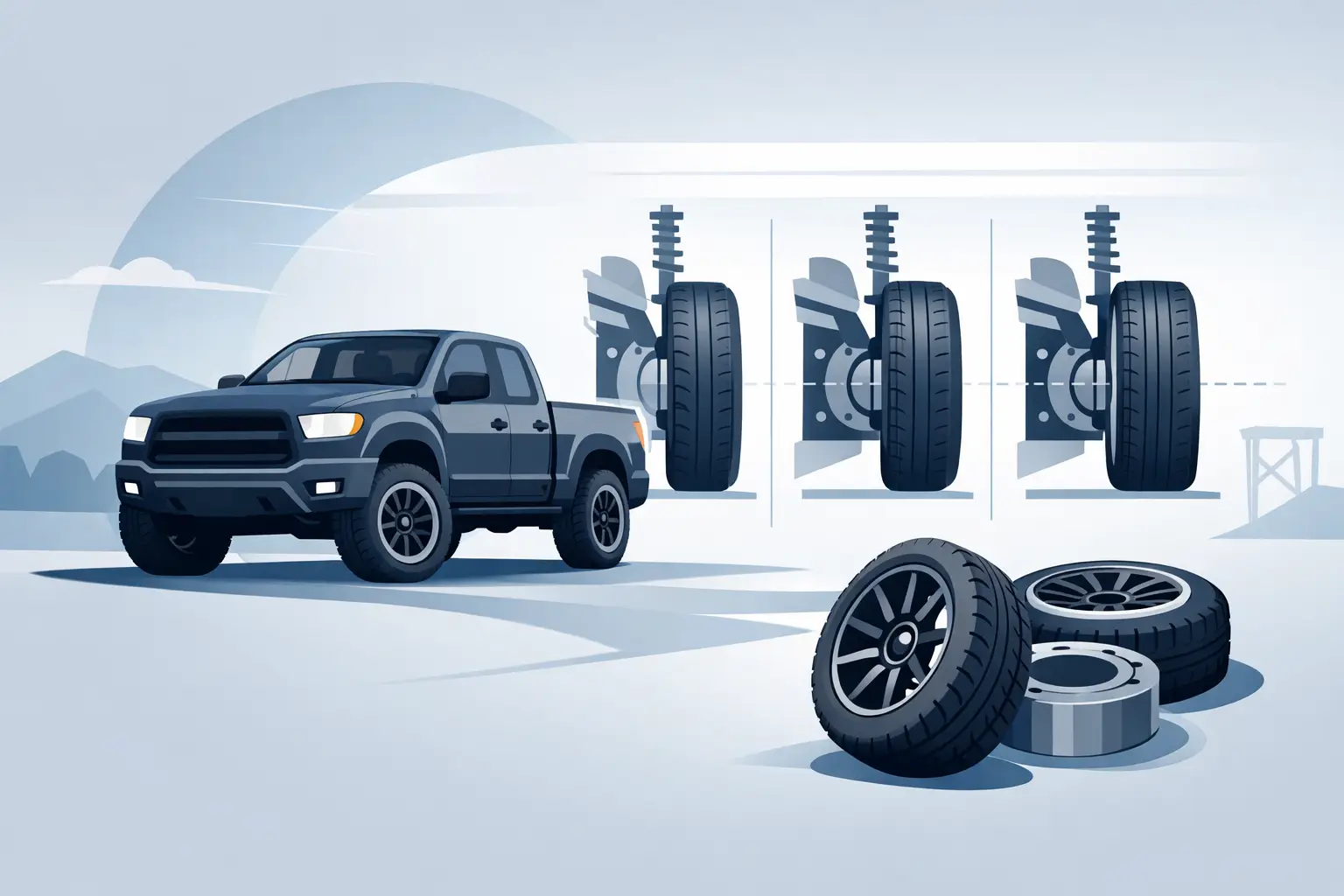
A truck can look perfect on paper and still rub the fender liner on the first turn out of the driveway. That usually comes down to one detail buyers underestimate – wheel offset. This truck wheel offset guide is built to make that spec easier to read, easier to compare, and easier to get right before you order wheels or tires.
What wheel offset actually means
Wheel offset is the distance between the wheel’s mounting surface and its centerline. It tells you where the wheel sits in relation to the hub, suspension, brakes, and fenders. That one number changes both appearance and function.
A positive offset means the mounting pad sits closer to the street side of the wheel, which usually pulls the wheel farther inward. A negative offset moves the wheel farther outward, creating a wider stance and a more aggressive look. Zero offset places the mounting surface right on the wheel’s centerline.
That sounds simple, but offset never acts alone. Wheel width, tire size, suspension height, brake clearance, and body design all influence whether a setup works. The right choice is not just about what looks bold in a product photo. It is about where the entire wheel and tire package ends up once installed.
Truck wheel offset guide: why the numbers matter
On a truck, offset affects more than stance. It changes inner clearance near the upper control arm, spindle, shock, and sway bar. It also changes outer clearance at the fender, flare, mud flap, and bumper edge.
Move the wheel too far inward and you can run into suspension components, especially with wider aftermarket wheels and larger tires. Move it too far outward and the tire may contact the fender during compression or full steering lock. That outward movement can also increase road spray, put more stress on wheel bearings over time, and change the feel of the steering.
This is where people get caught. A wheel may bolt on correctly and still be the wrong fitment. Lug pattern gets the wheel on the truck. Offset determines whether the truck drives cleanly with the setup you wanted.
How to read offset on a wheel spec sheet
Offset is usually listed in millimeters, often as something like +20, +1, 0, or -12. The plus or minus sign matters as much as the number itself.
A +20 offset on the same wheel width will sit farther inward than a 0 offset. A -12 offset will push the wheel out farther than both. If you are comparing aftermarket truck wheels, small changes can make a visible difference. Ten to fifteen millimeters may not sound dramatic, but on the vehicle it can be the difference between tucked, flush, or poking past the fender.
Backspacing is related, but it is not the same measurement. Backspacing tells you how much room there is from the wheel mounting pad to the inner wheel edge. Some truck buyers prefer backspacing because it helps visualize inner clearance. Still, most modern wheel listings lead with offset, so you need to be comfortable reading it.
Stock offset versus aftermarket offset
Most factory truck wheels use a positive offset that keeps the wheel relatively tucked under the body. Automakers do that for packaging, steering geometry, durability, and compliance. It is efficient and predictable.
Aftermarket wheels often reduce positive offset or go into negative offset to create a stronger visual stance. That can look right on a leveled or lifted truck, especially with wider tires, but there is always a trade-off. More aggressive offset can improve presence, yet it may also increase trimming needs, create rubbing, or require more careful tire selection.
The best setup depends on the goal. If you use the truck as a daily driver, tow regularly, or spend time on rough roads, conservative offset usually keeps fitment cleaner and long-term wear more controlled. If the truck is built around visual impact and off-road style, a more aggressive offset may be worth the extra planning.
Wheel width changes the offset story
Offset numbers only make sense when you consider wheel width. A +1 offset on a 9-inch wheel and a +1 offset on a 12-inch wheel do not place the outer lip in the same spot. The wider wheel extends farther inward and outward from the centerline.
That is why copying someone else’s offset without matching the wheel width can go wrong fast. The truck might be the same model, but if their wheel is 20×9 and yours is 20×10 or 20×12, the final position changes. Tire section width matters too. Some tires run wider than others even in the same labeled size.
If you are planning a wheel upgrade, treat width, offset, and tire size as one fitment package. Breaking them apart is where expensive mistakes start.
Common fitment goals and the offset that supports them
A tucked or near-stock look usually uses a more positive offset. This is often the safest option for daily driving because it keeps the wheel closer to factory geometry and minimizes the chance of the tire extending past the fender.
A flush setup aims to bring the tire close to the outer fender line without obvious poke. This is where many truck owners land because it balances style and practicality. It often requires moderate offset changes, not extreme ones.
An aggressive stance with visible poke usually comes from lower or negative offset, often combined with a wider wheel. It can deliver the visual payoff many truck builders want, but it is the setup most likely to need trimming, leveling, lift, or careful tire sizing.
There is no universal best offset. There is only the offset that matches your truck, your wheel width, your tire size, and how much compromise you accept.
Suspension, lift kits, and leveling kits
A lift kit or leveling kit can create more room, but it does not erase offset math. Many buyers assume extra ride height automatically solves rubbing. Sometimes it helps with vertical clearance, but steering and rear-of-fender contact can still happen because the tire’s path changes as it turns and compresses.
Leveling kits are especially misunderstood. They improve front-end height and can help fit a larger tire, but they do not necessarily allow the same aggressive wheel offset as a full suspension lift. Inner clearance and outer fender contact still need attention.
If you are adding suspension components and wheels at the same time, plan them together. Fitment works best when the wheel spec supports the suspension setup rather than fighting it.
Brake clearance and component interference
Offset also plays a role in brake and suspension clearance, but not always in the way buyers expect. Pushing a wheel outward may create more room near some suspension components, yet spoke design and wheel barrel shape still determine whether the wheel clears the brake caliper.
That means you cannot judge fitment from offset alone. Two wheels with the same size and offset may fit differently because of the face design. This matters even more on newer trucks with larger brake packages.
When ordering aftermarket wheels, clear specs beat assumptions every time. A clean-looking wheel is only a good choice if it clears the hardware behind it.
A practical way to choose the right offset
Start with your truck’s factory wheel size and offset, then define the result you want. Do you want stock-like drivability, a flush stance, or a more aggressive look? From there, compare the new wheel width and offset to the factory setup so you can see how much the inner and outer positions will change.
Next, match the tire to the wheel instead of choosing them separately. A wider tire may erase the clearance you thought you had. Then account for suspension height, alignment, and normal use. A truck that flexes off-road, tows, or carries weight needs more margin than a truck built mainly for street use.
If you are between two offset options, the safer choice is usually the one that asks less from the body and suspension. Style matters, but fitment that works every day is what keeps a build enjoyable.
Mistakes that cost truck owners money
The most common mistake is buying wheels based only on diameter and bolt pattern. The second is assuming offset alone tells the whole story. Width, tire size, and suspension setup can change the outcome enough to turn a popular fitment into a problem.
Another mistake is chasing the most aggressive look without planning for trimming or ride changes. There is nothing wrong with a bold setup, but it should be a deliberate build choice, not a surprise after installation. At FORTLUFT, that kind of practical fitment thinking is part of what separates a good-looking truck from one that looks right and drives right.
Wheel offset is one of those specs that rewards precision. Get it right, and the truck sits with purpose, clears the components it needs to clear, and delivers the look you actually had in mind.