
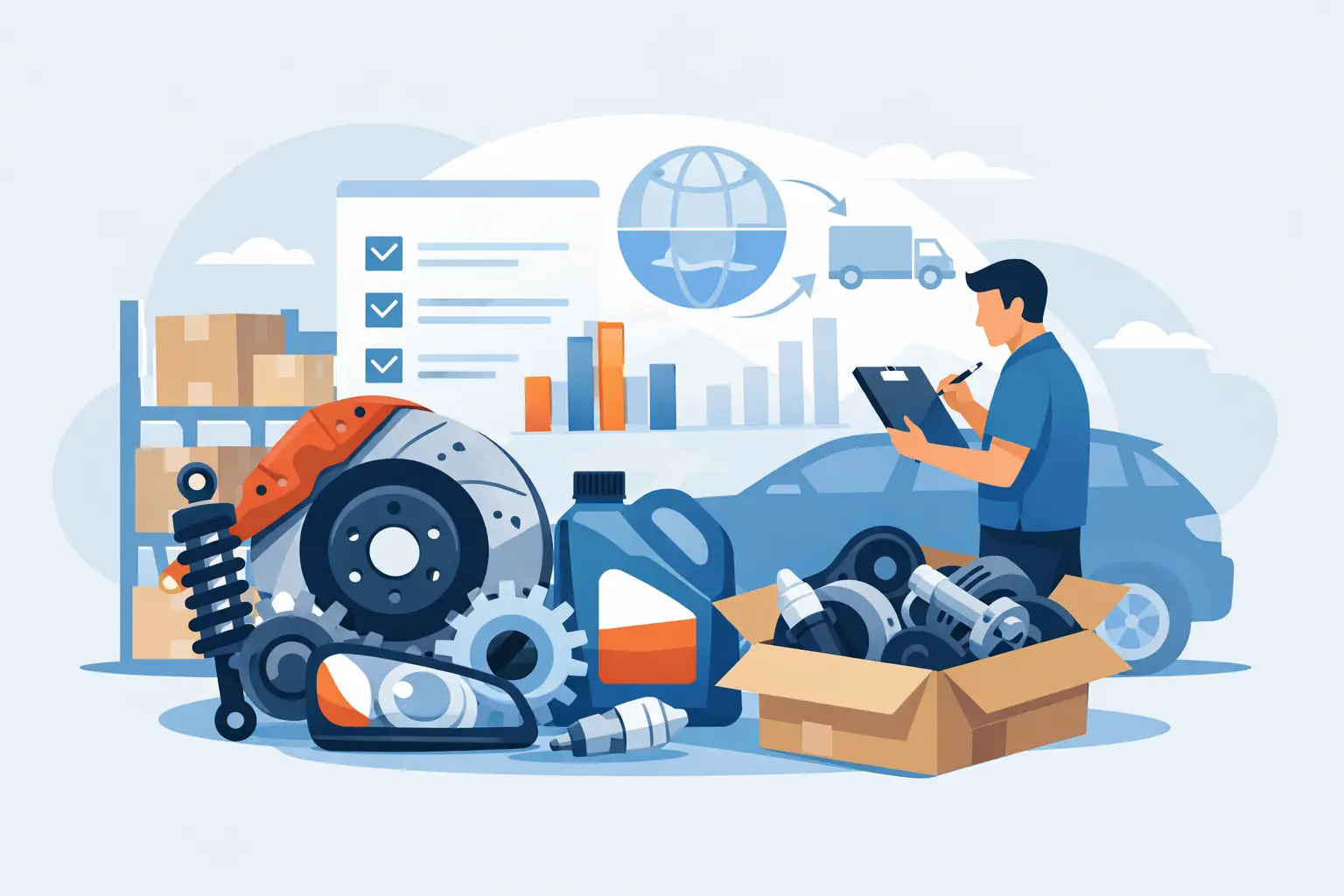
One bad bulk order can tie up cash, stall installs, and leave slow-moving inventory collecting dust on the shelf. That is why wholesale auto parts purchasing is not just about getting a lower unit cost. It is about buying the right parts, in the right mix, at the right time, with enough confidence in fitment and quality to keep vehicles moving and customers coming back.
For shops, resellers, and commercial buyers, the stakes are higher than they look. A discounted part that returns too often is expensive. A stylish upgrade that photographs well but does not fit the market is expensive. A fast-moving maintenance item that is always out of stock is expensive too. The strongest wholesale buyers treat purchasing as a performance system, not a price hunt.
What wholesale auto parts purchasing really demands
At a glance, buying wholesale sounds simple. Open an account, review pricing, place larger orders, and improve margin. In practice, the better question is whether your purchasing process supports both everyday repair demand and the categories that drive higher-ticket sales.
That balance matters in the aftermarket. Routine parts like wiper components, ignition items, and suspension replacements keep volume steady. Appearance and performance-focused categories like exhaust pipes, muffler tips, wheels, and related accessories can lift average order value and strengthen customer loyalty. Buyers who ignore one side of that equation often end up either overstocked on specialty items or underprepared for daily service needs.
Good purchasing starts with understanding what your customers actually ask for, not what looks attractive in a catalog. If your market leans toward work trucks and SUVs, your mix should reflect that reality. If you serve owners who care about stainless finishes, exhaust tone, or visual upgrades, then material and finish become part of the sales strategy, not just the spec sheet.
Price matters, but total buying cost matters more
The easiest mistake in wholesale auto parts purchasing is chasing the lowest line-item price. That number only tells part of the story. The real cost includes return rates, warranty exposure, shipping timing, packaging reliability, and the labor impact of a part that does not install cleanly.
Take exhaust components as an example. A lower-cost pipe may look acceptable on paper, but if the material quality is inconsistent or the finish does not meet buyer expectations, you lose time on support, exchanges, and damaged trust. On the other hand, a stainless or nonmagnetic option with more consistent construction may protect margin better over time even if the upfront cost is higher.
The same logic applies to categories like suspension and ignition. Fitment confidence and dependable quality reduce friction. In a retail or service environment, friction is costly. It slows bay turnover, burdens counter staff, and creates hesitation on the next sale.
That does not mean premium is always the right answer. It depends on your customer base. Some buyers want the most affordable functional replacement. Others will pay more for material quality, finish, or upgrade appeal. The point is to buy with your actual sales environment in mind, not just a spreadsheet.
How to build a smarter wholesale purchasing mix
Strong buyers rarely treat all categories the same. They build a layered assortment.
Your core layer is made up of dependable maintenance and replacement parts with predictable demand. These are the items that keep sales moving steadily and support repeat business. Your second layer includes higher-margin upgrade or style-driven categories that help differentiate your offering. In the aftermarket, that often means wheels, exhaust accessories, and trim-forward components where appearance matters as much as utility.
The third layer is strategic depth. These are products you may not move every day, but they help you serve a wider set of vehicles or buying scenarios without forcing customers elsewhere. For some businesses, that means broader SUV and Jeep coverage. For others, it means adding catalytic converter-related exhaust categories or washer system components to round out maintenance needs.
A smart mix also respects seasonality and local demand. Wiper and washer products can spike differently by region. Tire and wheel demand shifts with weather, driving habits, and style trends. Exhaust categories may sell on both replacement need and enthusiast interest. If your purchasing calendar ignores those patterns, your margins will show it.
Fitment discipline is where wholesale performance is won
In aftermarket parts, fitment mistakes erase discounts fast. This is especially true when you are buying at volume.
Every buyer wants speed, but speed without fitment discipline is expensive. Product data has to be clean. Vehicle applications must be clear. If a category has variation by trim, engine, bed length, wheelbase, or emissions setup, those details need to be treated seriously during purchasing, not after the return request arrives.
That is one reason experienced buyers value suppliers that present categories clearly and support account-based purchasing with straightforward access to product information. Efficiency is not just convenience. It affects inventory accuracy, customer service, and reorder confidence.
For style-oriented categories, fitment has another layer. The part may technically fit, yet still miss the visual expectation. Muffler tips, exhaust finishes, and wheel-related purchases often carry aesthetic standards alongside mechanical requirements. Buyers who understand that dual role usually make better decisions and create fewer disappointments downstream.
Supplier relationships should improve speed and control
The best wholesale relationships do more than offer a lower price tier. They make it easier to buy well.
That means consistent account access, useful product organization, clear tax-exempt purchasing paths where applicable, and a buying experience that respects time. Shops and resellers do not need a complicated process. They need a reliable one.
When evaluating a supplier, ask whether they help you move from one-off orders to repeatable purchasing. Can you reorder efficiently? Are categories easy to navigate? Does the catalog support both practical replacement demand and higher-appeal accessory sales? Can your business buy in a way that aligns with your exemption status and account structure?
Those factors matter because wholesale purchasing is cumulative. One smooth order is good. Fifty smooth orders create a system. FORTLUFT approaches this from a practical retail angle with partner access that supports both direct buying needs and broader aftermarket opportunity.
Inventory discipline beats overbuying
Bulk pricing creates temptation. The assumption is simple: if the per-unit cost drops enough, buy deeper. But overbuying is one of the fastest ways to drain working capital.
A better approach is to classify products by movement speed, margin profile, and substitution risk. Fast-moving essentials can justify deeper stock when demand is stable and fitment range is broad. Niche or style-sensitive items deserve more caution, especially when trends shift or customer taste varies by vehicle segment.
Material-driven products often require a more selective view. Stainless steel exhaust parts or carbon fiber-accented accessories can be compelling, but only if they match the preferences of your customer base. In the right market, they elevate both product perception and margin. In the wrong market, they sit.
This is where smaller test buys can outperform aggressive stocking. If a category is new for your business, learn from real sell-through before you commit heavily. Wholesale buying should increase confidence, not increase guesswork.
Why appearance matters in aftermarket purchasing
Some buyers still separate maintenance from style as if they belong to different businesses. In the real aftermarket, they often overlap.
A customer replacing an exhaust component may also care about finish and tip design. A wheel purchase can start with function and end with a visual statement. Even practical categories can carry an expectation of material quality and presentation. Technology as an art form is not just a slogan when buyers are choosing parts that need to perform well and look right.
For wholesalers and commercial buyers, that creates opportunity. If your assortment includes both workhorse replacement parts and design-aware upgrade options, you can serve a broader range of intent without changing suppliers or sales strategy entirely. You simply need to recognize when the buying decision is emotional as well as technical.
A better standard for wholesale auto parts purchasing
The strongest purchasing decisions are rarely dramatic. They are disciplined. They come from knowing your vehicles, your customers, your sales patterns, and your tolerance for risk. They account for fitment, finish, lead times, and margin together instead of treating them as separate issues.
Wholesale auto parts purchasing works best when every order supports a clearer business objective. Sometimes that objective is speed. Sometimes it is category expansion. Sometimes it is better presentation, better material quality, or fewer returns. The point is to buy with intent.
When you treat purchasing as part of your brand experience, not just your cost structure, the results are easier to feel on the floor, at the counter, and in the next reorder. Buy parts that earn their place, and the business tends to follow.