
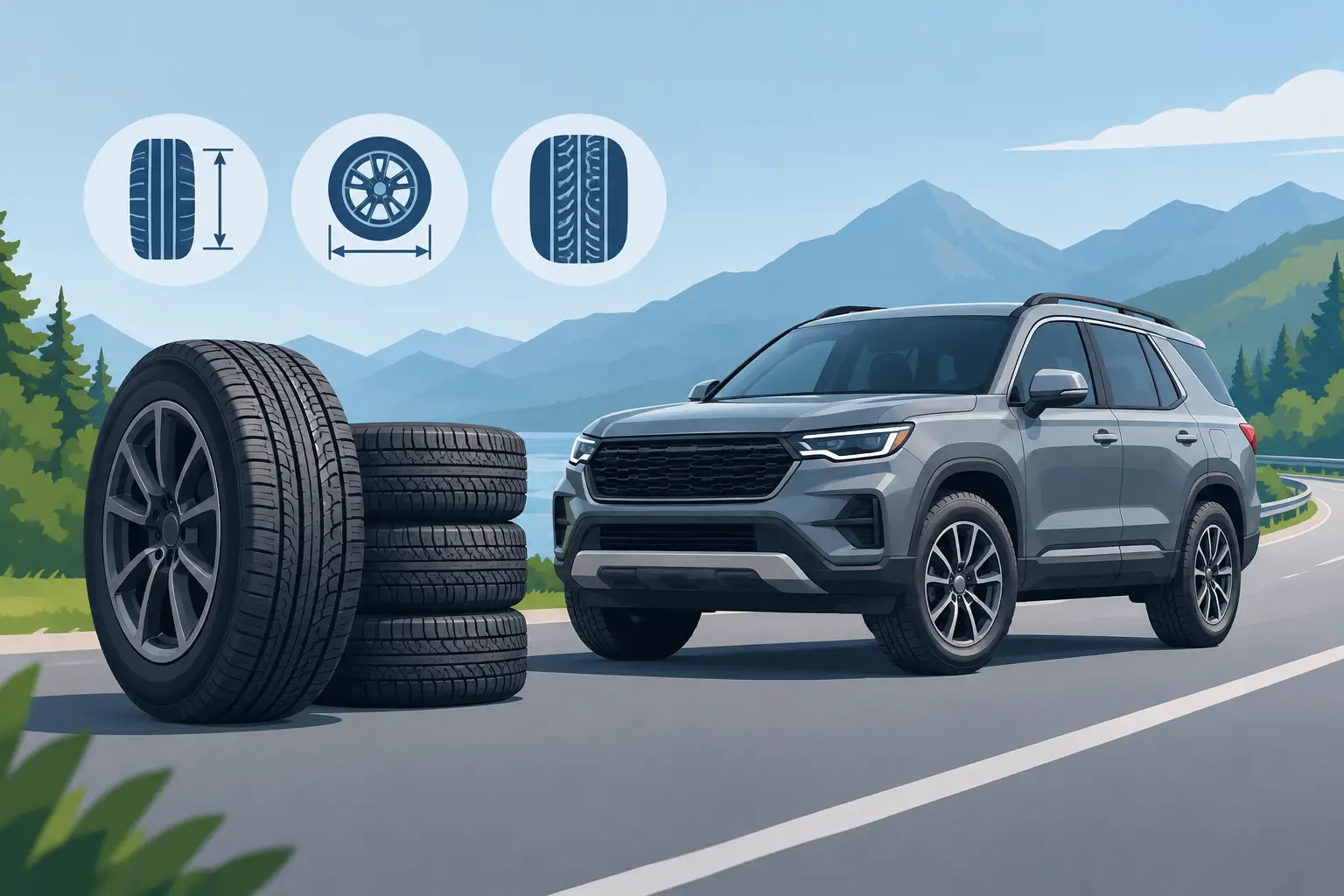
A tire that looks right on an SUV can still be wrong for the vehicle. SUV tire sizing affects much more than wheel-well appearance: it influences steering response, braking, speedometer accuracy, ride comfort, drivetrain behavior, and whether the tire clears suspension and body components through a full turn.
For a stock replacement, the factory size is usually the most efficient path. For a more aggressive stance, added sidewall, or a wheel upgrade, the right answer comes from measurements and intended use, not just the largest tire that appears to fit. Good fitment is where capability, safety, and design meet.
SUV Tire Sizing Starts With the Sidewall Code
Most SUV tires use a metric code such as 265/65R18. Each part provides a measurement needed to compare tires accurately.
The first number, 265, is the tire’s section width in millimeters. This is the approximate width from sidewall to sidewall when mounted on the manufacturer’s approved measuring wheel. A wider wheel or different tire design can slightly change the real-world measurement.
The second number, 65, is the aspect ratio. It means the sidewall height is 65 percent of the tire’s width. In this example, the sidewall is approximately 172 mm tall. A lower aspect ratio creates a shorter sidewall, generally sharpening steering feel but reducing the cushioning that helps an SUV handle potholes, gravel, and broken pavement.
The R identifies radial construction, which is standard for modern passenger and light-truck tires. The final number, 18, is the wheel diameter in inches. A 265/65R18 tire requires an 18-inch wheel. It cannot be safely mounted on a 17-inch or 20-inch wheel, regardless of how close the overall diameter may be.
You may also see load index and speed rating after the size, such as 114T. These are not secondary details. The load index identifies the tire’s maximum rated carrying capacity, while the speed rating indicates its tested heat and speed capability. Both must match the demands of the SUV, including passengers, cargo, trailers, and roof-mounted gear.
Understanding Overall Diameter
Overall tire diameter determines how much room the tire needs vertically and how it affects vehicle calibration. To estimate diameter for a metric size, multiply width by aspect ratio, convert the result from millimeters to inches, double it for both sidewalls, then add wheel diameter.
A 265/65R18 is roughly 31.6 inches tall. A 275/65R18 is about 32.1 inches tall. That half-inch increase may sound small, but it reduces clearance by about a quarter-inch at the top of the tire and can create rubbing at the liner, mud flap, or suspension during turns and compression.
Diameter also changes the number of tire revolutions per mile. A larger tire travels farther per rotation, so the speedometer may read slower than the SUV’s actual road speed. Odometer readings, shift behavior, advanced driver-assistance systems, and four-wheel-drive calibration can also be affected when the difference becomes substantial.
Check Fitment Before Choosing a Bigger Tire
An SUV has several potential contact points, and static clearance in a driveway does not tell the full story. Tires move through an arc when steering turns, suspension compresses, and the vehicle leans in a corner. The tire also grows slightly at speed because of centrifugal force.
Check clearance at full steering lock in both directions. Look closely at the front fender liner, bumper edge, mud flaps, sway bar, strut body, upper control arm, and brake lines. At the rear, examine the liner, inner wheelhouse, trailing-arm area, and outer fender lip. A tire that clears during normal driving can rub when the vehicle is loaded, towing, or crossing uneven terrain.
Wheel offset and width are just as relevant as the tire label. Offset controls where the wheel sits in relation to the hub. A wheel with less positive offset pushes the tire outward, which may improve stance but can increase fender contact and steering kickback. More positive offset moves the tire inward and can create interference with suspension components.
Wheel width matters because every tire size has an approved rim-width range. Mounting a tire on a wheel that is too narrow can pinch the tread and sidewall. Mounting it on a wheel that is too wide can stretch the sidewall, reduce protection for the wheel lip, and alter handling. For replacement or upgrade fitment, use the tire manufacturer’s approved wheel-width specifications rather than relying on appearance alone.
A lift can create additional vertical space, but it does not automatically solve every rubbing issue. Suspension lifts, leveling kits, body lifts, wheel offset, and tire width each change clearance differently. A lifted SUV may still rub at full lock because the tire is contacting the rear portion of the front wheel well.
Match Tire Size to How the SUV Works
Factory tire sizing is engineered around the vehicle’s gross axle weight rating, braking system, steering geometry, gearing, and intended ride quality. Staying near the original diameter is often the best choice for daily-driven SUVs, especially when reliability, fuel economy, quiet operation, and predictable handling are priorities.
A plus-size setup uses a larger-diameter wheel with a lower-profile tire while keeping overall tire diameter close to stock. For example, moving from an 18-inch wheel to a 20-inch wheel usually requires a shorter sidewall. This can create a cleaner, more tailored appearance and quicker steering response, but the trade-off is a firmer ride and greater risk of wheel damage on potholes.
A taller tire adds sidewall and ground clearance beneath the axles. It can be a practical choice for unpaved roads, trail use, or an SUV that regularly encounters snow and rough surfaces. Taller tires can also soften impacts, but they add weight and may reduce acceleration, braking feel, fuel economy, and effective gearing.
Wider tires can increase the contact patch under the right conditions, though more width is not automatically more grip. Tire compound, tread design, inflation pressure, road temperature, and water evacuation matter just as much. A wider all-terrain tire may look purposeful, but it can be heavier, louder, and more likely to follow road grooves than a properly sized highway tire.
Load Range, Construction, and Inflation Matter
SUV owners often focus on diameter first, then discover the new tires have a different load range or construction. That can change the vehicle’s behavior more than expected.
Passenger-metric tires, marked with a P in many applications, are generally designed for comfortable everyday use. Light-truck tires, often marked LT, use more durable construction intended for heavier loads, towing, off-road conditions, or commercial service. LT tires can offer stronger sidewalls and added toughness, but they are typically heavier and may ride firmer. They also require inflation pressure appropriate to the vehicle and load, not simply the maximum pressure printed on the sidewall.
Do not reduce load capacity when changing tire size. Check the tire’s individual load rating against the axle loads listed on the driver-side door placard. For towing or carrying frequent cargo, leave a healthy margin rather than selecting a tire that only barely meets the requirement.
All four tires should match in size, construction, and tread depth as closely as possible. This is particularly important on all-wheel-drive and four-wheel-drive SUVs. Significant rolling-diameter differences can keep drivetrain components working against each other, causing unnecessary wear. If one tire must be replaced on an AWD vehicle, measure the remaining tread and follow the vehicle manufacturer’s tolerance guidance.
A Practical SUV Tire Sizing Process
Start with the door-jamb placard and the current tire sidewall. The placard establishes the manufacturer’s recommended size, cold inflation pressure, and load requirement for that specific vehicle configuration. The tire sidewall confirms what is currently installed, which may or may not be original equipment.
Next, decide what needs to improve. If the goal is a direct replacement, prioritize the stock size, proper load index, and a tread pattern suited to the road conditions. If the goal is an upgraded appearance, decide whether the priority is a larger wheel, a wider footprint, or a taller sidewall. These are different changes with different fitment consequences.
Then compare overall diameter, width, wheel-width range, and offset before ordering. Keep diameter changes modest unless you have verified clearance, gearing effects, and calibration needs. A test fit is valuable for custom wheel-and-tire packages, especially on modified Jeeps, trucks, and SUVs with aftermarket suspension components.
Finally, protect the investment with correct installation and maintenance. Use the specified torque for lug nuts, set cold pressures accurately, and schedule an alignment after suspension work or a major tire-size change. Rotate tires on schedule and inspect inner shoulder wear, which can reveal an alignment or clearance issue before it becomes a damaged tire.
The best SUV tire setup does not need to be the biggest one in the parking lot. It needs to fit the wheel, carry the load, clear the vehicle in motion, and support the way you actually drive. When those details are right, the result looks intentional and performs that way too.