
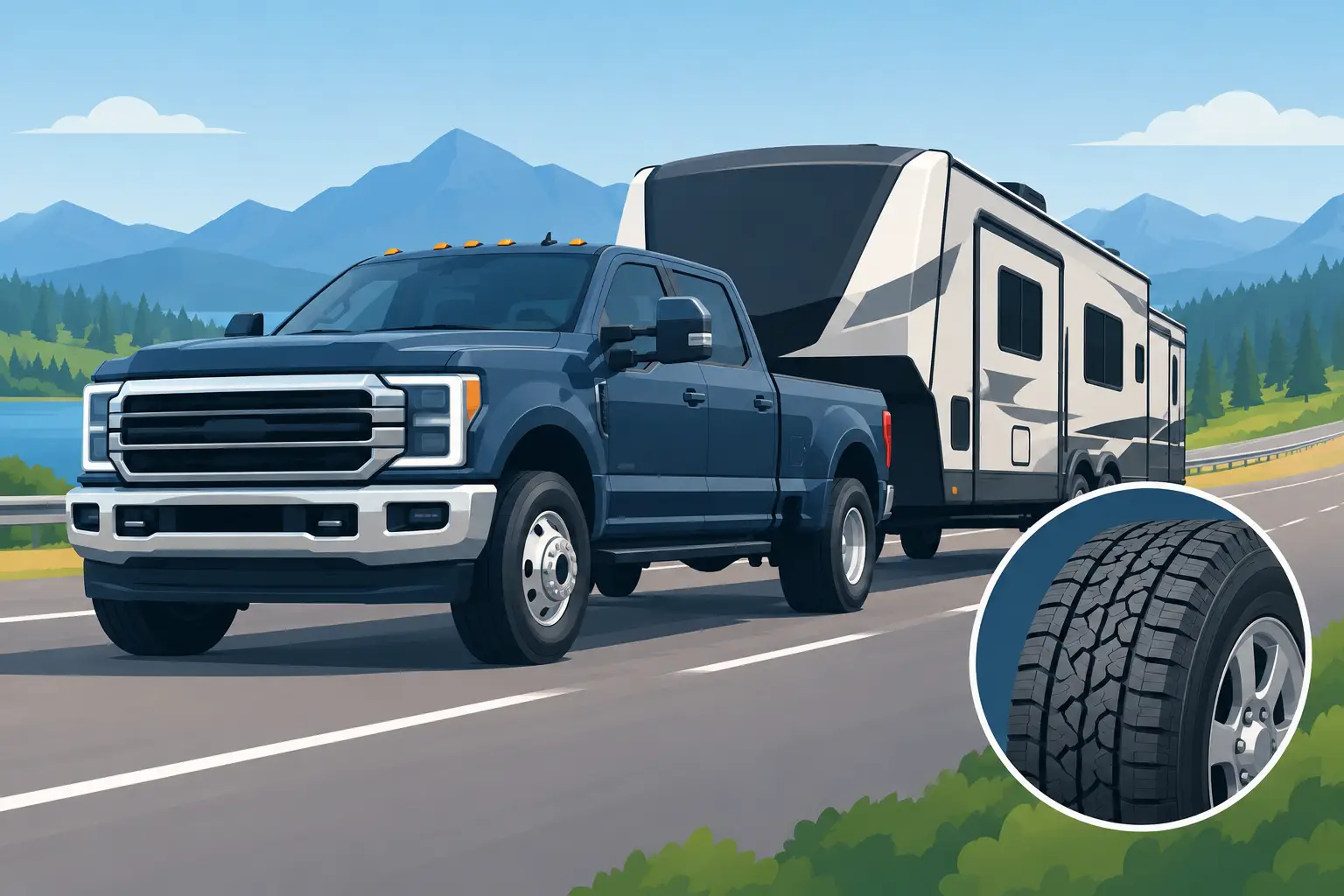
A trailer can turn a familiar truck into a very different machine. Braking distances grow, steering response changes, and heat builds quickly when the tires are not built for the load. The best tires for towing trucks are not simply the most aggressive-looking tires or the ones with the deepest tread. They are tires matched to your truck’s axle ratings, trailer weight, driving surface, and real-world workload.
For a weekend utility trailer, a quality all-terrain tire may be the right balance. For a loaded equipment trailer, enclosed car hauler, or work setup that runs highway miles every day, a highway-focused light-truck tire with serious load capacity is usually the smarter choice. Buy for control and durability first. The appearance, ride comfort, and off-road capability should follow the job.
What Makes the Best Tires for Towing Trucks?
Towing puts more demand on a tire than unloaded commuting. The tire sidewall carries additional force during turns, the tread handles greater heat at highway speed, and the construction has to remain stable under a sustained load. That is why the sidewall details matter more than a marketing label.
Start with the load index and load range. The load index states how much weight an individual tire can support at its specified inflation pressure. Load range reflects the tire’s strength category and its maximum pressure capability. Many half-ton trucks use P-metric or LT-metric tires depending on trim and intended use, while three-quarter-ton and one-ton trucks commonly require LT tires built for heavier service.
An LT tire is not automatically the correct upgrade for every truck. It may provide firmer sidewalls and better towing stability, but it can also add weight and create a stiffer unloaded ride. Your wheel size, vehicle placard, Gross Axle Weight Rating, and tire clearance still control what fits safely. Never select a tire based only on how much your truck can theoretically tow.
Match Tire Capacity to Axle Weight
Trailer tongue weight transfers a meaningful share of the trailer’s weight to the truck, and cargo distribution can put more stress on the rear axle than expected. A tire’s capacity must cover the actual weight carried at each axle, with an appropriate margin, rather than just the trailer’s published dry weight.
Check your truck’s door-jamb tire information label and owner’s manual before changing tire size or load range. Then weigh the truck and trailer as loaded for travel if you tow regularly. Separate axle weights give a much clearer picture than an empty-trailer specification. They also reveal whether hitch setup, trailer loading, or suspension adjustment needs attention.
Choose the Right Tread for Your Towing Route
Tread design changes how a towing truck feels on the road. The right answer depends on where the truck works most often, not where you might take it once or twice a year.
Highway-Terrain Tires for Daily Hauling
Highway-terrain tires are often the strongest choice for trucks that tow on pavement. Their continuous tread ribs improve straight-line stability, promote even wear, and generally run quieter than more open tread designs. Many are engineered to manage heat effectively during extended highway use, which matters when the truck is loaded in summer conditions.
This category suits travel trailers, enclosed trailers, boats, work equipment, and commercial delivery loads that spend most of their time on maintained roads. Look for a tread pattern with wide circumferential channels for wet-road evacuation and a compound designed for long tread life. A calm, predictable tire can make a substantial difference when crosswinds or passing trucks move the trailer.
All-Terrain Tires for Mixed-Surface Work
All-terrain tires make sense when towing includes gravel, job sites, dirt access roads, boat ramps, snow, or uneven campsites. They offer more bite than highway tires while remaining practical for regular street driving. For many Jeep, SUV, and pickup owners, this is the most versatile category.
The trade-off is usually more road noise, slightly less refined highway behavior, and potentially faster wear if the truck spends nearly all of its miles on pavement. Some aggressive all-terrain patterns also have larger tread blocks that can feel less precise with a heavy trailer behind the truck. Choose a model with a load rating that supports your application, not just a tread pattern that looks ready for the trail.
Mud-Terrain Tires for Specialized Use
Mud-terrain tires are built to clear loose soil, mud, and rocks. They can be the right choice for trucks that routinely tow into off-road work areas or remote terrain. On pavement, however, their open tread can be louder, less efficient, and less composed in wet conditions than a highway or all-terrain tire.
For most towing trucks, mud-terrain tires are a specialized tool rather than the default answer. If the trailer stays on the highway and the truck sees mud only occasionally, a capable all-terrain tire typically offers a better balance.
Size, Sidewall, and Inflation Matter as Much as the Tire Brand
Oversizing tires can change more than the look of a truck. A larger diameter may affect effective gearing, speedometer accuracy, braking feel, suspension clearance, and towing response. Wider tires are not always better either. A wide tire can improve footprint in some conditions, but it may follow road grooves more noticeably and increase rolling resistance.
For a dedicated tow vehicle, staying close to the factory overall diameter is often the practical move. It preserves the systems and calibrations the manufacturer designed around the truck while giving you room to choose a stronger construction within the approved size range.
Sidewall height deserves attention as well. A taller sidewall can help absorb rough-road impacts, while a shorter sidewall may feel more direct in steering. Under trailer load, the key is controlled flex. Excessively soft sidewalls can contribute to a vague or unsettled feeling, especially when the trailer encounters ruts, expansion joints, or wind.
Inflation pressure is part of the towing setup, not an afterthought. Underinflation builds heat, increases sidewall flex, and accelerates wear. Overinflation can reduce traction and create a harsh ride. Use the truck manufacturer’s recommended pressures as your starting point, then follow the tire manufacturer’s load-and-inflation guidance where applicable. Do not inflate beyond the wheel or tire limits printed on the components.
Do Not Ignore Tire Age, Wear, and Matching
A truck can have plenty of tread left and still be a poor tow vehicle if the tires are aged, cracked, unevenly worn, or mismatched across an axle. Uneven wear may signal an alignment issue, worn suspension components, improper inflation, or frequent overloading. Those problems become more noticeable with a trailer attached.
For stable towing, use matching tires with the same size, load rating, and comparable tread depth on each axle. Replacing tires in pairs is the minimum standard; replacing all four is often the better choice on four-wheel-drive trucks, where significant circumference differences can place stress on the drivetrain.
Before a long haul, inspect for cuts, bulges, punctures, exposed cords, and sidewall cracking. Confirm the spare is properly inflated and has sufficient capacity for the truck. A compact or lower-rated spare is not a reliable plan for a loaded towing day.
Build the Whole Towing Setup Around Control
Tires work with the rest of the truck. A properly rated hitch, correct trailer tongue weight, functioning trailer brakes, aligned suspension, and balanced cargo all influence how the tires perform. No tire can fully compensate for an overloaded rear axle or a trailer loaded tail-heavy.
If your truck feels unstable while towing, do not assume a more aggressive tire is the cure. Verify trailer loading first, then inspect tire pressure, tread condition, wheel balance, alignment, shocks, and hitch equipment. Often, the best improvement comes from correcting the system rather than replacing one part.
FORTLUFT customers who build trucks for both work and personal use can approach tires the same way they approach any quality upgrade: fit the component to the application, respect the specifications, and choose materials and construction that support the way the vehicle is used.
The right towing tire should make the truck feel composed, not dramatic. Select the capacity your loaded axles need, choose a tread designed for your usual route, maintain the correct pressure, and inspect the tires before the trailer is connected. That is how a truck stays ready for the miles that matter.