
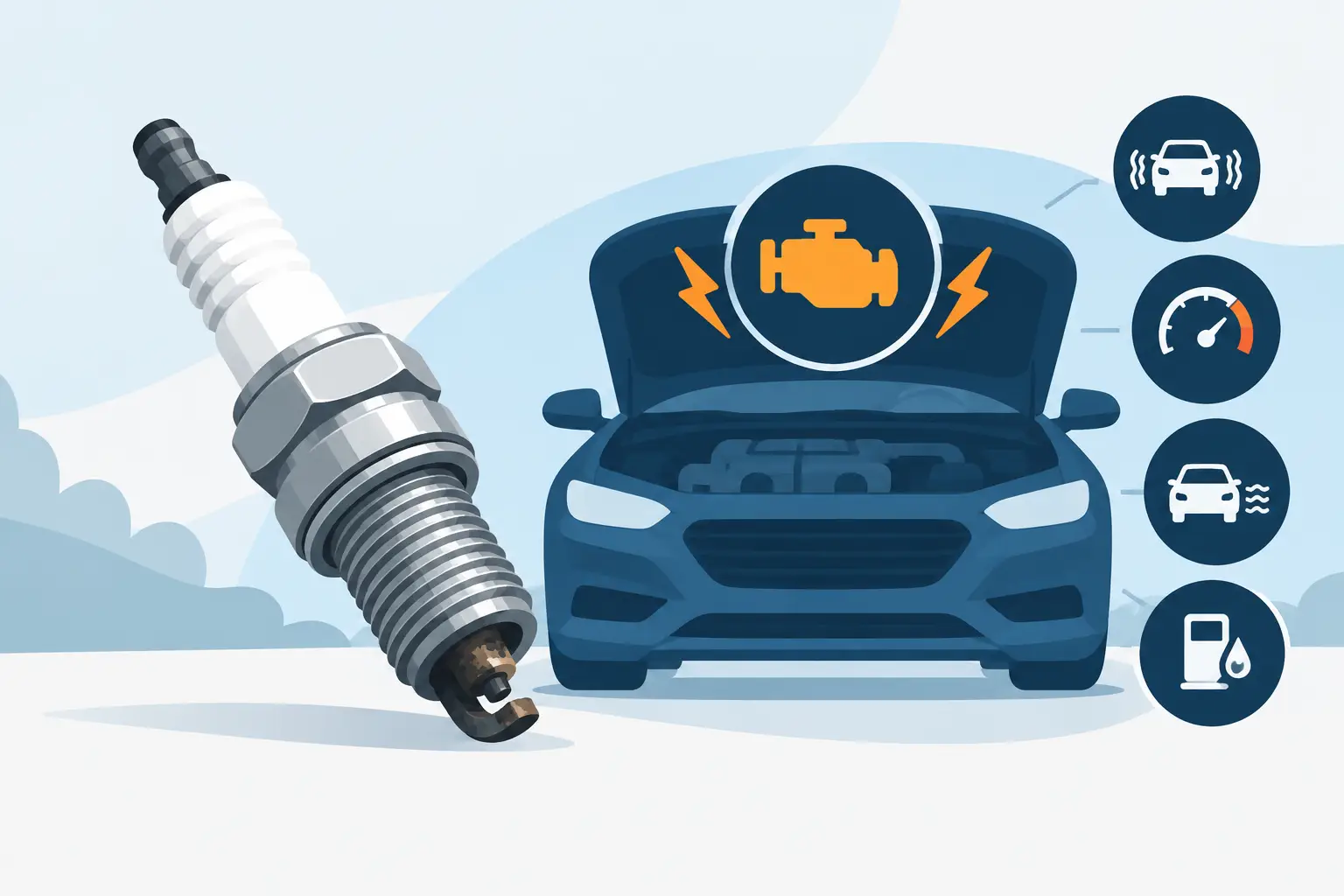
A single missed ignition event can turn a normally smooth commute into a rough idle, sluggish acceleration, or a flashing check engine light. Can bad spark plugs misfire? Absolutely. Worn, fouled, damaged, or incorrectly specified spark plugs are among the most common causes of gasoline-engine misfires, and they deserve attention before a minor drivability issue becomes an expensive repair.
Spark plugs are small components with a major job: they create the spark that ignites the air-fuel mixture inside each cylinder. When that spark is weak, inconsistent, or absent, the cylinder may not burn its fuel charge correctly. The result is a misfire – and the vehicle will usually let you know.
How Bad Spark Plugs Cause a Misfire
A spark plug must fire under intense heat and pressure, thousands of times per minute. Its center and ground electrodes gradually wear away, increasing the gap between them. As the gap grows beyond specification, the ignition system needs more voltage to jump it. Eventually, the coil may not be able to consistently produce enough energy, especially under load.
A plug can also misfire because it is contaminated. Oil entering the combustion chamber can coat the firing end, while an overly rich fuel mixture can leave dry black carbon deposits. Coolant contamination, ash deposits, cracked porcelain, a bent electrode, or physical damage from incorrect installation can all interfere with ignition.
The plug itself is not always the root cause. A fouled plug may be reporting another engine problem, such as a leaking valve cover gasket, worn piston rings, failing fuel injector, or weak ignition coil. Replacing the plug can restore operation temporarily, but diagnosing why it fouled protects the new set and the engine.
Signs Bad Spark Plugs May Be Misfiring
The clearest clue is a rough or uneven idle. You may feel a vibration through the steering wheel, seat, or floorboard while stopped. Under acceleration, the engine may hesitate, stumble, surge, or feel short on power. In some vehicles, the issue is most obvious when climbing a grade, towing, or merging onto a highway, because cylinder pressure is higher and a weak spark has a harder time firing.
Fuel economy can also drop. When a cylinder misfires, the engine control module may add fuel as it attempts to correct the combustion problem. Unburned fuel can then enter the exhaust stream, reducing efficiency and raising the risk of catalytic converter damage.
Watch the check engine light closely. A steady light often means the vehicle has stored a fault code that needs attention. A flashing check engine light is more urgent: it commonly indicates an active, catalyst-damaging misfire. Reduce load, avoid hard acceleration, and arrange diagnosis as soon as possible.
Other common signs include difficult starts, an exhaust smell of raw fuel, reduced throttle response, and a noticeable change in exhaust sound. These symptoms can overlap with fuel, air, sensor, and mechanical faults, so they are evidence – not proof – that the plugs are to blame.
Can Bad Spark Plugs Misfire Under Load Only?
Yes. A vehicle can idle reasonably well and still misfire during acceleration. At idle, cylinder pressure is relatively low, so it takes less voltage for the spark to bridge the plug gap. Press the throttle, and cylinder pressure rises. That added pressure makes weak coils, worn plugs, damaged boots, and excessive plug gaps far more likely to fail.
This is why a quick visual inspection may not always reveal the issue. A plug can look serviceable yet break down electrically only when the engine is hot or working hard. Diagnostic trouble codes, live misfire data, and a careful inspection of the ignition system provide a more reliable direction.
Check the Basics Before Replacing Parts
Start with the vehicle manufacturer’s recommended spark plug type, heat range, and replacement interval. Modern engines are designed around specific plug materials and configurations. Installing a lower-grade plug, the wrong heat range, or a plug with an incorrect gap can create new drivability problems instead of fixing the old one.
If access is straightforward and you have the correct tools, remove the plugs one at a time and keep them in cylinder order. Compare their condition. A normal plug often has light tan or gray deposits. Dry, sooty black buildup may point to rich operation or weak ignition. Wet oil deposits suggest oil control issues. A white, blistered appearance may indicate overheating, an overly lean mixture, or an incorrect plug specification.
Inspect the porcelain for cracks, the electrode for erosion, and the plug gap with a proper gauge. Also look closely at ignition coils, coil boots, and plug wires where equipped. Carbon tracking – a thin dark line along porcelain or a boot – can give spark energy an easier path to ground than the plug gap.
If a scan tool shows a cylinder-specific code, such as a misfire on cylinder three, a swap test can be useful. Move the coil from the affected cylinder to another cylinder, clear the code, and see whether the misfire follows the coil. Do not randomly swap multiple parts at once; changing one variable at a time makes the result meaningful.
When Spark Plug Replacement Is the Right Move
Replace spark plugs when they are at their service interval, visibly worn, damaged, contaminated beyond practical cleaning, or confirmed as the source of a misfire. For most modern engines, replacing the complete set is the smart move. Plugs wear at a similar rate, and installing only one new plug can leave the remaining cylinders close to failure.
Use the correct material. Standard copper plugs are affordable and appropriate for some older applications, but they typically have a shorter service life. Platinum and iridium plugs cost more upfront but are designed for longer intervals and are common in late-model vehicles. Do not substitute materials simply because they are available. Match the application requirements.
Installation quality matters as much as part selection. Start each plug by hand to avoid cross-threading an aluminum cylinder head. Follow the specified torque value, use the correct socket, and avoid applying anti-seize or dielectric grease unless the plug or vehicle manufacturer specifically calls for it. Many modern spark plugs have coated threads, and excessive lubricant can alter torque readings.
Do Not Ignore a Misfire for Too Long
Continuing to drive with a persistent misfire can damage more than the plugs. Unburned fuel may overheat the catalytic converter, an expensive exhaust component designed to control emissions. Severe misfires can also stress engine mounts, reduce performance, and leave you stranded when the ignition fault worsens.
For DIY owners, a quality replacement spark plug set and the right ignition components can be a straightforward maintenance investment. For shops and commercial buyers, accurate fitment, correct specifications, and dependable replacement inventory help keep routine ignition work efficient. FORTLUFT supports the practical side of vehicle maintenance while keeping the standard high for parts that affect daily driving.
A misfire is the engine asking for attention, not a sound to turn up the radio over. Check the basics early, use application-correct parts, and treat a flashing check engine light as a reason to stop guessing and start diagnosing.