
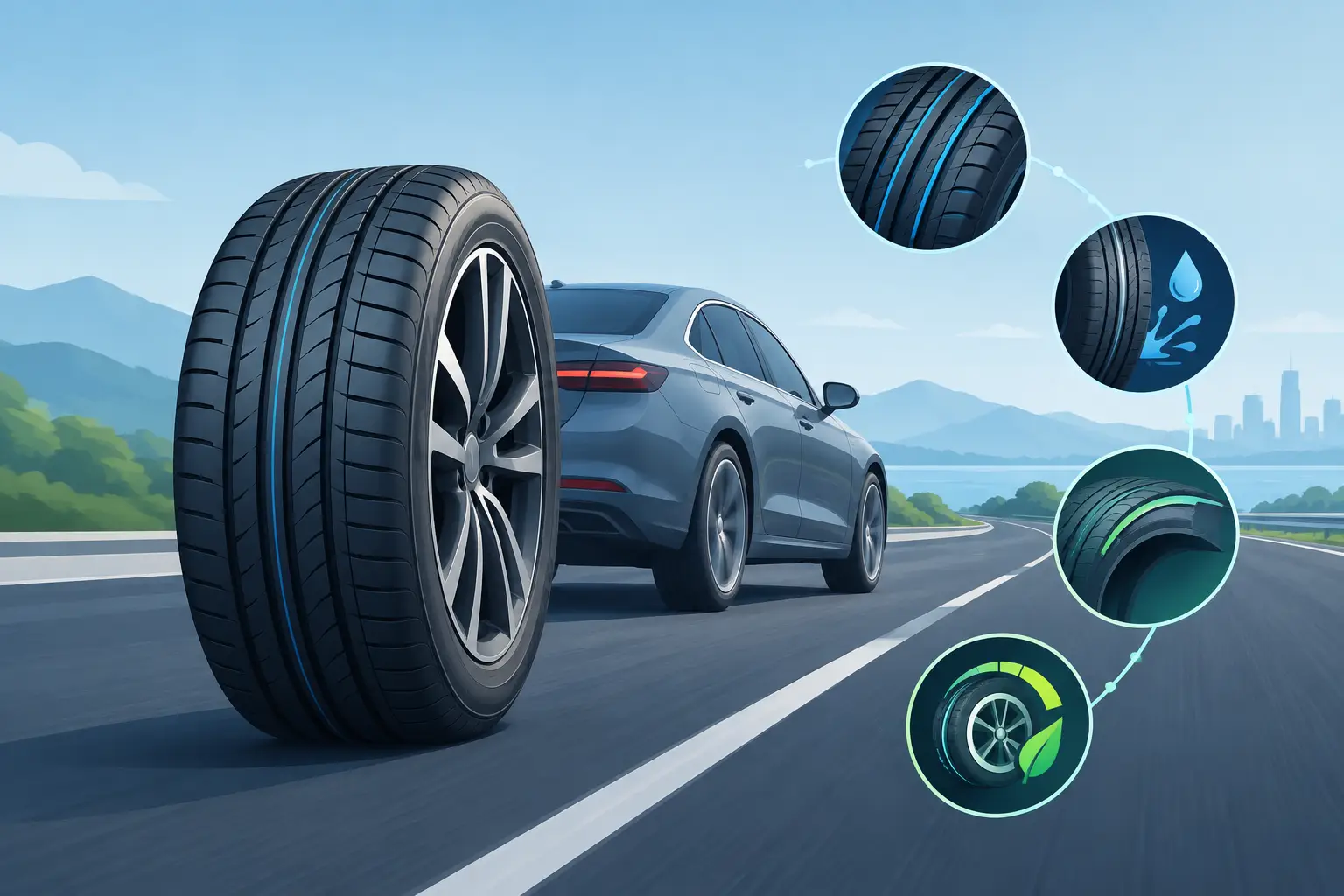
A tire is the only part of your car, truck, Jeep, or SUV that is meant to stay in contact with the road. That makes tire technology more than a spec sheet detail. It directly shapes braking distance, wet-weather confidence, steering response, fuel use, road noise, and the way a vehicle looks sitting in the driveway.
A wider tire may give a truck a more planted stance. An all-terrain tire may provide the traction needed for a trailhead or job site. But neither upgrade automatically improves every part of the drive. The right choice comes down to compound, construction, tread design, size, load rating, and how you actually use the vehicle.
Tire Technology Starts With the Rubber Compound
The black rubber visible on a tire is a carefully engineered blend, not a single material. Manufacturers combine natural and synthetic rubbers with silica, carbon black, oils, resins, and reinforcing materials to balance grip, longevity, temperature resistance, and rolling resistance.
Softer compounds generally create more traction because they can conform closely to the pavement. That can improve dry handling and cold-weather grip, but the trade-off is usually faster wear. Performance-oriented summer tires often favor this approach. A harder compound can last longer and may better support heavy-duty use, although it may deliver less immediate grip in cold or slick conditions.
Silica plays a major role in modern tire compounds. It can help a tire maintain wet traction while reducing rolling resistance, which is the energy required to keep the tire moving. Less rolling resistance can support better fuel economy or driving range. For a daily driver, that balance may matter more than maximum cornering grip.
Temperature matters. A tire compound designed for hot summer pavement can become less flexible in near-freezing conditions. A winter tire stays pliable in the cold, while an all-season tire aims for a middle ground. All-season capability is convenient, but it is not the same as dedicated winter traction when snow, ice, and sustained low temperatures are part of the job.
Tread Design Is Where Tire Technology Meets the Road
Tread is responsible for directing water, loose material, and heat away from the contact patch. That contact patch is the small area where tire and road meet. Its shape changes as the vehicle accelerates, brakes, corners, and carries weight.
Wide circumferential grooves help move water out from under the tire, reducing the risk of hydroplaning. Lateral grooves assist with wet traction and can add bite on loose surfaces. Small cuts in the tread blocks, called sipes, create extra edges that improve grip in rain, slush, and snow.
The pattern also influences noise and wear. A tightly packed tread pattern tends to run more quietly on pavement, making it a practical fit for commuters, crossovers, and highway-driven SUVs. Large, open tread blocks can clear mud and grip uneven terrain more effectively, but they commonly produce more road noise and can wear differently during extended highway miles.
That is why tire categories are not interchangeable. Highway terrain tires prioritize predictable pavement manners and long-distance comfort. All-terrain tires split the difference between road use and off-pavement traction. Mud-terrain tires are built for aggressive loose-surface conditions, not quiet interstate travel. Choose the category based on the roads your vehicle sees most often, not the toughest route it might see once a year.
Directional, Asymmetrical, and Symmetrical Patterns
A symmetrical tread pattern uses the same design across the face of the tire. It is common, versatile, and often easier to rotate. Directional tires use a V-shaped pattern engineered to channel water in a specific direction. They must be mounted and rotated correctly to perform as designed.
Asymmetrical tires use different tread zones across the inside and outside shoulders. One side may focus on wet drainage while the other supports dry cornering stability. These tires can offer a refined blend of response and all-weather performance, but correct mounting orientation is essential.
Construction Controls Feel, Strength, and Capability
Most passenger and light-truck tires use radial construction. In a radial tire, cords run across the tire from bead to bead, with belts beneath the tread to stabilize the contact area. This construction supports smoother ride quality, efficient operation, and reliable tread life for everyday vehicles.
The sidewall deserves close attention, especially on trucks, Jeeps, and SUVs. A reinforced sidewall can better resist damage from rocks, potholes, and heavy loads. It can also sharpen steering feel by limiting sidewall flex. The compromise is often a firmer ride and additional weight.
Load range and ply rating language can be confusing because modern tires do not always use the literal number of fabric plies suggested by older terminology. What matters is the tire’s stated load capacity and inflation requirements. A tire that looks aggressive but does not meet your vehicle’s load needs is not an upgrade.
For towing, hauling, or commercial use, match the tire’s load index to the vehicle’s requirements and account for real operating weight. A loaded trailer, gear in the bed, passengers, and aftermarket accessories all add up. Proper inflation is equally critical because an underinflated tire builds excess heat, accelerates wear, and can compromise handling.
Sidewalls and Tire Size Are Part of the System
Tire size changes more than appearance. Moving to a larger diameter can increase ground clearance and fill out a wheel well, but it can also affect acceleration, braking, speedometer accuracy, gear ratio behavior, and suspension clearance. A wider tire may improve the vehicle’s stance and potentially expand the contact patch, but it can increase steering effort, weight, and susceptibility to hydroplaning if the tread is not designed to manage water effectively.
Wheel width, offset, and tire profile all need to work together. A tire that is too wide for its wheel can feel imprecise and wear poorly. One that is stretched or incorrectly seated can create safety and durability concerns. Check fitment before ordering, including clearance at full steering lock and full suspension travel.
Low-profile tires can produce quick steering response and a clean performance look. They also leave less sidewall to absorb potholes. Taller sidewalls generally improve impact compliance and are often the smarter call for rough roads, trails, heavy loads, or work vehicles.
Smart Tires and Sensors Add Useful Data
Tire pressure monitoring systems are now standard on most newer vehicles, but basic warning lights are only the first layer of information. Advanced sensor systems can track pressure and temperature in real time, giving fleets and performance drivers earlier warning of a developing problem.
Pressure is not a minor maintenance item. It affects tread wear, braking behavior, handling consistency, and fuel consumption. A tire can lose pressure gradually enough that the driver does not notice until wear patterns or handling problems become obvious.
Some newer tire designs also use sound-absorbing foam inside the casing to reduce cabin noise. Others are developed for the instant torque and added weight of electric vehicles. EV-focused tires may emphasize low rolling resistance, high load capacity, and wear resistance, but the best option still depends on the vehicle, climate, and driving priorities.
Choosing Technology for the Way You Drive
Start with the tire placard on the driver-side door jamb and your owner’s manual. They establish the manufacturer-recommended size, load index, and speed rating. From there, decide what needs to improve: wet traction, snow performance, trail capability, towing stability, ride comfort, tread life, or visual presence.
Do not choose solely by tread appearance. An aggressive pattern may suit a lifted Jeep or a work truck that regularly leaves pavement, while a quiet touring tire may be the better investment for an SUV that spends its life on highways. The most effective tire setup is the one that matches the vehicle’s purpose without creating avoidable compromises.
At FORTLUFT, the same fitment-first thinking applies whether you are replacing worn tires, refining a wheel-and-tire stance, or building a more capable truck or SUV. Technology as an art form begins with components that work together.
Before the next purchase, look beyond the sidewall lettering. Consider the roads, weather, payload, and miles ahead. The right tire technology gives every other vehicle upgrade a stronger foundation.